Check out this FREE Trial Lesson on Math for age 8!

X

Favorites
With answer key
Interactive
  • 8
  • Comparing Fractions
  • Math
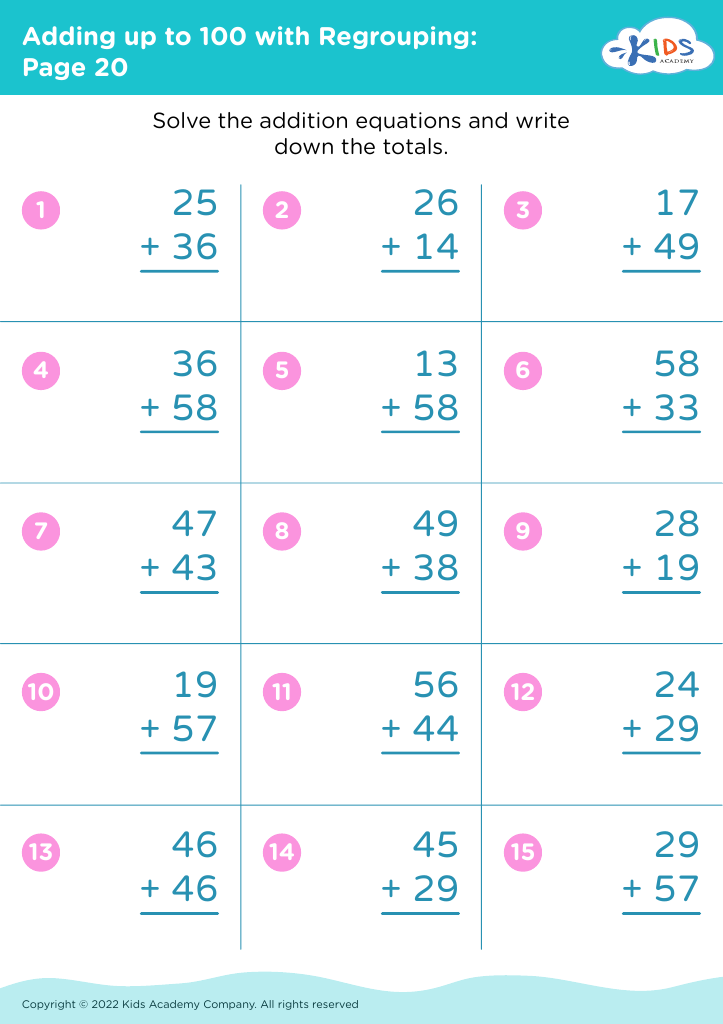
Adding up to 100 with Regrouping: Page 20
Worksheet
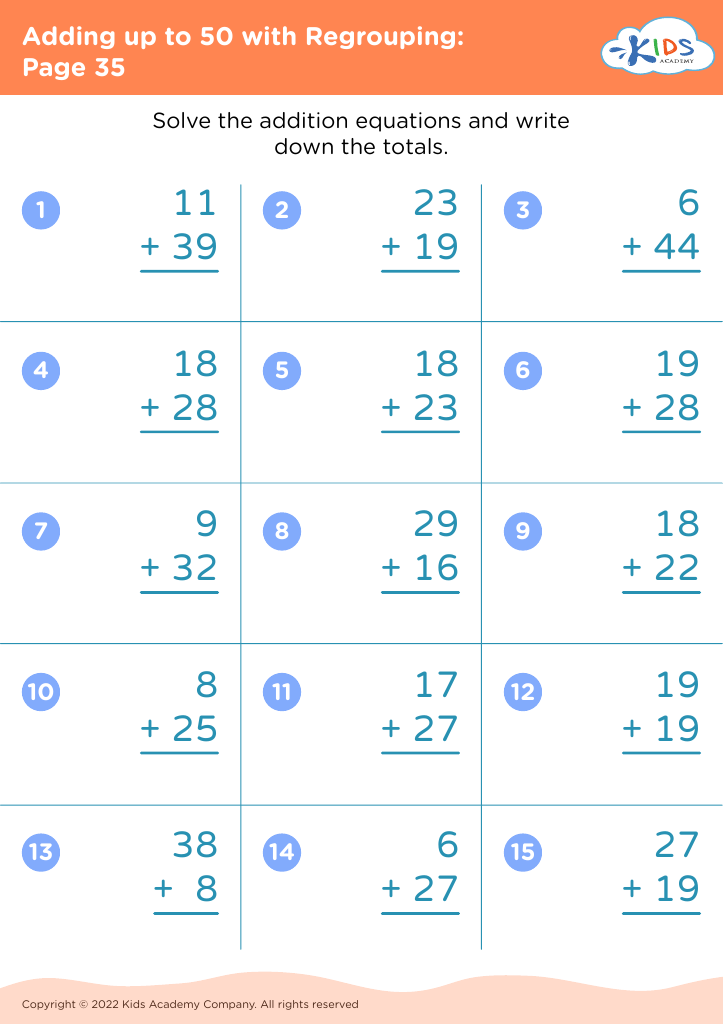
Adding up to 50 with Regrouping: Page 35
Worksheet
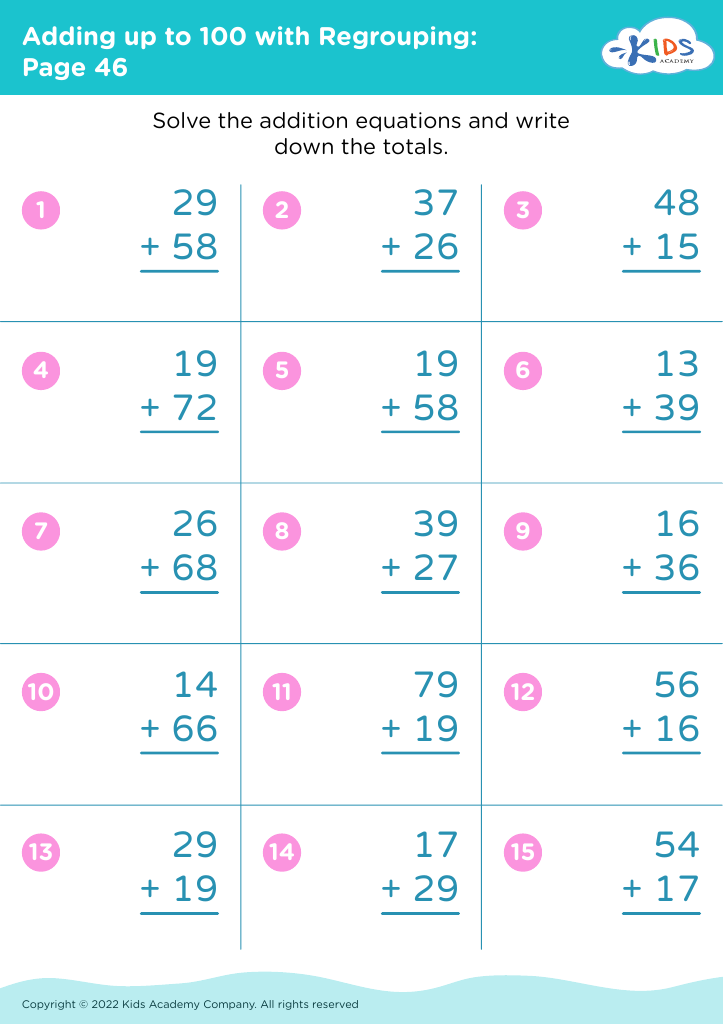
Adding up to 100 with Regrouping: Page 46
Worksheet
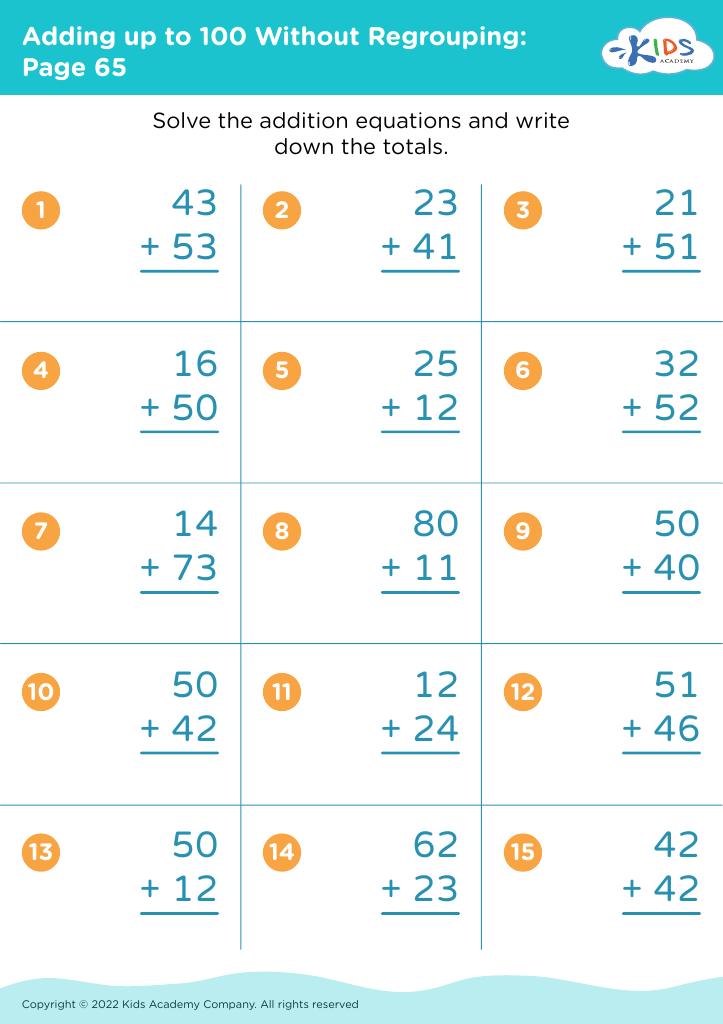
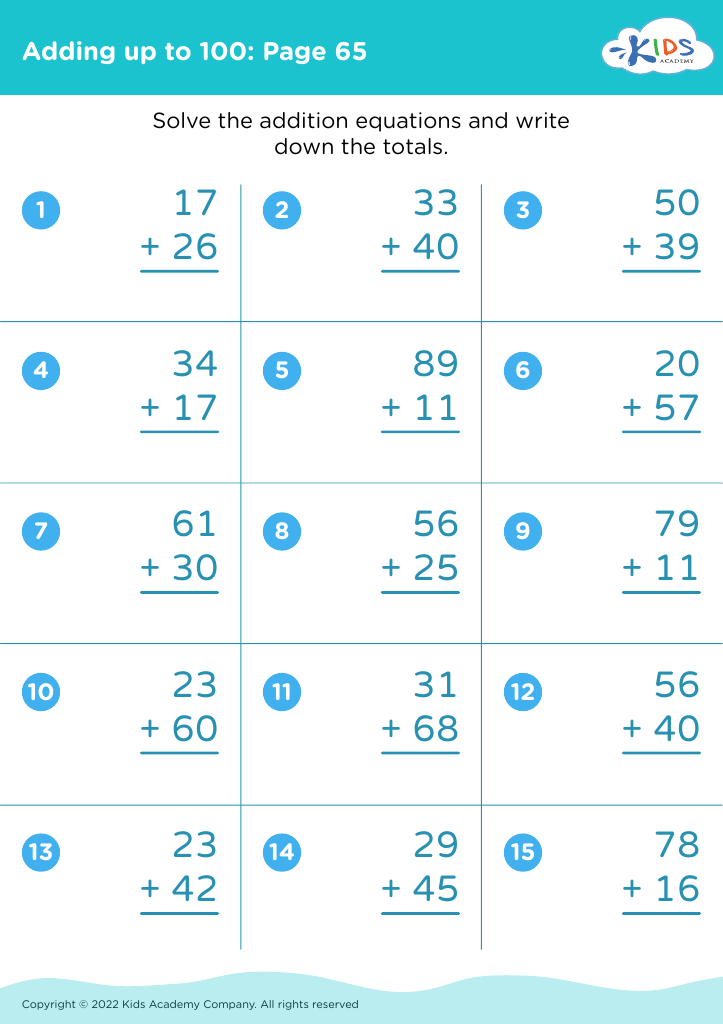
Adding up to 100 Without Regrouping: Page 65
Worksheet
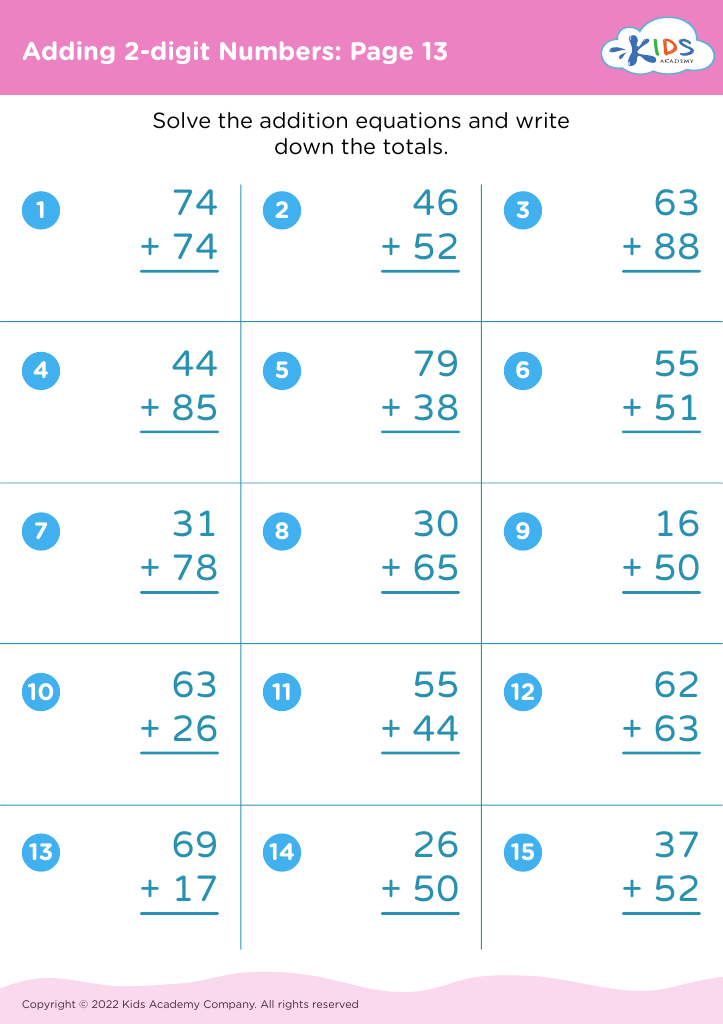
Adding 2-digit Numbers: Page 13

Adding 2-digit Numbers: Page 13

Adding 2-digit Numbers: Page 13
Worksheet
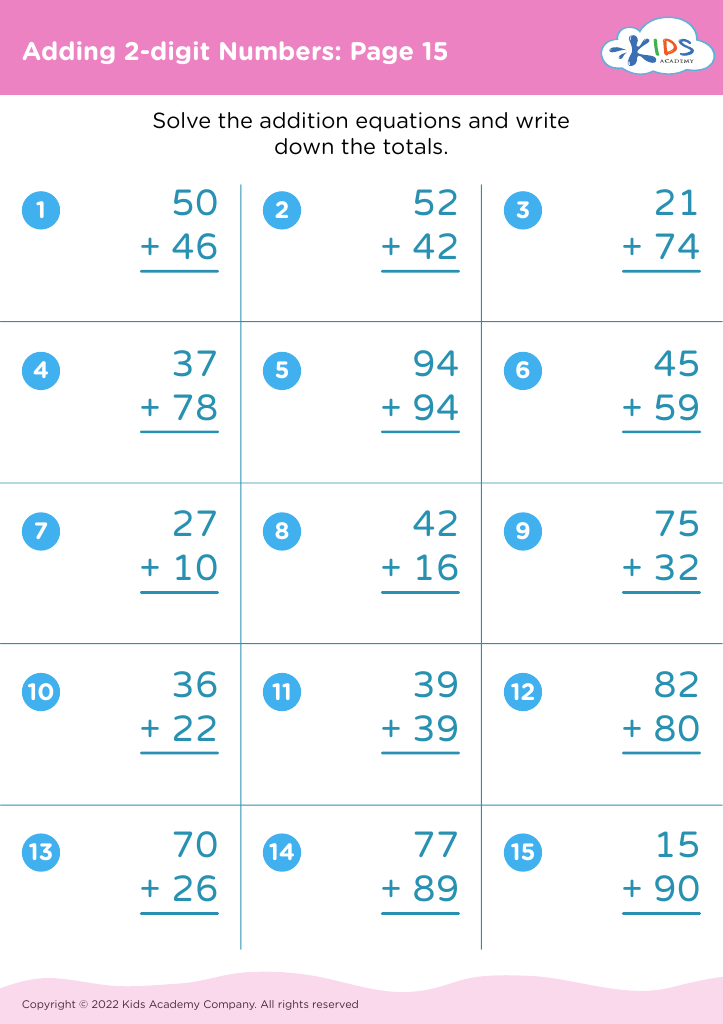
Adding 2-digit Numbers: Page 15

Adding 2-digit Numbers: Page 15

Adding 2-digit Numbers: Page 15
Worksheet
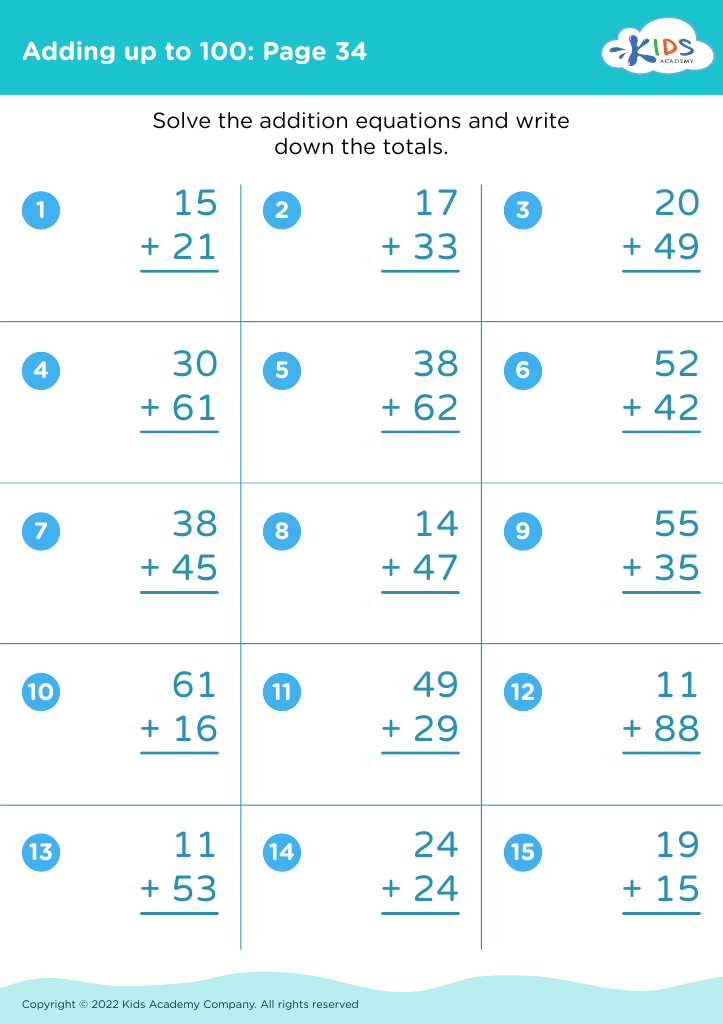
Adding up to 100: Page 34

Adding up to 100: Page 34

Adding up to 100: Page 34
Worksheet
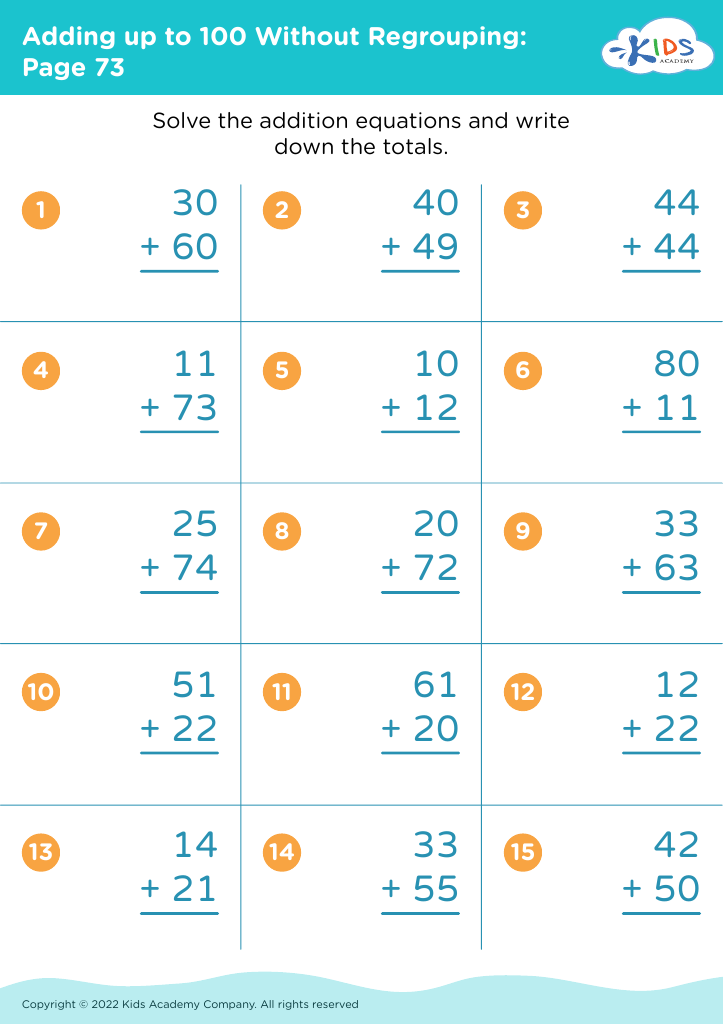
Adding up to 100 Without Regrouping: Page 73
Worksheet
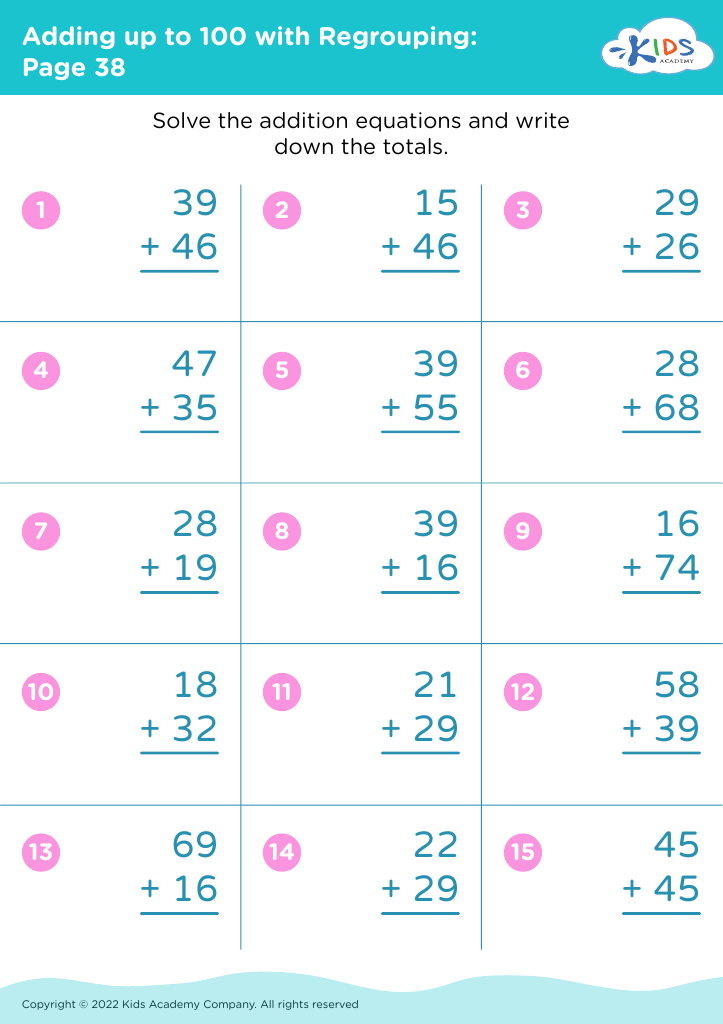
Adding up to 100 with Regrouping: Page 38
Worksheet
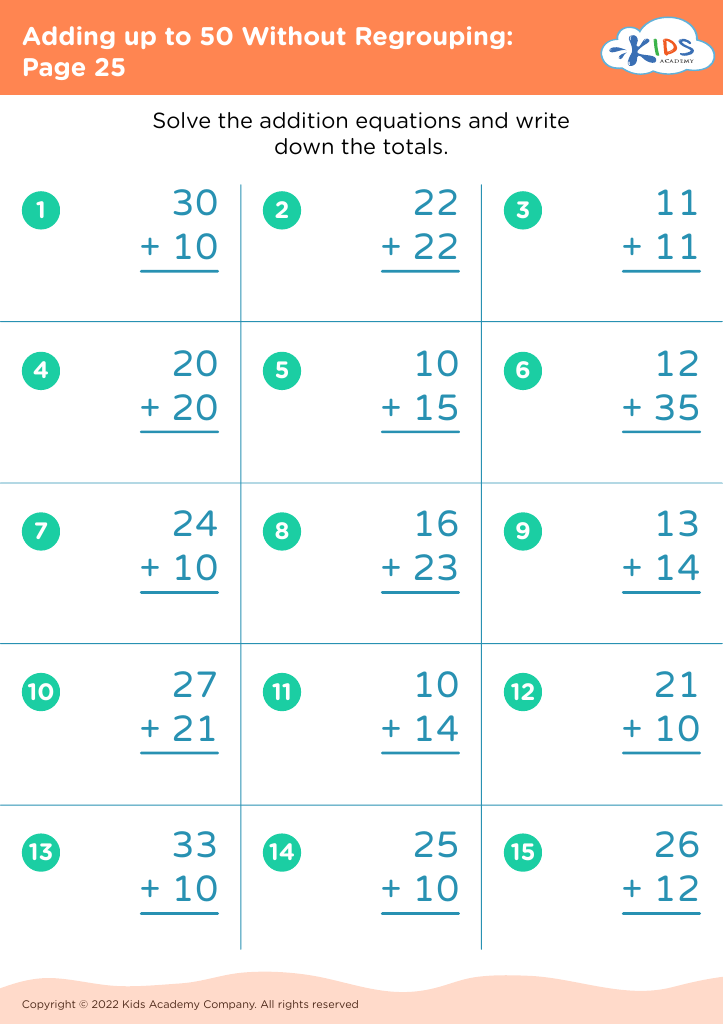
Adding up to 50 Without Regrouping: Page 25
Worksheet
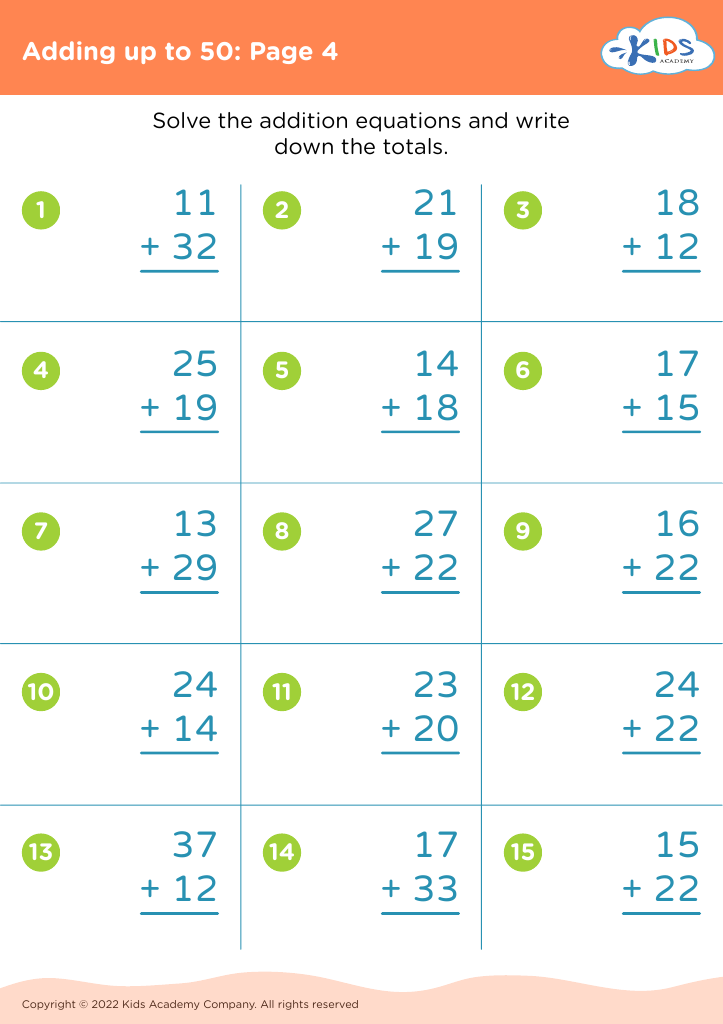
Adding up to 50: Page 4

Adding up to 50: Page 4

Adding up to 50: Page 4
Worksheet
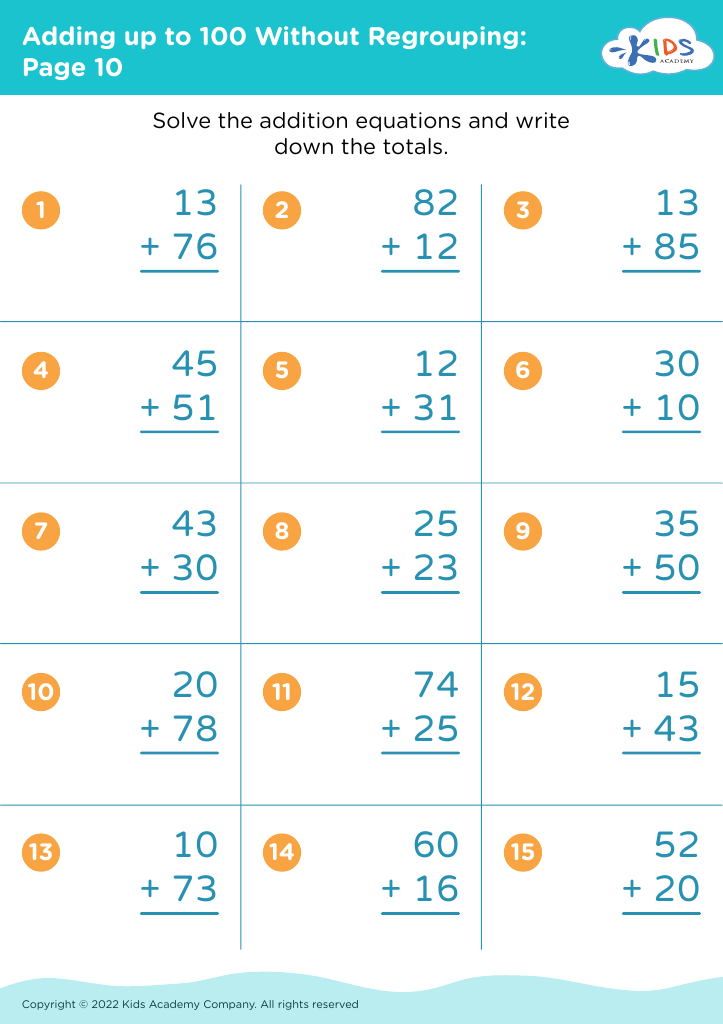
Adding up to 100 Without Regrouping: Page 10
Worksheet
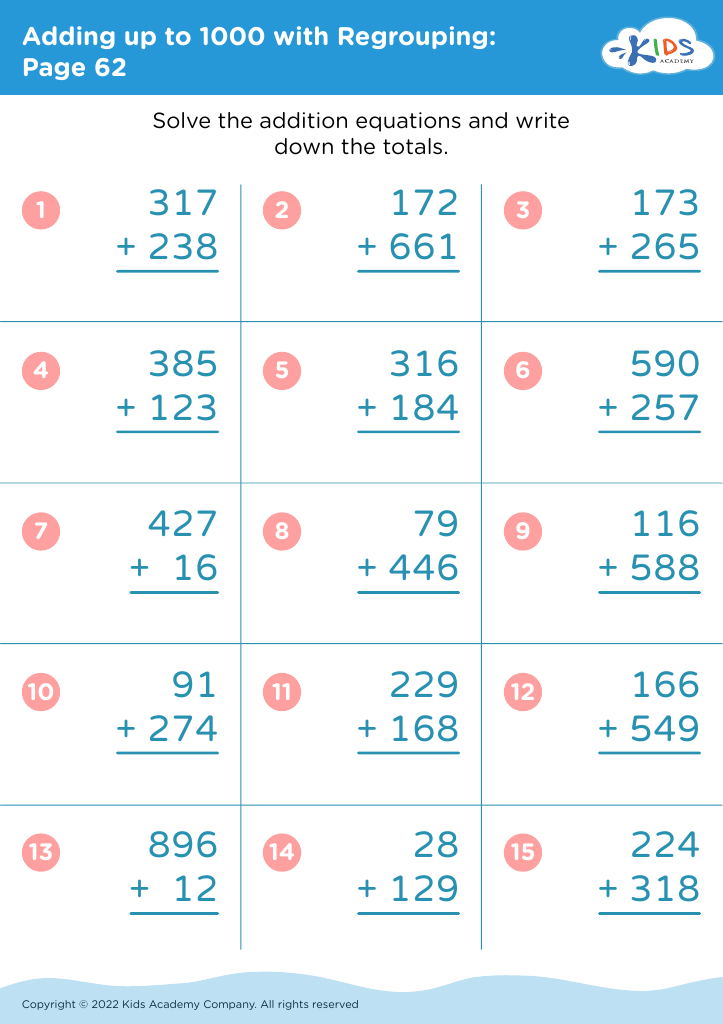
Adding up to 1000 with Regrouping: Page 62
Worksheet
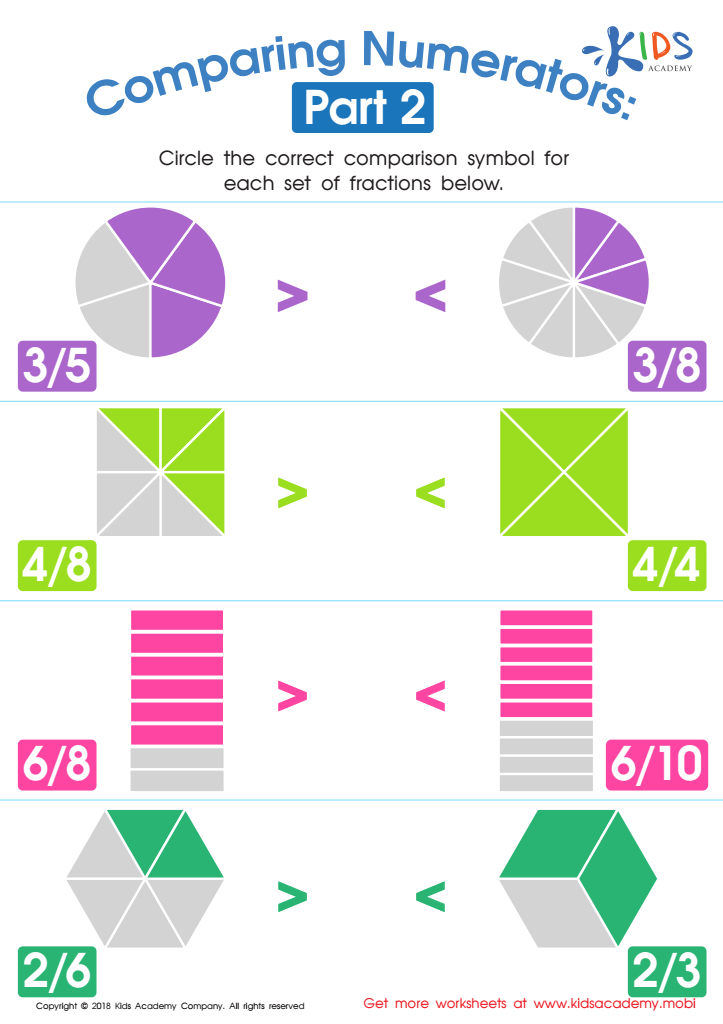
Comparing Numerators Part 2 Worksheet

Comparing Numerators Part 2 Worksheet

Before beginning this exercise, your child should have knowledge of fractions, including counting and identifying them in shaded areas of shapes. In the pdf, they must compare two fractions in each set and circle the symbol for the larger fraction. Help them as needed.
Comparing Numerators Part 2 Worksheet
Worksheet
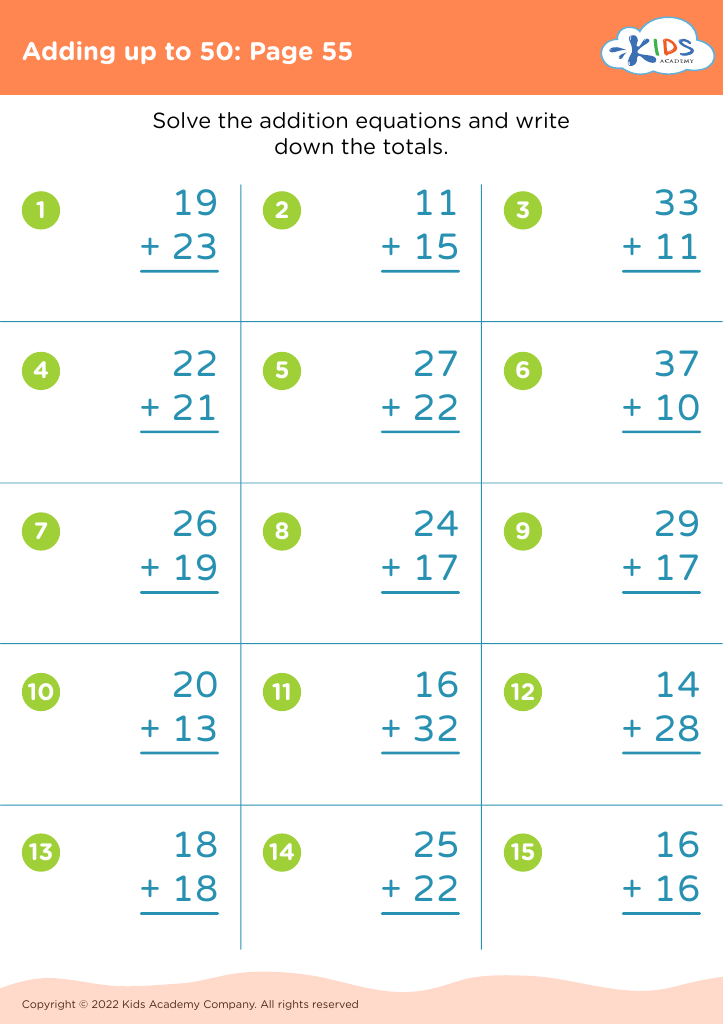
Adding up to 50: Page 55

Adding up to 50: Page 55

Adding up to 50: Page 55
Worksheet
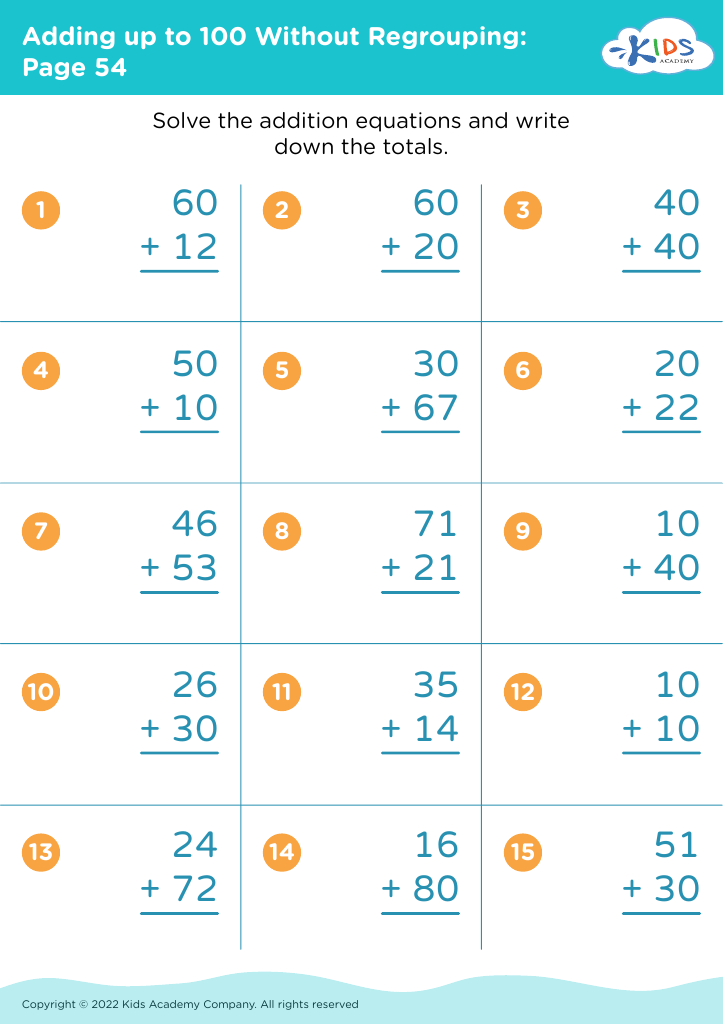
Adding up to 100 Without Regrouping: Page 54
Worksheet
Adding up to 100: Page 65

Adding up to 100: Page 65

Adding up to 100: Page 65
Worksheet
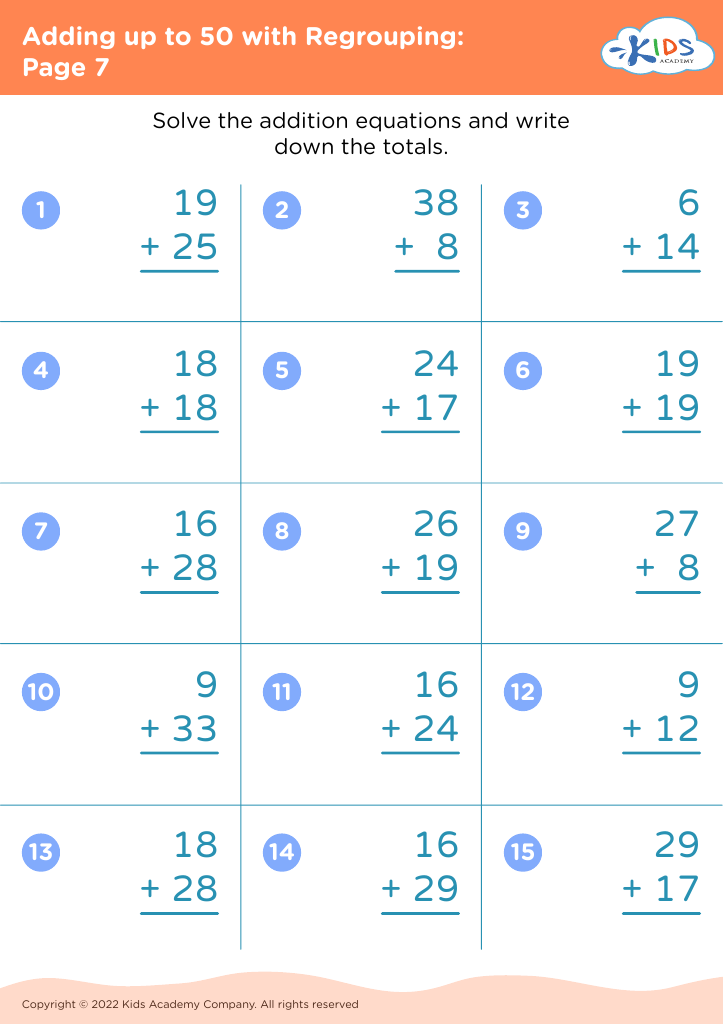
Adding up to 50 with Regrouping: Page 7
Worksheet
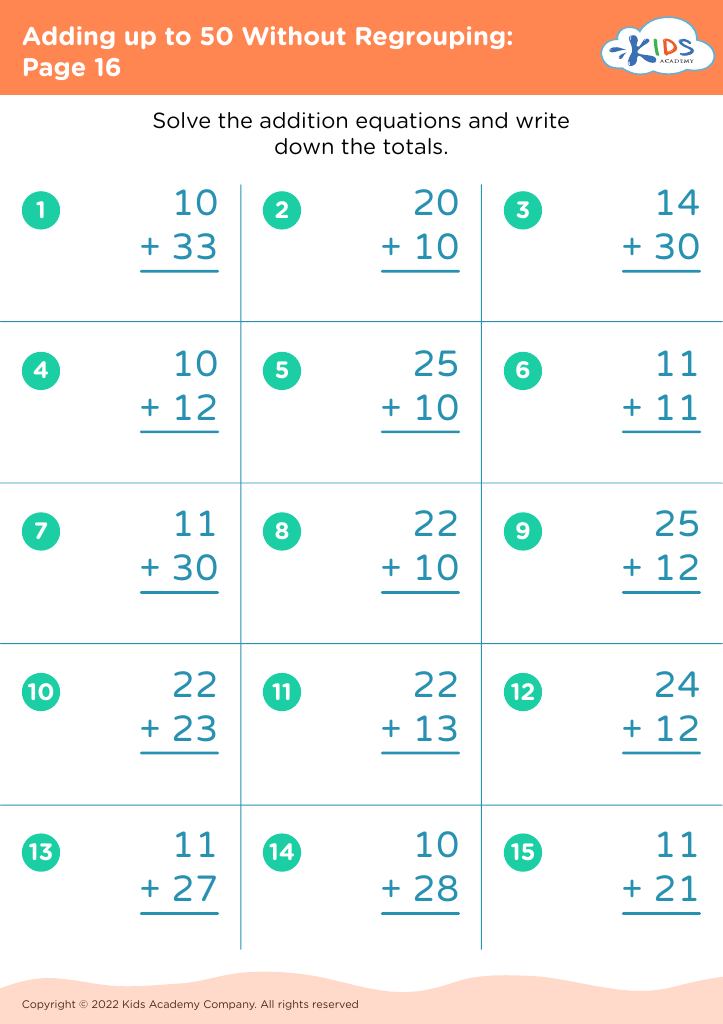
Adding up to 50 Without Regrouping: Page 16
Worksheet
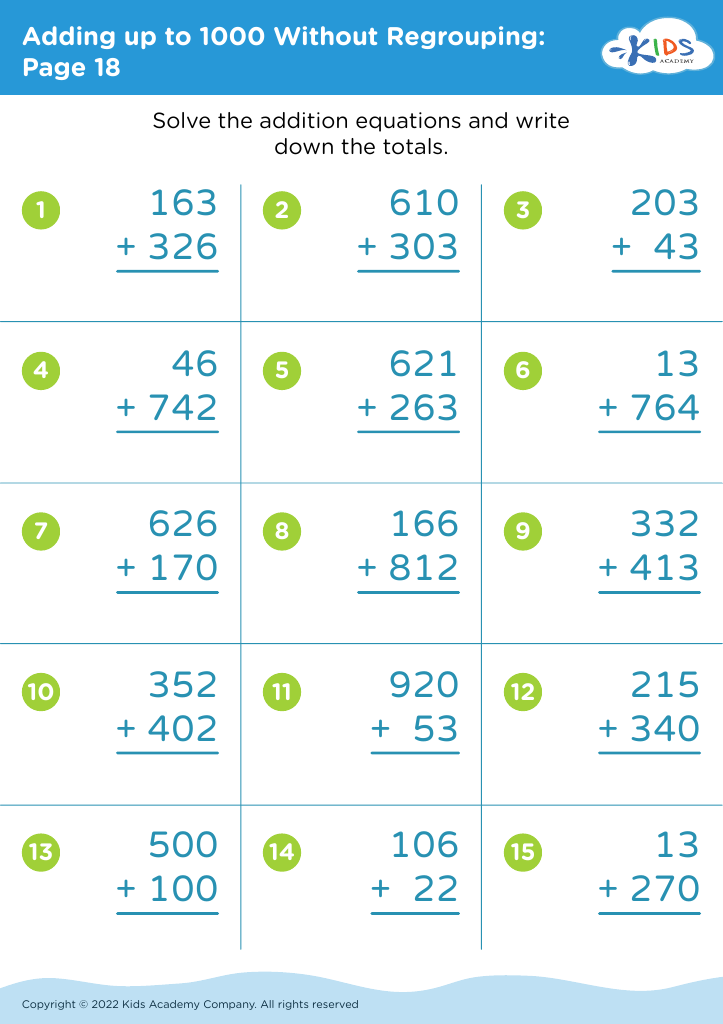
Adding up to 1000 Without Regrouping: Page 18
Worksheet
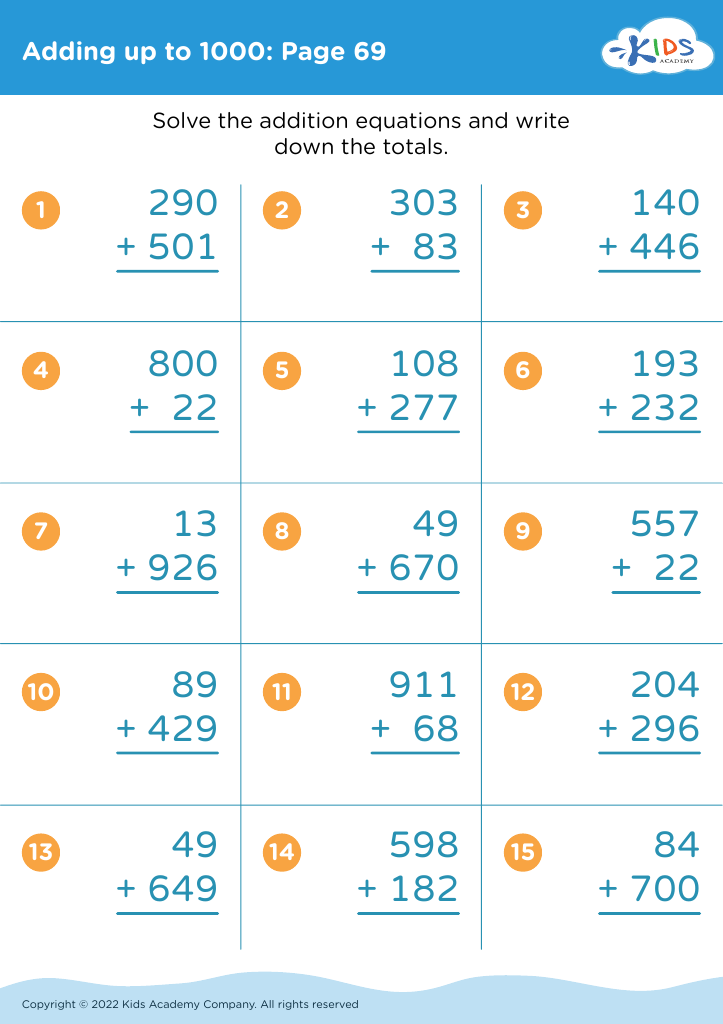
Adding up to 1000: Page 69

Adding up to 1000: Page 69

Adding up to 1000: Page 69
Worksheet
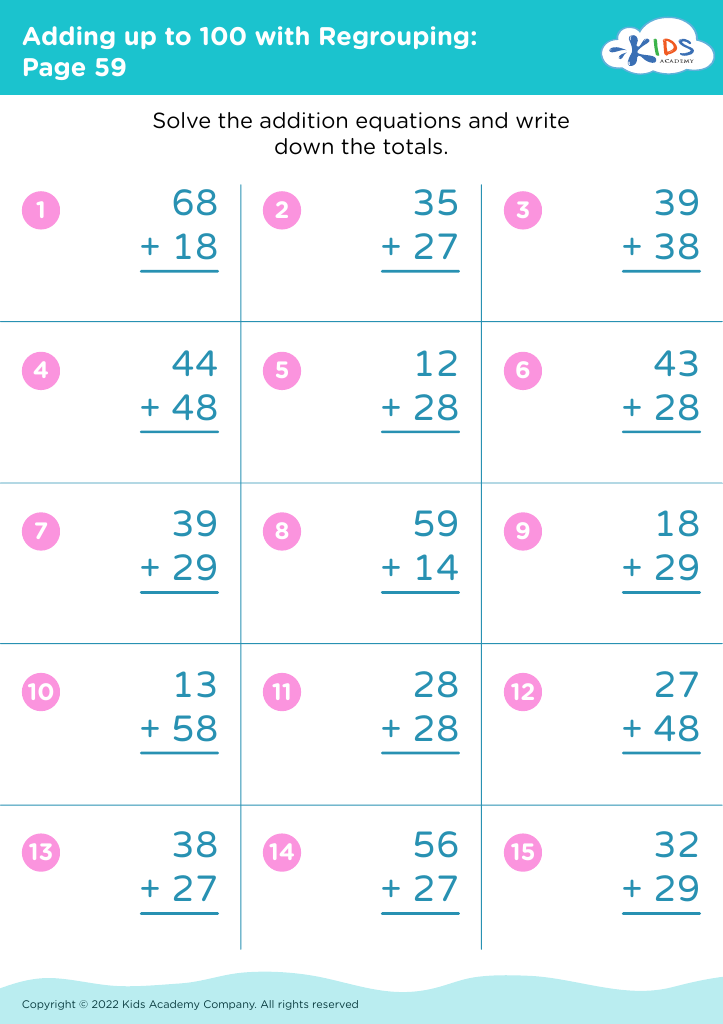
Adding up to 100 with Regrouping: Page 59
Worksheet
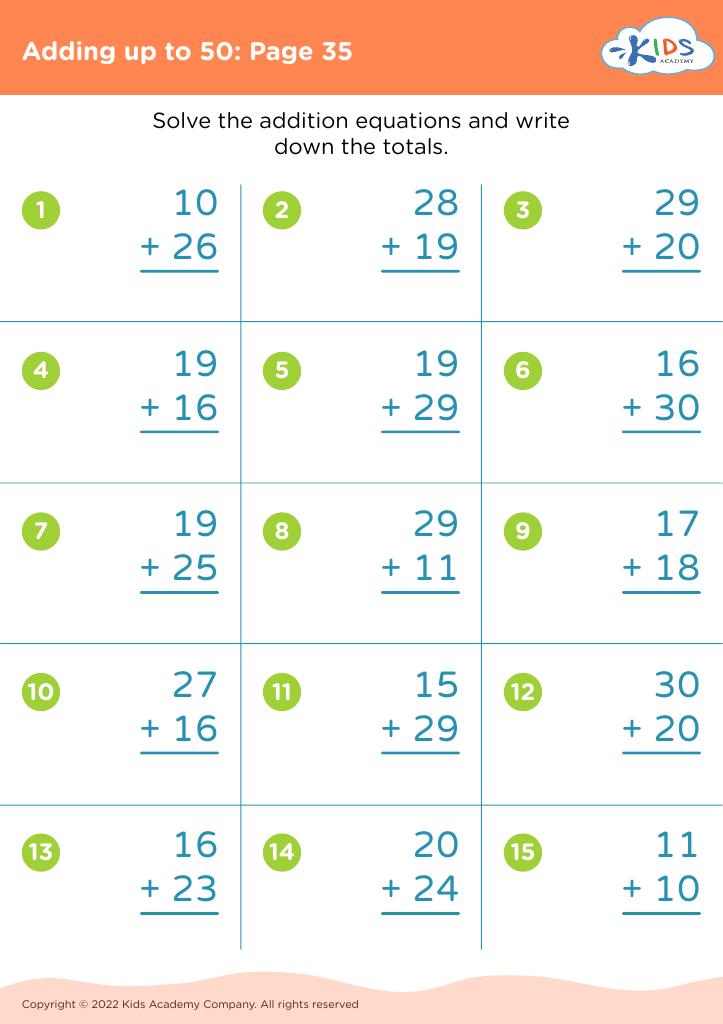
Adding up to 50: Page 35

Adding up to 50: Page 35

Adding up to 50: Page 35
Worksheet
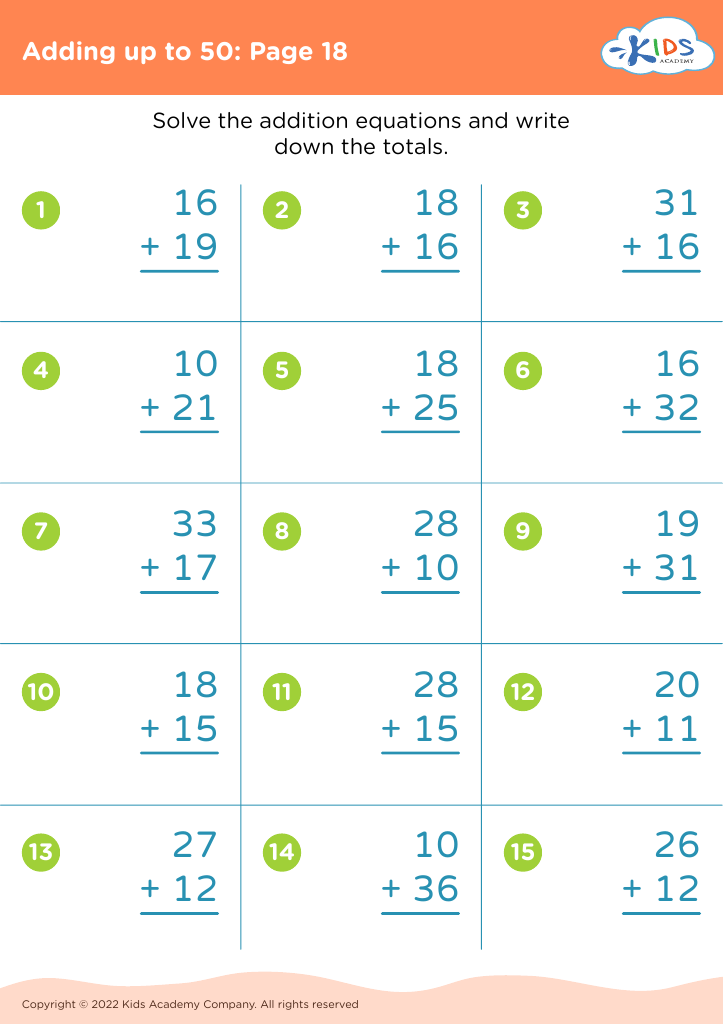
Adding up to 50: Page 18

Adding up to 50: Page 18

Adding up to 50: Page 18
Worksheet


Comparing fractions is a crucial math skill for 8-year-olds that lays the foundation for more complex mathematical concepts. For parents and teachers, understanding and supporting children in this area is essential for several reasons. Firstly, comparing fractions teaches kids about proportional reasoning, which is fundamental to understanding ratios, percentages, and scale in real-life situations, such as cooking, budgeting, and interpreting data.

Additionally, mastering the comparison of fractions enhances critical thinking skills. Children learn to analyze numbers, understand the importance of denominators and numerators, and apply reasoning to problem-solving. This skill also builds resilience; as students grapple with tricky concepts, they learn the value of perseverance.

Moreover, discussions around comparing fractions provide excellent opportunities for language development. Parents and educators can nurture math vocabulary, encouraging children to articulate their thoughts and reasoning—instilling confidence in their communication skills.

Finally, focusing on comparing fractions during this formative age can foster a positive attitude toward math. When students succeed in understanding fractions, they build confidence that can transcend into other areas of mathematics, reducing anxiety and promoting a love for learning. Therefore, supporting 8-year-olds in mastering this concept is beneficial for their academic journey and overall cognitive development.