Develop counting skills Math Worksheets for 8-Year-Olds
5 filtered results
-
From - To
Discover a range of engaging math worksheets designed to enhance counting skills for 8-year-olds! Our worksheets combine fun activities and clear instructions to make learning enjoyable. Through colorful visuals and interactive problem-solving, children will practice essential counting techniques, sequencing, and number recognition. These resources are perfect for supplementing classroom learning or as engaging at-home activities. Each worksheet is tailored to challenge and inspire young minds, helping to build a solid foundation in math. Foster your child's confidence and skills in counting today with our thoughtfully crafted materials, ensuring learning is both effective and entertaining! Explore now!
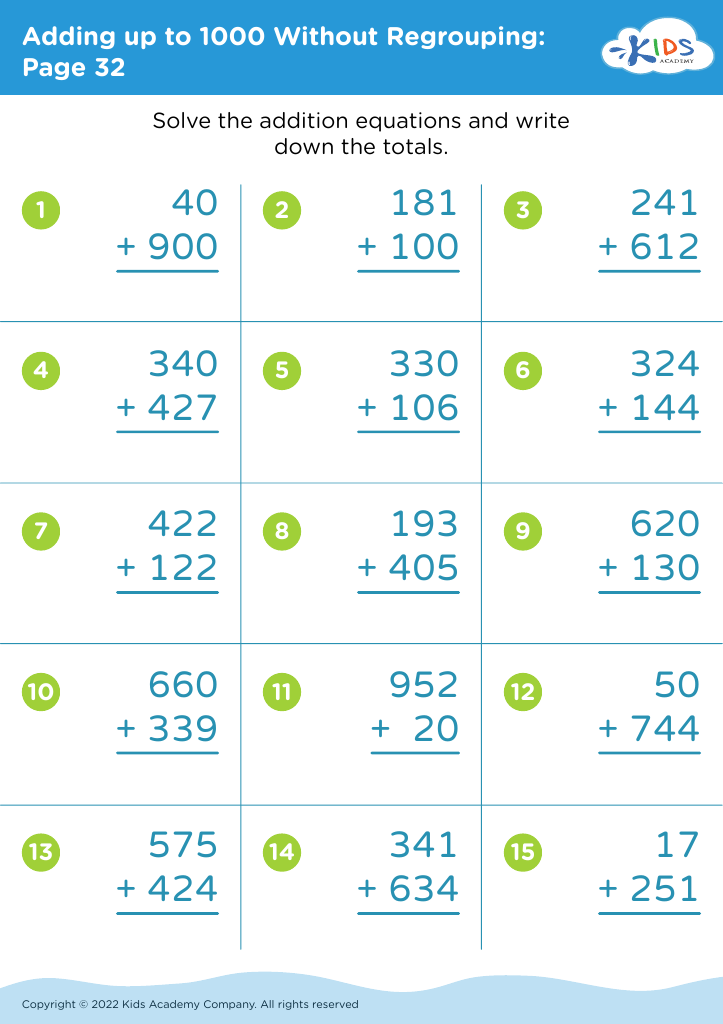
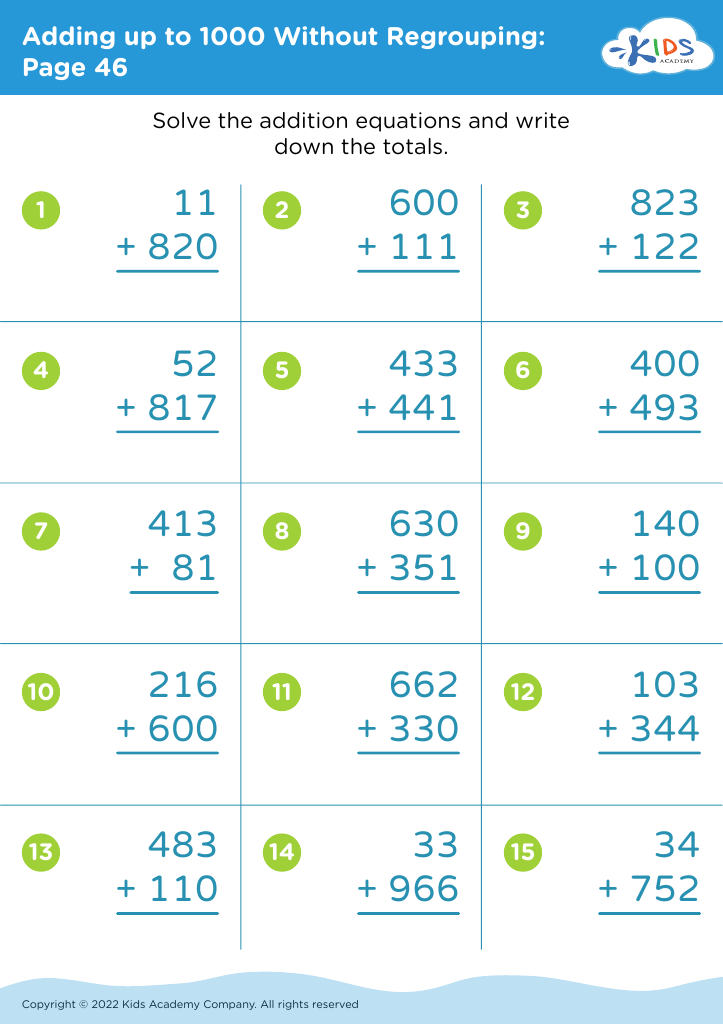
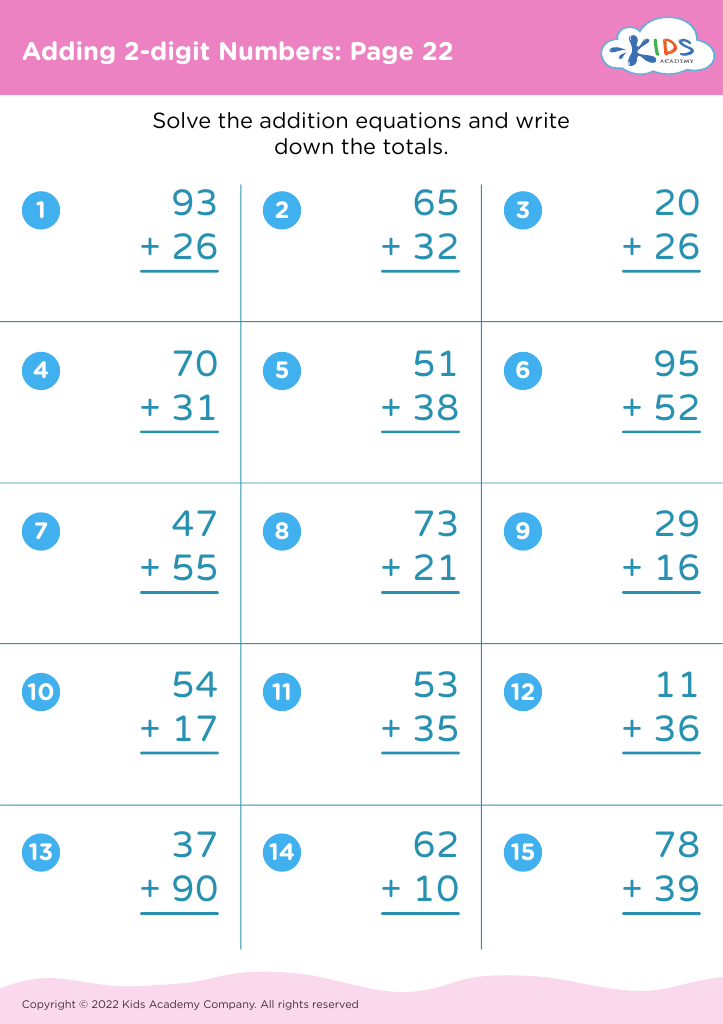
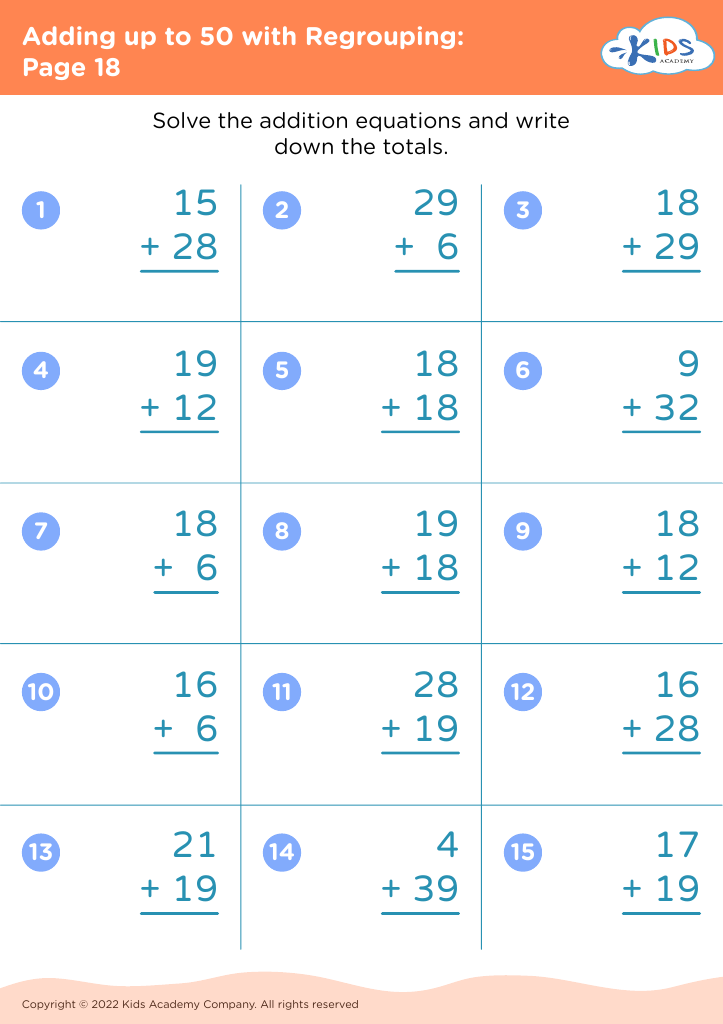
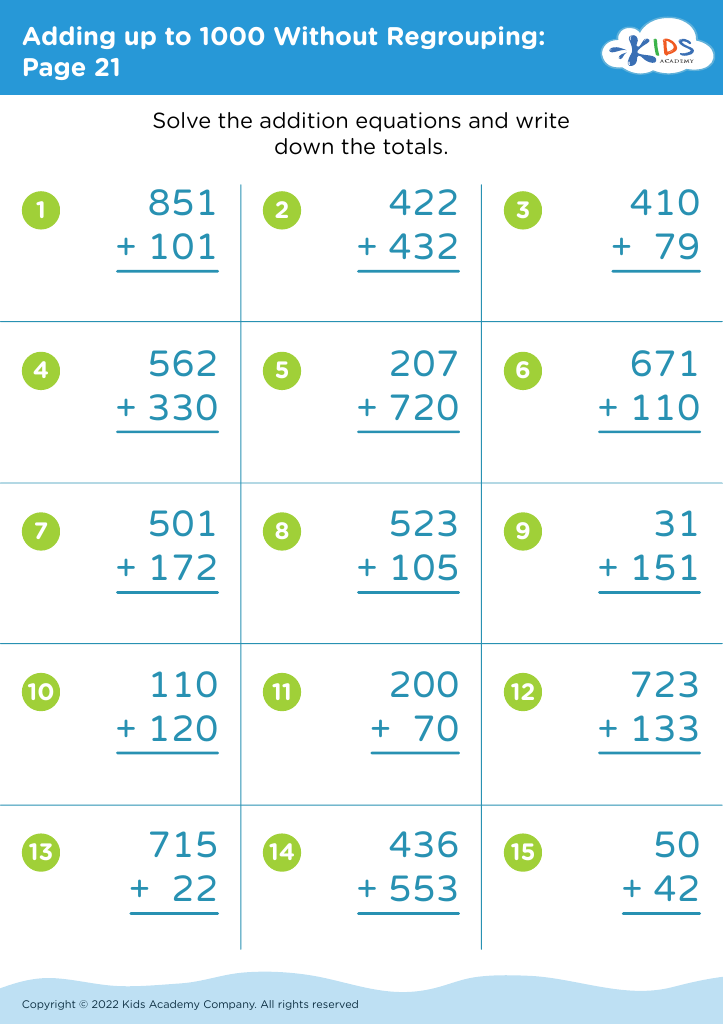








Developing counting skills in 8-year-olds is crucial for several reasons, making it a priority for both parents and teachers. At this age, children are transitioning from basic counting to more complex mathematical concepts, such as addition, subtraction, and even multiplication. Solid counting skills lay the foundation for later mathematical understanding and problem-solving abilities.
Moreover, counting is not just about numbers; it promotes critical thinking. As children learn to count with different patterns (such as skipping or counting backward), they enhance their logical reasoning, which spills over into other subjects and everyday situations. Early mastery in counting also boosts confidence in mathematics, reducing math anxiety, which many children experience as they progress in school.
Additionally, counting skills are applicable in real-life scenarios. Understanding quantities helps children handle money, measure ingredients in cooking, or engage in games that involve scoring, all fostering a practical understanding of math.
Finally, early development of counting skills can promote a joyful learning experience when linked with fun activities and games, encouraging a lifelong love for math. Thus, parents and teachers should prioritize the development of these essential skills for holistic educational growth.








