Learning number patterns Math Worksheets for 8-Year-Olds
3 filtered results
-
From - To
Discover engaging "Learning Number Patterns Math Worksheets for 8-Year-Olds" designed by Kids Academy to help young learners build essential math skills! Our worksheets offer a variety of fun and challenging exercises that encourage students to identify, predict, and extend numerical patterns. Perfect for guided practice at home or in the classroom, these printable resources foster critical thinking and problem-solving abilities. With colorful illustrations and a gradual increase in difficulty, kids remain motivated and confident. Watch your child excel in math as they unlock new learning opportunities by mastering number patterns with Kids Academy worksheets!
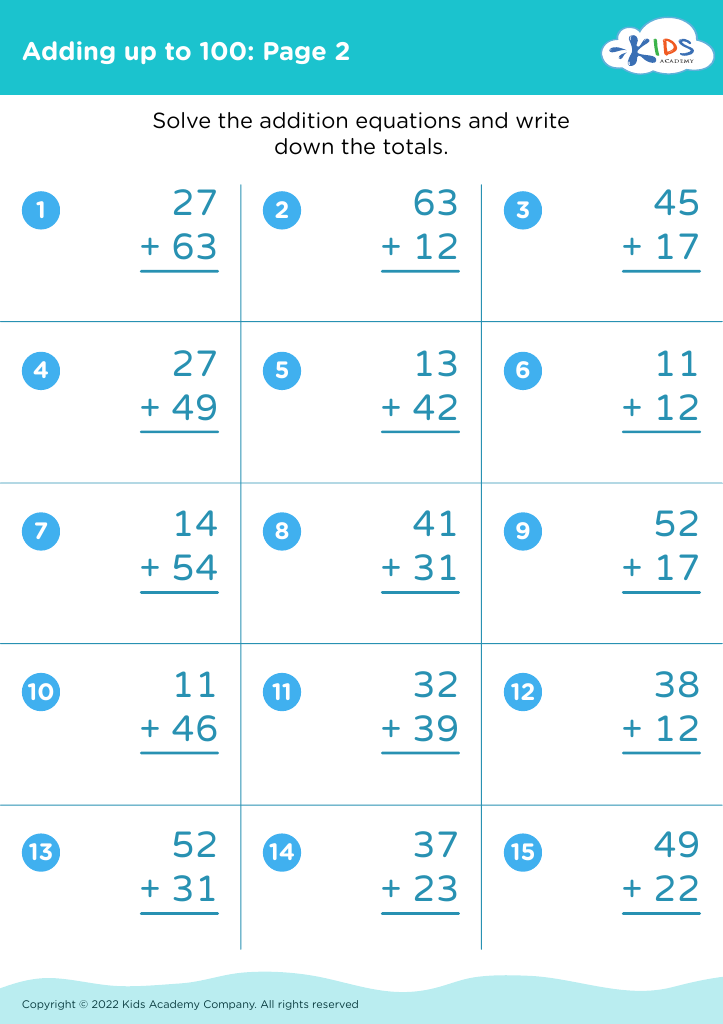
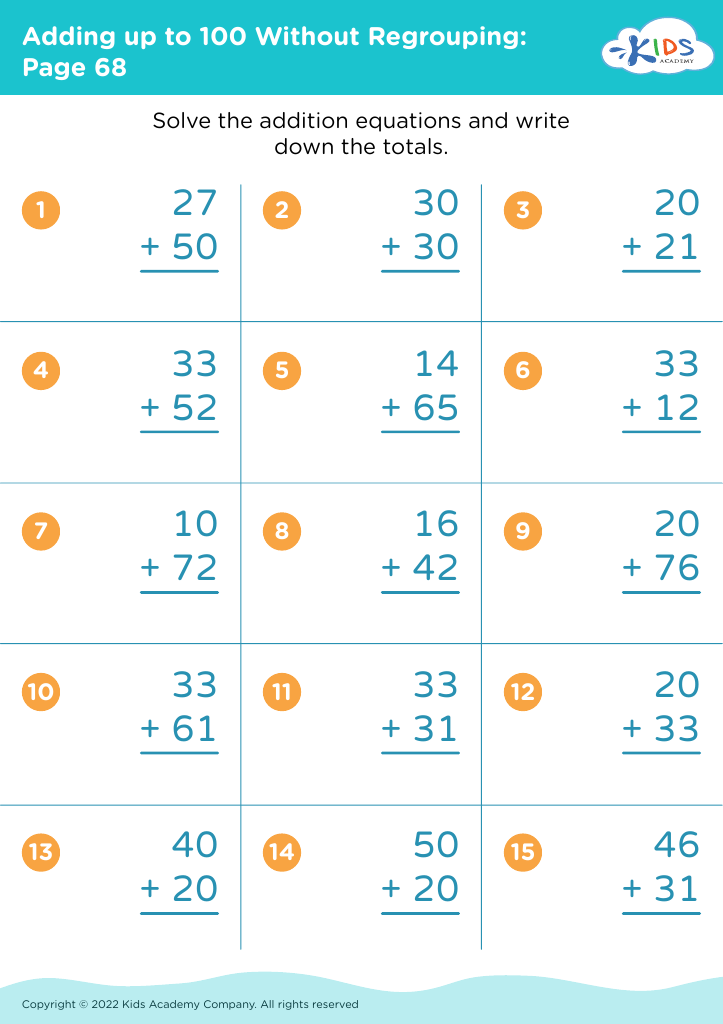
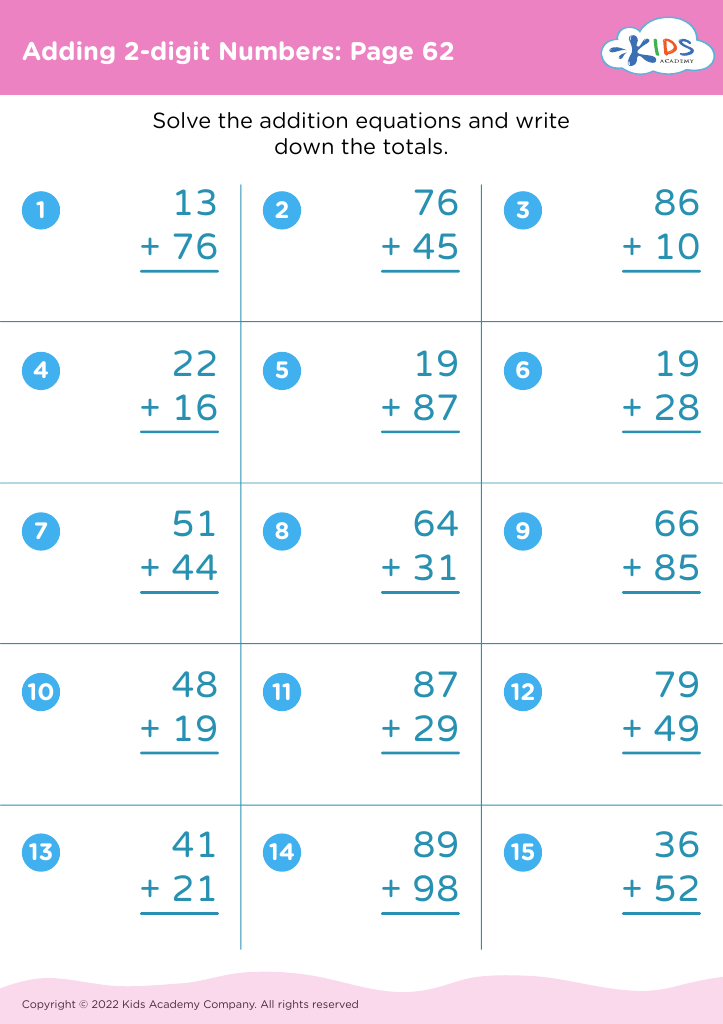








Understanding number patterns in math is crucial for 8-year-olds as it lays the groundwork for more advanced mathematical concepts and problem-solving skills. Number patterns help children recognize relationships and make predictions, which fosters critical thinking and logical reasoning. For parents and teachers, emphasizing this aspect of math education equips children with essential tools needed for their future educational journey and everyday life.
Patterns in numbers help enhance a child's ability to understand and work with algebraic concepts, which will be encountered in later grades. Recognizing patterns can also improve computational skills, as children learn methods to quickly add, subtract, multiply, or divide by identifying repeated sequences or structures. Moreover, pattern recognition sharpens mental math abilities, allowing children to perform calculations more efficiently.
For cognitive development, learning number patterns strengthens a child’s memory and attention to detail. It also boosts their ability to recognize and categorize information, leading to better performance across various subjects. Teachers incorporating patterns into their lessons can make math more engaging, helping children develop a love for the subject rather than seeing it as a series of isolated problems.
Therefore, parents and teachers should prioritize teaching number patterns to 8-year-olds to provide them with essential cognitive skills, encourage logical thinking, and establish a solid foundation for future mathematical success.








