Enhance your child's financial literacy with our engaging Money Recognition Math Worksheets designed specifically for 8-year-olds! These interactive worksheets provide fun and effective ways to teach kids about identifying coins and bills, counting money, and making change. With a variety of stimulating activities tailored to different learning styles, children will develop essential math skills while gaining confidence in handling money. Our carefully crafted exercises not only make learning enjoyable but also help your child grasp real-life applications of math. Perfect for classroom or home use, our money recognition worksheets empower young learners to build lasting financial skills for their future!

Check out this FREE Trial Lesson on Math for age 8!

Make a Group to Match Numerals

Favorites
With answer key
Interactive
  • 8
  • Money recognition
  • Math
What's the Price? Worksheet

What's the Price? Worksheet

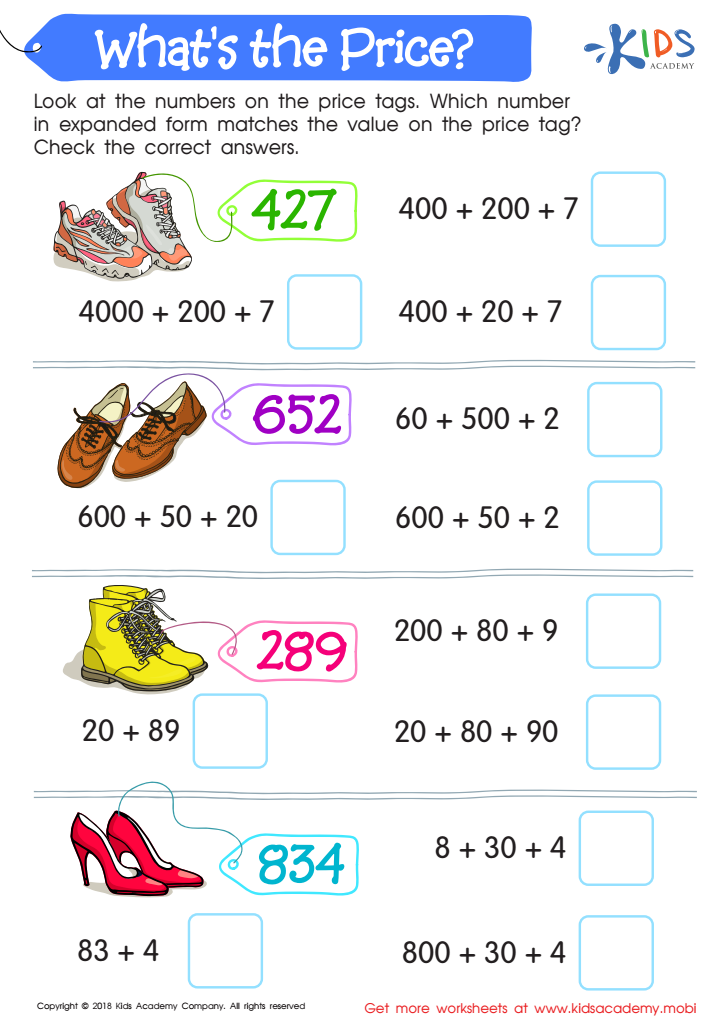
With this price tag worksheet, you and your kids can have some educational fun! Check the numbers on the tags, ask your child to work out their expanded form, and circle the correct answers. It's a great way to teach math and keep them entertained!
What's the Price? Worksheet
Worksheet
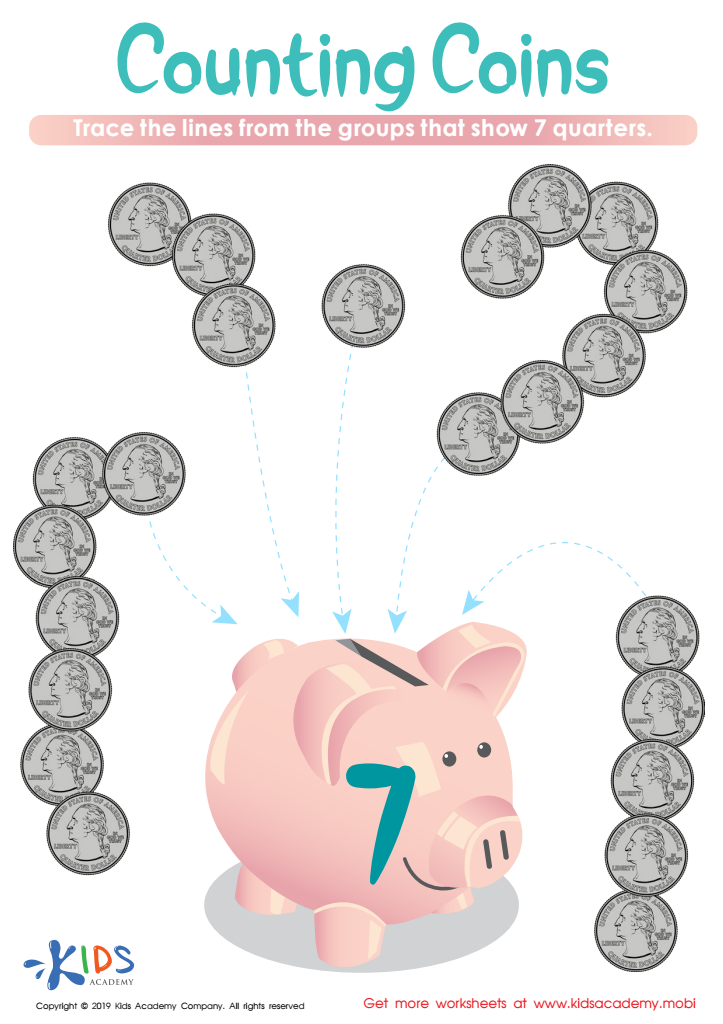
Counting Coins Worksheet

Counting Coins Worksheet

Help your students overcome their fear or aversion of counting and learning numbers with this fun worksheet! It features colorful pictures with four groups of coins. Ask the students to count each group, then trace the lines to the piggy bank. Show them it's easy to count and learn numbers!
Counting Coins Worksheet
Worksheet
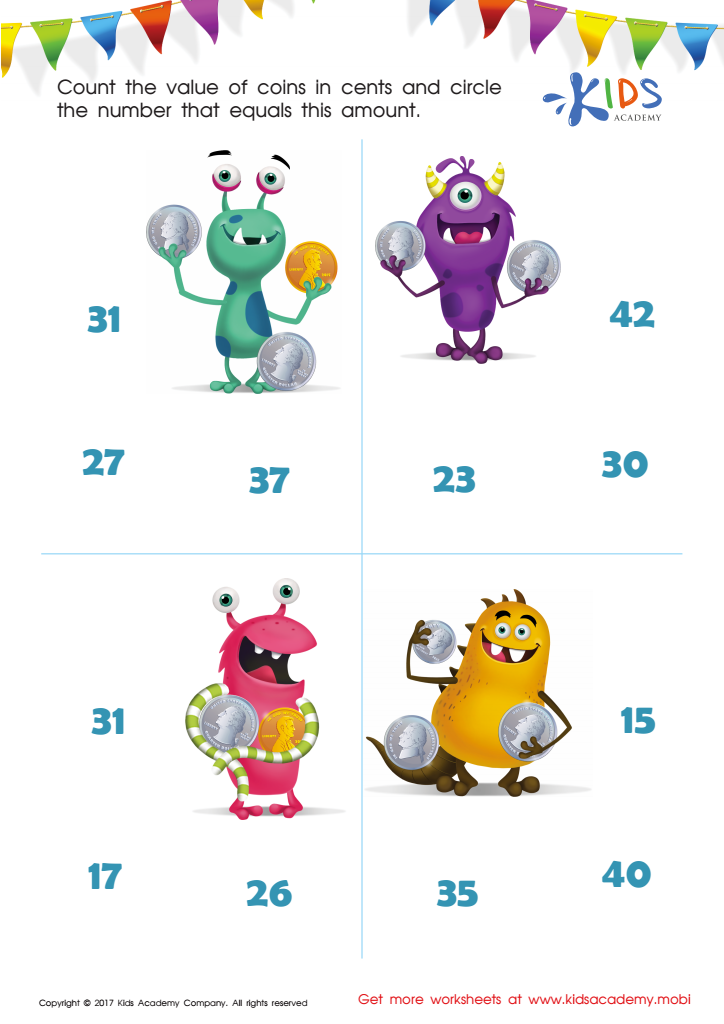
Printable Money Games and PDF Worksheets: How Many Coins

How Many Coins Money Worksheet

Have fun while counting coins: look at the monsters and count the coins in their hands. Challenge your little learners to count and write down the number of coins each one has. Enjoy the time together!
How Many Coins Money Worksheet
Worksheet
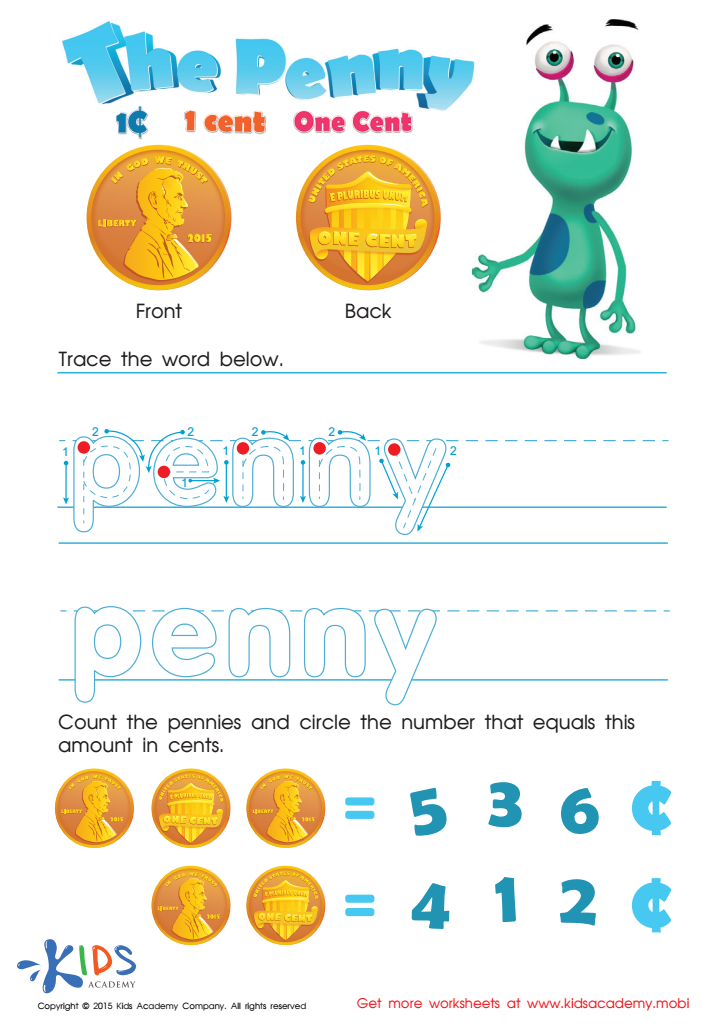
Printable Money Games and PDF Worksheets: One Cent or the Penny

One Cent or the Penny Money Worksheet
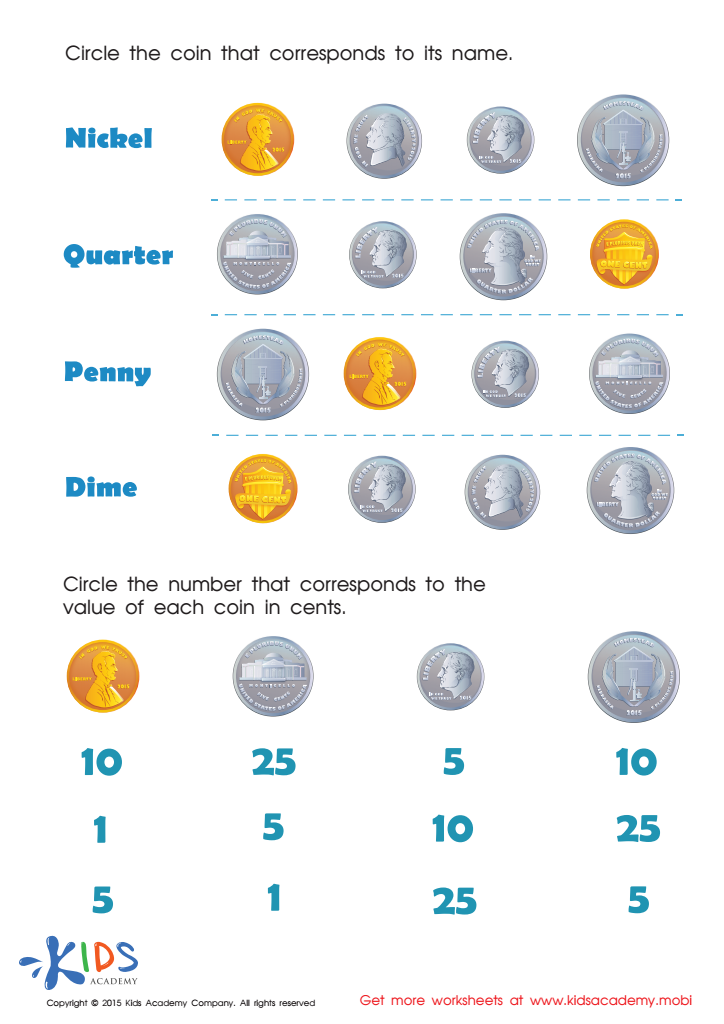
Counting money made easy with Kids Academy's new collection of worksheets! Start with the one cent coin, or "Penny": trace it and count the pennies to work out the total. Visit our site for more free, printable money worksheets.
One Cent or the Penny Money Worksheet
Worksheet
Printable Money Games and PDF Worksheets: Coin Names and Values

Coin Names and Values Money Worksheet
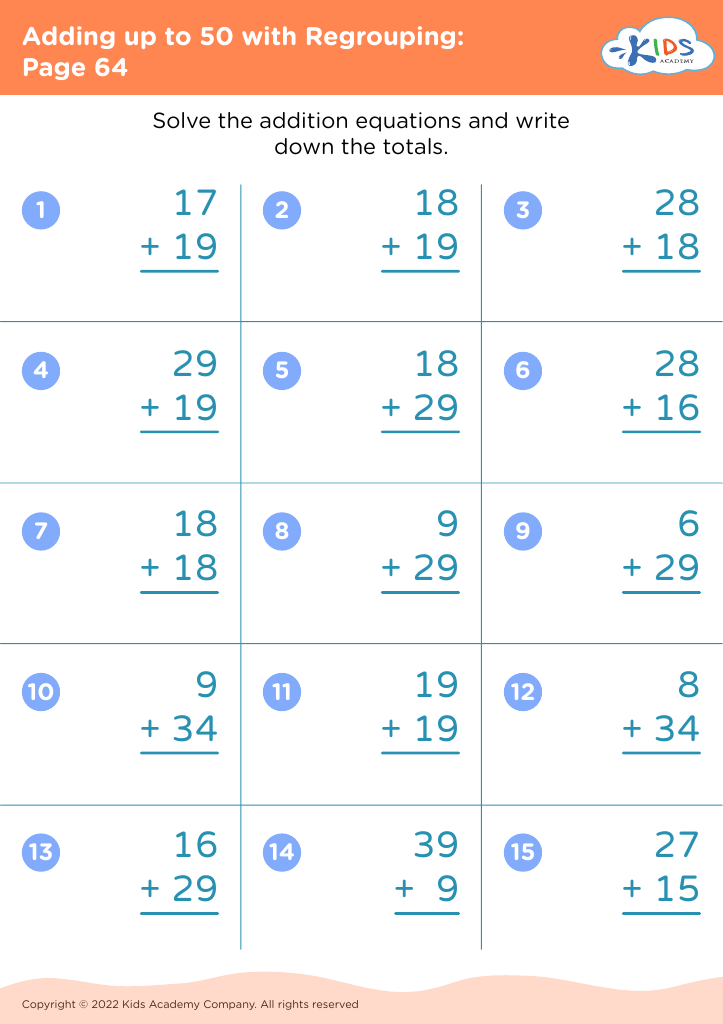
Learning about money can be easy, interesting and fun! Start by memorizing names and values of coins and then try matching pictures of coins to the right names and values. Find a great selection of counting money worksheets at our web site and keep learning.
Coin Names and Values Money Worksheet
Worksheet
Adding up to 50 with Regrouping: Page 64
Worksheet
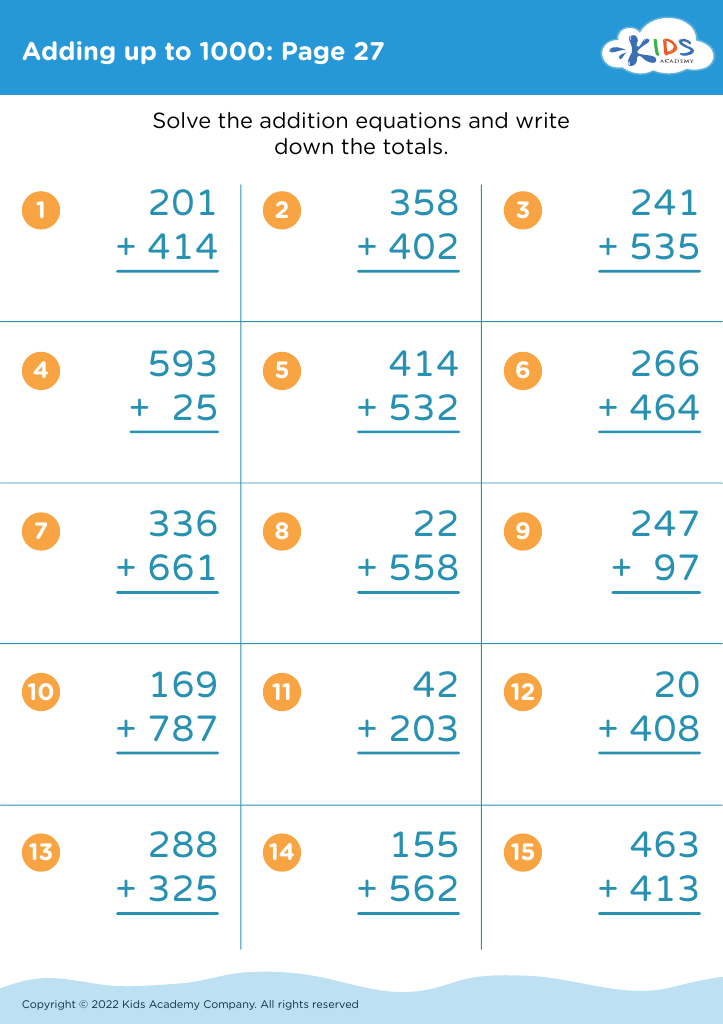
Adding up to 1000: Page 27

Adding up to 1000: Page 27

Adding up to 1000: Page 27
Worksheet
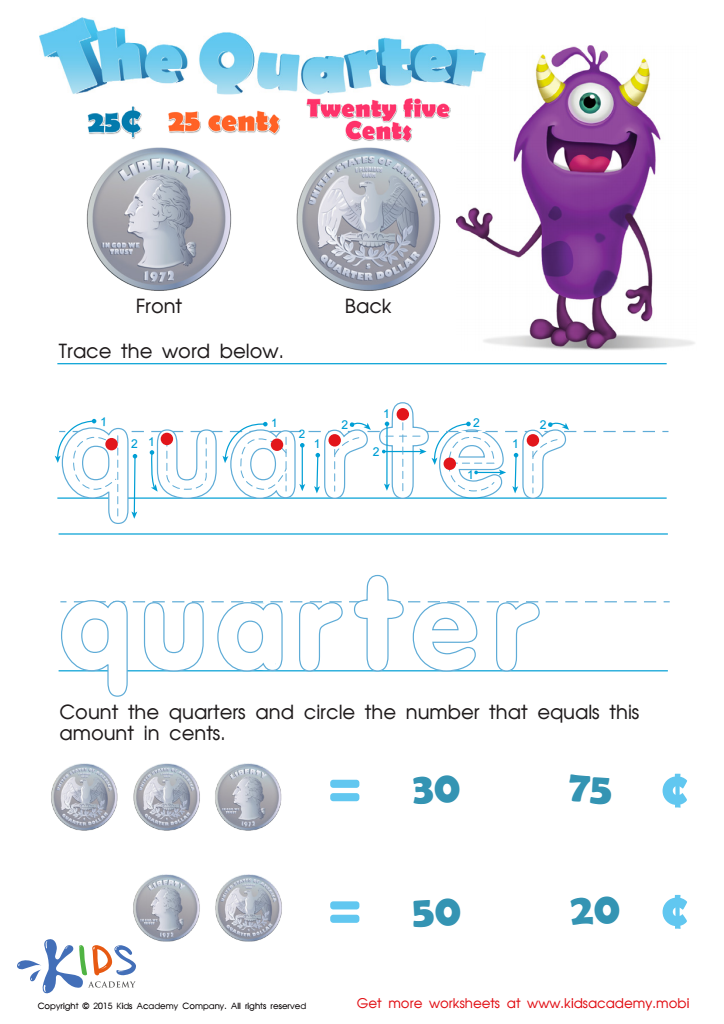
Printable Money Games and PDF Worksheets: Twenty Five Cents or the Quarter

Twenty Five Cents or the Quarter Money Worksheet

Check out our new printable money games - learn to count money easily! With quarters, trace the word, count them and calculate the amount in cents. More worksheets at our website. Give it a try!
Twenty Five Cents or the Quarter Money Worksheet

Worksheet


Money recognition is a crucial aspect of a child's mathematical development, especially for 8-year-olds, and it goes beyond simple arithmetic. Understanding money helps children grasp fundamental math concepts such as addition, subtraction, and multiplication in a real-world context. It equips them with essential life skills for managing finances, whether they are saving for a toy or calculating change during transactions.

Parents and teachers should care about fostering this skill because it promotes financial literacy, helping children make informed decisions as they grow. Introducing money recognition at an early age builds a foundation for budgeting, saving, and responsible spending habits, which are essential for future independence. Additionally, engaging in activities that involve money—like shopping simulations or counting allowances—can enhance a child's confidence in math, making the subject more relatable and enjoyable.

Moreover, recognizing money serves as an opportunity for children to enhance their cognitive abilities through problem-solving and critical thinking. Encouraging discussions about money in daily life—such as valuing items and comparing prices—can deepen their understanding of value and exchange. This educational focus not only sets the groundwork for academic success but also nurtures responsible and financially-savvy adults.