Number comparison Math Worksheets for 8-Year-Olds
7 filtered results
-
From - To
Engage your 8-year-old with our stimulating Number Comparison Math Worksheets! Specially designed to boost their analytical skills, these worksheets help young learners compare numbers, developing essential math abilities in a fun and interactive way. Suitable for various learning paces, our exercises ensure a solid understanding of numerical relationships, enabling your child to tackle math problems confidently. Explore activities like greater than, less than, and equal to comparisons, presented with vibrant illustrations that keep your child captivated. Perfect for classroom use or home practice, our worksheets make learning math both enjoyable and effective. Start your child’s math journey today!
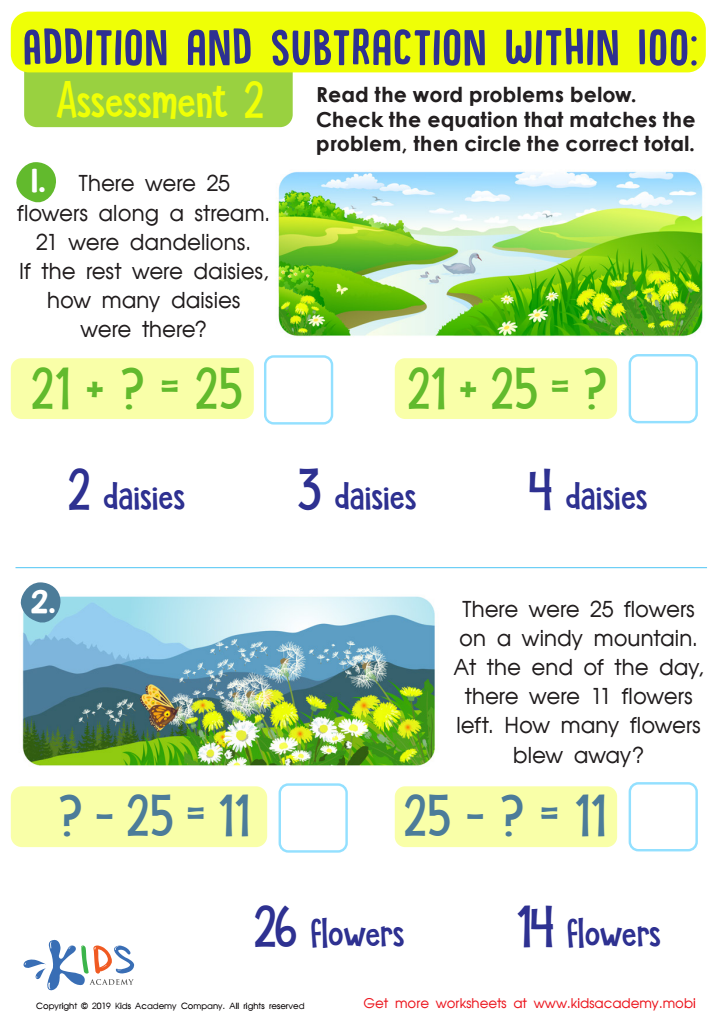
Assessment 2 Math Worksheet
 Assign to My Students
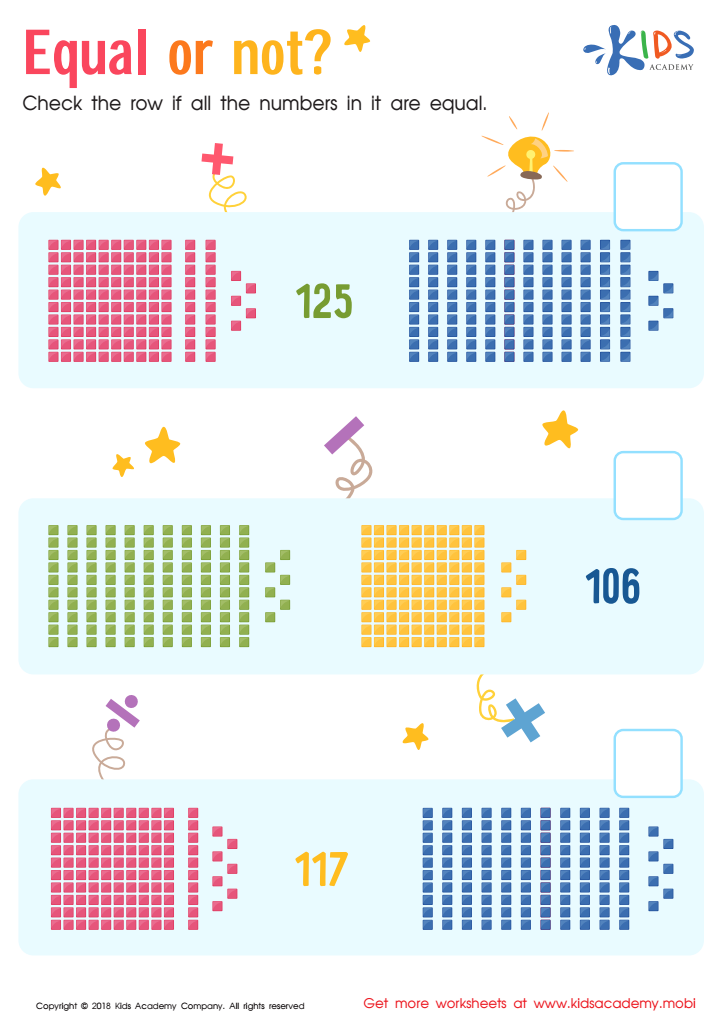
Equal or not Worksheet
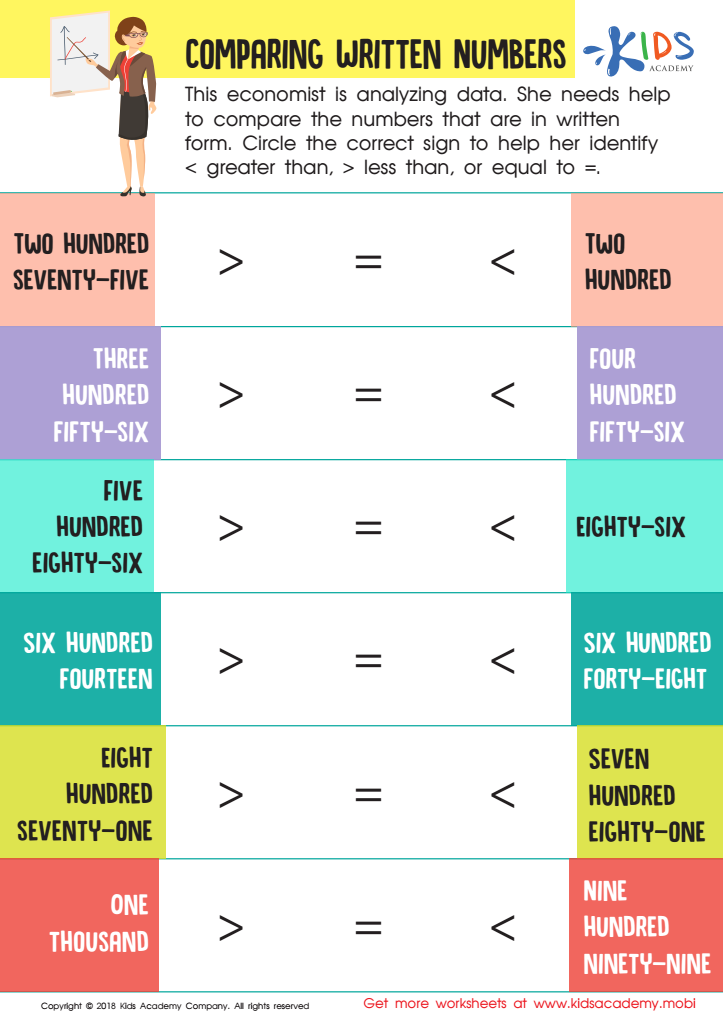
Comparing Written Numbers Worksheet
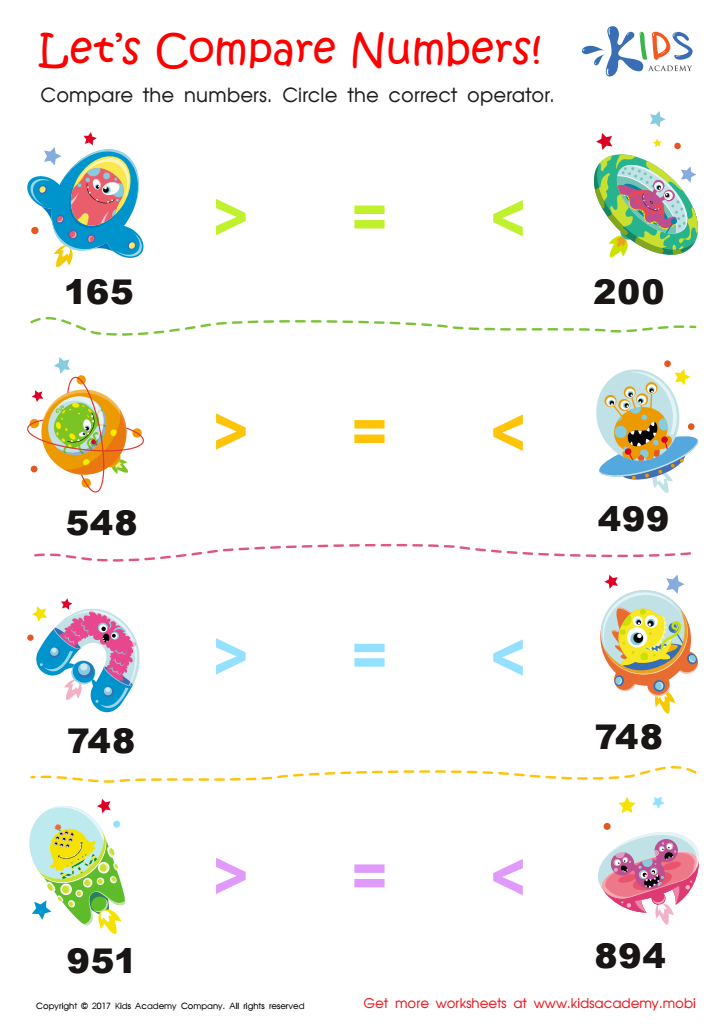
Comparing Numbers Worksheet for 2nd Grade
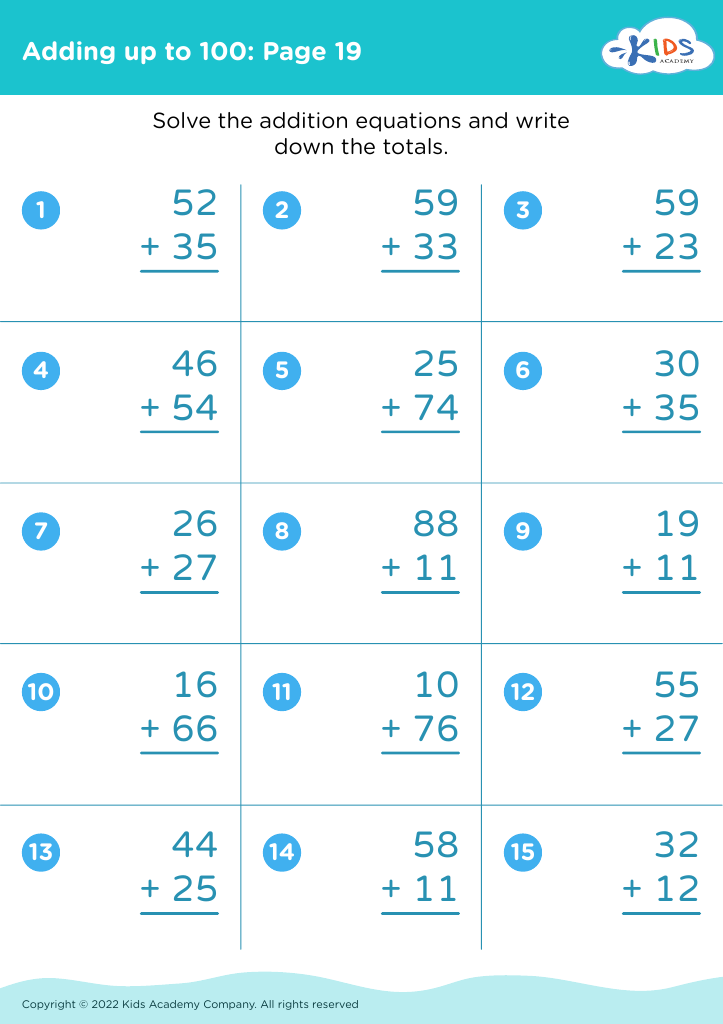
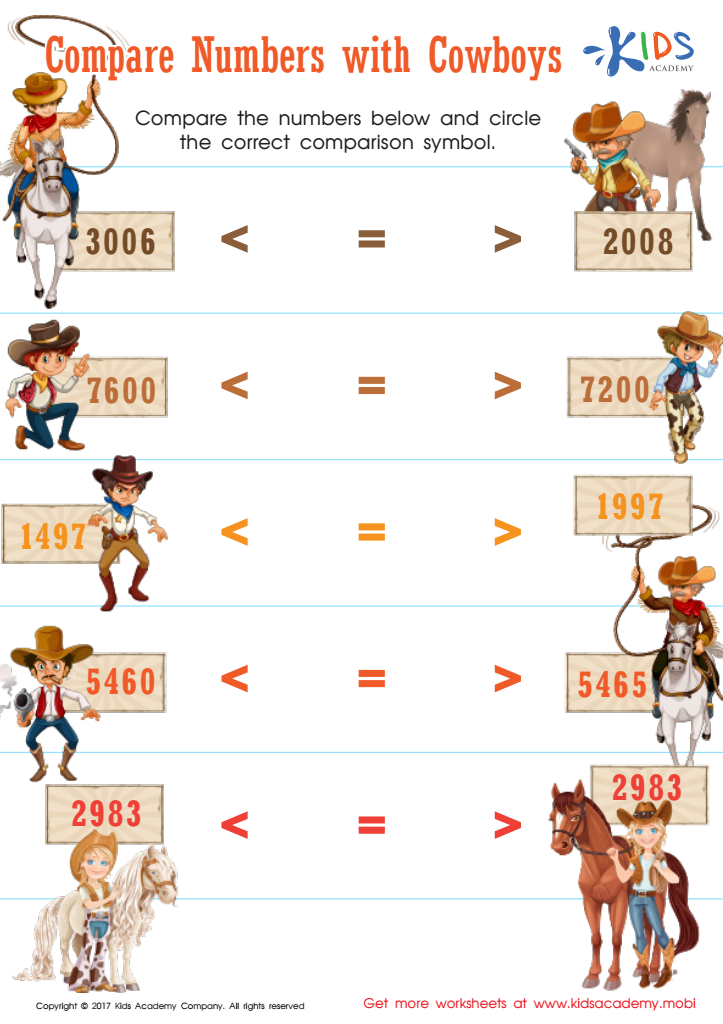
Compare Numbers Worksheet for 3rd Grade
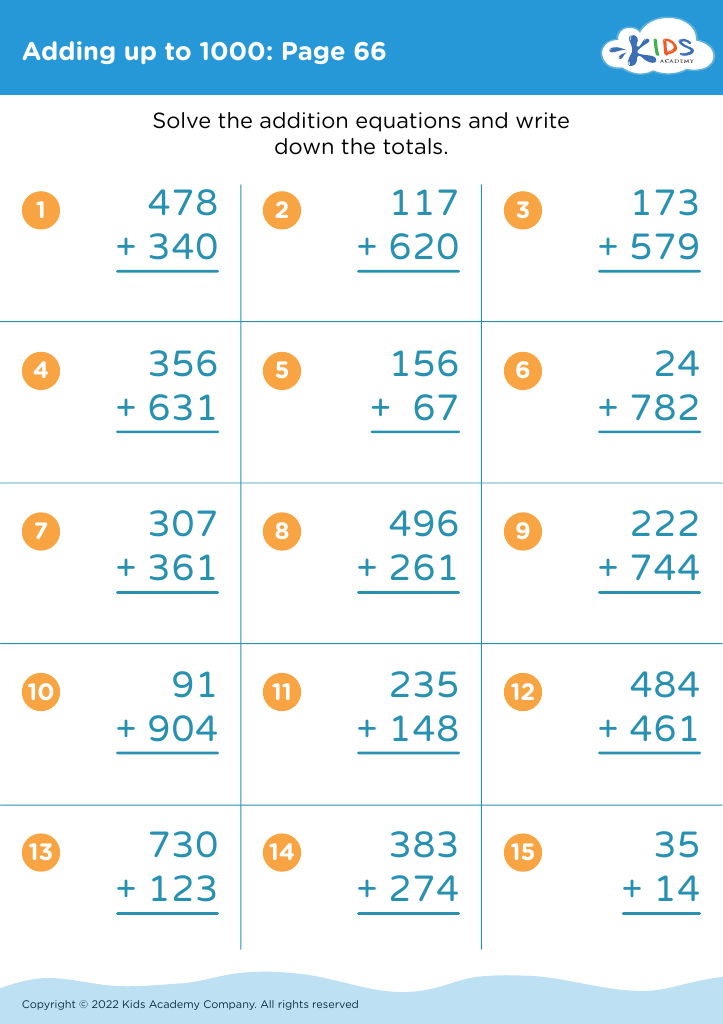







Number comparison is a fundamental math skill that plays a crucial role in a child's overall cognitive development, especially for 8-year-olds entering more advanced levels of learning. Parents and teachers should care about this for several reasons.
Firstly, number comparison helps children grasp the concept of numerical value, which is a foundation for more complex mathematical operations like addition, subtraction, multiplication, and division. Understanding which numbers are greater or lesser aids in developing a sense of order and number magnitude.
Secondly, skills in number comparison enhance a child's problem-solving abilities. By knowing how to compare numbers, children can make more informed decisions and effectively analyze quantitative information. This also translates to real-life scenarios where they need to budget their allowance, score in games, or even make sense of the days' calendar.
Moreover, number comparison activities, such as ordering numbers or identifying missing numbers in a sequence, engage critical thinking and pattern recognition. These exercises foster an inquisitive mindset, encouraging children to ask questions and explore further in mathematics.
Finally, mastery of basic number comparison is often linked with future academic success. Early competence in math has been shown to correlate with higher achievement not only in subsequent math courses but across various domains of education. Therefore, prioritizing this skill can provide children with a strong educational foundation, paving the way for their academic success and everyday life skills.








