
Practice addition Math Worksheets for 8-Year-Olds
5 filtered results
Difficulty Level
Grade
Age
-
From - To
Subject
Activity
Standards
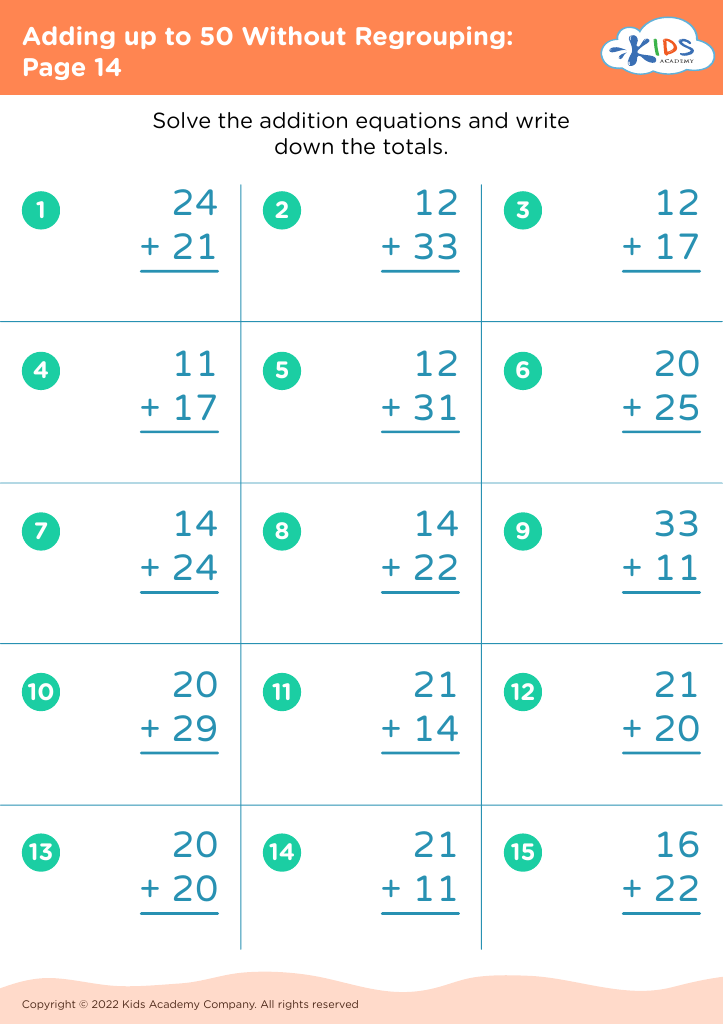
Welcome to our collection of practice addition math worksheets designed specifically for 8-year-olds! Our engaging worksheets provide a variety of fun exercises that help reinforce foundational addition skills. With colorful illustrations and interactive problems, children will enjoy enhancing their math abilities while developing confidence in solving addition equations. These worksheets cater to various learning styles, ensuring each child can progress at their own pace. Perfect for classroom use or at-home practice, our material aligns with educational standards, making math enjoyable and effective. Empower your child’s learning journey with our carefully crafted resources today!
Favorites
With answer key
Interactive
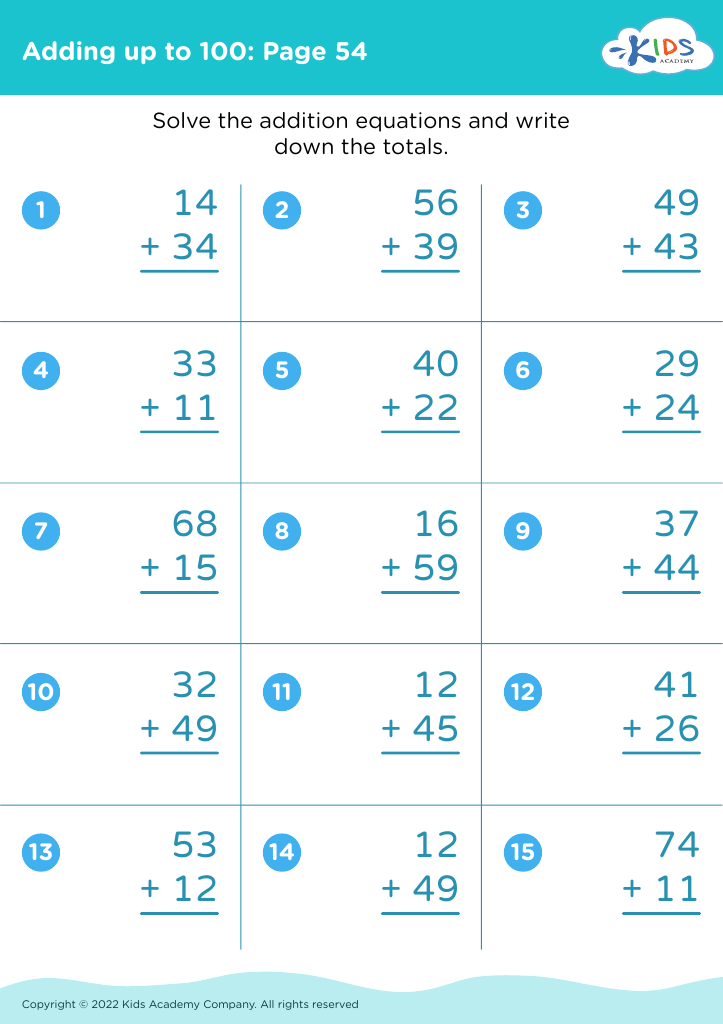
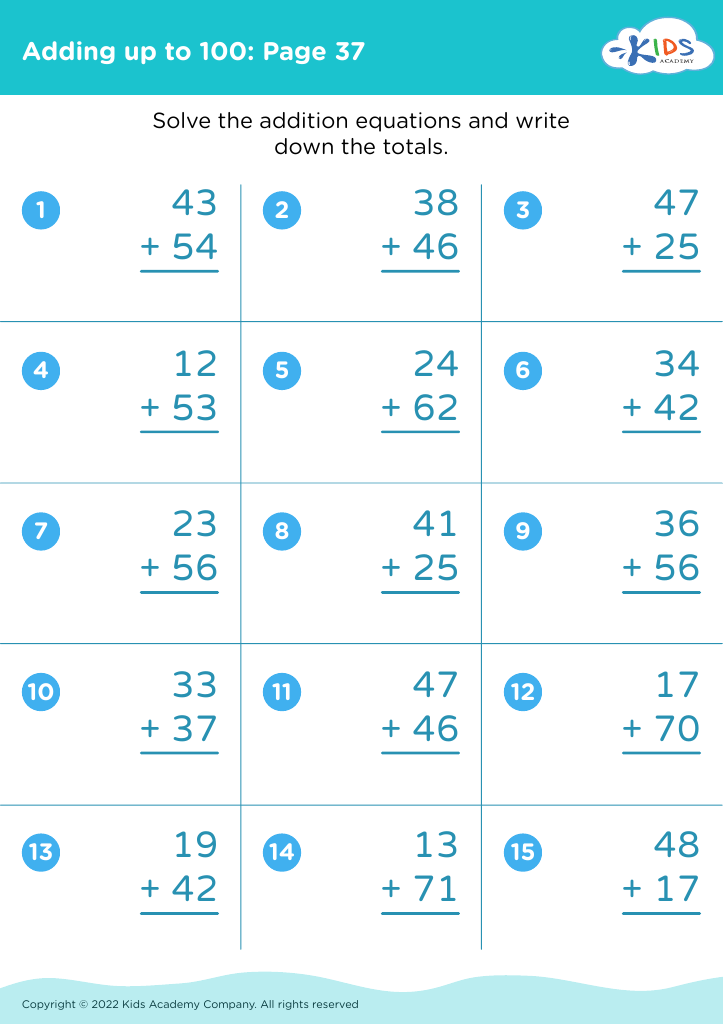
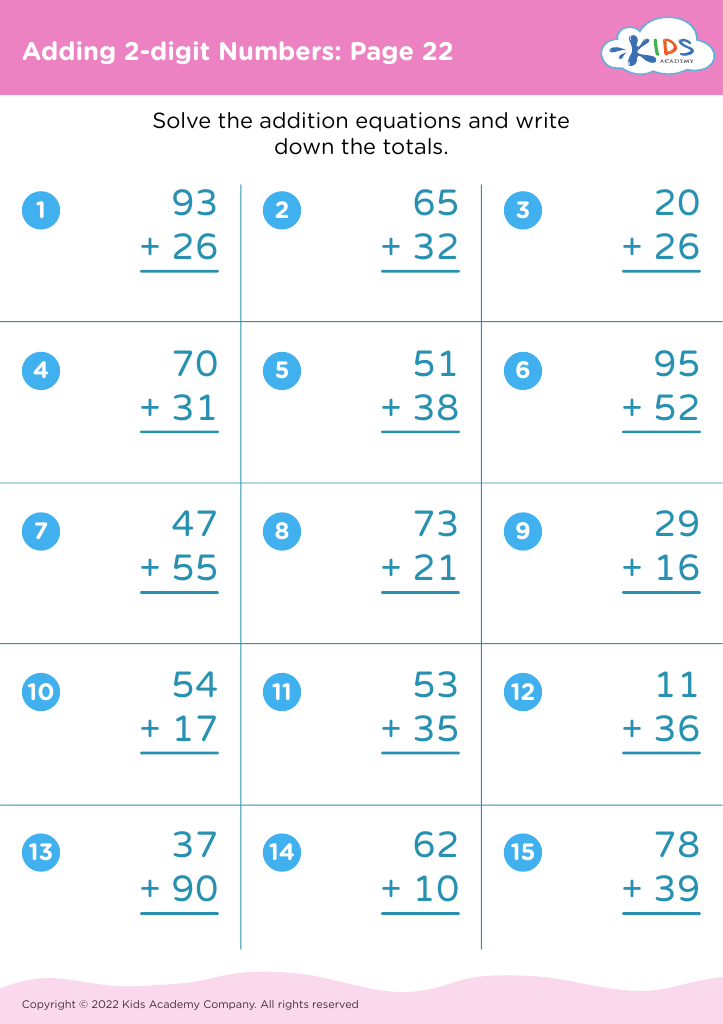
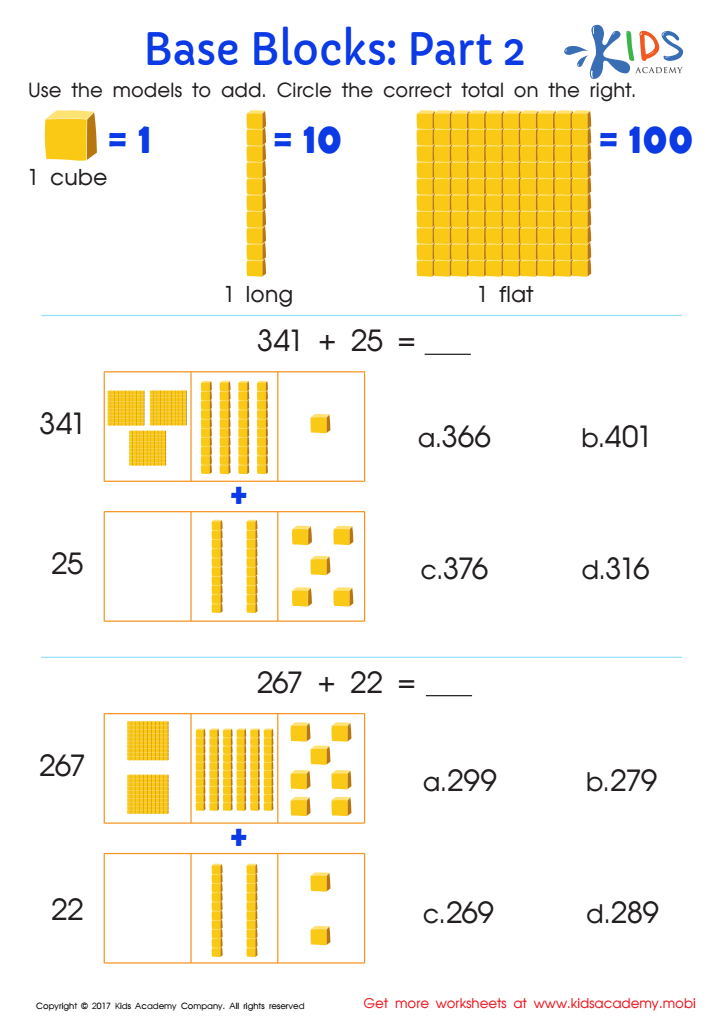
Base Ten Blocks Worksheet: Part 2
It provides kids with the practice needed to get a better grip on numeracy and multi-digit addition. Get the PDF today and give your child the resources they need.
This worksheet uses base blocks to help kids recognize and add multi-digit numbers. It gives kids the practice they need to become more numerate and handle multi-digit addition with confidence. Download the PDF now and give your child the tools they need to succeed.
 Assign to My Students
Base Ten Blocks Worksheet: Part 2
Worksheet
Join Kids Academy for Free
Who is primarily going to use this learning content?






Practicing addition math for 8-year-olds is crucial for several reasons. At this age, children are laying the foundation for their mathematical abilities, which are essential not just in school, but throughout life. Mastery in addition boosts confidence, ensuring that children feel capable when tackling more complex math concepts like subtraction, multiplication, and division.
Furthermore, early proficiency in addition helps improve problem-solving skills and enhances critical thinking capabilities. It encourages cognitive development as children learn to identify patterns, sequences, and relationships within numbers. Practicing addition also helps improve memory and concentration as kids engage with different problem-solving strategies.
Moreover, regular practice fosters a positive attitude toward math and learning in general. When children succeed at mastering addition, their enthusiasm for math grows, prompting them to take on new challenges with a more motivated mindset.
Additionally, parents and teachers should consider the diverse learning environments of children. Incorporating fun and engaging activities, such as games and practical applications in daily life, can make addition enjoyable. This hands-on learning encourages collaboration and communication skills with peers and family, creating a well-rounded educational experience where math becomes relevant and relatable.








