Understanding times tables Multiplication Worksheets for 8-Year-Olds
6 filtered results
-
From - To
Unlock your child’s math potential with our "Understanding Times Tables Multiplication Worksheets" tailored for 8-year-olds. These engaging worksheets are designed to help young learners grasp the concept of multiplication through visual aids and interactive activities. By utilizing fun and relatable scenarios, children can easily memorize times tables from 1 to 12, enhancing their confidence in math. Parents and educators will appreciate the structured yet enjoyable approach, ensuring that mastering multiplication becomes an exciting challenge rather than a chore. Encourage your child’s mathematical journey today with our carefully crafted resources that make learning multiplication both effective and enjoyable!
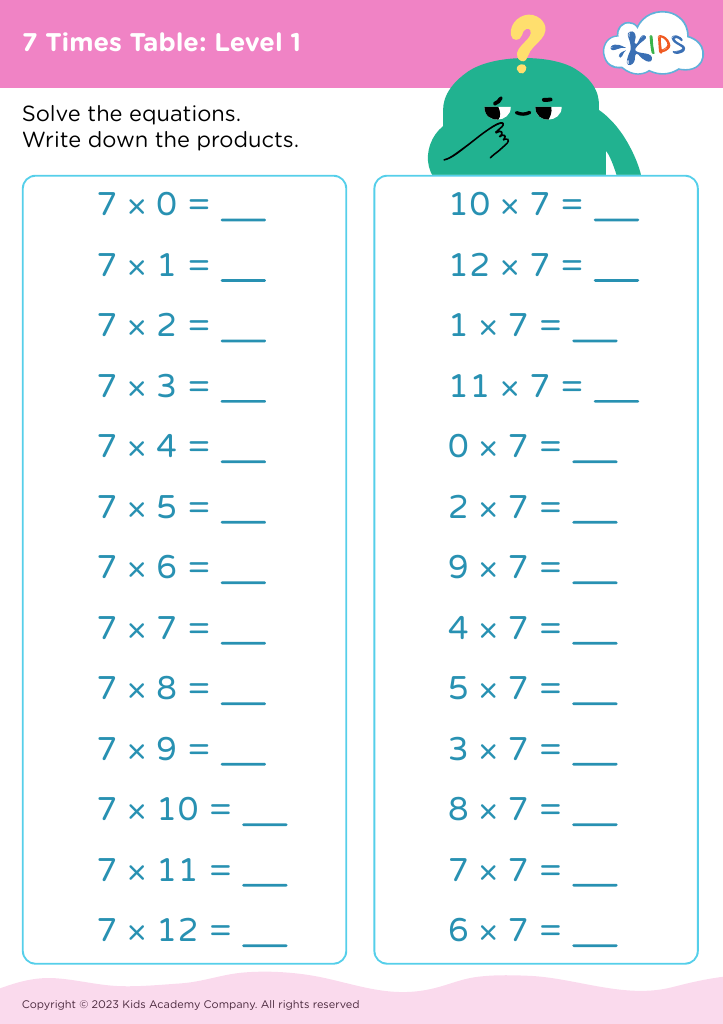
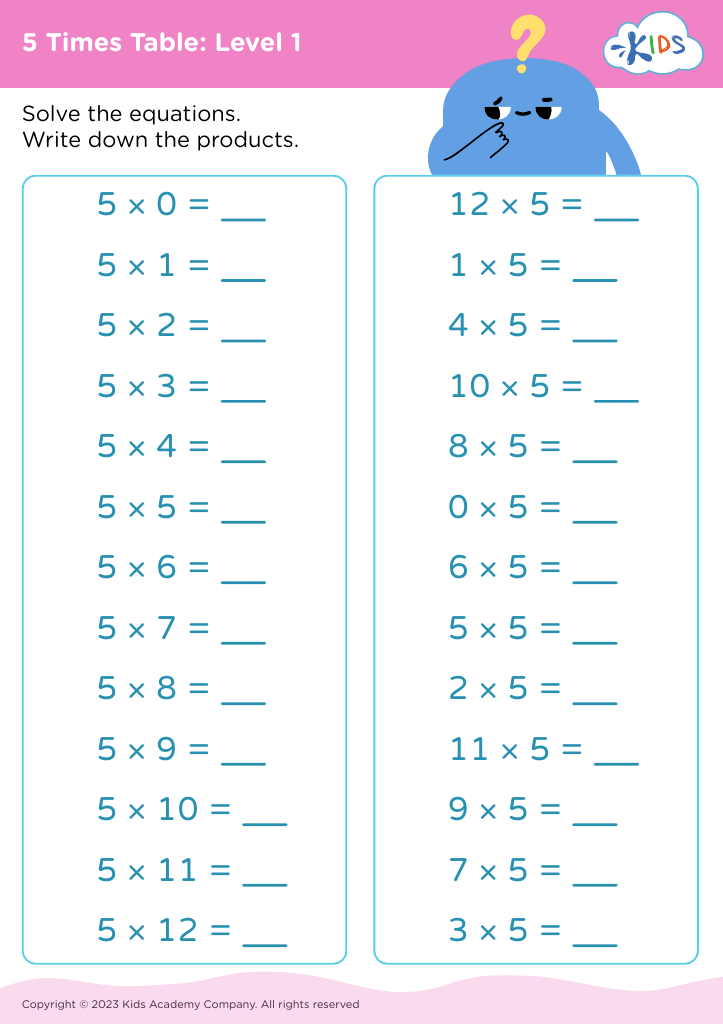
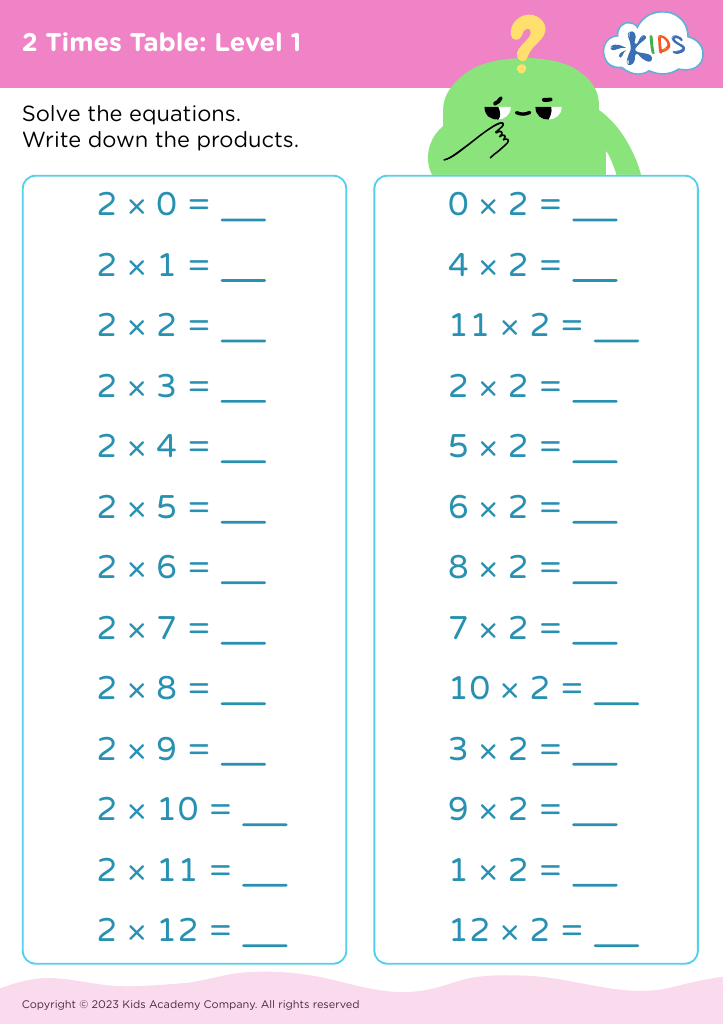
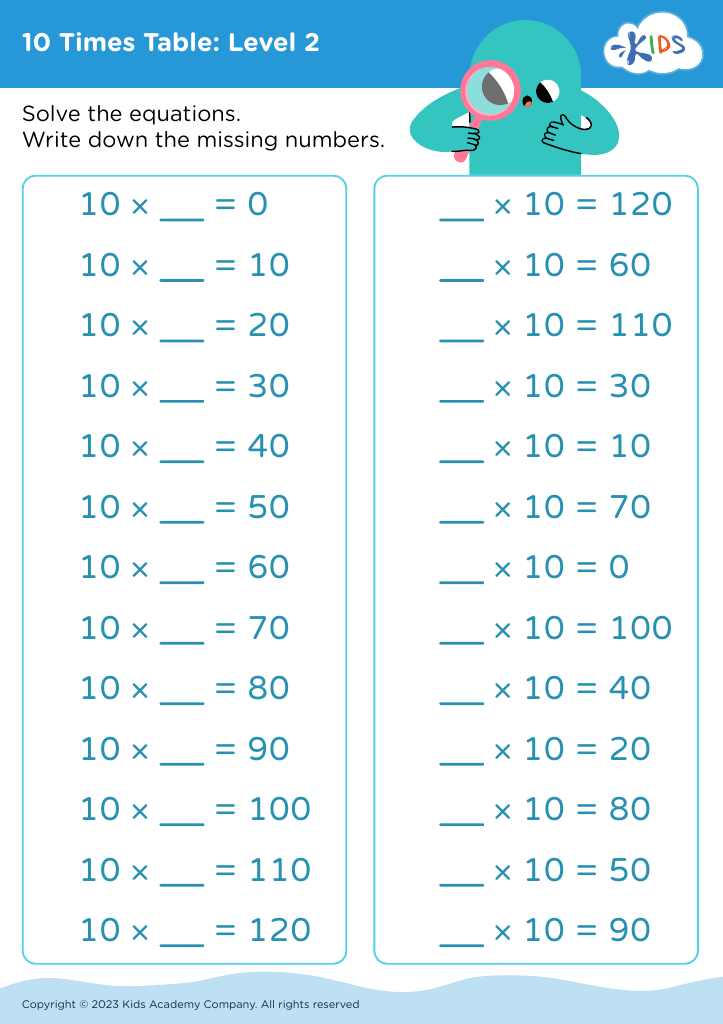
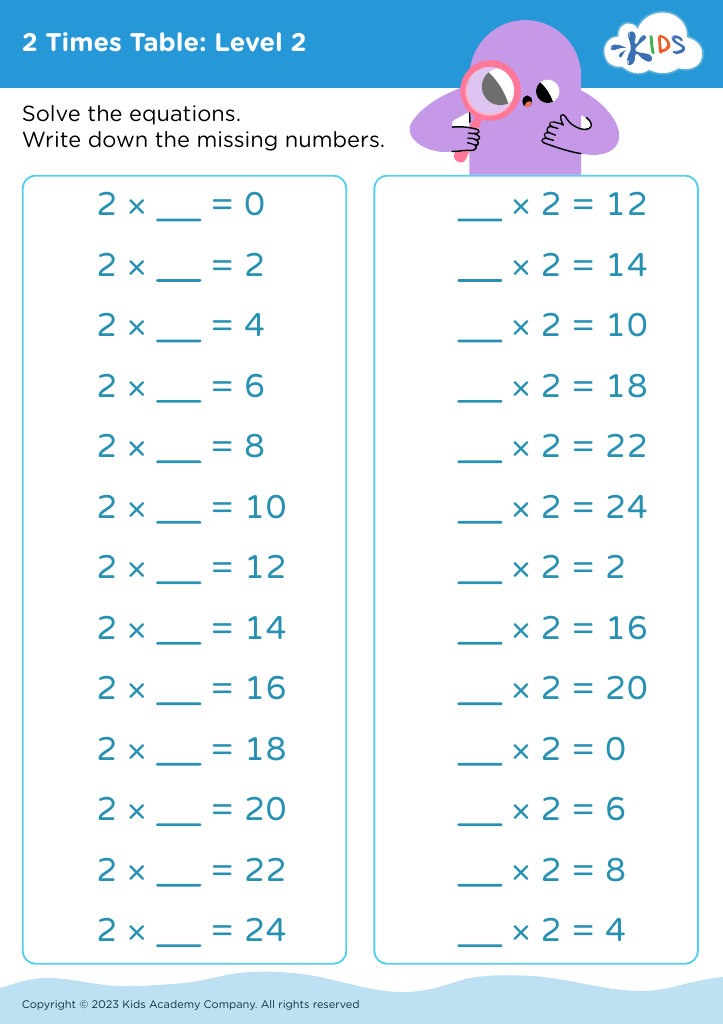
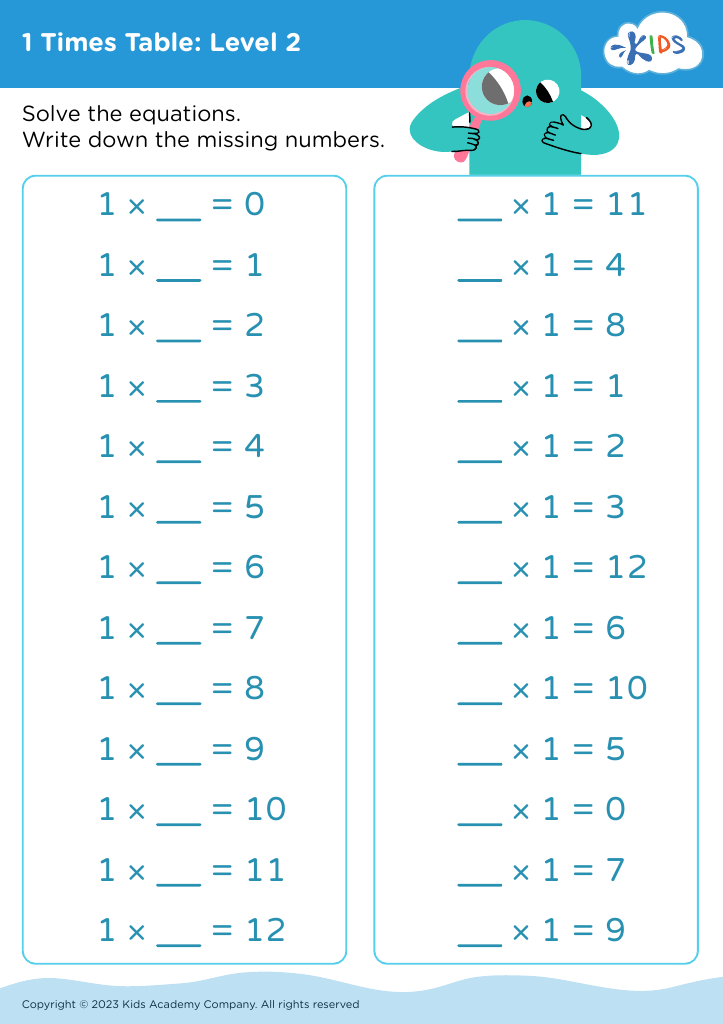








Understanding times tables and multiplication is critical for 8-year-olds, as it lays the foundation for future mathematical learning. Mastery of multiplication helps students develop essential problem-solving skills and reinforces their overall mathematical understanding. When children grasp multiplication, they gain the ability to see patterns and relationships between numbers, fostering a deeper comprehension of arithmetic concepts.
Learning times tables boosts confidence, enabling children to tackle more complex problems in school. It allows them to efficiently perform calculations in everyday situations, such as dividing a bill among friends or figuring out the total cost of multiple items. This skill also prepares them for more advanced topics in math, such as division, fractions, and algebra, which rely on a strong understanding of multiplication.
Additionally, reinforcing multiplication at this age promotes a positive attitude toward learning math, which can influence a child's academic trajectory. Parents and teachers play a vital role in enhancing students' multiplication skills through engaging activities, games, and practice, making the learning process enjoyable while reinforcing key concepts. Ultimately, caring about this essential skill ensures children are well-equipped for future educational challenges and real-life applications.








