Understanding life cycles Reading Non-Fiction Worksheets for 8-Year-Olds
3 filtered results
-
From - To
Explore the fascinating world of life cycles with our engaging Reading Non-Fiction Worksheets tailored for 8-year-olds! Designed to enhance comprehension skills, these worksheets provide an interactive approach to understanding various life cycles, from butterflies to frogs. Each activity encourages critical thinking and promotes curiosity about nature, making learning enjoyable and educational. Children will not only improve their reading skills but also gain valuable knowledge about the stages of life for different organisms. Perfect for home or classroom use, these worksheets help young learners connect with the natural world and develop a lifelong love for reading and science.
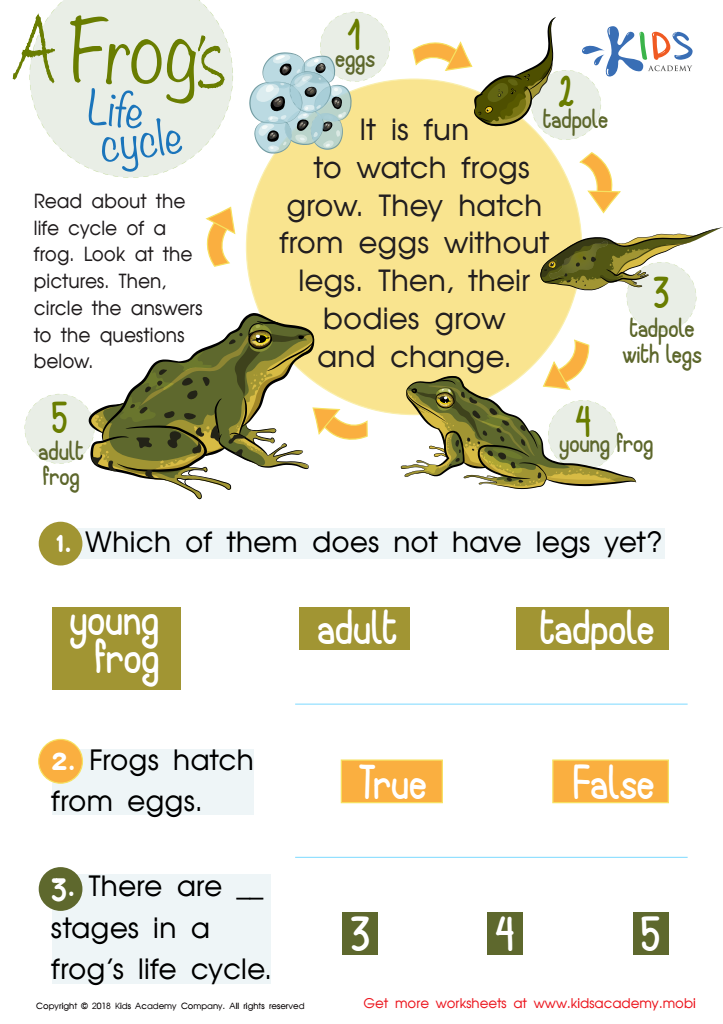
A Frog’s Life Cycle Worksheet
 Assign to My Students
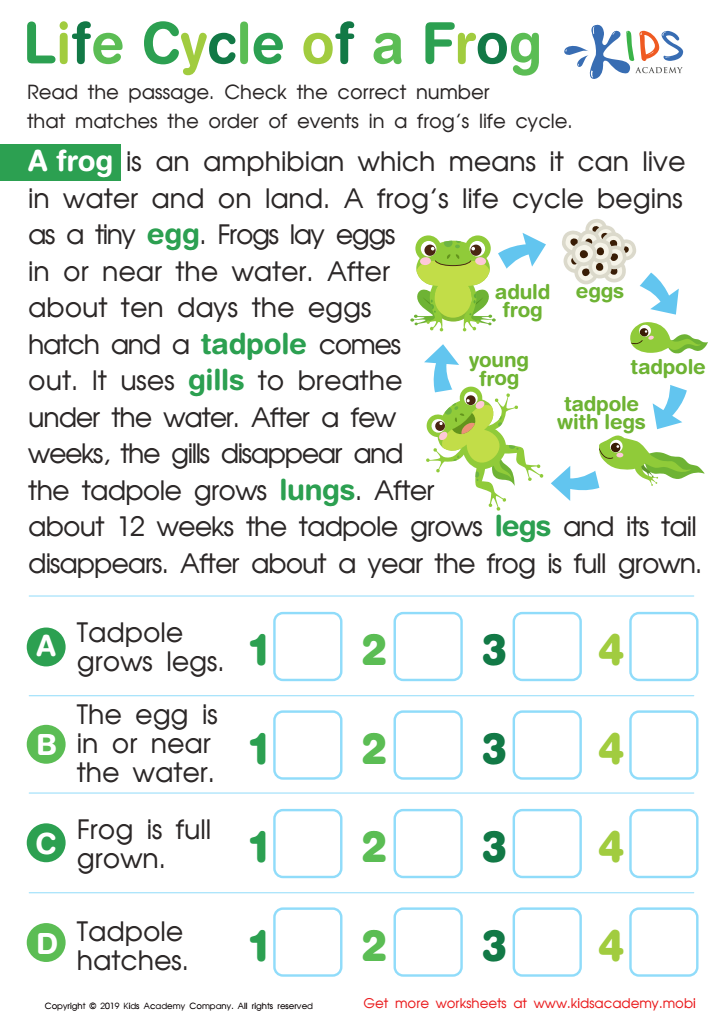
Life Cycle of a Frog Worksheet
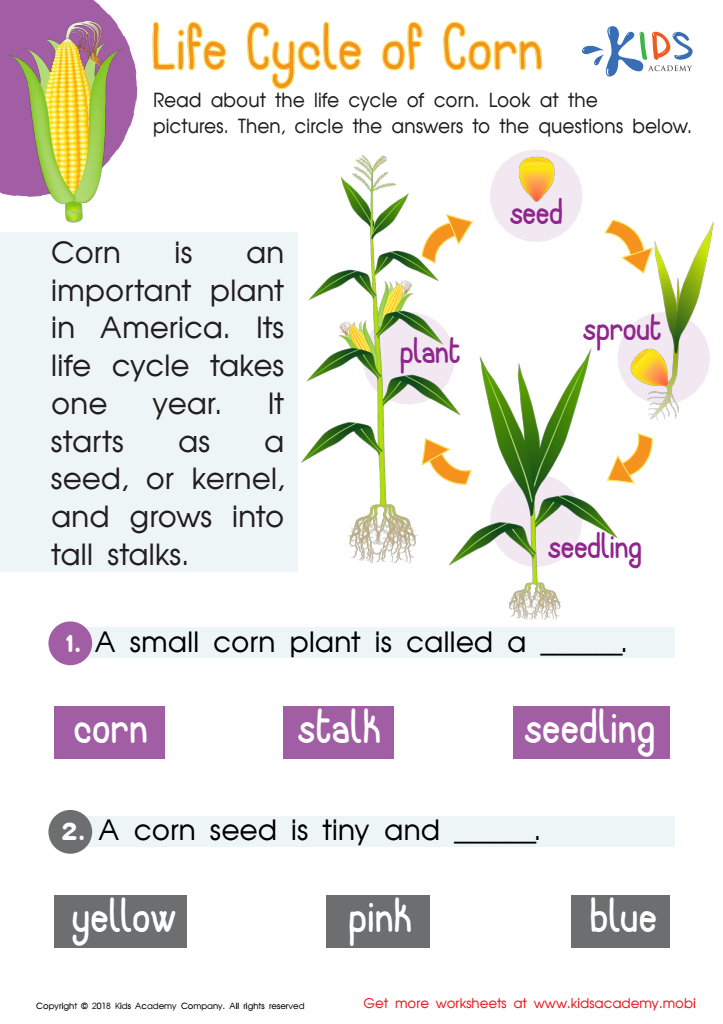
Life Cycle of Corn Worksheet








Understanding life cycles through reading non-fiction is crucial for 8-year-olds as it lays the foundation for scientific literacy and fosters a lifelong love of learning. At this age, children are naturally curious, and engaging with non-fiction books about life cycles—whether of plants, animals, or ecosystems—enhances their observational skills and understanding of the world around them.
When parents and teachers emphasize this topic, they encourage critical thinking. Exploring life cycles allows children to make connections to broader concepts such as growth, change, and interdependence within nature. Non-fiction reading exposes them to factual information, enhancing their ability to distinguish between opinion and evidence-based claims—a vital skill in our information-driven society.
Furthermore, discussing life cycles can spark conversations about responsibility and care for living things, promoting empathy among young learners. It also aligns with curriculum standards in science and literacy, supporting educational development. Moreover, choosing to read high-quality non-fiction helps develop vocabulary, comprehension, and communication skills, ensuring children are well-rounded students.
In summary, nurturing an understanding of life cycles through non-fiction not only supports academic growth but also fosters a sense of connection to the environment, encouraging responsible stewardship in the future.








