Shape Recognition Sight Words Worksheets for 8-Year-Olds
5 filtered results
Difficulty Level
Grade
Age
-
From - To
Subject
Activity
Standards
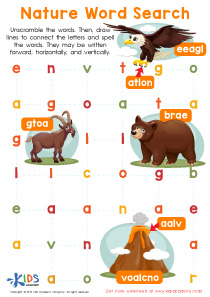
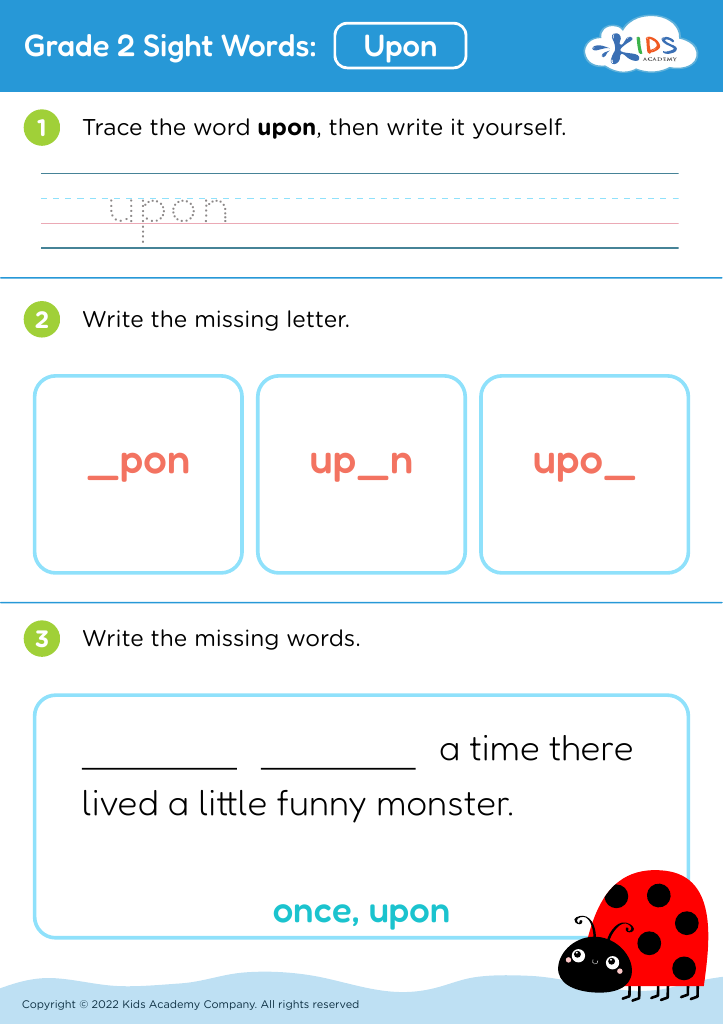
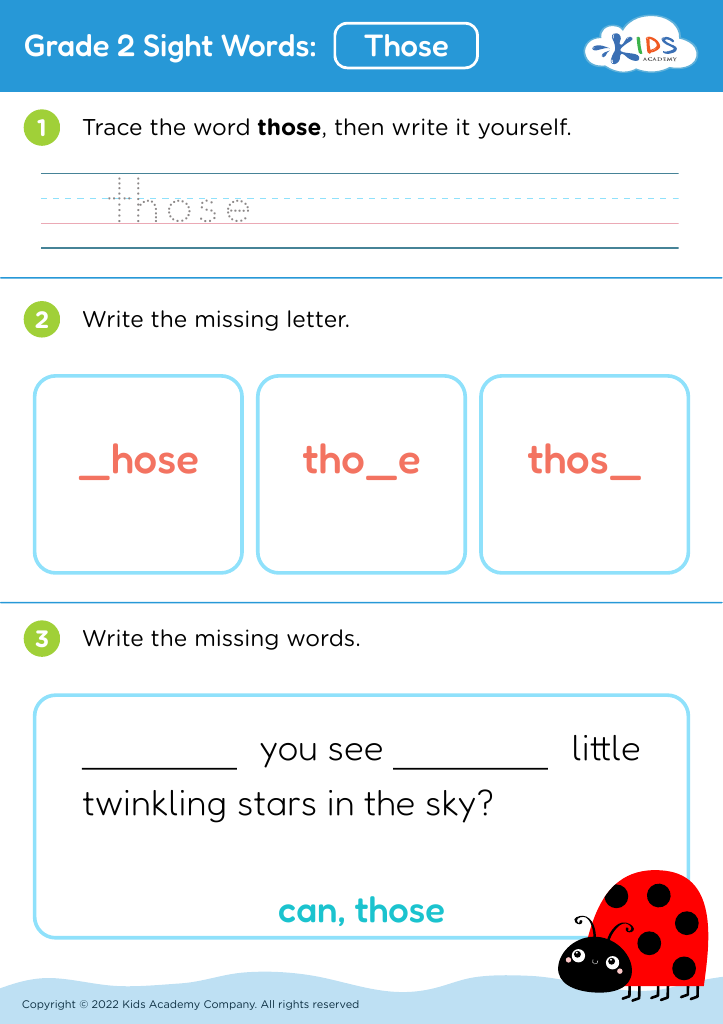
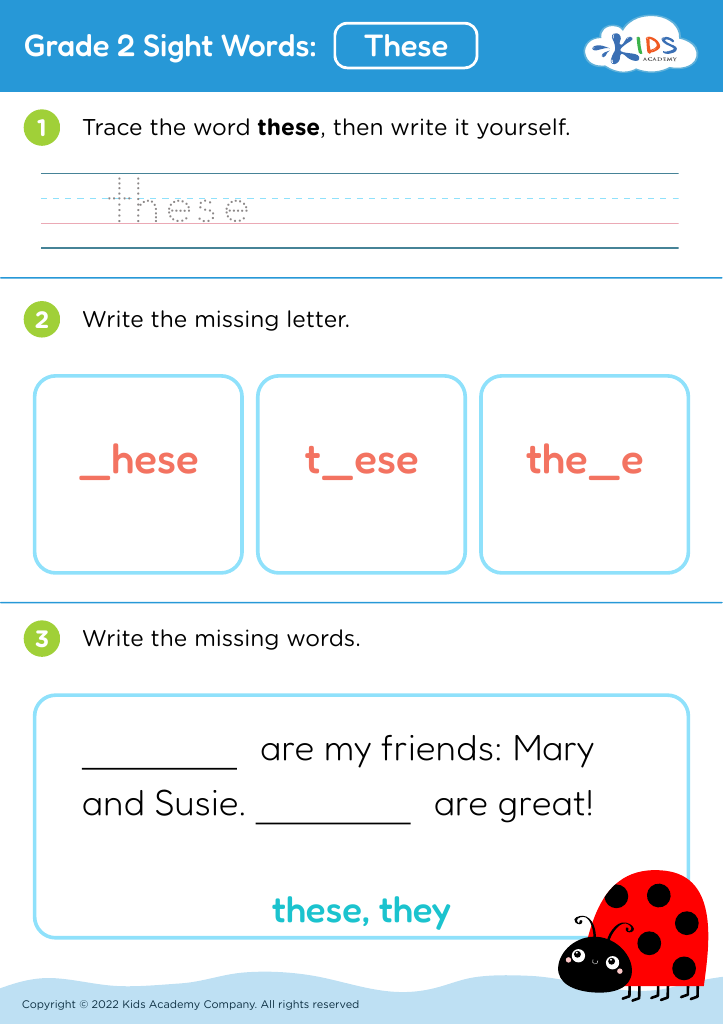
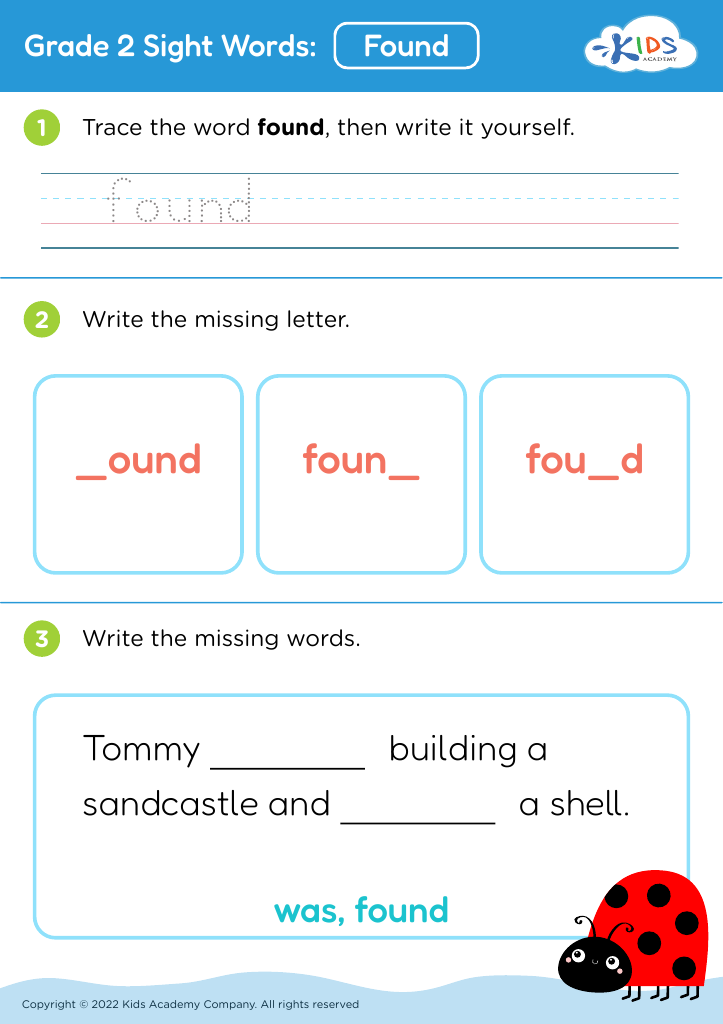
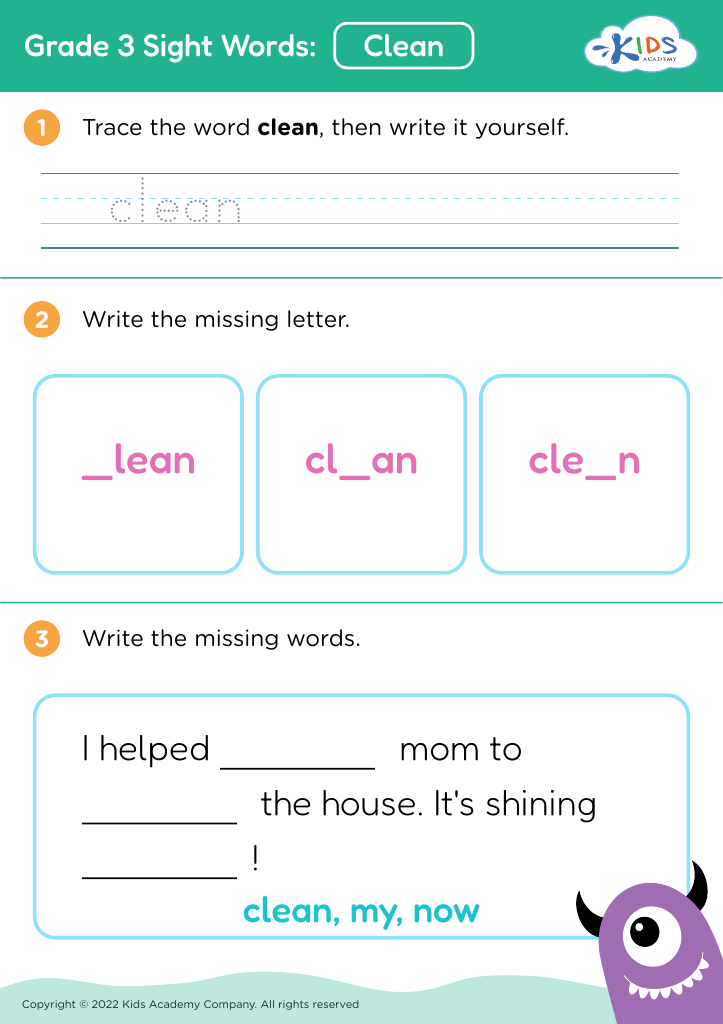
Boost your child’s literacy and geometry skills with our Shape Recognition Sight Words Worksheets for 8-year-olds! Designed to make learning fun, these engaging worksheets help children identify sight words while reinforcing their understanding of basic shapes. Each activity aligns with educational standards and provides varied exercises that improve reading fluency and visual-spatial skills. Perfect for both classroom and home use, our worksheets turn learning into an exciting adventure, ensuring consistent progress. Equip your 8-year-old with the essential skills they need for academic success with our expertly crafted Shape Recognition Sight Words Worksheets!
Favorites
With answer key
Interactive






Join Kids Academy for Free
Who is primarily going to use this learning content?








Shape recognition and sight words are foundational skills that significantly impact an 8-year-old's cognitive development and academic success. Shape recognition entails identifying and differentiating between various geometrical patterns such as circles, squares, and triangles. This skill promotes spatial awareness and fine motor skills, both of which are crucial for tasks like writing and solving math problems. It also forms the basis for more complex mathematical concepts in the future, such as angling and patterning, enabling a seamless transition as children advance in their education.
Sight words, on the other hand, are commonly used words that young readers learn to recognize instantly without needing to phonetically decode them. Mastery of these words boosts reading fluency, confidence, and comprehension. As students become proficient in recognizing these words at a glance, they can focus on understanding the story or information, leading to improved literacy skills.
Integrating shape recognition and sight words into early educational activities encourages cognitive synergy; children start to view learning as an interconnected experience. Parents and teachers should thus prioritize these elements to provide a well-rounded educational foundation. Doing so ensures that children not only excel in specific subjects but also cultivate problem-solving skills, creativity, and a lifelong love for learning.