Handwriting practice Letter G Worksheets for 9-Year-Olds
3 filtered results
Difficulty Level
Grade
Age
-
From - To
Subject
Activity
Standards
Enhance your child's handwriting skills with our engaging Letter G worksheets, specifically designed for 9-year-olds! These worksheets provide a fun and effective way for children to practice writing the letter G in both uppercase and lowercase forms. With a variety of exercises, including tracing, connecting dots, and creative writing prompts, kids will develop fine motor skills and improve their penmanship. Our user-friendly format encourages independent learning while making handwriting practice enjoyable. Perfect for classroom activities or home assignments, these worksheets are an essential resource for nurturing confident young writers. Start your child's handwriting journey with our Letter G worksheets today!
Favorites
With answer key
Interactive
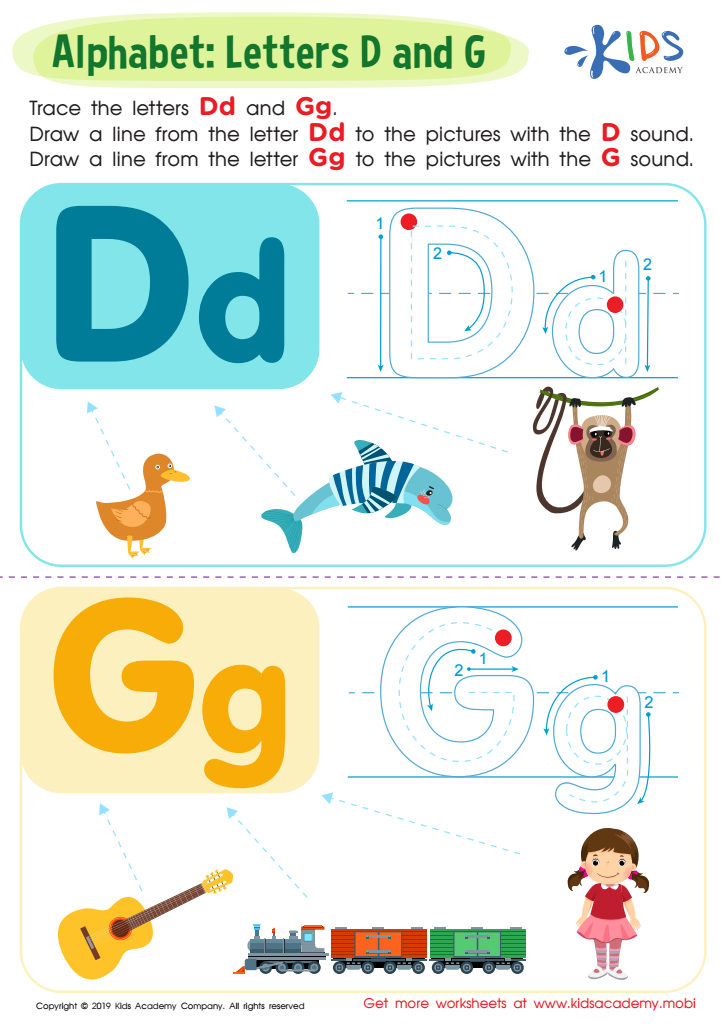
Letter D and G Tracing Worksheet
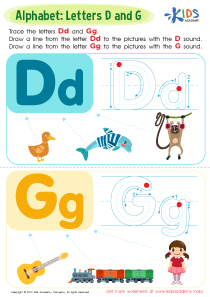
Kids can explore their imagination with the 'Alphabet: Letters D and G' worksheet! They'll trace capital and lowercase "D" and "G" and trace a line from the words. Colorful animals and objects make the task more fun and entertaining!
Letter D and G Tracing Worksheet
Worksheet
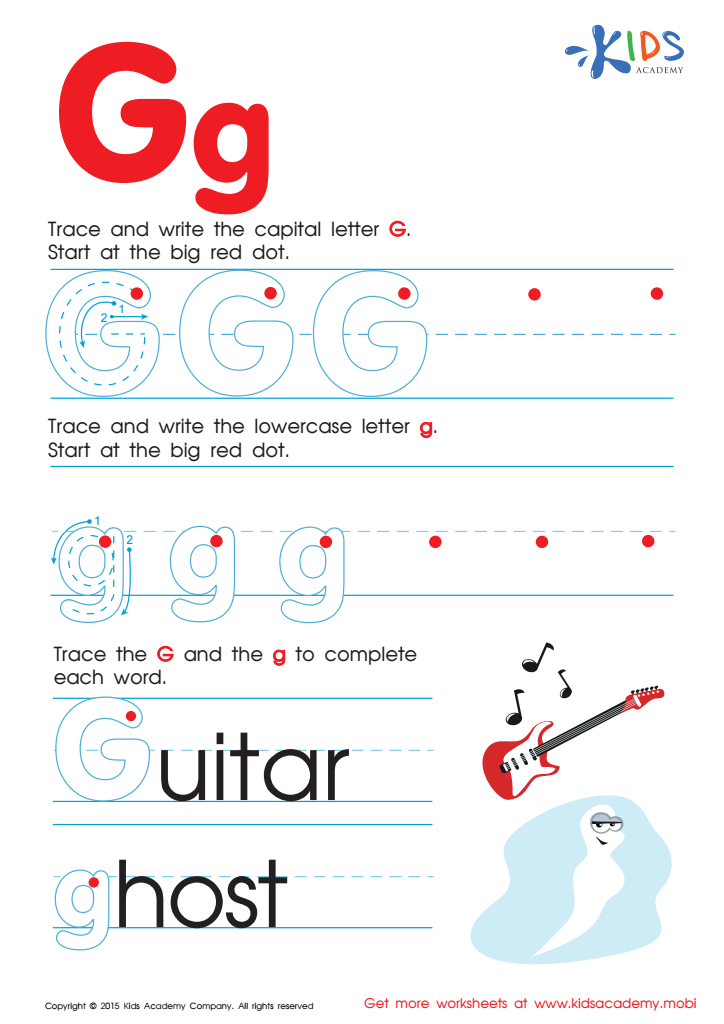
Letter G Tracing Page
Get ready to trace the letter "G" – with a big red spot as the starting point, trace the lines and watch the letter appear. Uppercase and lowercase letters are both easy and fun to write. Give it a go and finish the word "go". Play the guitar and say "hello" to a funny ghost!
Letter G Tracing Page
Worksheet
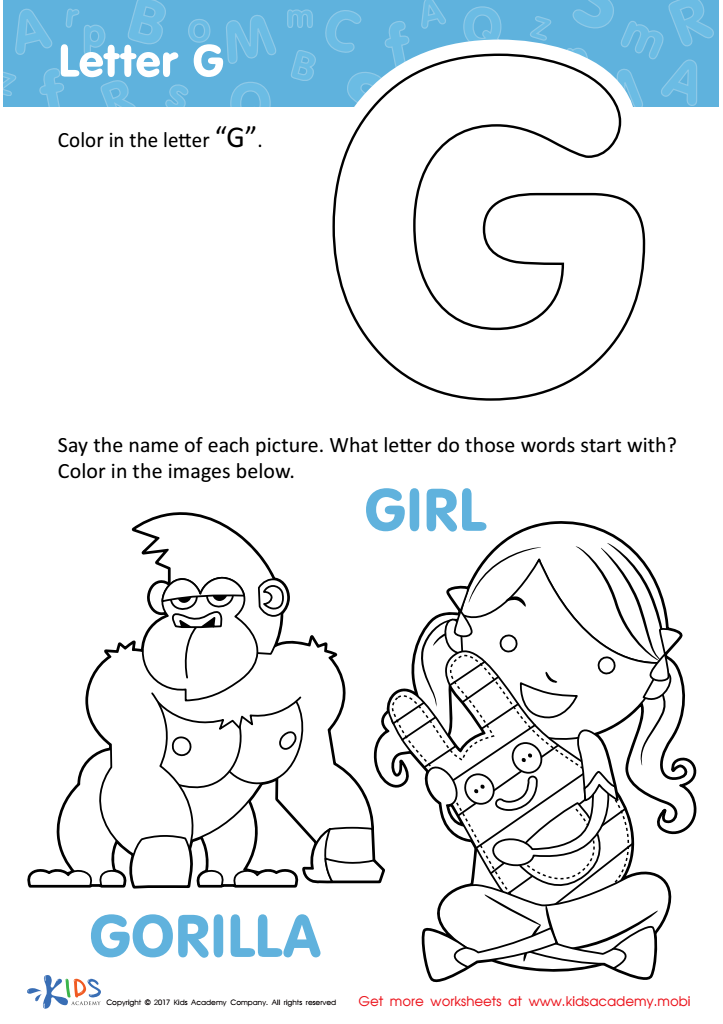
Letter G Coloring Sheet
This "G" coloring page encourages creativity and teaches kids the letter "G" sound. With its fun visuals and familiar words, it's sure to excite your child. Plus, you can talk about the letter’s sound with the pictures given.
Download (PDF)
 Assign to My Students
Assign to My Students
Letter G Coloring Sheet
Worksheet
Join Kids Academy for Free
Who is primarily going to use this learning content?






Handwriting practice, especially for letters like "G," is crucial for 9-year-olds as it significantly impacts their overall literacy development. First, developing fine motor skills through focused handwriting exercises enhances children's dexterity, which is essential not only for writing but for other everyday tasks like using tools or playing musical instruments. Second, legible handwriting supports effective communication, ensuring that their thoughts and ideas are conveyed clearly in written format, which is vital for academic success.
Practicing the letter "G" specifically aids in grasping the nuances of letter formation, which can improve spelling and reading fluency. At this age, children often transition from learning to write to writing to learn. Therefore, clear handwriting is necessary when they start composing more complex texts and completing assignments.
Additionally, consistency in practicing handwriting fuels confidence. Children who take pride in their writing are more likely to share their work and engage with peers and teachers. This engagement fosters a positive learning environment, enhancing their love for learning. Lastly, with a growing emphasis on digital communication, maintaining a strong foundation in handwriting is essential for future academic and professional pursuits. As such, parents and teachers should prioritize handwriting practice to support these developmental milestones.