
Letter formation Letter Recognition Worksheets for 9-Year-Olds
4 filtered results
Difficulty Level
Grade
Age
-
From - To
Subject
Activity
Standards
Unlock your child's potential with our engaging Letter Formation and Letter Recognition Worksheets, designed specifically for 9-year-olds. These worksheets facilitate hands-on learning, helping young learners confidently master the fundamentals of letter writing and recognition. Our diverse activities provide colorful illustrations and interactive challenges that capture attention while reinforcing essential skills. Each worksheet encourages creativity and focus, making letter practice enjoyable. Perfect for parents and teachers alike, these resources aim to enhance literacy development and improve handwriting skills in a way that resonates with this age group. Enhance your child's learning journey today with our thoughtfully crafted worksheets!
Favorites
With answer key
Interactive
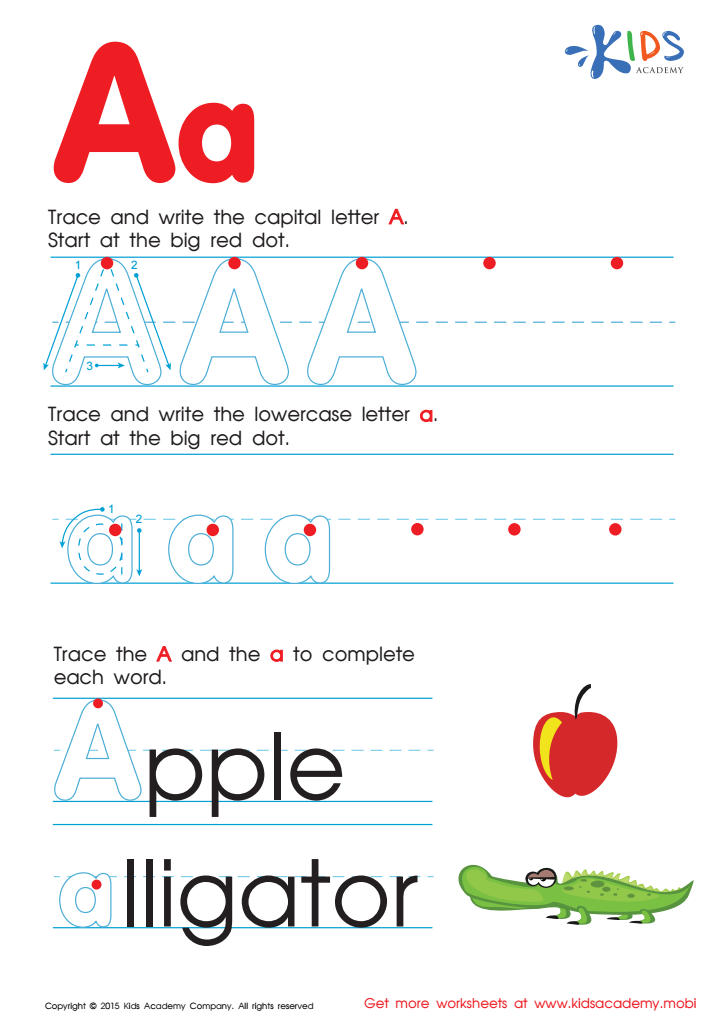
Letter A Tracing Page
Trace and write the letter "A"! Start with the big red dot, then do the capital and lowercase versions. Then write it again with two words - apple and alligator. Download more tracing worksheets at Kids Academy.
Letter A Tracing Page
Worksheet
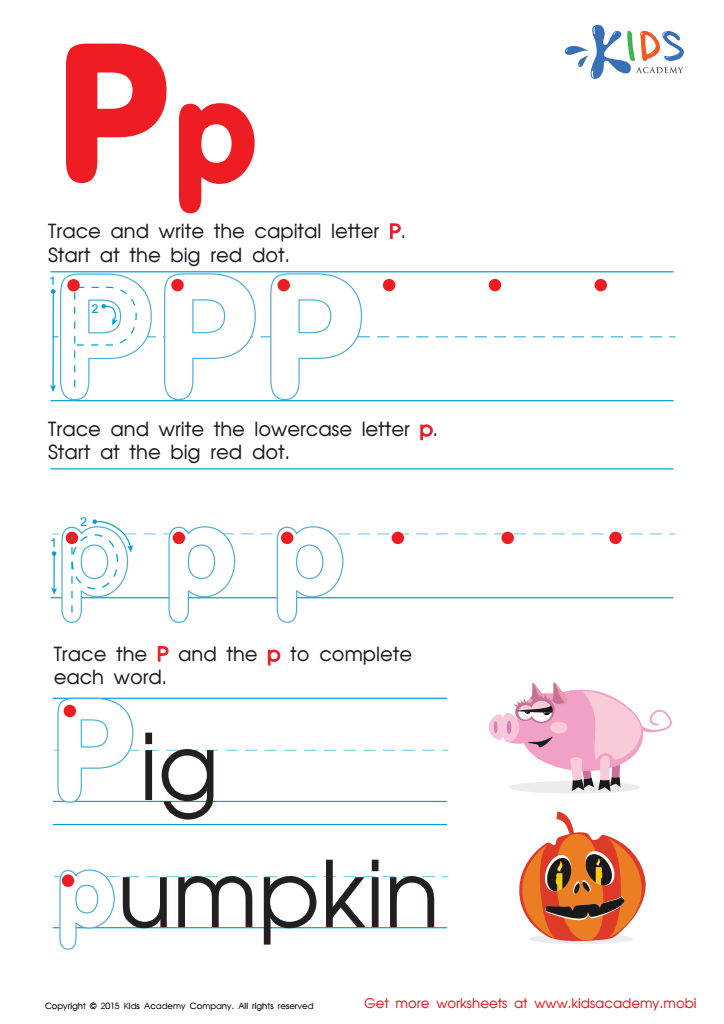
Letter P Tracing Page
Trace the lines from the red dot to learn to write "P"! Then practice this letter with the fun activities: complete the word "Pig" and "Pumpkin". Check out Kids Academy to get more free ABC worksheets.
Letter P Tracing Page
Worksheet
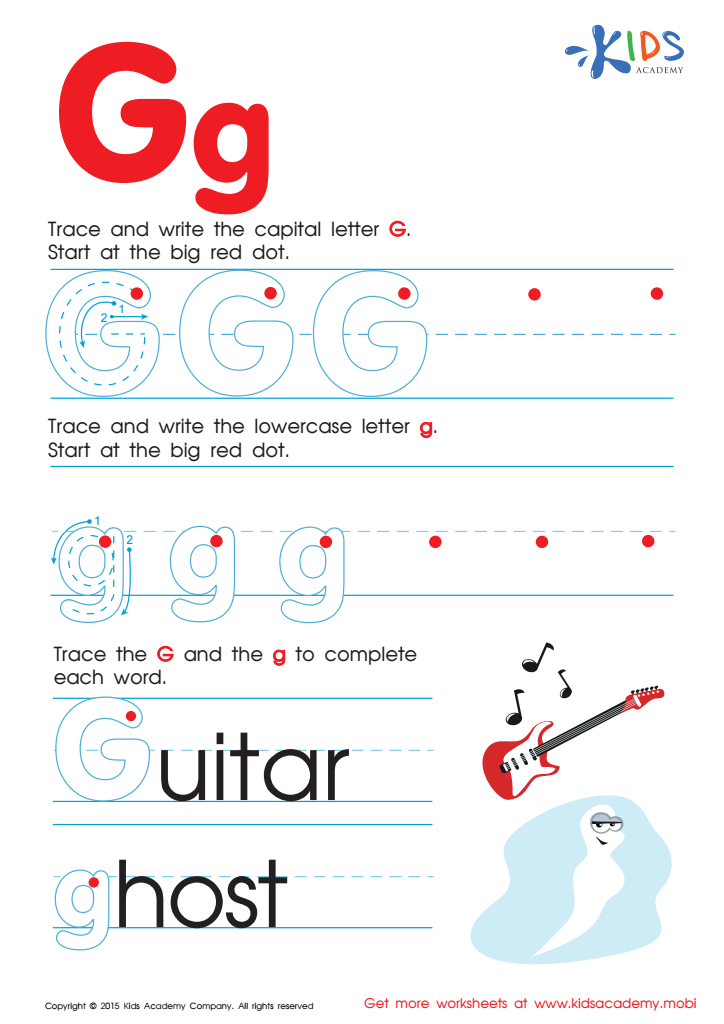
Letter G Tracing Page
Get ready to trace the letter "G" – with a big red spot as the starting point, trace the lines and watch the letter appear. Uppercase and lowercase letters are both easy and fun to write. Give it a go and finish the word "go". Play the guitar and say "hello" to a funny ghost!
Letter G Tracing Page
Worksheet
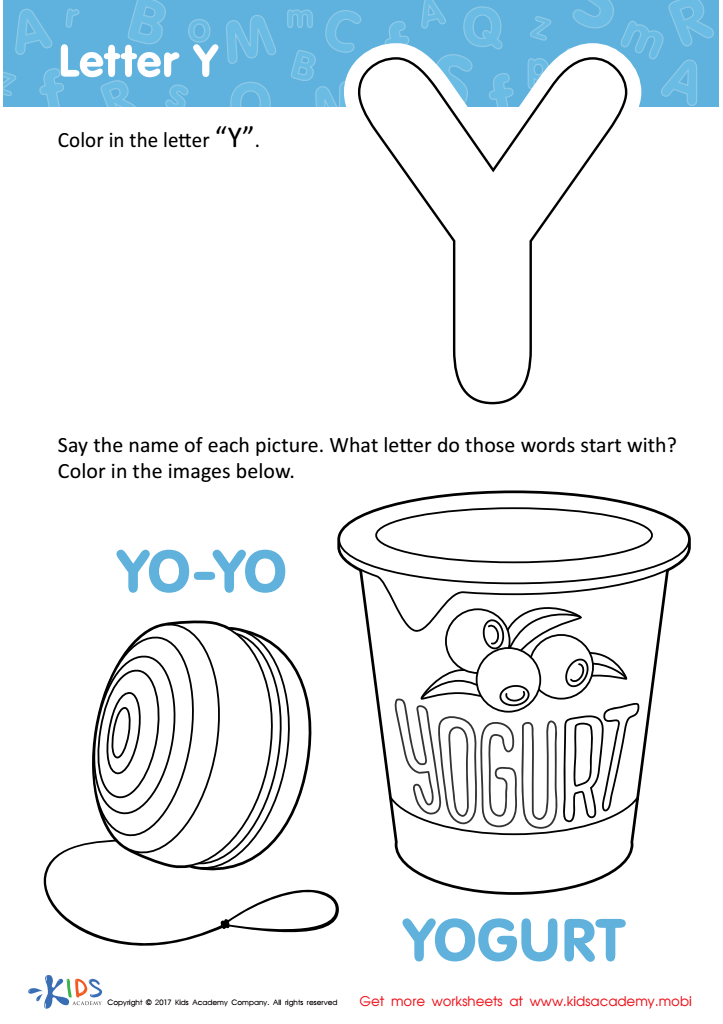
Letter Y Coloring Sheet
Let's celebrate letter "Y"! Here's a fun coloring page that'll help your child learn this end-of-the alphabet letter. It's packed with familiar objects that'll help build their art and literacy skills. So let's say "Yay"!
Download (PDF)
 Assign to My Students
Assign to My Students
Letter Y Coloring Sheet
Worksheet
Join Kids Academy for Free
Who is primarily going to use this learning content?








Parents and teachers should prioritize letter formation and recognition for 9-year-olds because these skills lay the foundation for literacy and effective communication. Mastering letter formation ensures that children can write legibly and expressively, which is crucial not just for academic success, but also for everyday communication. At this age, students begin to produce longer texts, making clear penmanship essential to convey their ideas effectively.
Letter recognition, on the other hand, is integral to reading development. Recognizing letters quickly and accurately helps children develop fluency, enabling them to transition smoothly from decoding words to understanding larger texts. This fluency supports greater engagement with reading material, fostering a love for books that contributes to lifelong learning.
Both skills also improve confidence; children who write neatly and can easily identify letters are more likely to participate in classroom discussions and activities. Additionally, good letter formation and recognition can identify and address potential learning difficulties early on, allowing parents and educators to implement necessary interventions. By investing time and resources into these foundational skills, parents and teachers create a supportive learning environment that nurtures literacy development, ultimately setting children on a path to academic success and confident self-expression.







