
Writing practice Letter Recognition Worksheets for 9-Year-Olds
10 filtered results
Difficulty Level
Grade
Age
-
From - To
Subject
Activity
Standards
Help your 9-year-old strengthen their writing skills with our engaging Letter Recognition Worksheets! These meticulously designed worksheets cater to young learners, blending fun and education as they practice letter formation and recognition. Each worksheet features a variety of activities, including tracing, filling in missing letters, and identifying uppercase and lowercase letters. Perfect for at-home learning or classroom use, our resources enhance handwriting proficiency while reinforcing foundational reading skills. Watch your child gain confidence in their writing abilities as they engage with colorful designs and interactive tasks. Discover the joy of learning with our Letter Recognition Worksheets today!
Favorites
With answer key
Interactive
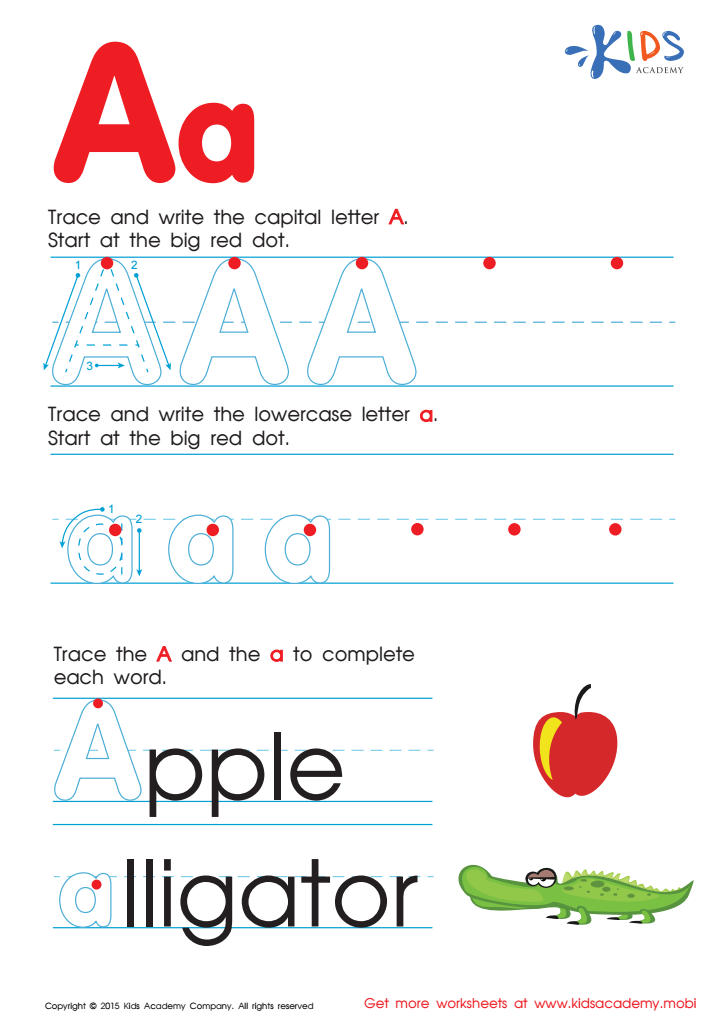
Letter A Tracing Page
Trace and write the letter "A"! Start with the big red dot, then do the capital and lowercase versions. Then write it again with two words - apple and alligator. Download more tracing worksheets at Kids Academy.
Letter A Tracing Page
Worksheet
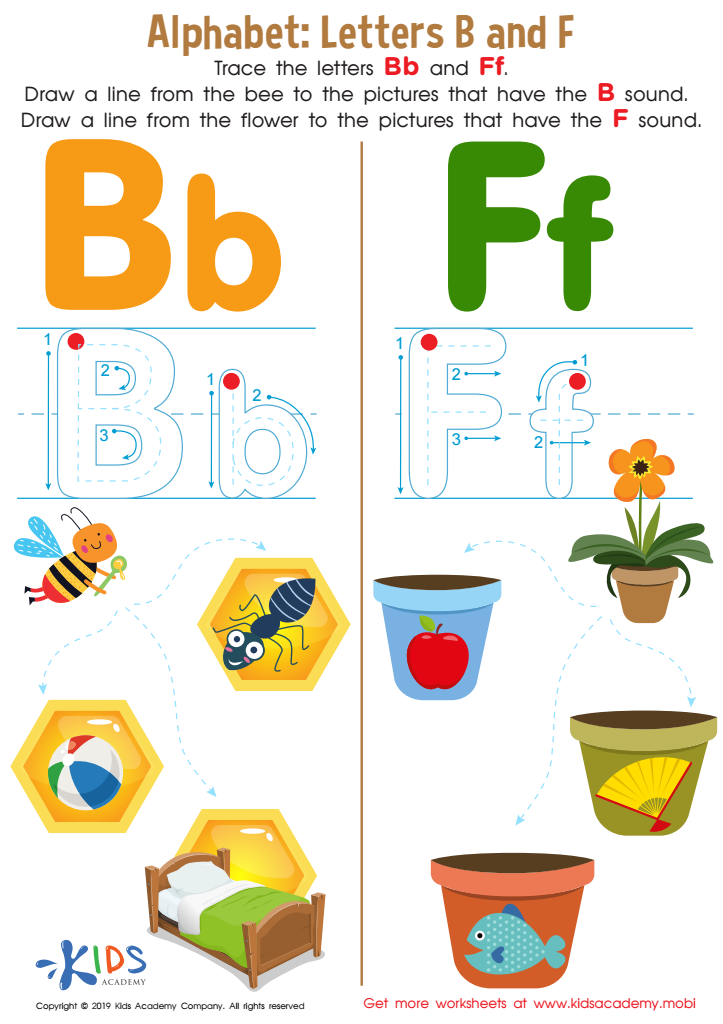
Letters B and F Tracing Worksheet
Does your kid know the letters B and F? This tracing sheet helps them practice by tracing each letter, then drawing a line from a bee and a flower to related words. Recognizing words with pictures develops a great skill, and students will master it in no time!
Letters B and F Tracing Worksheet
Worksheet
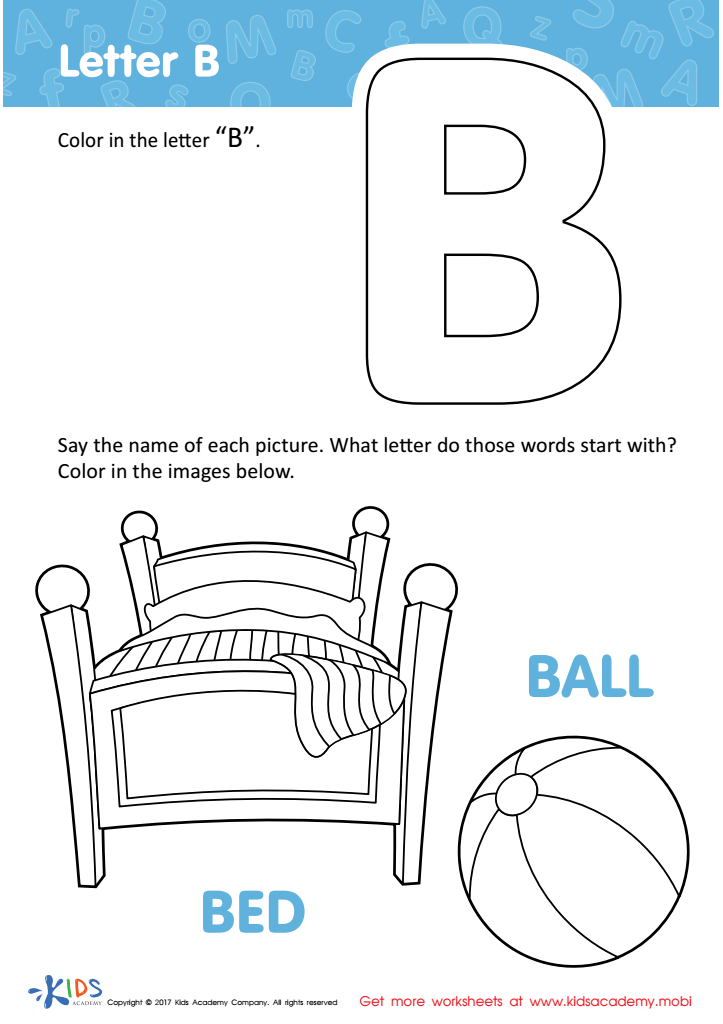
Letter B Coloring Sheet
Kids will love coloring this page that features things they like - balls, bubbles, bugs and bedtime - all words starting with "B"! It's a great way to introduce the alphabet and increase their exposure to letters and sounds. Let them have fun and learn at the same time!
Download (PDF)
 Assign to My Students
Assign to My Students
Letter B Coloring Sheet
Worksheet
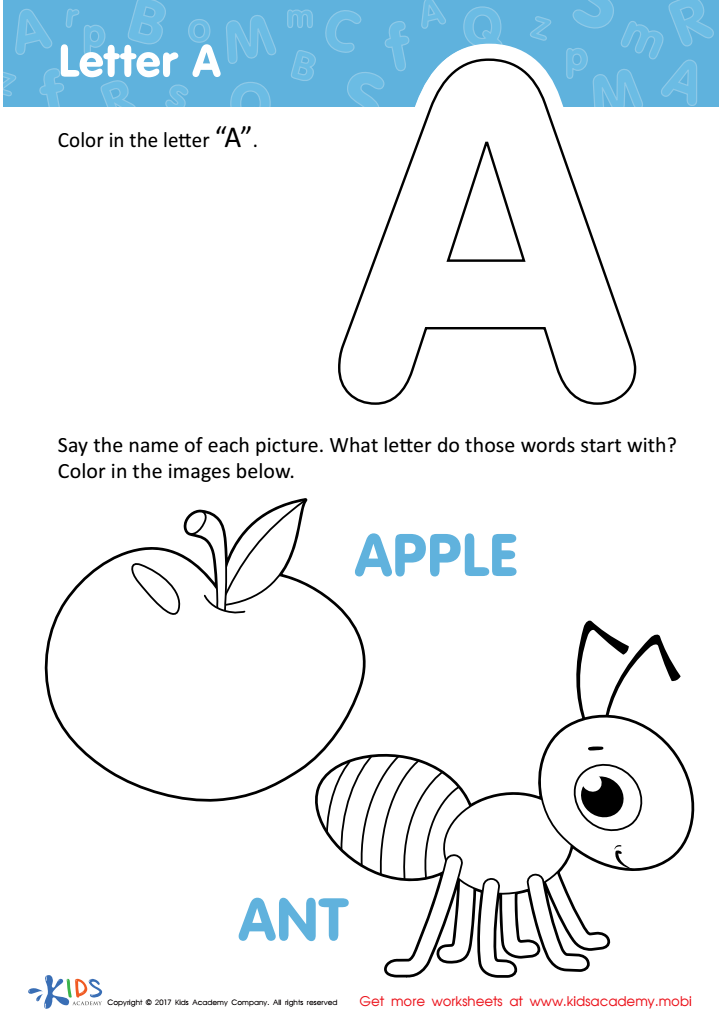
Letter A Coloring Sheet
This letter "A" coloring page is great for introducing kids to the alphabet! Let them exercise their creativity while they learn to recognize letters and sounds - it's a fun and easy way to help them get started.
Download (PDF)
Assign to My Students
Assign to My Students
Letter A Coloring Sheet
Worksheet
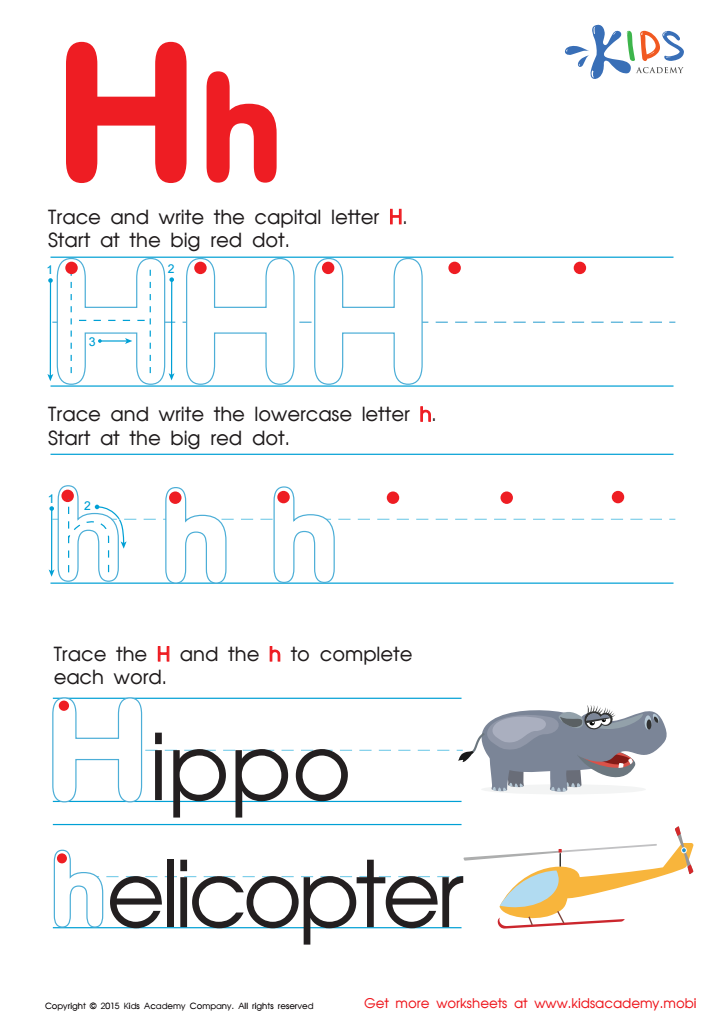
Letter H Tracing Page
Trace the letter "H", then practice writing its lowercase form. Finally, choose your favorite form of transport and ride away! Get our worksheets to make learning fun and easy.
Letter H Tracing Page
Worksheet
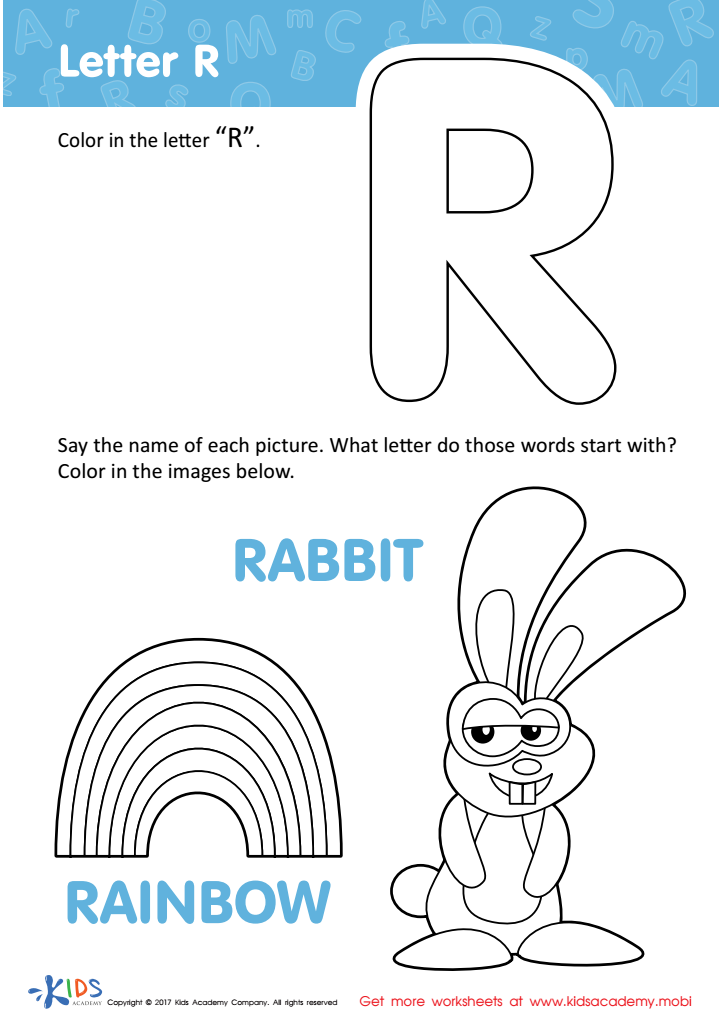
Letter R Coloring Sheet
Let your child explore the rainbow with this fun letter "R" coloring page! They can learn to recognize the letter and make connections to words, all while having fun! Make alphabet learning enjoyable with joyful coloring pages.
Download (PDF)
Assign to My Students
Assign to My Students
Letter R Coloring Sheet
Worksheet
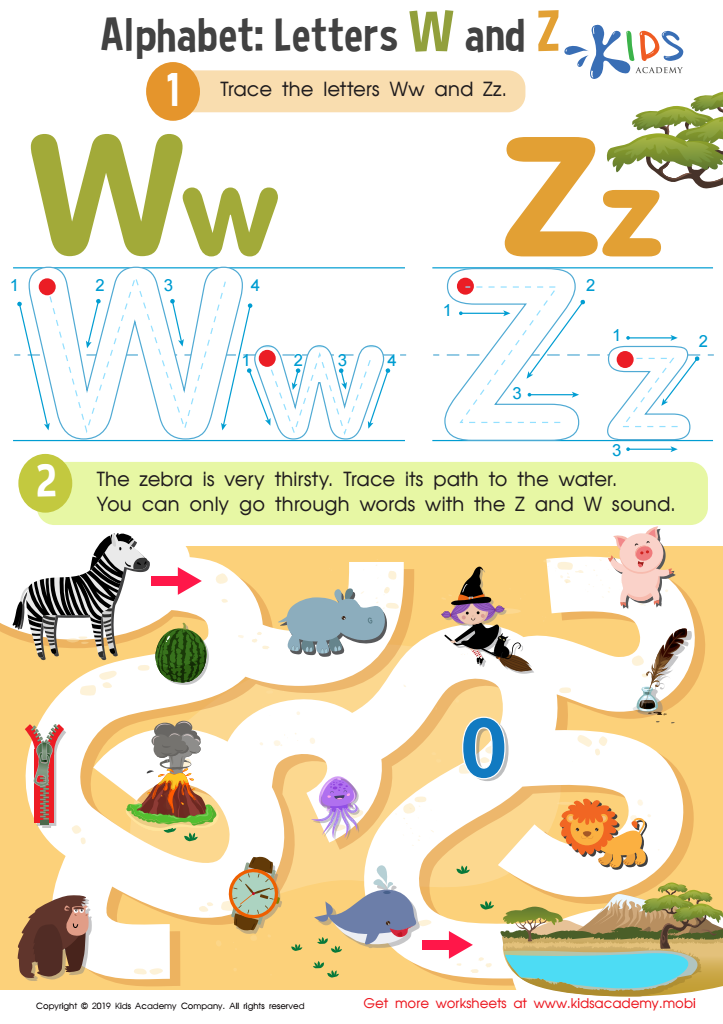
Letters W and Z Tracing Worksheet
Kids will go on a safari exploration of letters W and Z with this worksheet. Students will trace «W» and «Z» and then help the zebra find their watering hole, only following the path of the «W» and «Z» words among many others. It'll be a fun learning activity!
Letters W and Z Tracing Worksheet
Worksheet
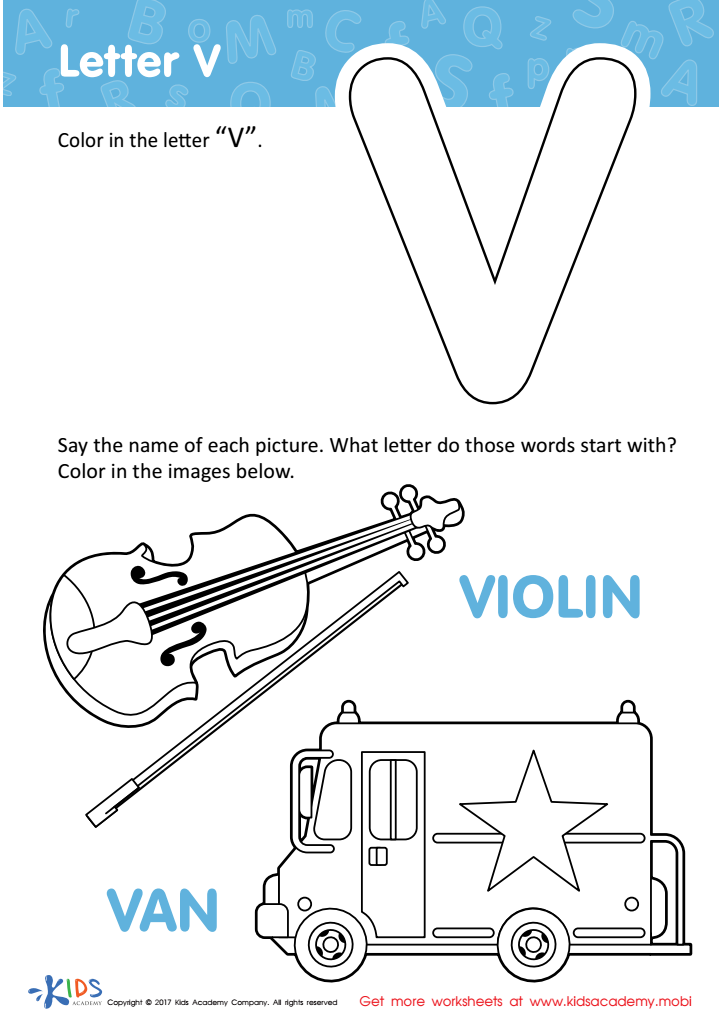
Letter V Coloring Sheet
This fun letter V coloring page can boost your child's knowledge of the letter "V" and its sound. Help them pronounce it correctly, too!
Download (PDF)
Assign to My Students
Assign to My Students
Letter V Coloring Sheet
Worksheet
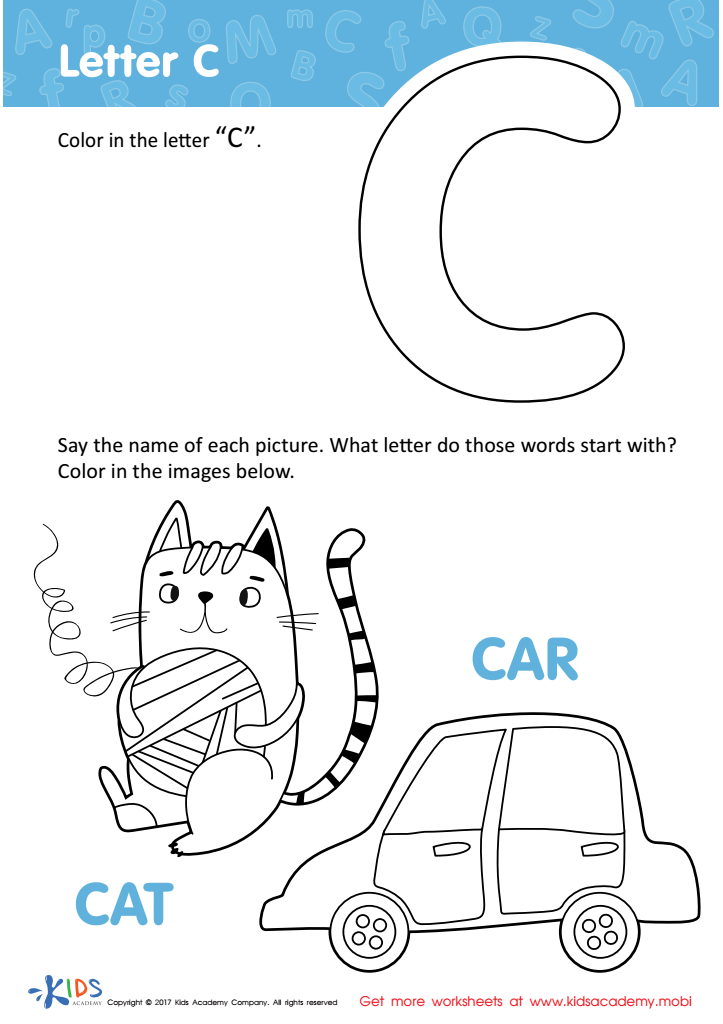
Letter C Coloring Sheet
Introduce kids to the letter 'C' with this fun coloring page! Exposing little ones to letters, words, and sounds helps them learn long before they can read. Start with simple words like 'cat' and 'car' - these are great first sight words for young children.
Download (PDF)
Assign to My Students
Assign to My Students
Letter C Coloring Sheet
Worksheet
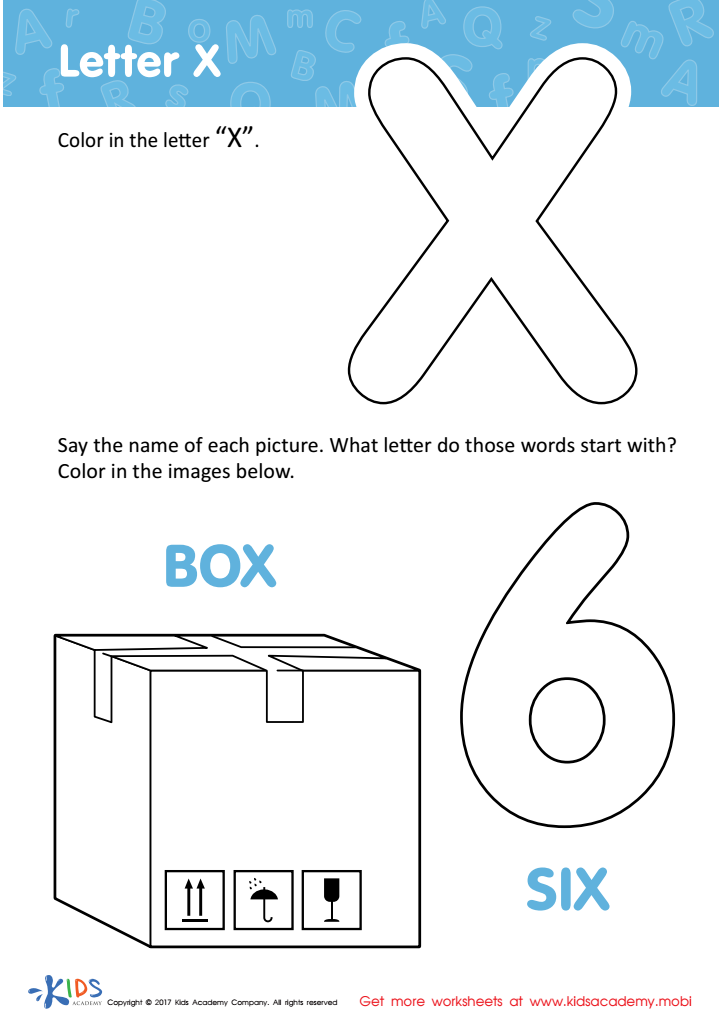
Letter X Coloring Sheet
Help your little learner find the letter "X" with this coloring page. Go over the sounds it makes and how to find it at the end of words. Unlock the mystery of this unique letter - it's one of the most challenging but rewarding letters to learn!
Download (PDF)
Assign to My Students
Assign to My Students
Letter X Coloring Sheet
Worksheet
Join Kids Academy for Free
Who is primarily going to use this learning content?








Writing practice and letter recognition are crucial for 9-year-olds as they significantly impact their literacy development and overall academic success. At this age, children are transitioning from learning to read to reading to learn, making these skills foundational for comprehension and communication.
Letter recognition enables children to quickly identify letters in both lowercase and uppercase forms, which is essential for developing spelling skills and facilitating fluent reading. Mastery of this skill significantly boosts their confidence, allowing them to engage more actively in classroom discussions and written assignments.
Writing practice, on the other hand, enhances fine motor skills and encourages the development of a personal writing style. It allows children to express their thoughts and ideas more clearly and creatively, fostering critical thinking and problem-solving abilities.
Moreover, regular writing practice and letter recognition activities can stimulate a child's imagination, enabling them to become adept storytellers and persuasive writers, essential abilities in today's communication-driven world. As facilitators of learning, teachers and parents play a key role in motivating children to practice these skills, ensuring they build a strong foundation for future educational advancement and lifelong literacy. This holistic approach supports not only academic growth but also social and emotional development.







