Rhyming Worksheets for 9-Year-Olds
4 filtered results
-
From - To
Unleash the poetic potential of your 9-year-old with our engaging Rhyming Worksheets! Specially designed to captivate and educate, these worksheets serve as an excellent tool for children to explore the enchanting world of rhymes. Perfect for 9-year-olds, our worksheets are crafted to foster creativity, enhance phonemic awareness, and improve vocabulary through fun and interactive exercises. Watch as your child discovers the joy of language, effortlessly learning the art of rhyming words. Ideal for both classroom and home use, our Rhyming Worksheets are your child's companion in mastering the rhythm and beat of poetry at an early age. Start the rhyming adventure today!
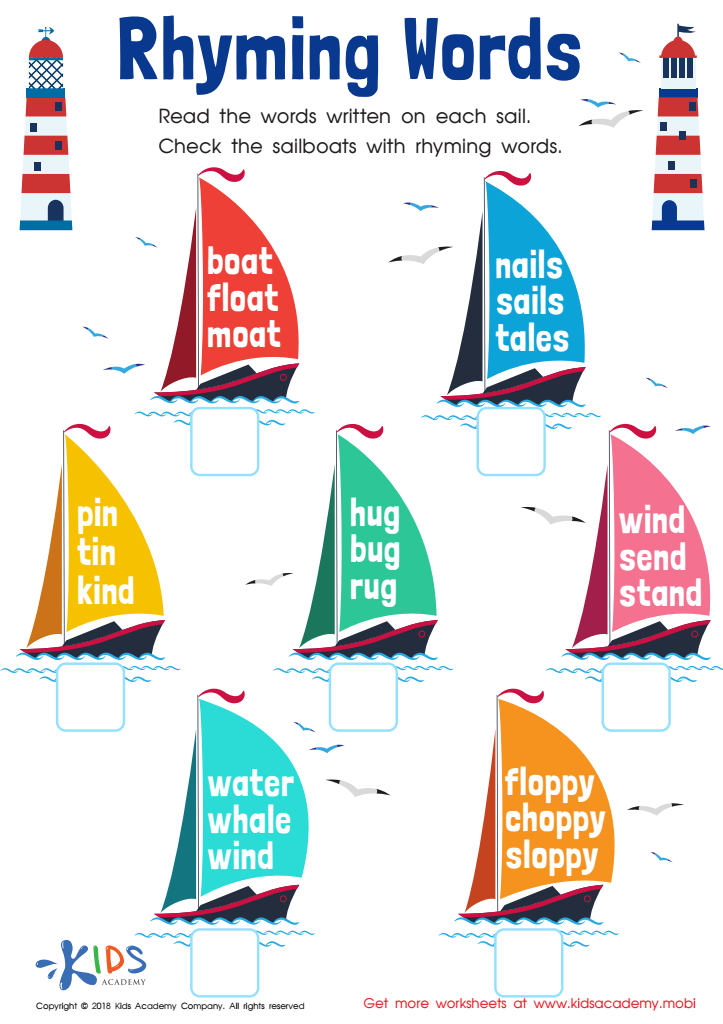
Rhyming Words Worksheet
 Assign to My Students
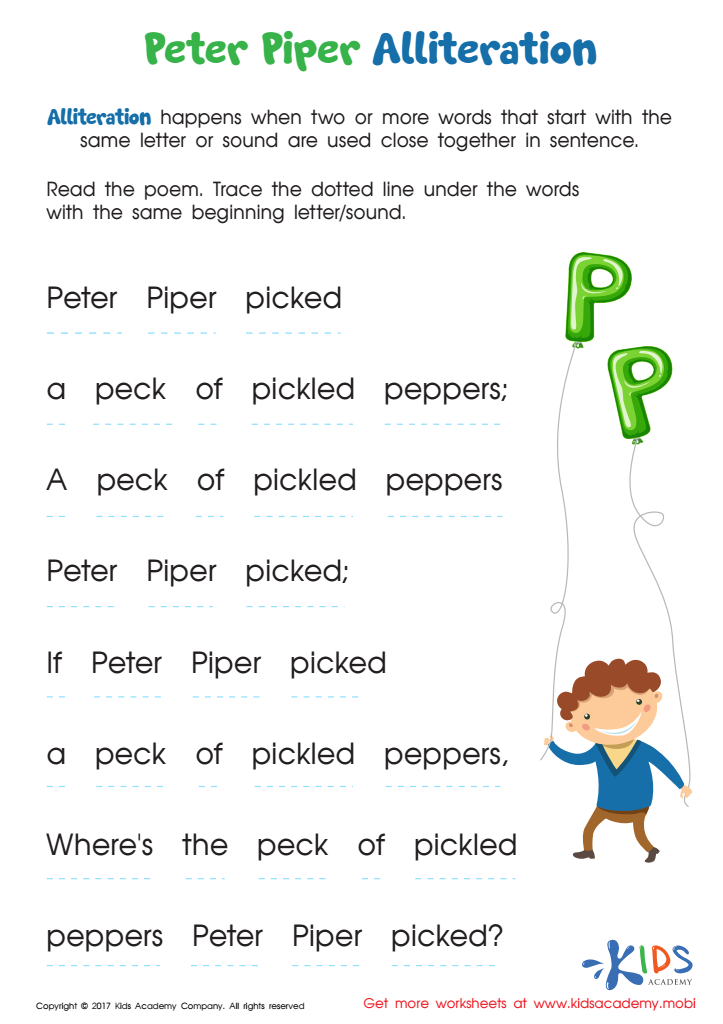
Peter Piper Alliteration Worksheet
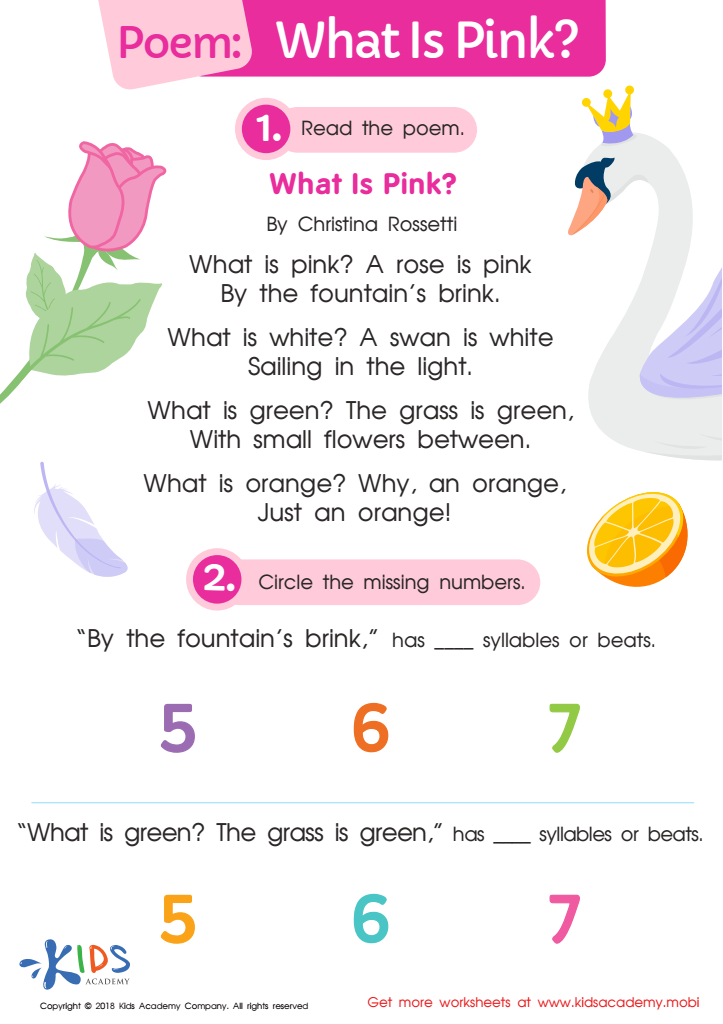
Poem: What Is Pink? Worksheet
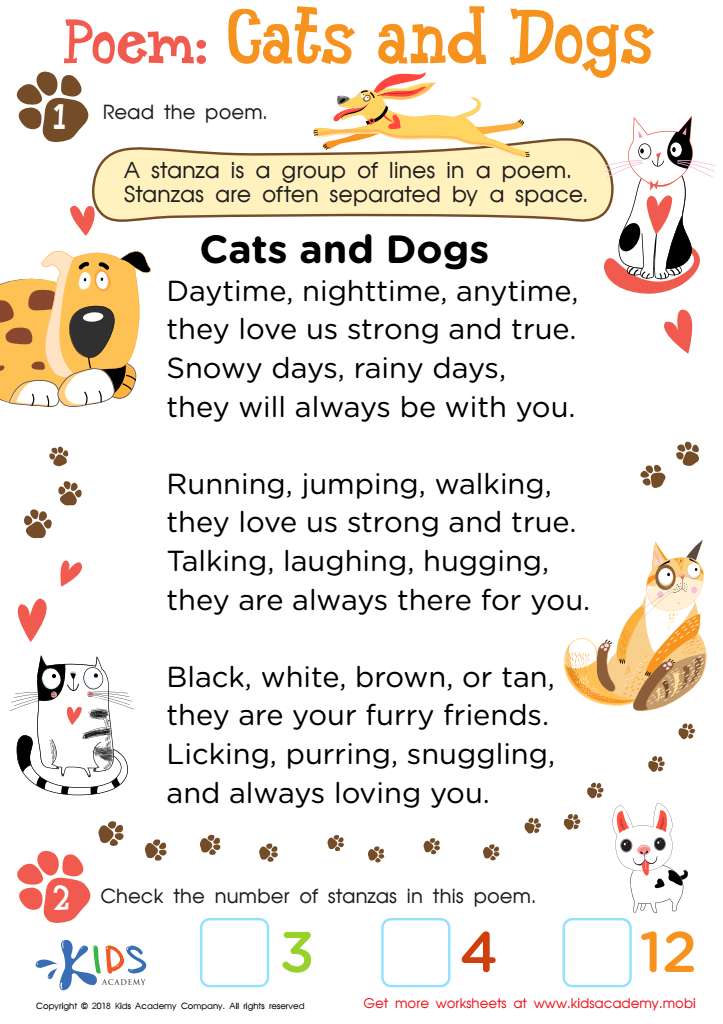
Poem: Cats and Dogs Worksheet







Rhyming worksheets designed specifically for 9-year-olds serve as a crucial tool in nurturing a child's literacy and language skills. At this pivotal age, children are expanding their reading abilities and developing a more nuanced understanding of language. Rhyming, a key phonetic exercise, facilitates this growth by enhancing phonemic awareness, the ability to recognize and manipulate sounds in words—a foundational skill for successful reading and spelling.
For 9-year-olds, engaging with rhyming worksheets makes learning enjoyable and interactive. These worksheets are tailored to capture the interest of children, presenting rhyming tasks that are both challenging and age-appropriate. Through activities like matching rhyming words, filling in missing rhymes, and creating their own rhyming pairs, children practice pattern recognition and sound discrimination. This not only improves their reading fluency but also boosts their creative writing skills, as they become more adept at playing with words and sounds to express their thoughts and stories.
Moreover, rhyming worksheets for 9-year-olds encourage independent learning. As children work through these exercises, they gain confidence in their ability to identify and generate rhymes without direct assistance. This autonomy in learning fosters a sense of achievement and motivates them to explore language further.
In essence, rhyming worksheets for 9-year-olds are a valuable educational resource. They make learning fun, support essential literacy development, and build a strong foundation for future language success.







