Handwriting improvement Tracing Letters Worksheets for 9-Year-Olds
3 filtered results
-
From - To
Enhance your 9-year-old's handwriting skills with our specialized Tracing Letters Worksheets. Designed to foster fine motor skills and pencil control, these printable worksheets offer a structured approach to mastering letter formation. With engaging exercises and repetitive tracing activities, children can build the muscle memory needed for legible, confident handwriting. Perfect for both home and classroom use, our worksheets support ELA learning objectives while making handwriting practice enjoyable. Inspire your child's writing development today with our expertly crafted resources, available now at Kids Academy.
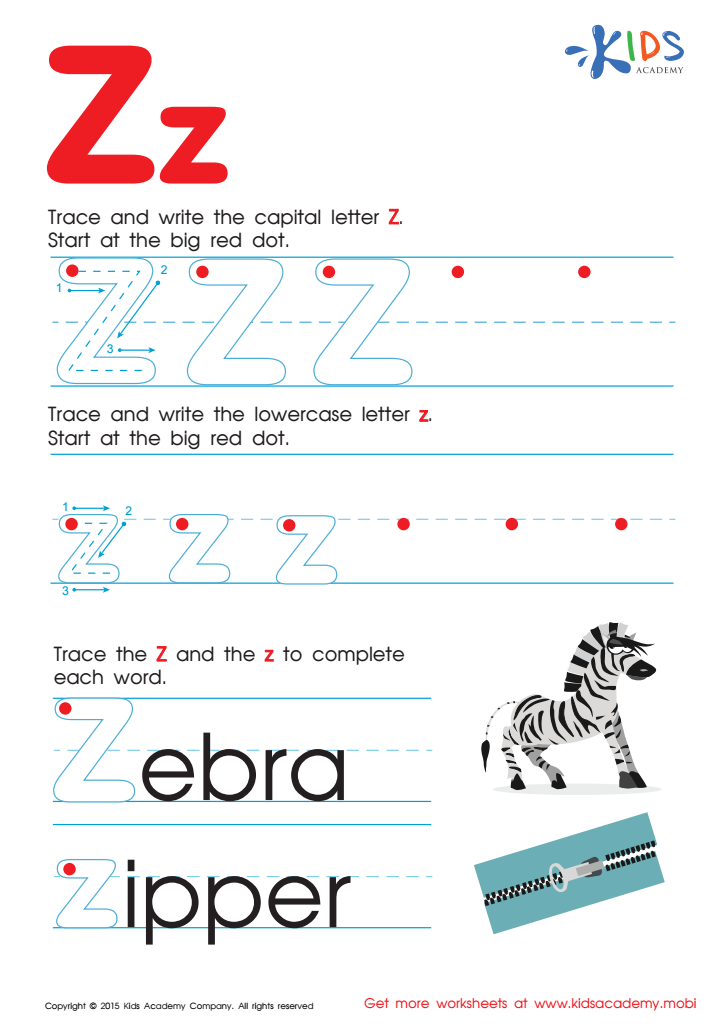
Letter Z Tracing Page
 Assign to My Students
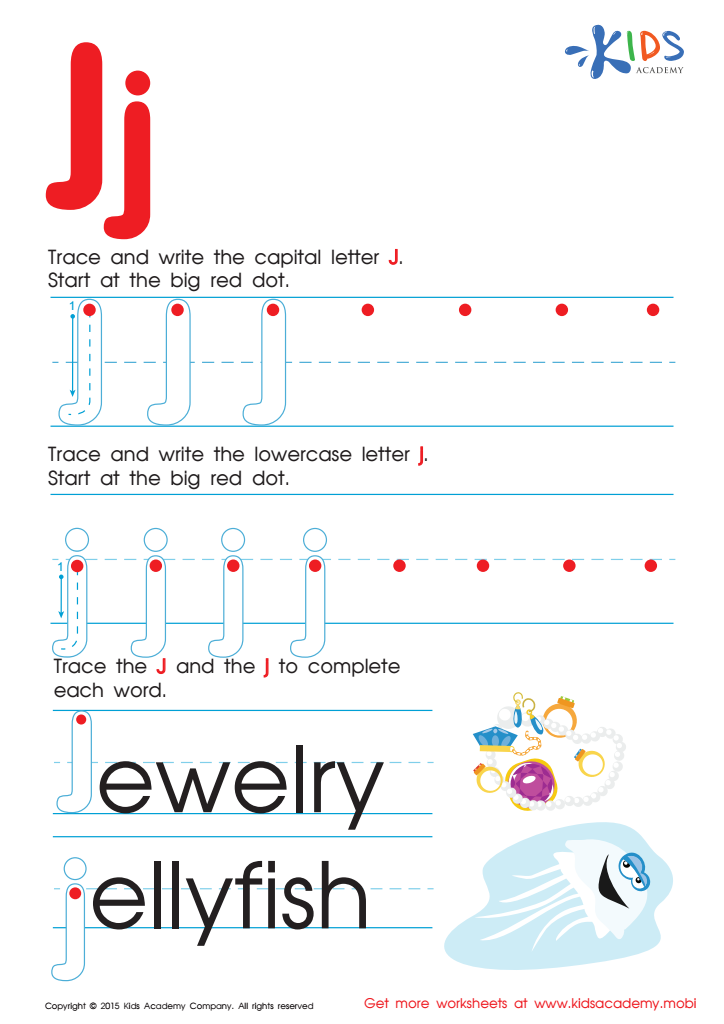
Letter J Tracing Page

Letter B Tracing Page








Handwriting improvement through tracing letters is vital for 9-year-olds due to its multifaceted benefits, impacting both academic and developmental areas. For parents and teachers, investing in this skill ensures children develop essential fine motor control and muscle memory, which are crucial for legible and efficient writing. Good handwriting not only fosters clearer expression of thoughts but also boosts confidence in children, enabling them to keep pace in the classroom and excel in written assignments and tests.
Additionally, tracing letters helps reinforce letter formation, spacing, and alignment, assisting in the transition from print to cursive writing—a critical skill emphasized in many educational curricula. This practice enhances cognitive development, as it integrates visual and tactile learning pathways, promoting better mental processing and memory retention.
Moreover, engaging in handwriting exercises sharpens attention span, supports focus, and nurtures perseverance—qualities essential for lifelong learning and success. It also provides a constructive break from screen time, fostering better hand-eye coordination and promoting holistic physical and mental development. Hence, by focusing on handwriting improvement, parents and teachers can support 9-year-olds in acquiring a fundamental skill that underpins academic achievement and personal growth, setting them up for future success.








