Letter formation Tracing Letters Worksheets for 9-Year-Olds
3 filtered results
-
From - To
Enhance your child's writing skills with our engaging Letter Formation Tracing Worksheets designed specifically for 9-year-olds! These worksheets provide a fun and interactive way for children to practice letter formation, helping to improve their handwriting and fine motor skills. Each worksheet features a variety of activities that promote letters' recognition and proper formation, ensuring that your child builds confidence in their writing abilities. Ideal for both home and classroom use, these resources align with educational standards and can be easily printed for convenient learning. Empower your child's literacy journey today with our thoughtfully designed tracing activities!
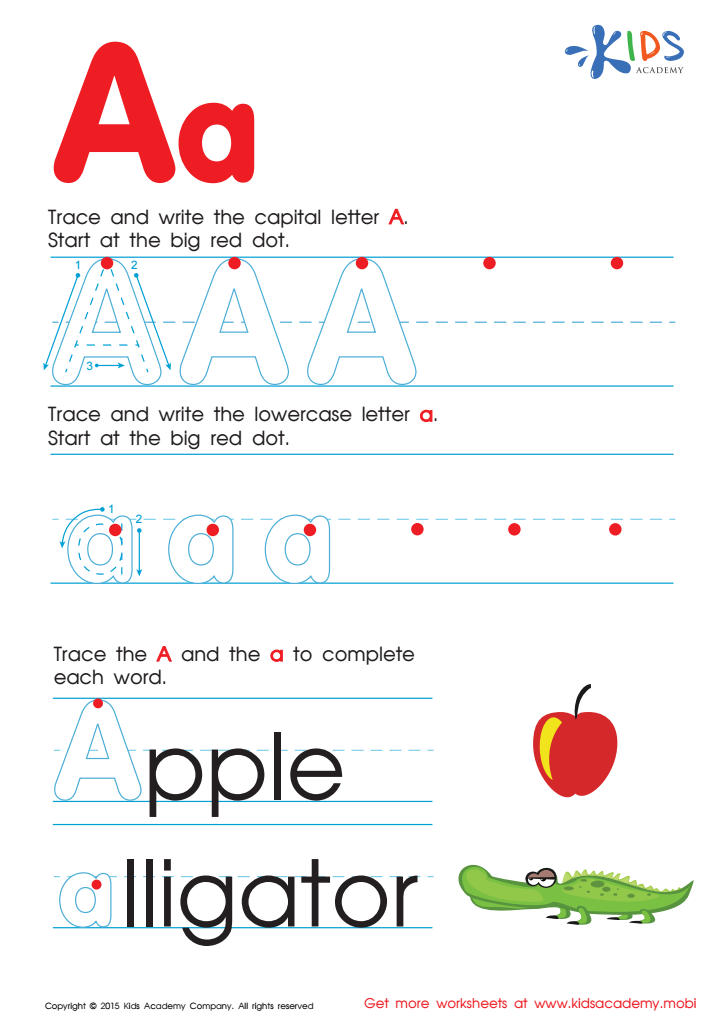
Letter A Tracing Page
 Assign to My Students
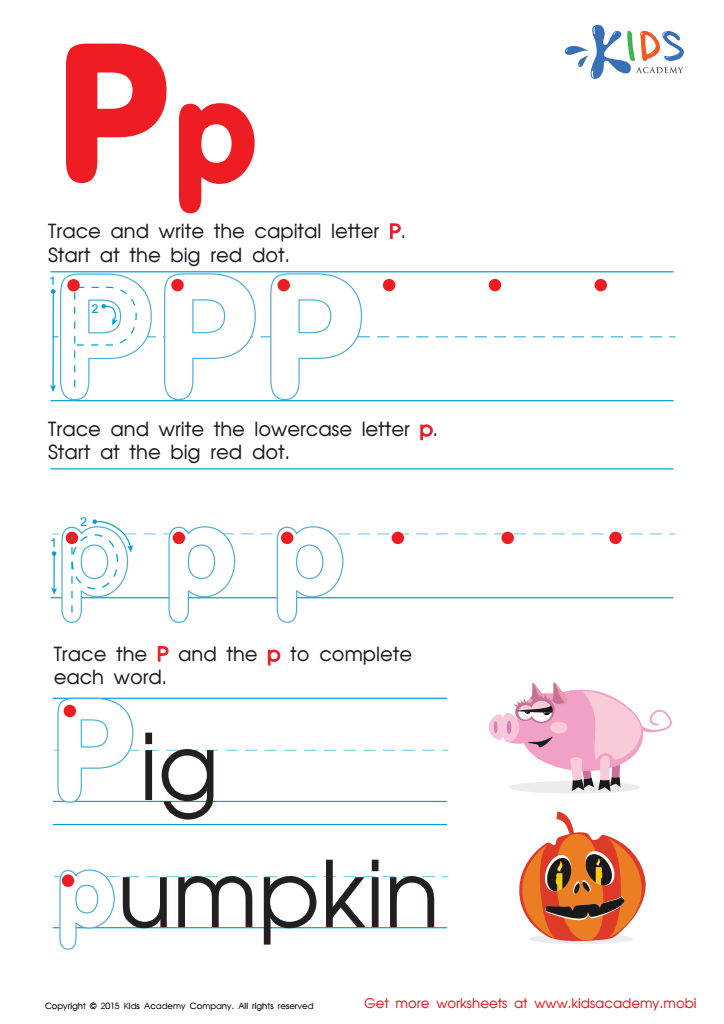
Letter P Tracing Page
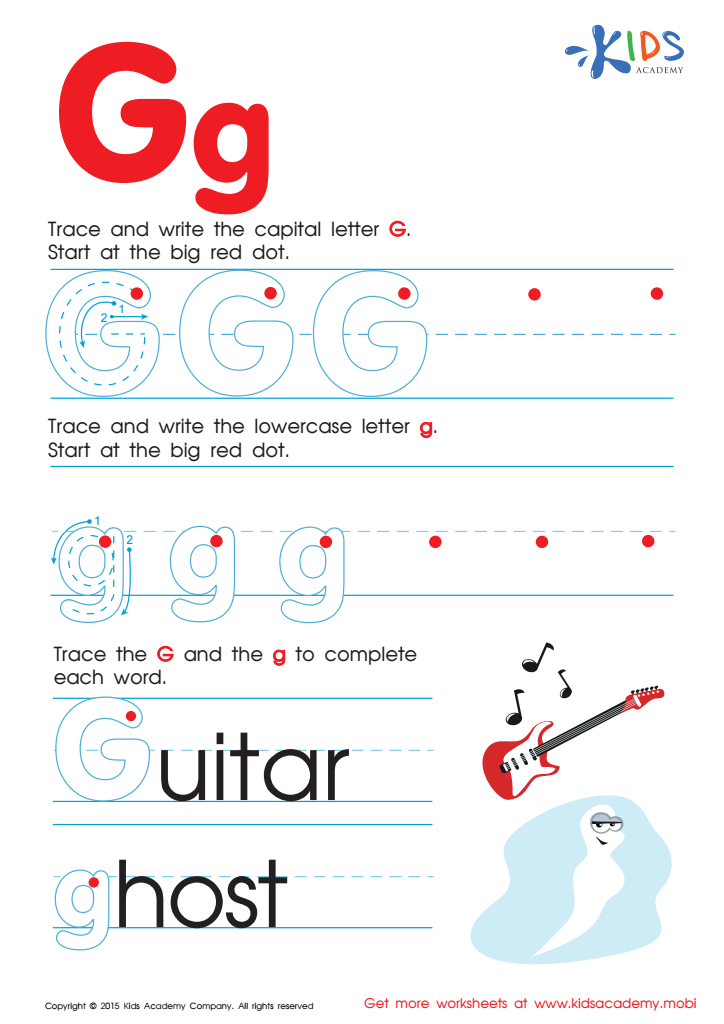
Letter G Tracing Page








Letter formation and tracing letters are critical skills for 9-year-olds, as they are foundational aspects of effective writing. First, proper letter formation enhances legibility, making a child’s writing easier to read for teachers and peers. This is particularly important as assignments become more complex, and clear communication becomes essential for academic success.
Secondly, tracing letters promotes fine motor skills, which are crucial for handwriting development. As children practice, they strengthen the small muscles in their hands and fingers, leading to better control and coordination. This growth contributes not just to writing but also to various everyday tasks that require dexterity.
Moreover, a strong emphasis on letter formation instills a sense of pride and accomplishment in students. It fosters confidence, allowing them to express their thoughts and creativity in a structured and polished way. Additionally, teachers and parents can use this skill to encourage positive learning habits, as tracing letters can be both engaging and interactive.
In summary, letter formation and tracing are not mere exercises; they lay the groundwork for future writing proficiency, motor skills development, self-confidence, and effective communication, all of which are essential for academic and personal growth.








