Vocabulary enhancement English for Beginners Worksheets for 9-Year-Olds
12 filtered results
Difficulty Level
Grade
Age
-
From - To
Subject
Activity
Standards
Elevate your child's English proficiency with our engaging Vocabulary Enhancement Worksheets designed specifically for 9-year-olds. Tailored for beginners, these worksheets make learning fun and interactive, helping young learners expand their vocabulary through captivating exercises. Each activity is crafted to progress language skills, ensuring kids grasp new words in context and build confidence in their communication abilities. With a variety of themes and formats, students will enjoy exploring diverse topics while improving their reading, writing, and speaking skills. Equip your child for success in English and watch them thrive academically with our thoughtfully designed resources. Perfect for both home and classroom use!
Favorites
With answer key
Interactive
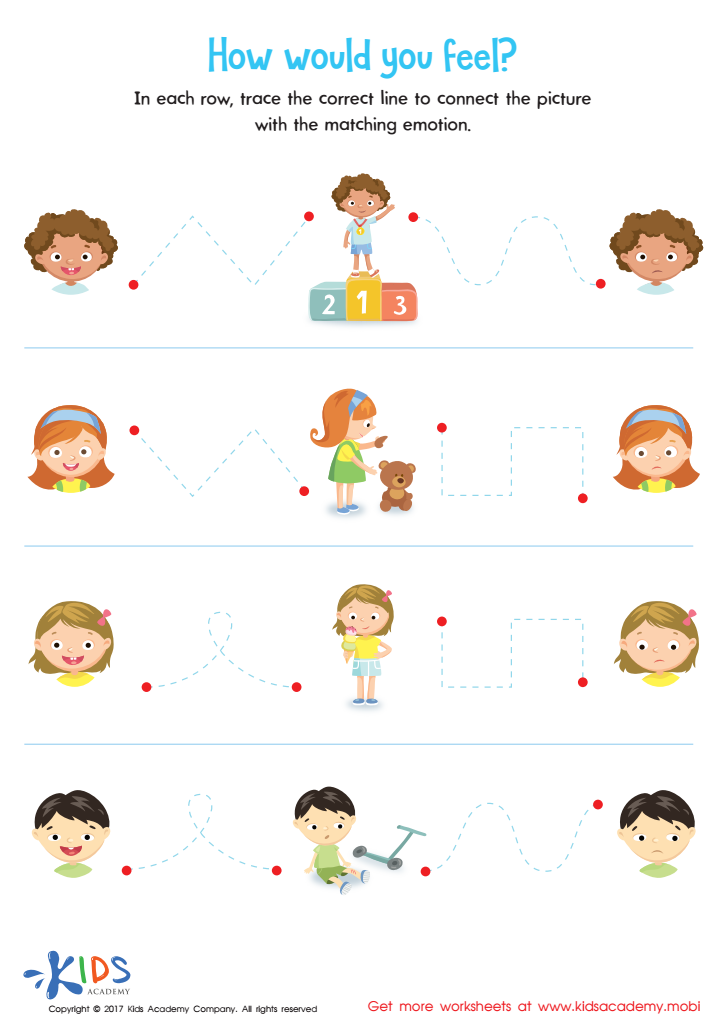
Feelings and Emotions Worksheet
Kids must learn how to deal with situations and handle their own emotions. This worksheet helps them practice empathy and resilience, making them more self-aware and confident. It also helps them to relate their life experiences to common disappointments and develop coping mechanisms.
Feelings and Emotions Worksheet
Worksheet
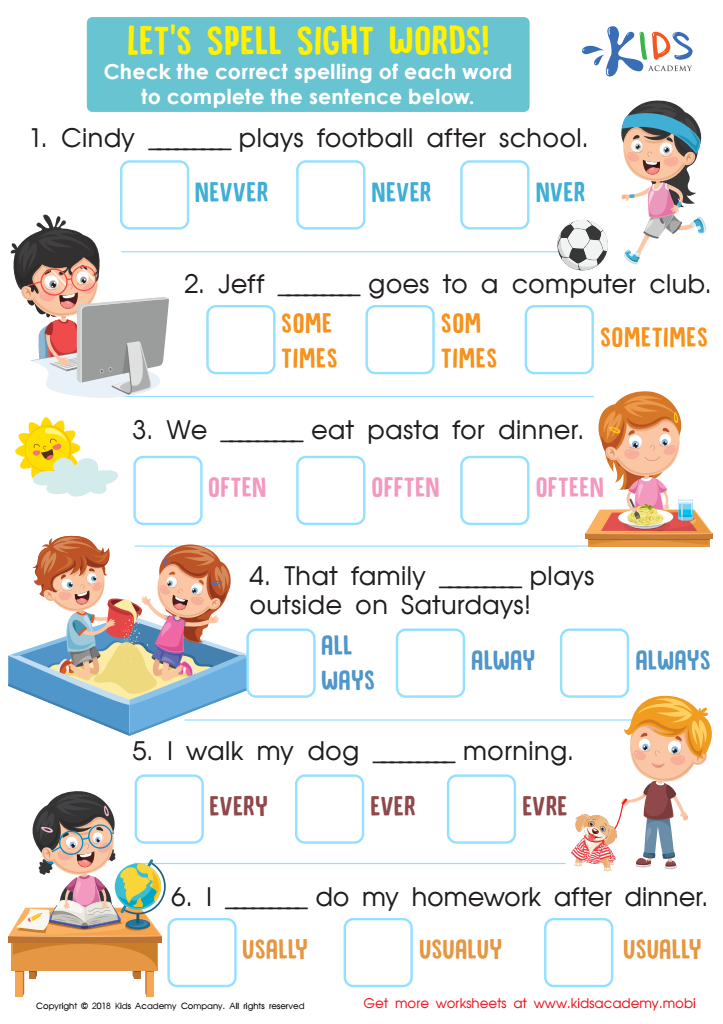
Let's Spell Sight Words Worksheet
Help your kids spell tricky sight words by asking them to spot differences in the sentences of activities they do regularly. This worksheet contains incomplete sentences, with the correct spelling of the word in the options for them to fill in. Get them to look out for words with the wrong spellings.
Let's Spell Sight Words Worksheet
Worksheet
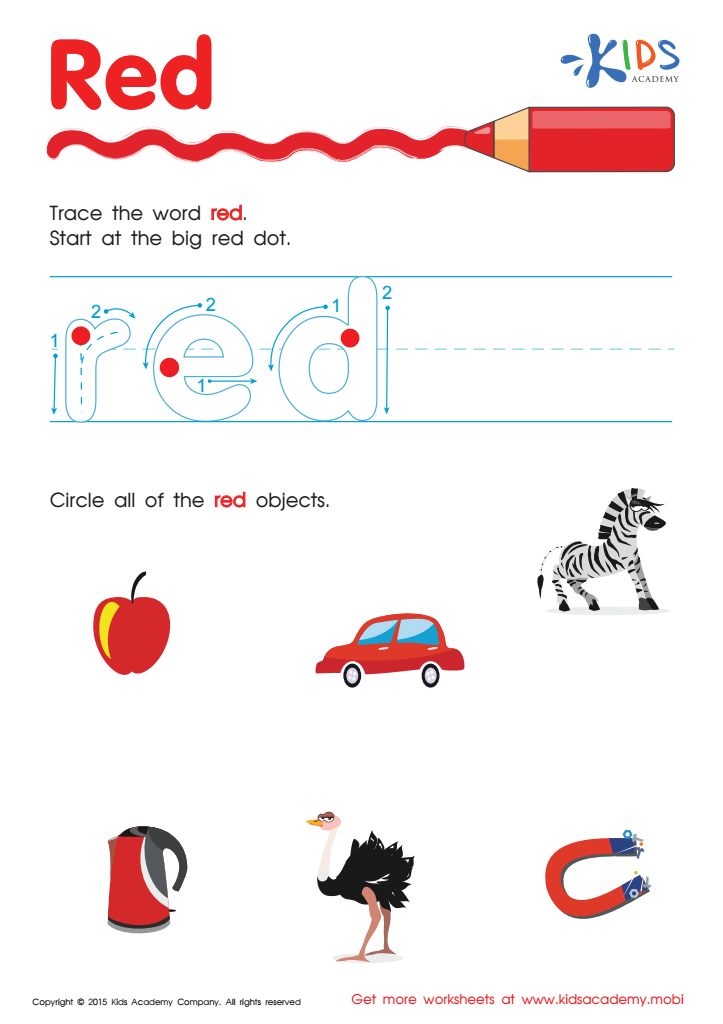
Red Tracing Color Words Printable
Trace red letter by letter, following the arrows and circling all the red objects. Look around your room and find something red. Have fun and become a handwriting master with this worksheet!
Red Tracing Color Words Printable
Worksheet
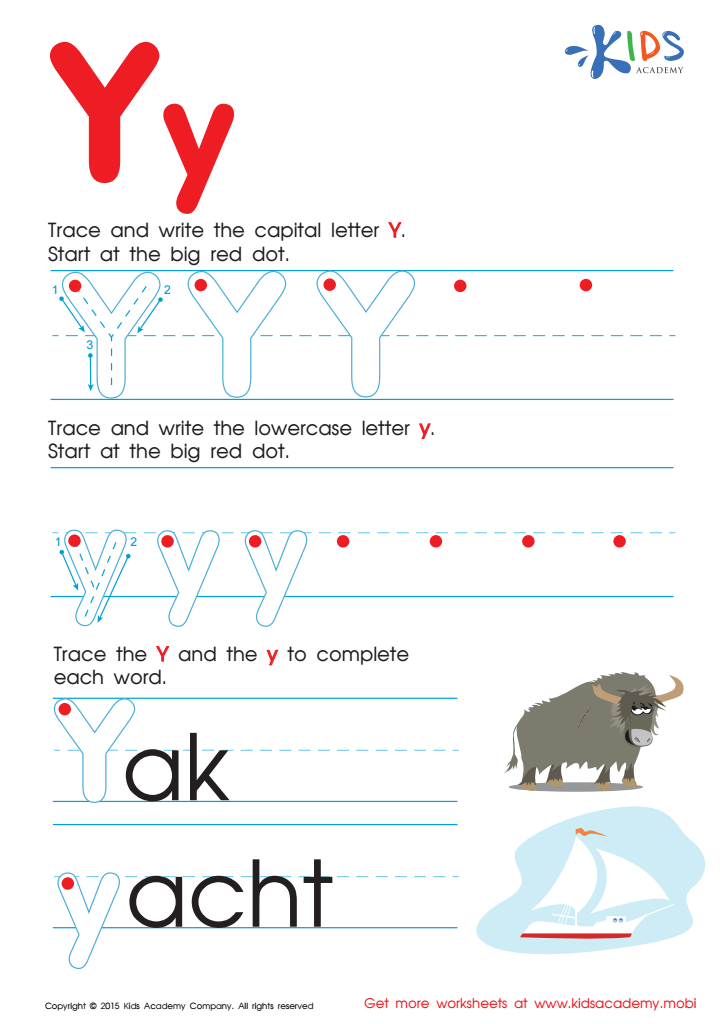
Letter Y Tracing Page
Trace the capital letter "Y" on the red dot, then trace and write the lowercase letter. Complete the words to help the Yak walk and the yacht swim. More worksheets at Kids Academy.
Letter Y Tracing Page
Worksheet
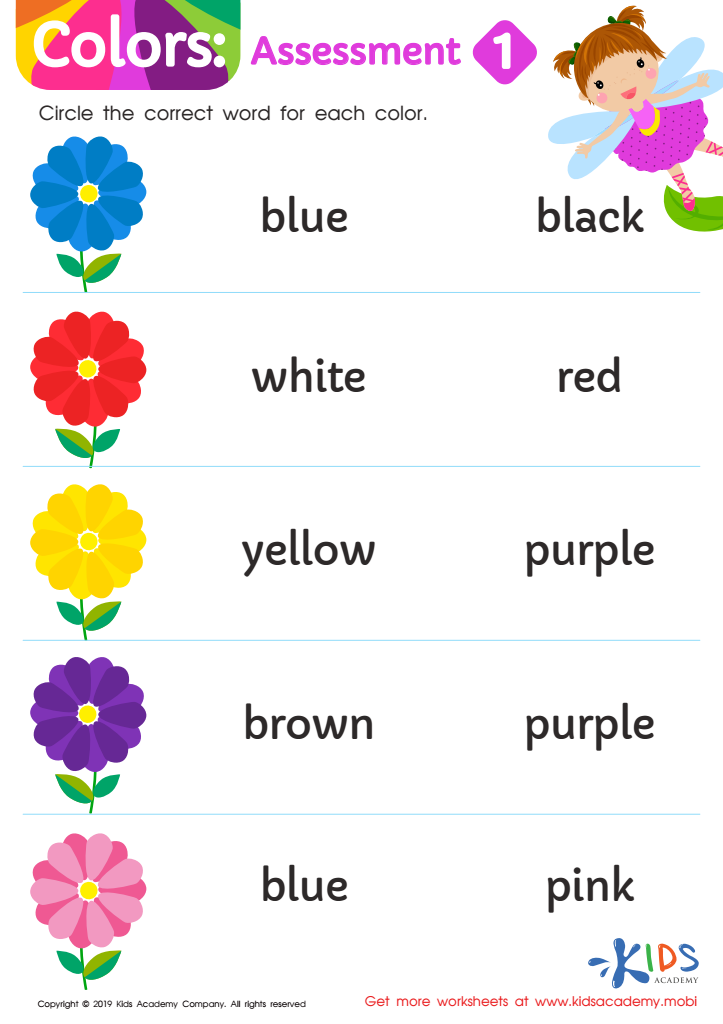
Colors: Assessment 1 Worksheet
Children can decode unfamiliar words by sounding them out or by recognizing sight words. Color words are an important part of sight word knowledge, so add them to your child's list! This color word worksheet is an effective assessment tool for teachers to use with preschool and kindergarten students. It checks their knowledge of five color words - they simply look at the flower and circle the appropriate color word!
Colors: Assessment 1 Worksheet
Worksheet
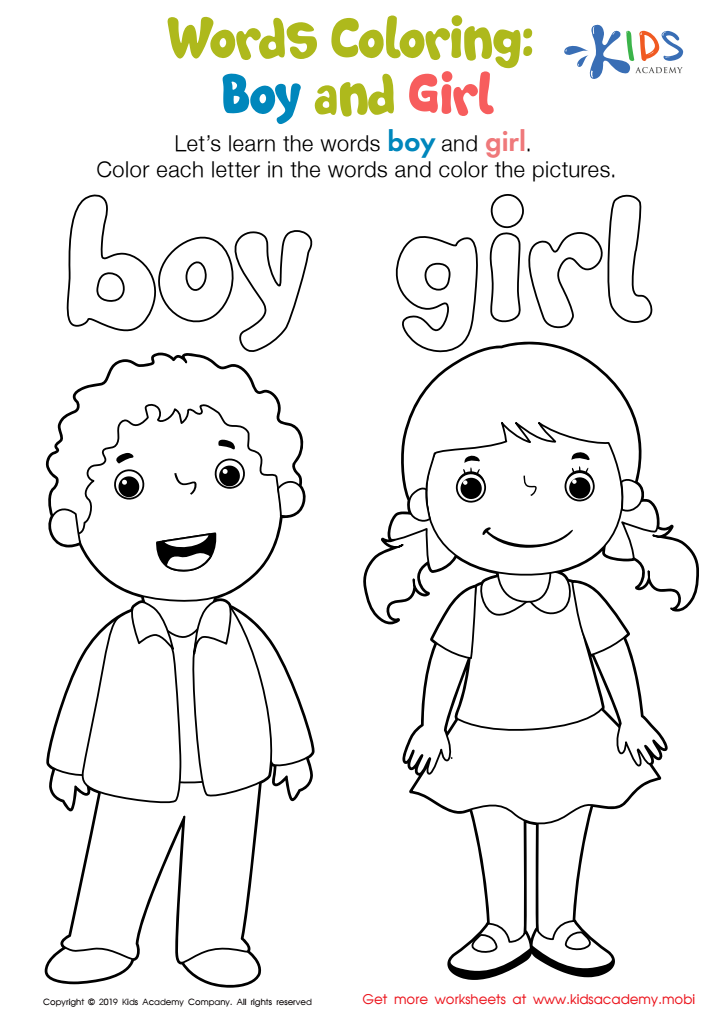
Boy and Girl Words Coloring Worksheet
Help your students build their sight word vocabulary! Early readers may not be able to sound out all words, so this worksheet teaches them to read two important sight words: boy and girl. They will color the letters and a picture of each, making it a fun and educational way to learn. Download the PDF now.
Download (PDF)
 Assign to My Students
Assign to My Students
Boy and Girl Words Coloring Worksheet
Worksheet
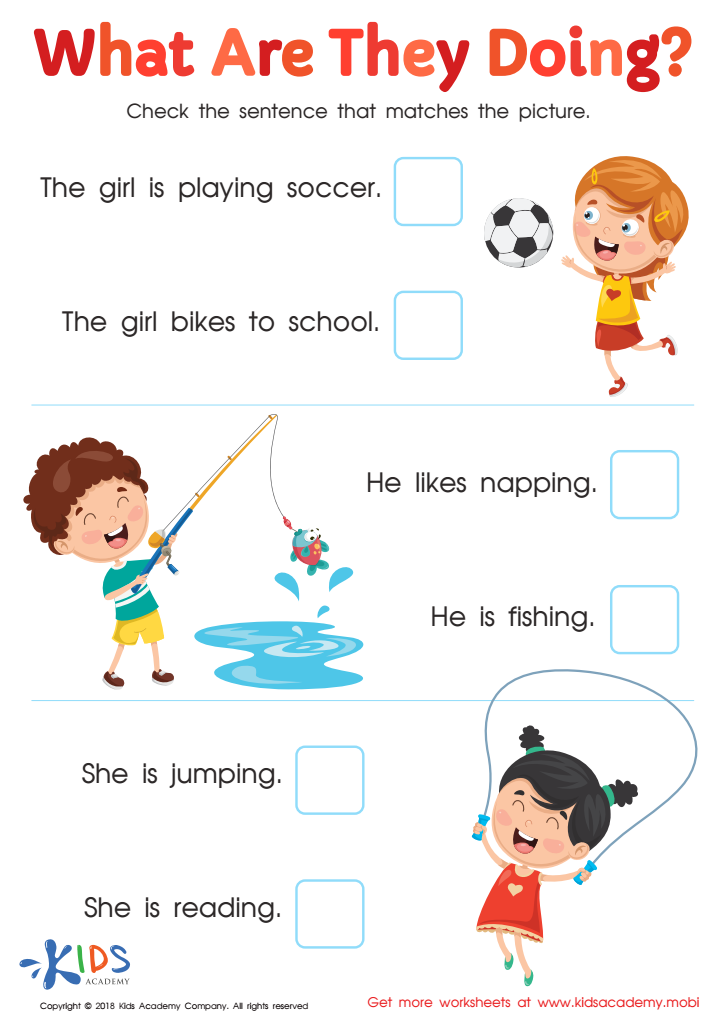
What Are They Doing? Worksheet
Look at the pdf with your child and ask which activities they like. Ask them to match the pictures with the sentences. Read the sentences aloud and help them check the right answers. Encourage them to talk about what they see in the pictures. It's a great way to help them learn.
What Are They Doing? Worksheet
Worksheet
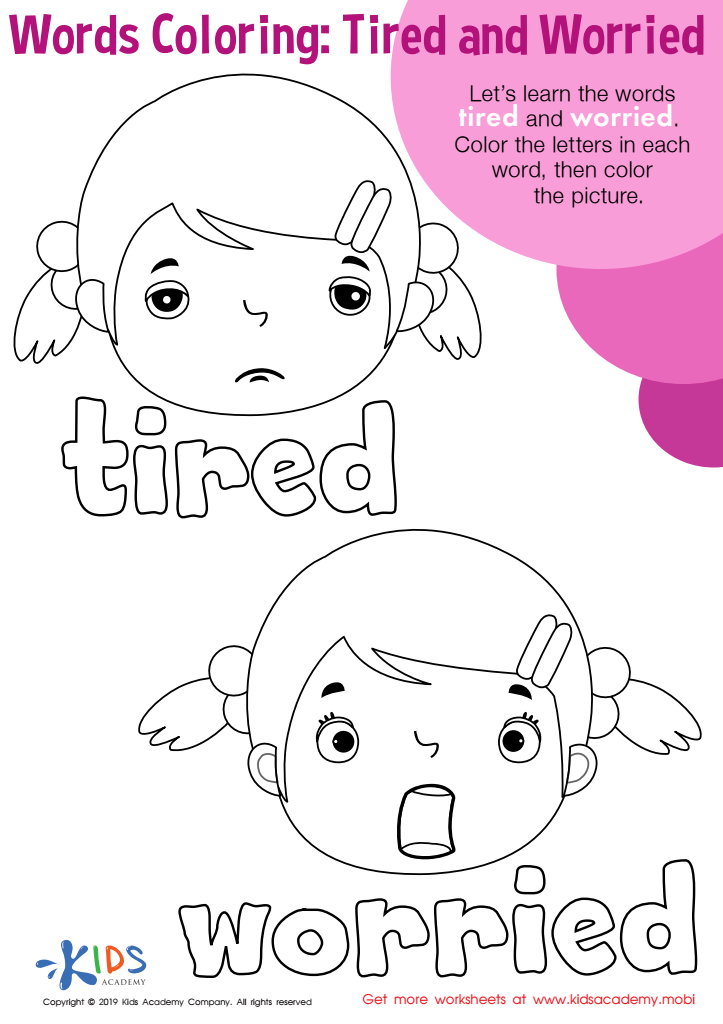
Tired and Worried Words Coloring Worksheet
Teach your students about "tired" and "worried" with this worksheet. Have them read and color the emotion words, then color the pictures of a tired girl and a worried girl. Discuss what makes them tired and worried. Expand their vocabulary with this fun coloring activity!
Download (PDF)
Assign to My Students
Assign to My Students
Tired and Worried Words Coloring Worksheet
Worksheet
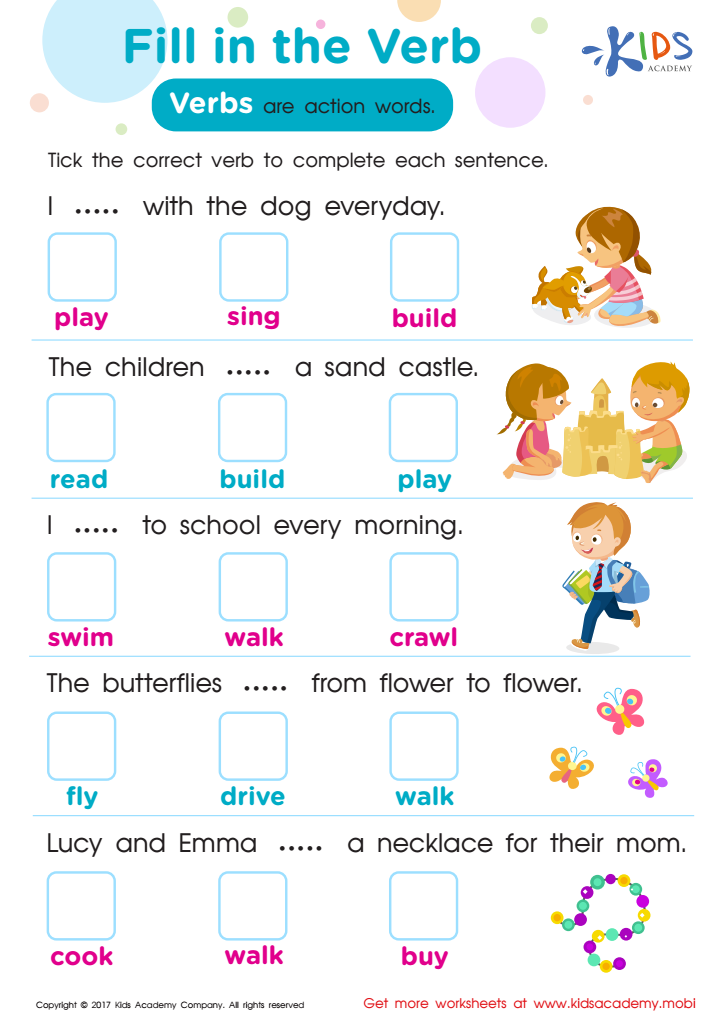
Fill in the Verb Printable
Help your child learn about verbs with this fun worksheet! Colorful images prompt them to fill in the verb, helping build their writing skills. It's a great way to make learning enjoyable.
Fill in the Verb Printable
Worksheet
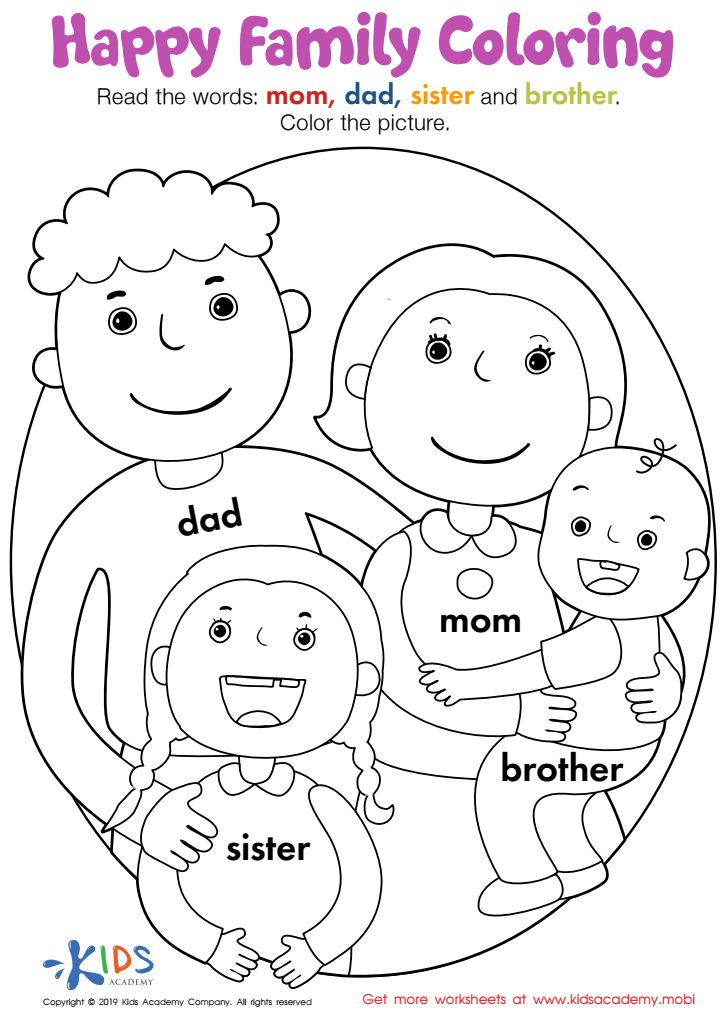
Happy Family Coloring Worksheet
Help your students gain confidence in family vocabulary with this worksheet. Labelled images of a family (dad, mom, sister, brother) are featured, along with an accompanying activity to colour in the picture. Your students will feel a sense of accomplishment after reading and completing the printable.
Download (PDF)
Assign to My Students
Assign to My Students
Happy Family Coloring Worksheet
Worksheet
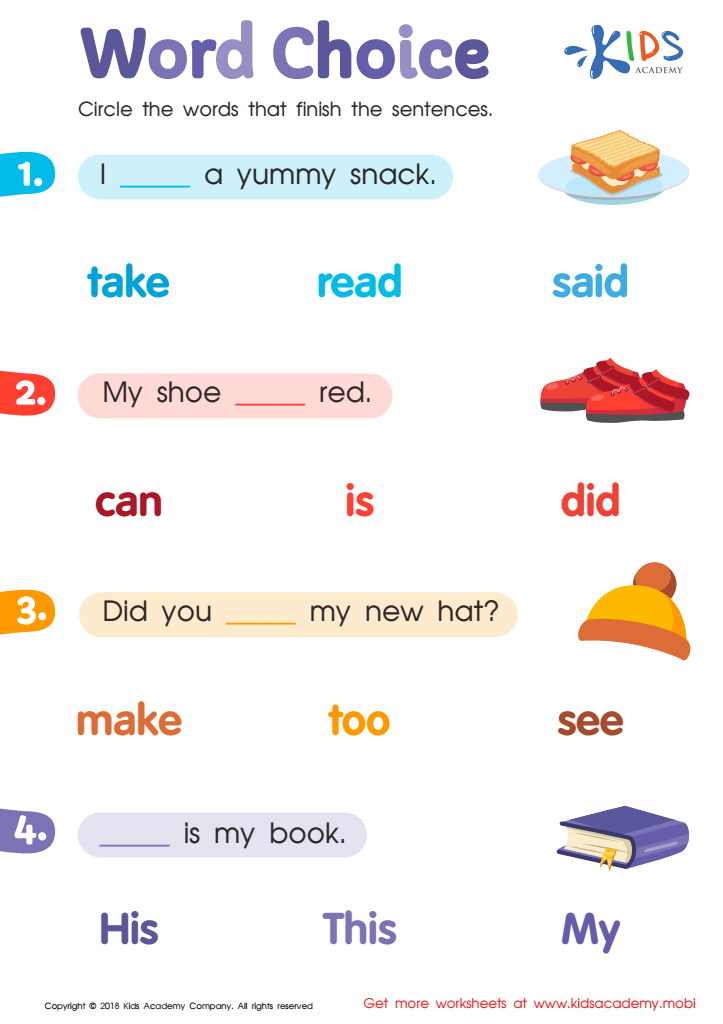
Word Choice Worksheet
This worksheet can help your children become better readers. By now, you should have an idea of their reading level. Read the incomplete sentences aloud and point to the missing piece. Have your students pick the correct word they think best fits the sentence out of the options given.
Word Choice Worksheet
Worksheet
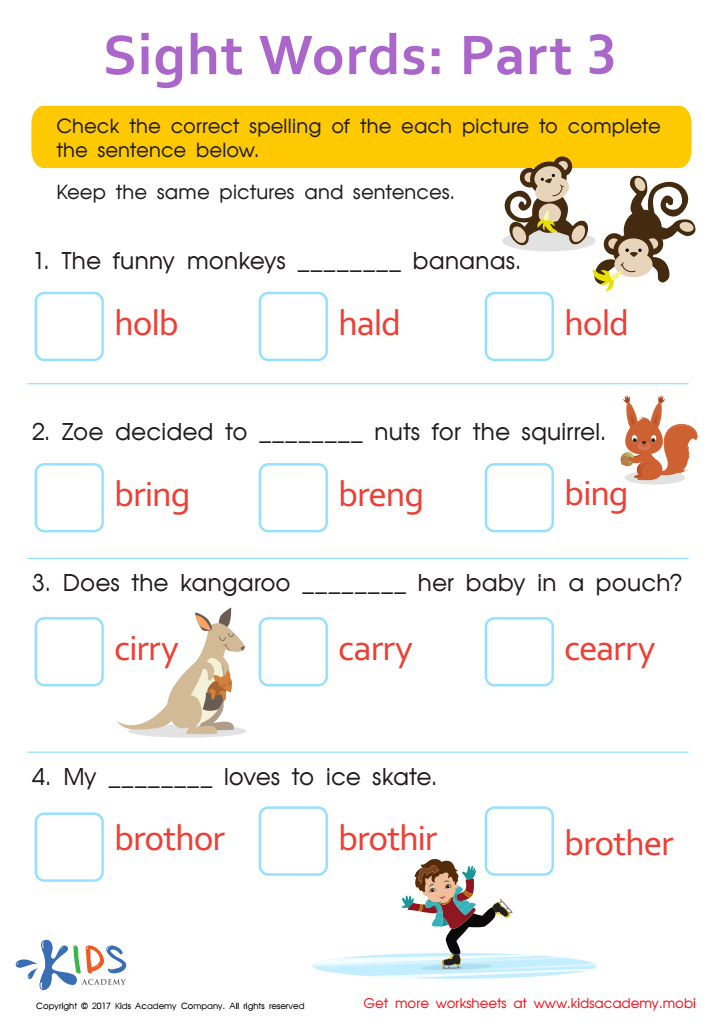
Hold, Bring, Carry, Brother Sight Words Worksheet
This sight words worksheet has fun illustrations to engage kids. They must read each sentence, then fill in the missing word, selecting from: hold, bring, carry, brother!
Hold, Bring, Carry, Brother Sight Words Worksheet
Worksheet
Join Kids Academy for Free
Who is primarily going to use this learning content?




Vocabulary enhancement is crucial for 9-year-old English learners as it lays the foundation for their overall language development and academic success. At this stage, children are developing critical reading and writing skills, and a rich vocabulary can significantly boost their comprehension and communication abilities. When parents and teachers prioritize vocabulary improvement, they open doors for deeper understanding and engagement with texts, fostering a lifelong love for reading.
Moreover, a strong vocabulary helps children express their thoughts and emotions more effectively, leading to improved social interactions and self-confidence. By encouraging vocabulary enhancement, educators and parents help children connect with diverse subjects, aiding in their critical thinking and problem-solving skills.
Additionally, children with extensive vocabularies tend to perform better in standardized tests and classroom assessments, which can influence their educational trajectory. Through playful learning methods, storytelling, and interactive activities, teachers can cultivate an enriching environment that stimulates vocabulary acquisition.
Ultimately, investing time and effort into vocabulary enhancement for 9-year-olds sets the stage for successful communication, analytical abilities, and a deeper appreciation for language, reinforcing the importance for both parents and educators to engage actively in this crucial developmental aspect.