Develop counting skills Worksheets for 9-Year-Olds
4 filtered results
-
From - To
Boost your 9-year-old's counting skills with our engaging worksheets! Tailored for young learners, these resources make counting fun and interactive. Children will work through a variety of exercises, from adding and subtracting numbers to understanding place value. Each worksheet is designed to develop critical thinking while enhancing number sense and problem-solving skills. Ideal for classroom use or home learning, our worksheets foster a love for mathematics. With colorful visuals and age-appropriate challenges, your child will not only improve their counting proficiency but also gain confidence in their math abilities. Explore our collection and watch your child's counting skills soar!
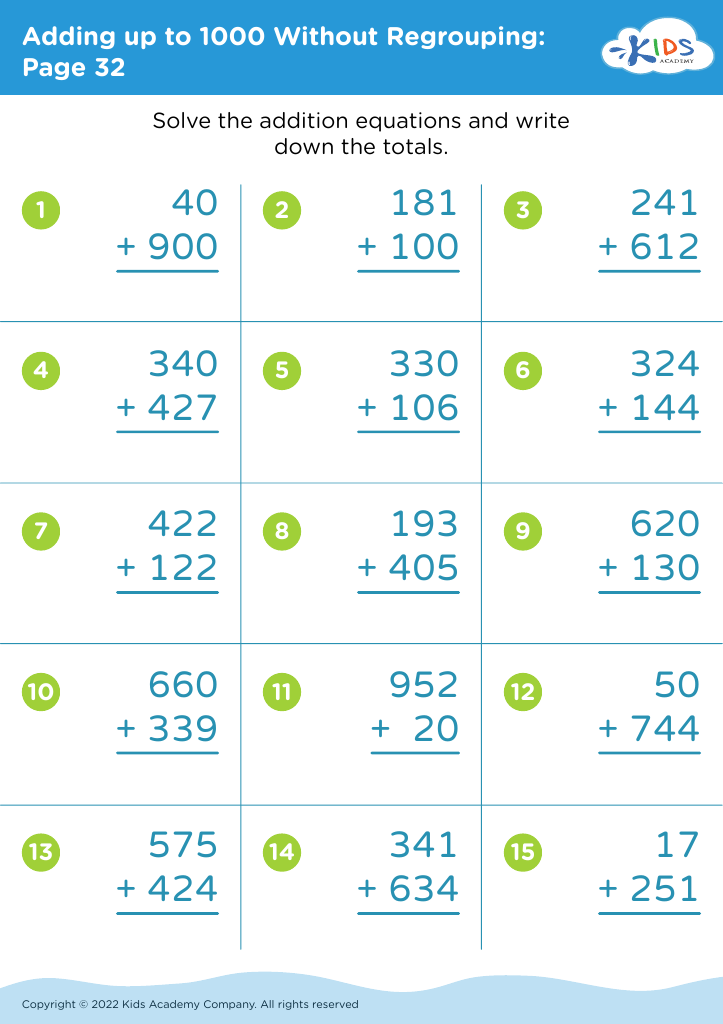
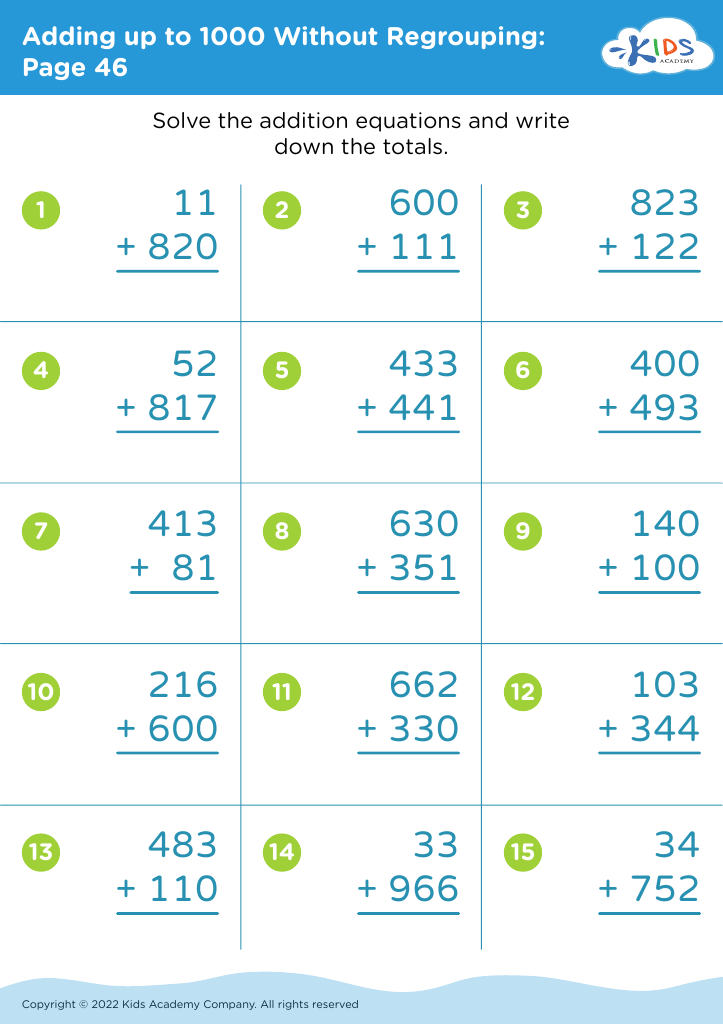
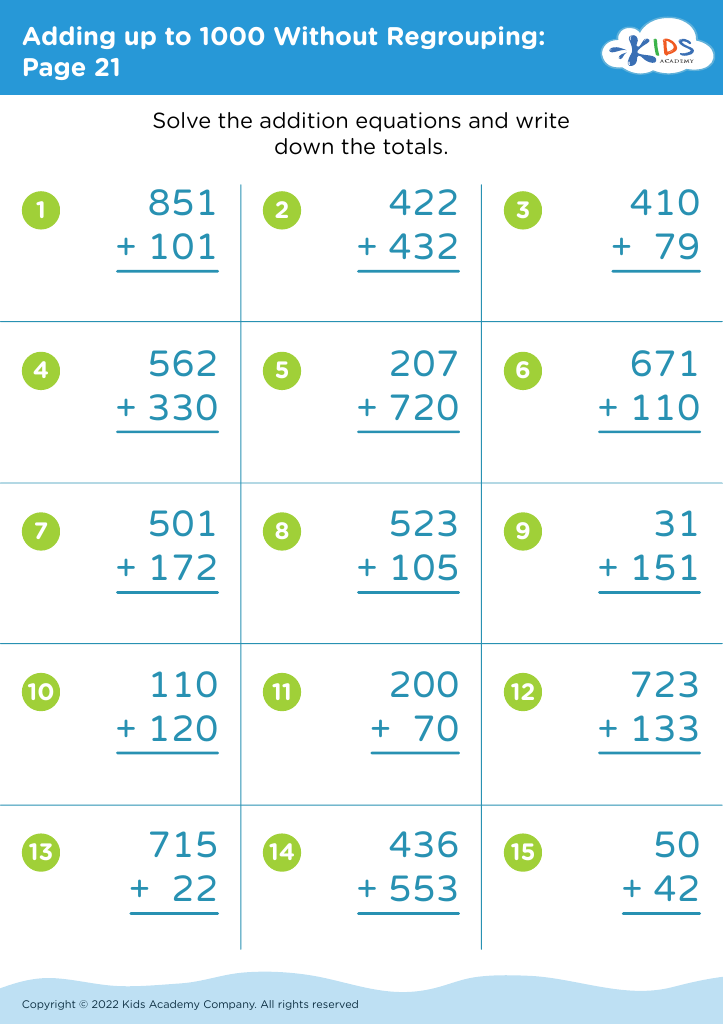
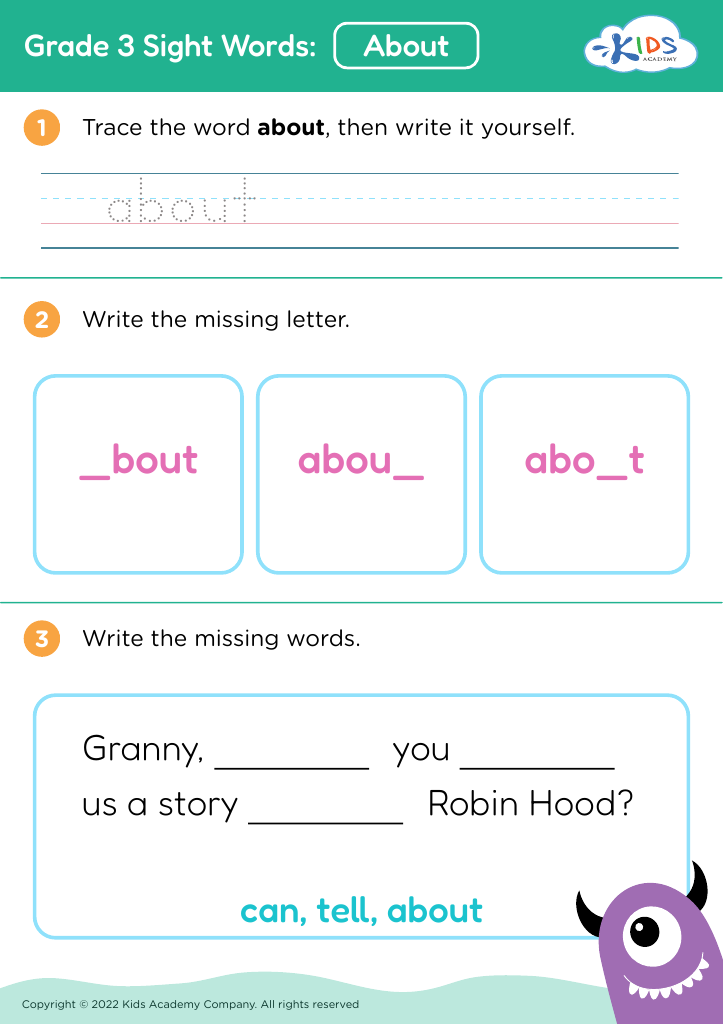







Counting skills are foundational for mathematical understanding and overall cognitive development in children. For 9-year-olds, these skills extend beyond basic counting; they form the building blocks for more advanced concepts like addition, subtraction, and problem-solving. When parents and teachers prioritize the cultivation of counting skills, they provide children with essential tools that support academic success across multiple disciplines.
Strong counting skills enhance children’s ability to understand numerical relationships, recognize patterns, and engage in logical reasoning, which are critical for subjects like math and science. Furthermore, proficiency in counting aids in the development of financial literacy, as children learn to manage money concepts, budgeting, and spending through practical applications.
Emphasizing counting skills fosters a sense of confidence in children, encouraging a positive attitude towards learning and mathematics throughout their educational journeys. By actively engaging in counting activities—be it through educational games, everyday situations like grocery shopping, or hands-on tools like counting objects—parents and teachers can help create a rich learning environment that encourages exploration and curiosity. Overall, improving counting skills can lead to more robust academic performance and better problem-solving abilities, equipping children for real-world challenges.








