
Improve mathematical skills Worksheets for 9-Year-Olds
3 filtered results
Difficulty Level
Grade
Age
-
From - To
Subject
Activity
Standards
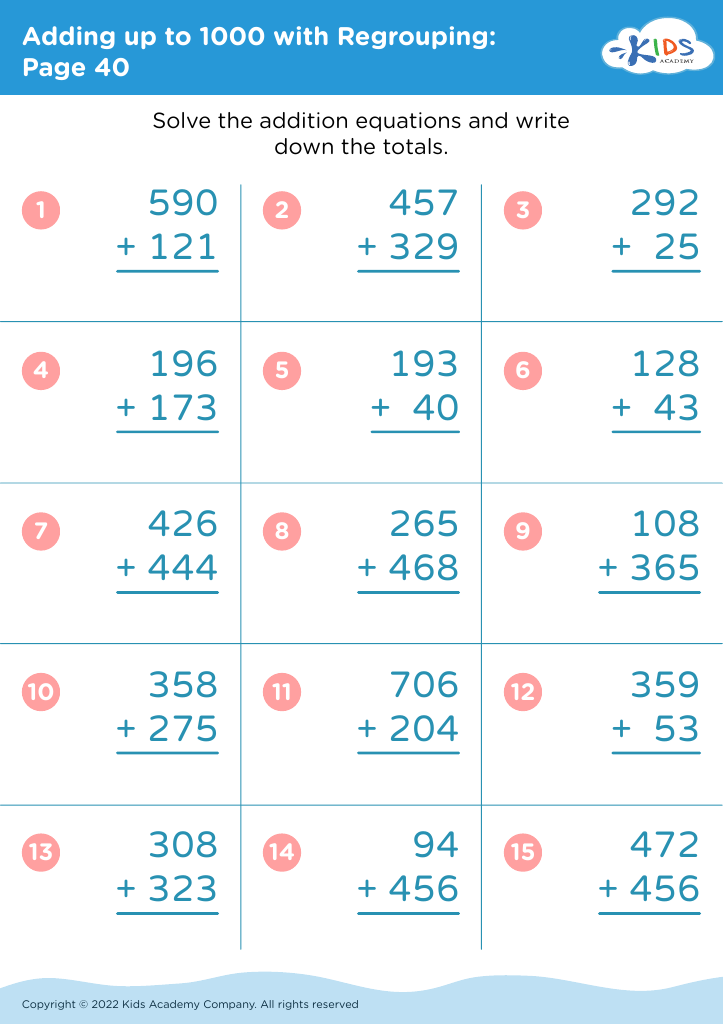
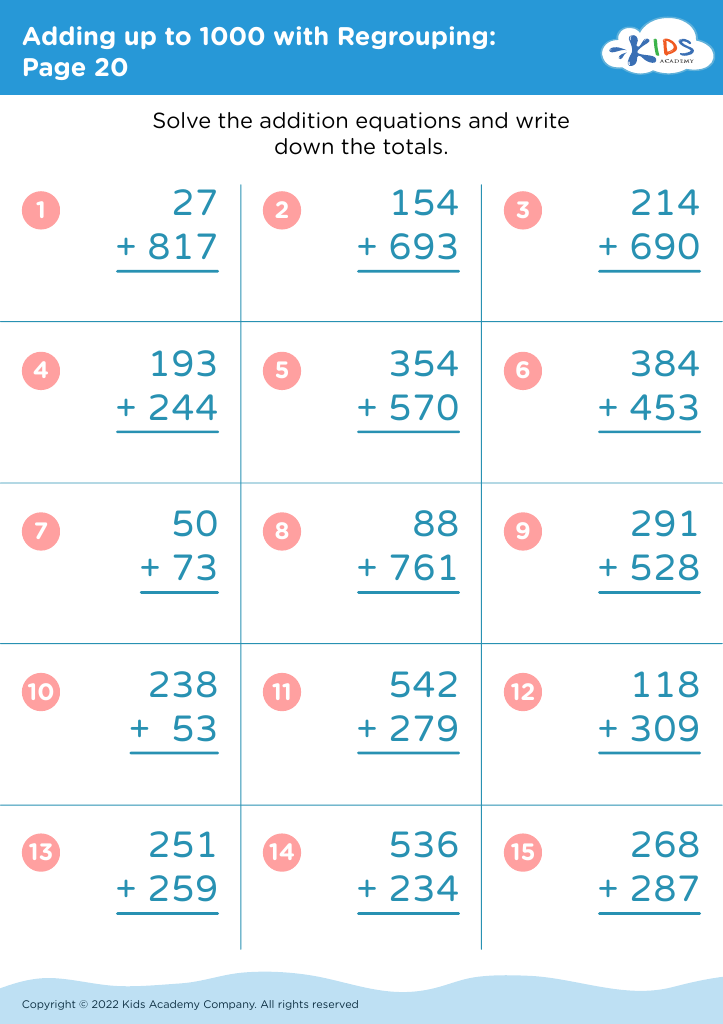
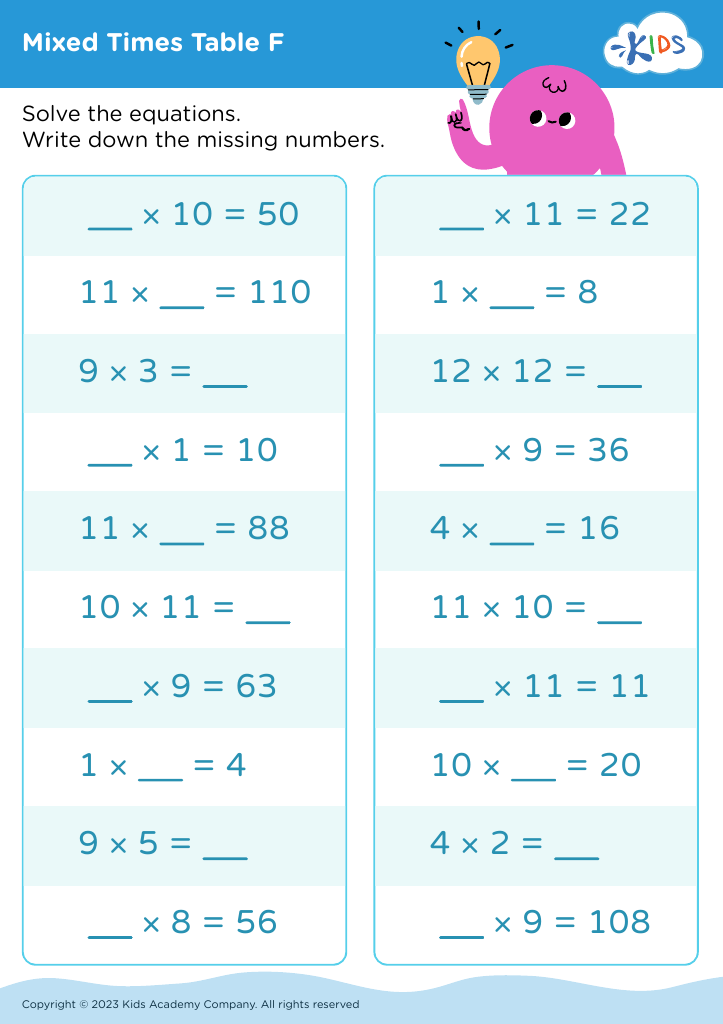
Unlock your child's potential with our "Improve Mathematical Skills Worksheets for 9-Year-Olds." Designed specifically for young learners, these engaging worksheets focus on enhancing essential math skills, including addition, subtraction, multiplication, and division. Each activity is tailored to promote critical thinking and problem-solving while keeping math fun and interactive. Whether your child needs a boost in confidence or daily practice, our resources provide a perfect blend of challenge and support. Perfect for both classroom and home use, these worksheets empower 9-year-olds to master math concepts and build a strong foundation for future learning. Start their math journey today!
Favorites
With answer key
Interactive
Join Kids Academy for Free
Who is primarily going to use this learning content?





.jpg)

Parents and teachers should prioritize improving mathematical skills for 9-year-olds because foundational math knowledge is crucial for a child's overall academic success and daily life. At this age, children begin to develop more complex mathematical concepts, such as multiplication, division, fractions, and introductory geometry. A strong grasp of these topics not only builds confidence but also prepares them for future learning challenges.
Mathematics fosters critical thinking and problem-solving abilities. By encouraging strong math skills, parents and teachers help children enhance their analytical thinking, promoting methods that can be applied across various subjects, from science to social studies. Additionally, competence in math can influence a child's motivation and enthusiasm for learning, leading to a more positive attitude toward education overall.
Furthermore, proficiency in mathematics is essential in today’s technology-driven world. Many careers require foundational math skills, so investing time in these skills now helps set the stage for future opportunities. Lastly, children develop lifelong skills such as logical reasoning and resilience through math practice, qualities that are invaluable both in academics and personal life. By fostering mathematical abilities, parents and educators play a key role in ensuring children thrive in school and beyond.








