Unlock your child's potential with our engaging logical thinking development worksheets for 9-year-olds! Designed to boost problem-solving skills, these worksheets are perfect for young learners. Each activity combines fun with critical thinking, encouraging kids to analyze patterns, make deductions, and explore possibilities. From puzzles to reasoning challenges, our materials promote cognitive growth while making learning enjoyable. Perfect for use at home or in the classroom, these worksheets help children develop essential skills in a supportive environment. Watch your child thrive as they sharpen their logical thinking abilities! Explore our collection now and foster a love for learning through creative challenges.

Check out this FREE "Logical thinking development" Trial Lesson for age 9!

More Word Problems

Favorites
With answer key
Interactive
  • 9
  • Logical thinking development
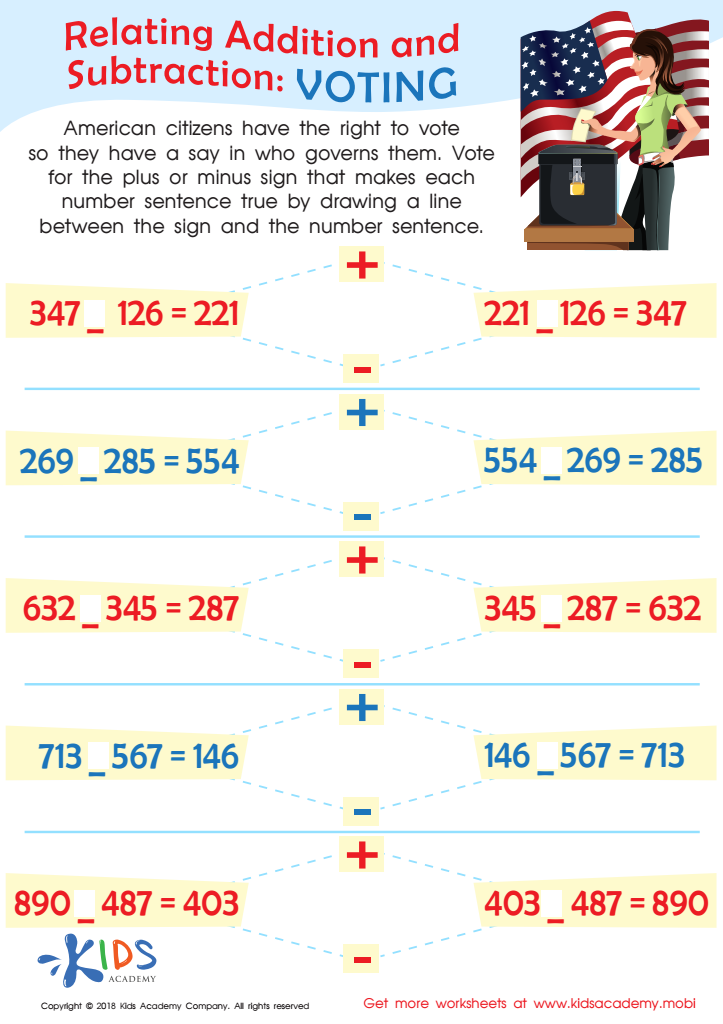
Voting Worksheet
Voting Worksheet

Voting Worksheet

This worksheet combines Social Studies and Math, teaching kids the democratic concept of voting. Guide learners to observe the problem, and decide if it needs a plus or minus. They "vote" for the correct answer by drawing a line from the problem to the correct operation symbol. Tally up the votes to check the answers!
Voting Worksheet
Worksheet
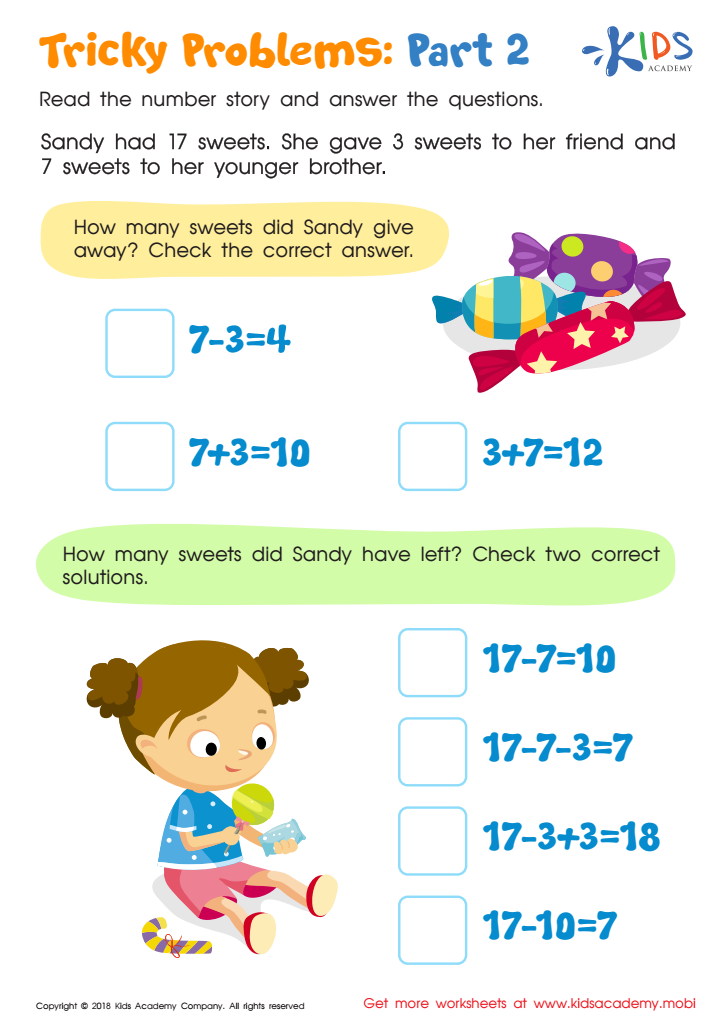
Tricky Problems Worksheet: Part 2

Tricky Problems Worksheet: Part 2

Help your little math learner visualize number stories with this engaging worksheet. They'll connect pictures to the story and use math facts to find the sums. After that, they'll be able to identify the correct number sentences to match. Let them practice and get better at problem solving!
Tricky Problems Worksheet: Part 2
Worksheet
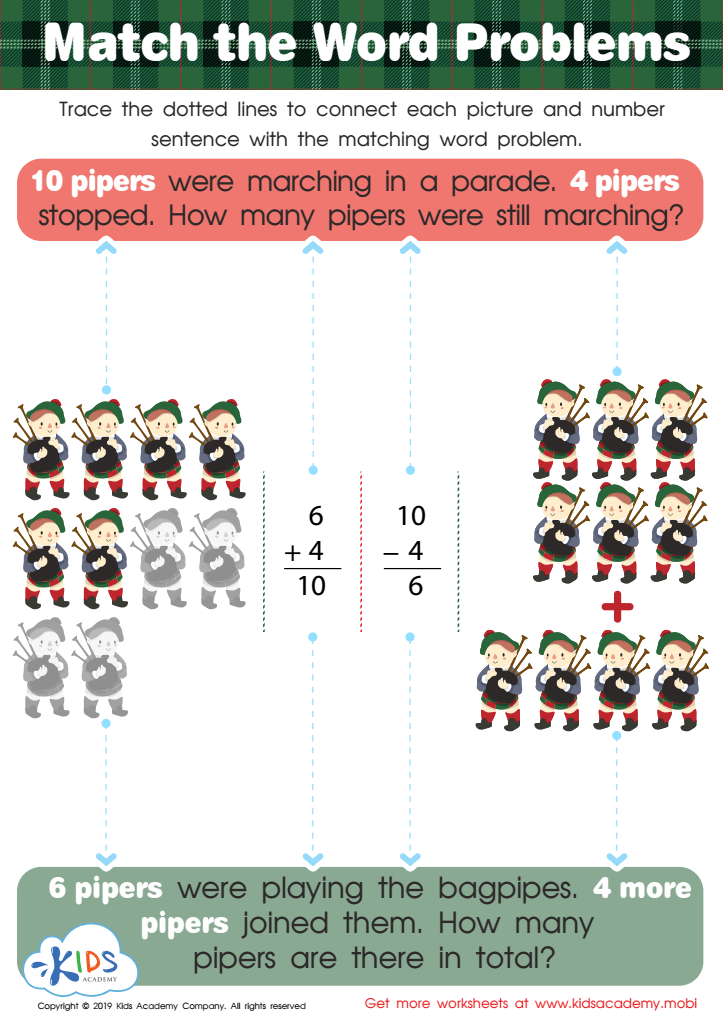
Match the Word Problems Worksheet

Match the Word Problems Worksheet

Read this word problem to your kids: Help them understand how it can be translated into a number problem. Trace the dotted lines to see how each picture and number sentence match the problem. With this worksheet, you can show your kids how easy it is to transform a word problem into a number problem.
Match the Word Problems Worksheet
Worksheet
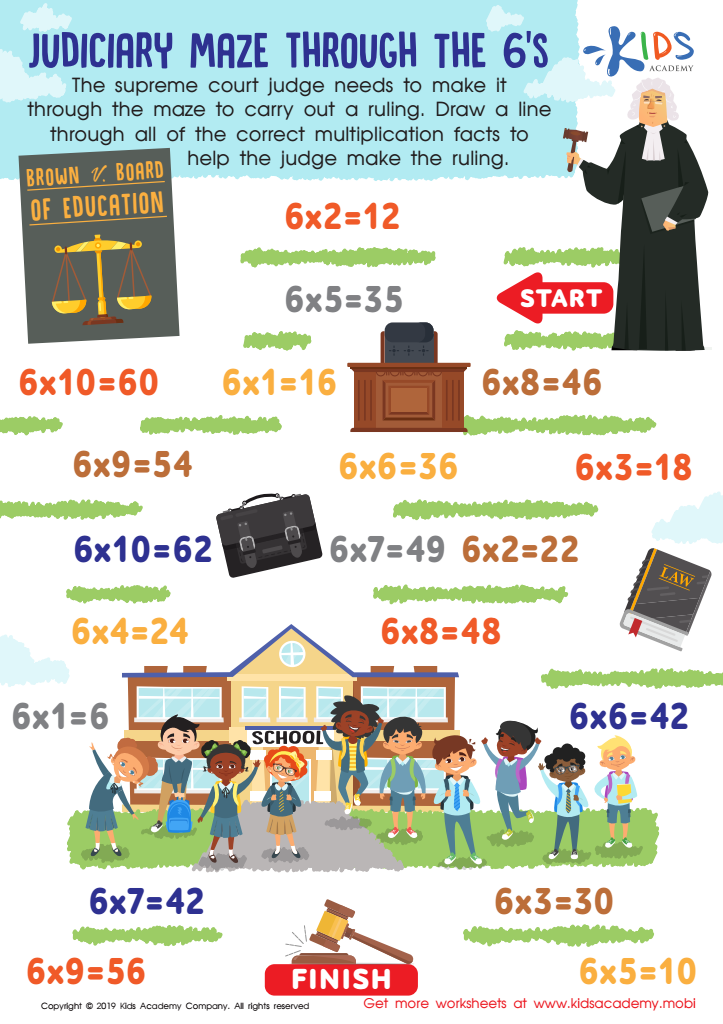
Judiciary Maze Through The 6’s Worksheet

Judiciary Maze Through The 6’s Worksheet

Multiplication can be complicated for kids, with lots of numbers and a seemingly endless multiplication table. Get them interested with a fun worksheet! Have them draw a line through all the correct multiplication facts to help the judge make it through the maze and carry out a ruling.
Judiciary Maze Through The 6’s Worksheet
Worksheet
Using Number Sentences to Solve Problems Worksheet
Using Number Sentences to Solve Problems Worksheet

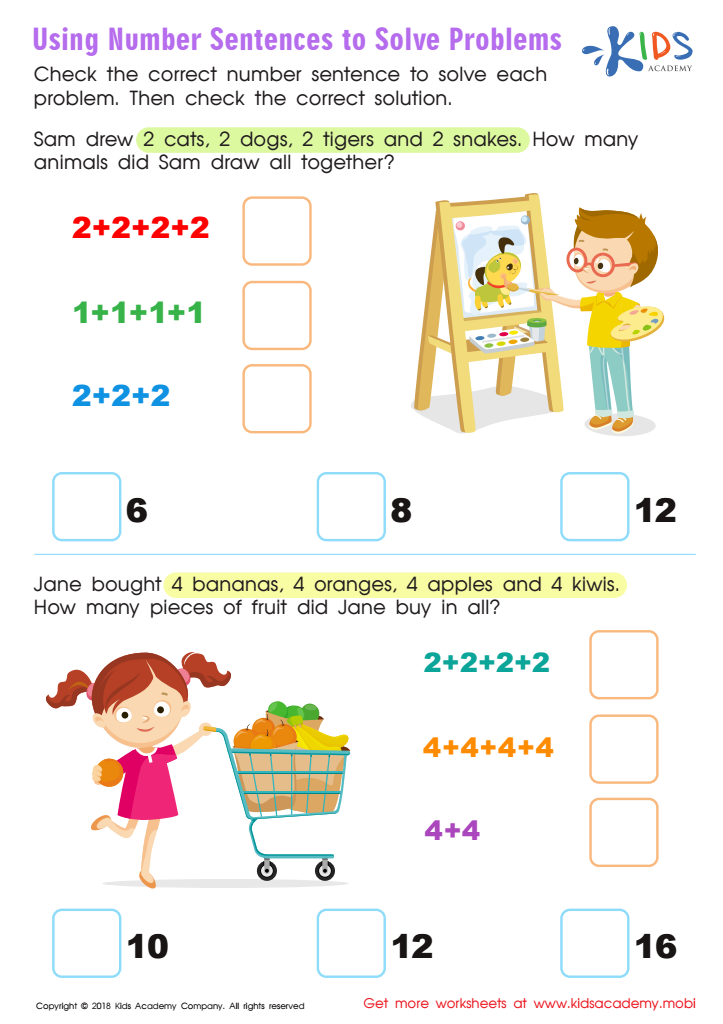
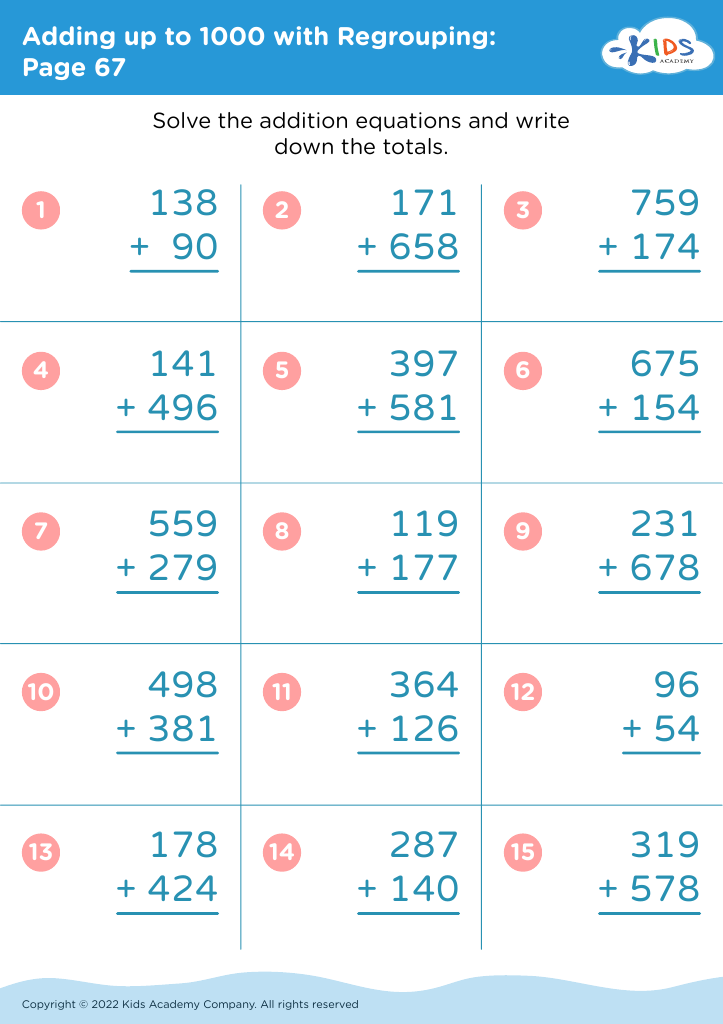
Solving math problems requires an efficient strategy. Picture representation can help young mathematicians with basic addition problems, especially when it involves repeated addends. As they gain confidence, they'll be able to apply their number sentence solving abilities to more complex equations.
Using Number Sentences to Solve Problems Worksheet
Worksheet
Adding up to 1000 with Regrouping: Page 67
Worksheet
Chess Pieces Math Worksheet

Chess Pieces Math Worksheet

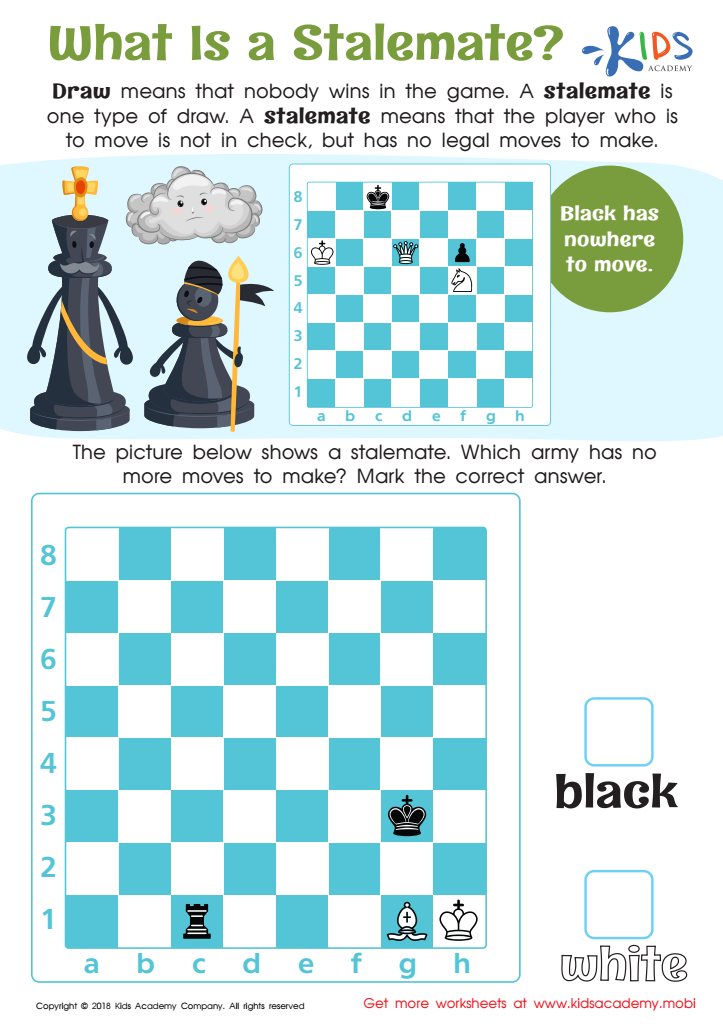
Chess involves math! Each piece has its own value, from the king (worth the entire game) to the queen (9 points), varying according to their power and role. In the worksheet, your child must use these values to solve the equations at the bottom.
Chess Pieces Math Worksheet
Worksheet
What Is a Stalemate? Worksheet
What Is a Stalemate? Worksheet

Chess is an ideal way to develop logic, strategizing, problem-solving and more! Even kids can learn it. With this worksheet, children can learn about draws and stalemates. Sample boards will help them decide which team, black or white, is at a stalemate.
What Is a Stalemate? Worksheet
Worksheet
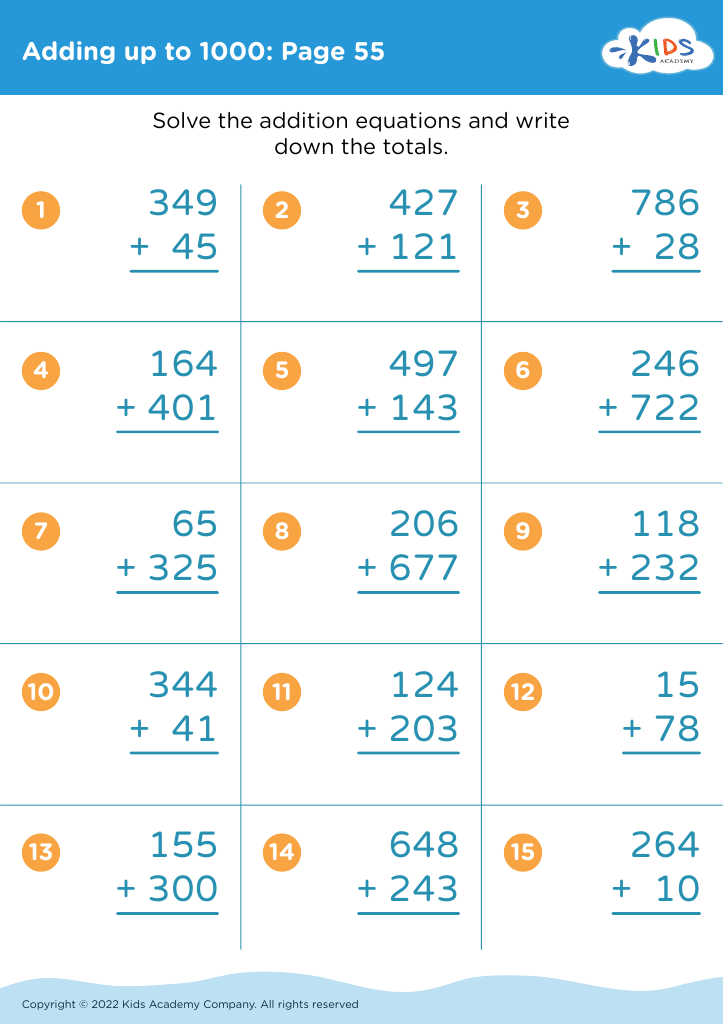
Adding up to 1000: Page 55

Adding up to 1000: Page 55

Adding up to 1000: Page 55
Worksheet
Setting up the Chessboard: Part 1 Worksheet


Setting up the Chessboard: Part 1 Worksheet

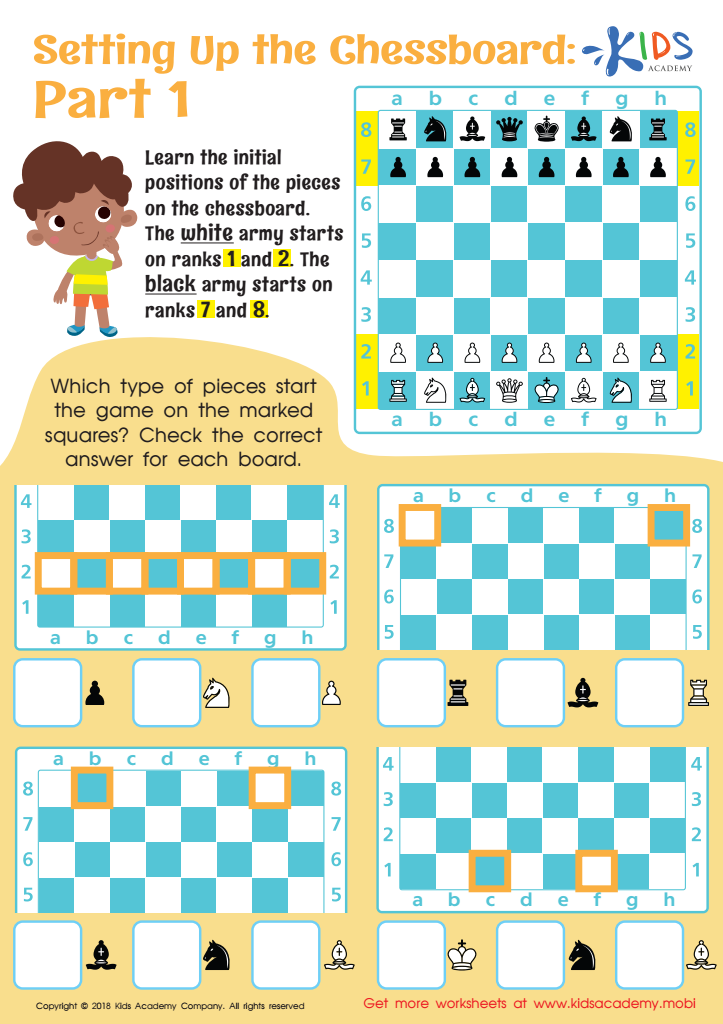
Teach your child the starting positions of the black and white armies on the chessboard. Black pieces are placed on ranks 7 and 8, and white pieces on ranks 1 and 2. Have them check the highlighted boxes on the chessboard to make sure they know the correct pieces to start with.
Setting up the Chessboard: Part 1 Worksheet

Worksheet


Logical thinking is essential for the cognitive development of nine-year-olds, as it lays the foundation for problem-solving and critical reasoning skills. At this age, children transition from concrete thinking to more abstract reasoning, which is crucial for their academic success. By fostering logical thinking, parents and teachers empower children to analyze situations, draw conclusions, and make informed decisions.

Additionally, logical thinking nurtures creativity and curiosity. It encourages children to ask questions, explore various solutions, and engage with challenges rather than retreating from them. This skill is not only valuable in subjects like mathematics and science but also in everyday life scenarios, helping children to navigate their world effectively.

Moreover, logical thinking aids in the development of social skills. It enhances communication abilities, as logical thinkers often articulate their thoughts clearly and convincingly. This fosters positive interactions with peers and adults, promoting teamwork and cooperation.

Finally, nurturing logical thought processes can inspire a love for learning. When children feel equipped to tackle problems, they are more likely to engage actively in their education, paving the way for lifelong learning and adaptability in an ever-changing world. Thus, investing in logical thinking at this crucial age is beneficial for both immediate educational outcomes and future successes.