
Math problem-solving Worksheets for 9-Year-Olds
12 filtered results
Difficulty Level
Grade
Age
-
From - To
Subject
Activity
Standards
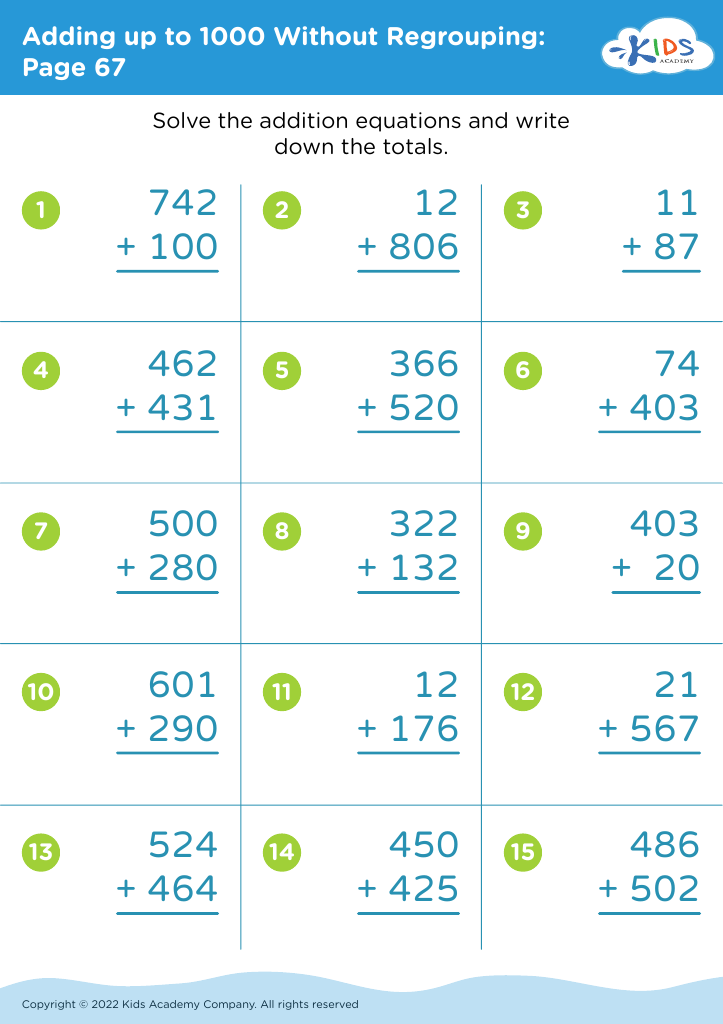
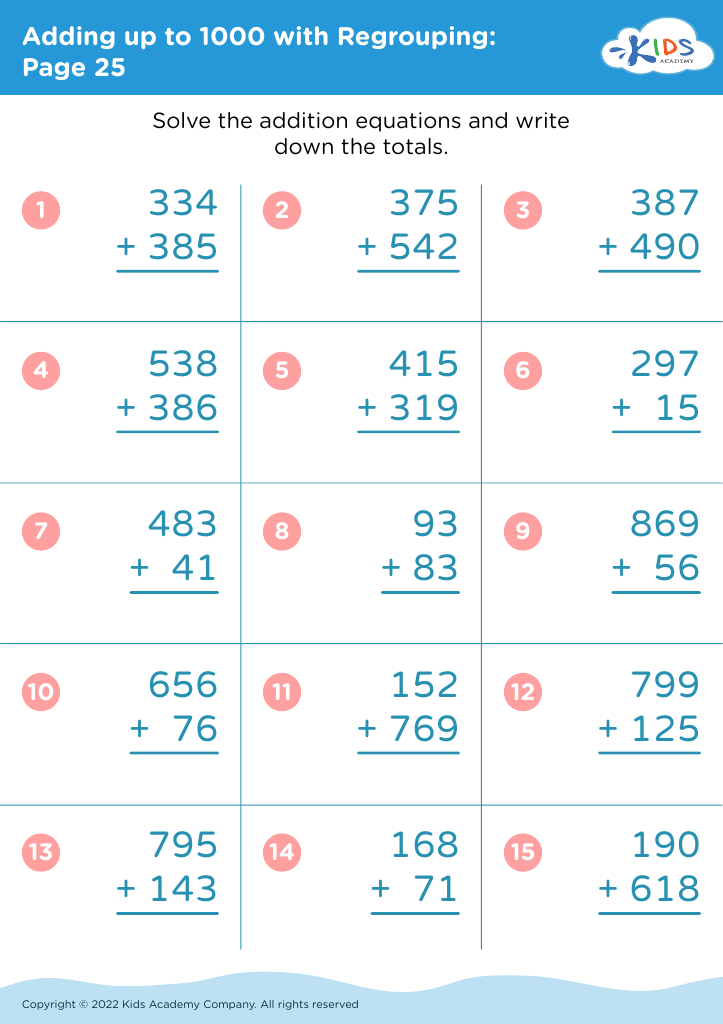
Unlock your child's potential with our Math Problem-Solving Worksheets for 9-Year-Olds! Specially designed to stimulate young minds, these engaging worksheets cover essential math skills like addition, subtraction, multiplication, and division. Each worksheet encourages critical thinking and fosters problem-solving prowess through real-world scenarios. Perfect for classroom use or at-home practice, these fun and educational resources build confidence and improve math fluency. Download and print to make learning an enjoyable experience for your 9-year-old. Equip your child with the tools they need to excel in math with Kids Academy today!
Favorites
With answer key
Interactive
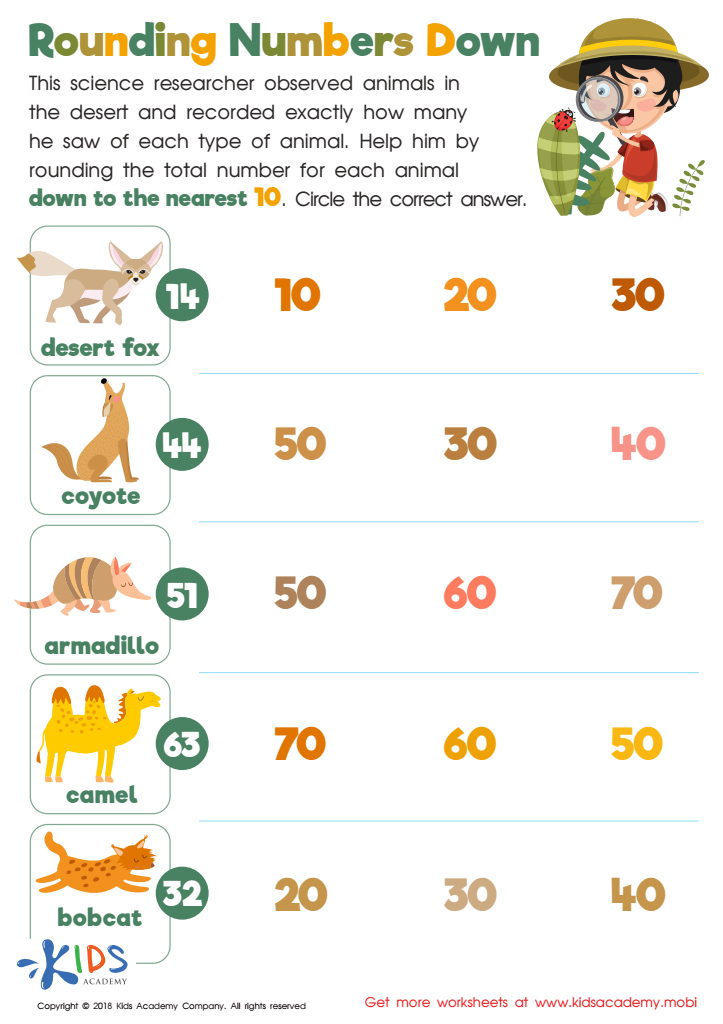
Rounding Numbers Down Worksheet
Does your child aspire to be a science researcher? This worksheet is the perfect place to start! Help your little one round the total number of animals seen in the desert to the nearest 10, then circle the correct answer for each. Fun and educational, this activity is a great way to help your kids get a taste of the science researcher lifestyle.
 Assign to My Students
Rounding Numbers Down Worksheet
Worksheet
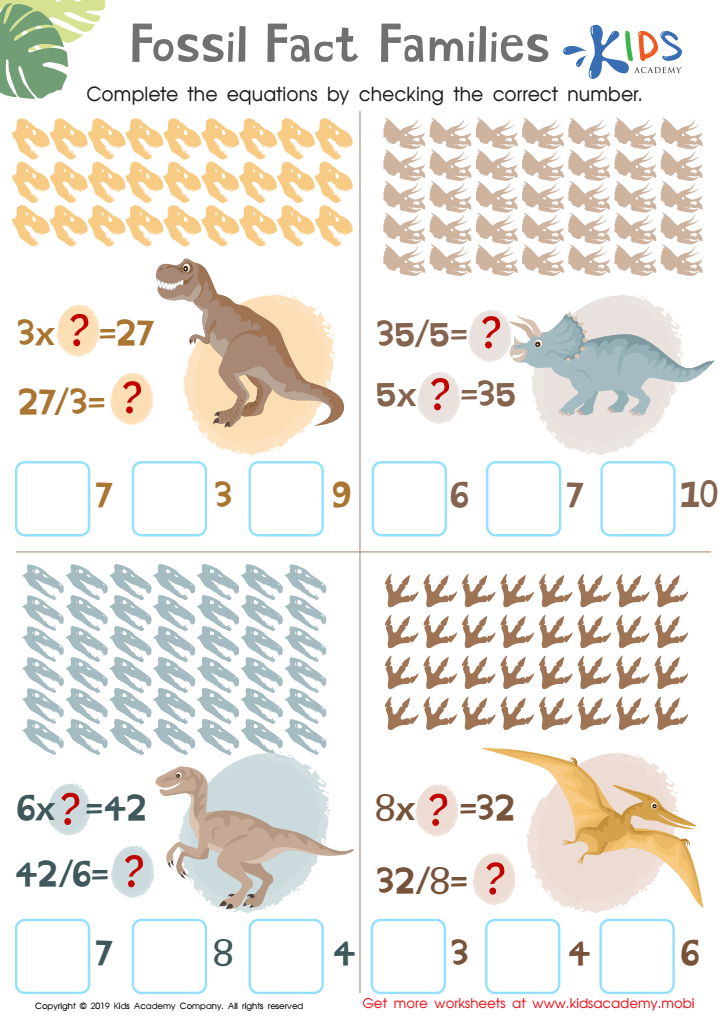
Fossil Fact Families Worksheet
Kids love dinosaurs, so why not learn about fact families with some fun prehistoric friends? This PDF worksheet uses picture arrays to help kids understand the relationships between multipliers and dividends. It helps them build automaticity with multiplication facts so they can quickly solve division problems and see the relationships between the two fact families.
Fossil Fact Families Worksheet
Worksheet
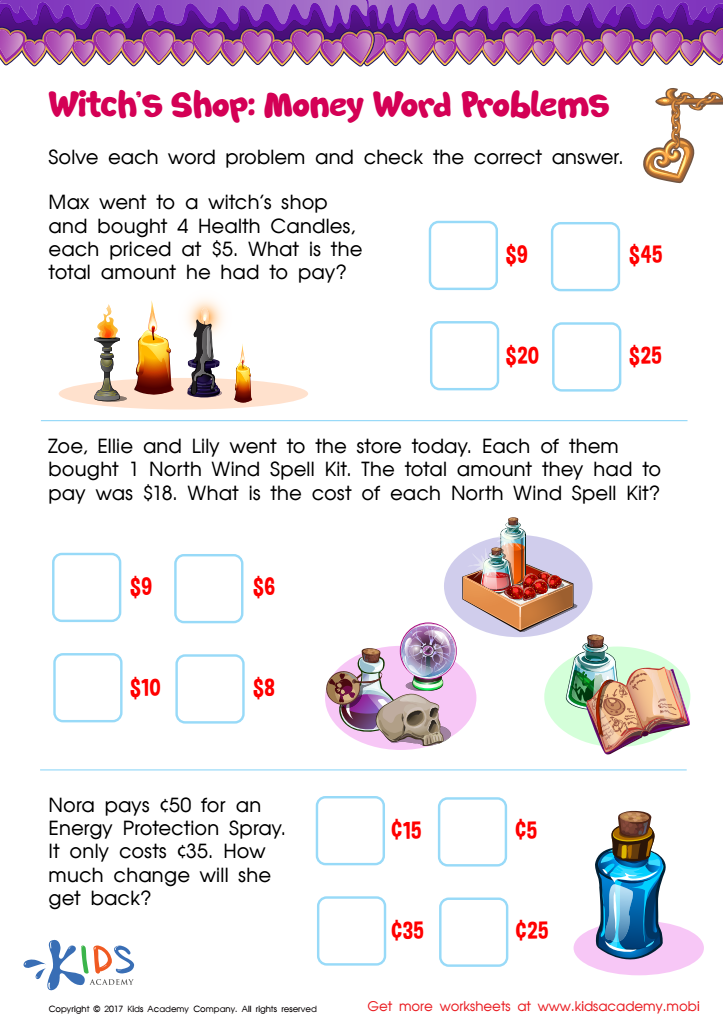
Money Word Problems Printable
Boost your 3rd grader's math skills with money word problems. This worksheet takes them to a witch's shop for a fun way to practice multiplication and division.
Money Word Problems Printable
Worksheet
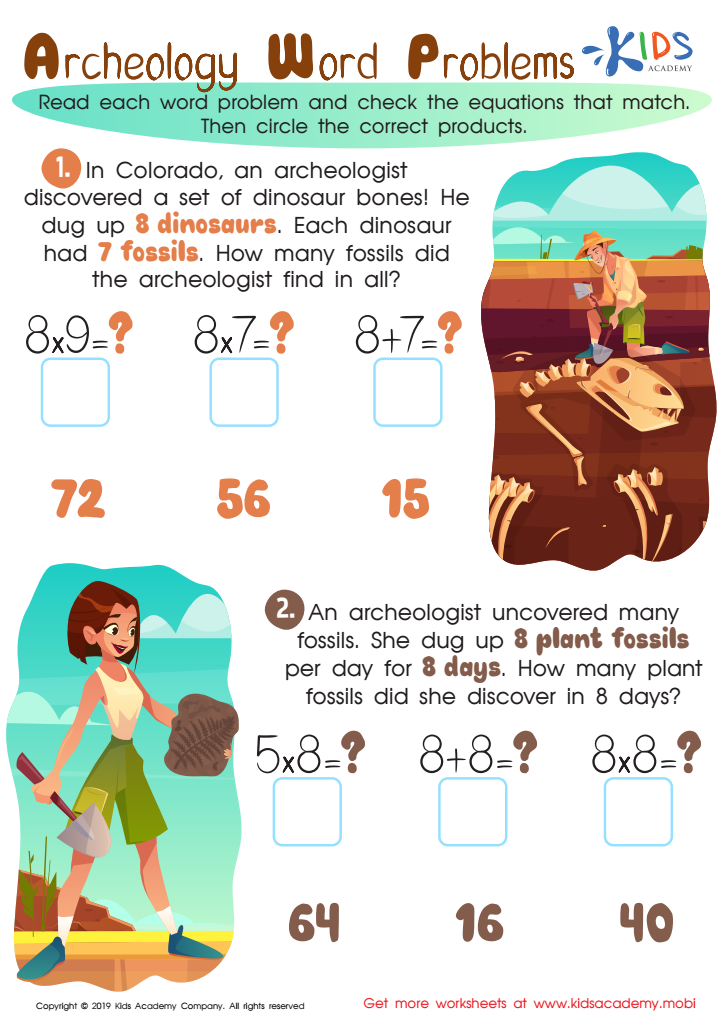
Archeology Word Problems Worksheet
Encourage your child to explore their career options! Show them an archeologist's job with this worksheet - featuring a picture of a dinosaur bone discovery. Read the accompanying text, then solve the word problems. Help your kids circle the correct answers to better understand this profession.
Archeology Word Problems Worksheet
Worksheet
Join Kids Academy for Free
Who is primarily going to use this learning content?








Parents and teachers should prioritize math problem-solving skills for 9-year-olds because it forms a foundational part of their cognitive and academic development. At this age, children are transitioning from basic arithmetic to more complex mathematical concepts that require logical thinking and resilience. By engaging in problem-solving, children learn how to approach difficulties strategically. They develop critical thinking skills that are not only valuable academically but are also essential life skills used in everyday decision-making and future problem-solving scenarios.
Additionally, early exposure to challenging math problems fosters a positive attitude toward mathematics, reducing math anxiety that can inhibit learning. It helps children build confidence in their abilities, encouraging a growth mindset where they understand that effort and practice lead to improvement. Math problems often require persistence, attention to detail, and creative thinking to uncover solutions – qualities that are beneficial across all subjects and activities.
Moreover, strong problem-solving skills in mathematics are linked to success in many careers that rely on analytical and quantitative skills such as engineering, science, technology, and finance. Ensuring children develop robust problem-solving skills in math therefore opens up a wider range of future opportunities. In summary, commitment to developing these skills not only strengthens children's academic foundation but also equips them with the essential tools needed for lifelong learning and success.








