
Measurement skills Worksheets for 9-Year-Olds
3 filtered results
Difficulty Level
Grade
Age
-
From - To
Subject
Activity
Standards
Discover our engaging Measurement Skills Worksheets designed specifically for 9-year-olds! These printable resources will help your child master essential measurement concepts, including length, weight, volume, and time. With a variety of fun activities, your young learner will practice measuring objects, understanding units, and solving real-world problems. Perfect for reinforcing classroom learning or enhancing homeschooling, our worksheets promote hands-on practice and critical thinking. Watch your child's confidence grow as they tackle measurement challenges and develop a solid foundation for future math success. Explore our collection today and make learning measurement skills enjoyable and impactful!
Favorites
With answer key
Interactive
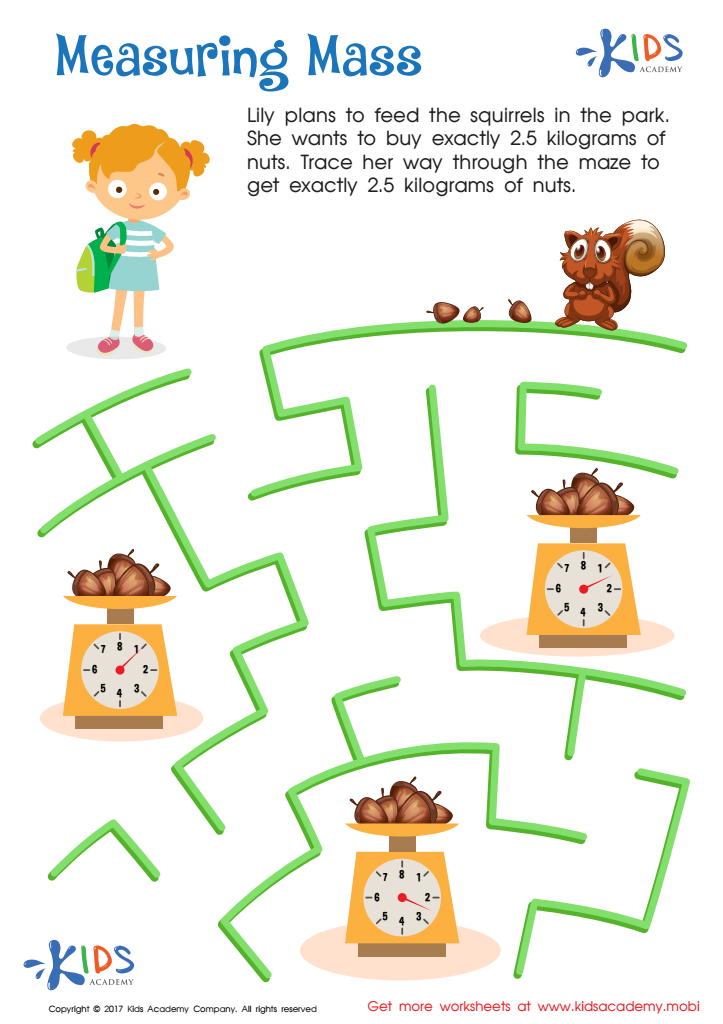
Measuring Mass Worksheet
Lily needs your child's help to find the right number of nuts to feed the squirrels. Ideal for 3rd grade!
 Assign to My Students
Measuring Mass Worksheet
Worksheet
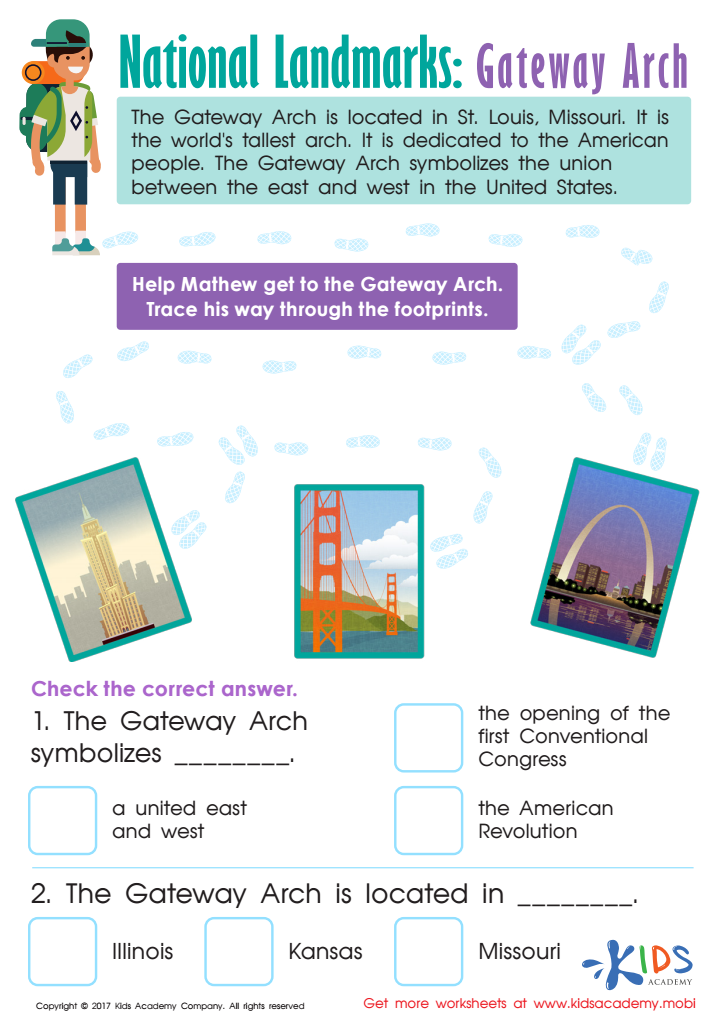
Gateway Arch Printable Worksheet
Explore America with your child! This printable worksheet takes them to St. Louis, Missouri's iconic Gateway Arch. As they learn about its history, they'll be quizzed with fun-filled facts. A great way to discover and appreciate this amazing national landmark! (80 words)
Gateway Arch Printable Worksheet
Worksheet
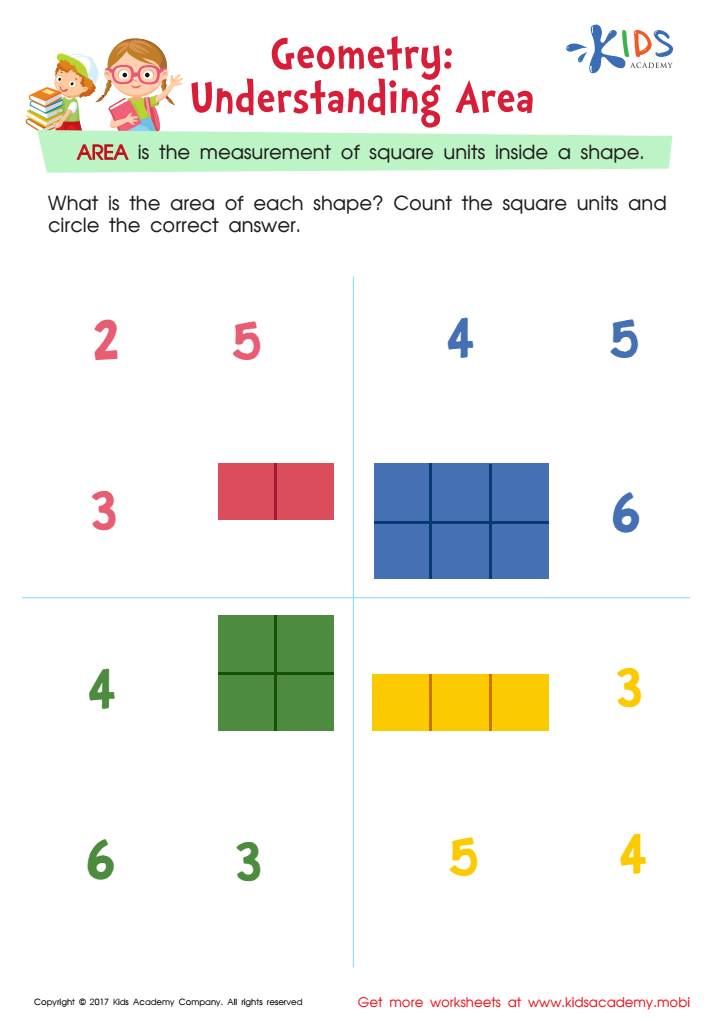
Understanding Area Worksheet
This helps them develop a better understanding and an easier way to learn instead of memorizing a formula.
Understanding Area Worksheet
Worksheet
Join Kids Academy for Free
Who is primarily going to use this learning content?





Measurement skills are crucial for 9-year-olds as they form the foundation for understanding and interacting with the world around them. At this age, children are typically developing their cognitive abilities to think critically and solve problems. Measurement skills—such as understanding length, weight, volume, and time—encourage logical thinking and refine their ability to quantify and compare objects.
Parents and teachers should care about fostering these skills because they are not only essential for academic success in mathematics but also play a significant role in everyday life. Whether it's measuring ingredients for a recipe, comparing heights when playing with friends, or estimating time for homework and chores, measurement is inherently linked to practical applications.
Moreover, developing measurement skills enhances spatial awareness and encourages curiosity, as children engage with their environment in meaningful ways. By emphasizing measurement in lessons and play, parents and teachers can support children's overall development, reinforcing self-confidence in their abilities to tackle math-related tasks. Ultimately, nurturing these skills leads to stronger foundations for future learning, enabling children to become more adept problem-solvers and confident learners as they grow.








