Problem-solving practice Worksheets for 9-Year-Olds
7 filtered results
-
From - To
Boost your 9-year-old's critical thinking with our Problem-Solving Practice Worksheets, designed to develop essential skills through engaging exercises. These worksheets cover a range of scenarios that challenge young minds, fostering analytical and logical thinking in a fun, interactive way. Perfect for reinforcing classroom learning or enhancing at-home education, our worksheets provide a solid foundation in problem-solving techniques that are crucial for academic success. Tailored to meet grade-level standards, these activities help build confidence and improve performance in subjects such as math, science, and reading comprehension. Equip your child with the tools they need to excel today!
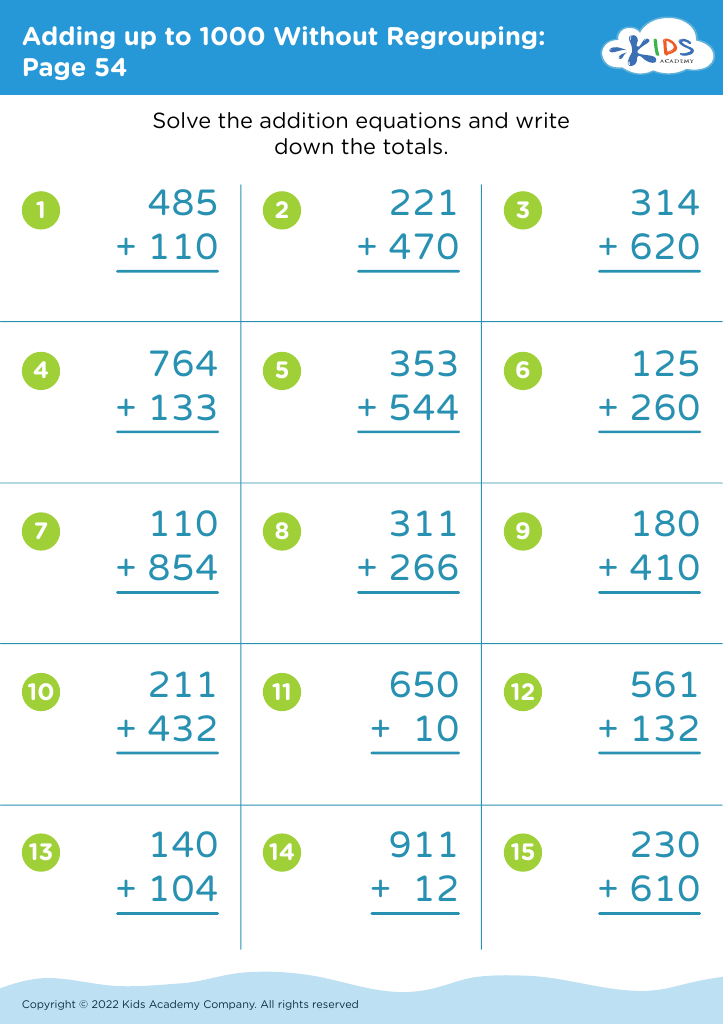

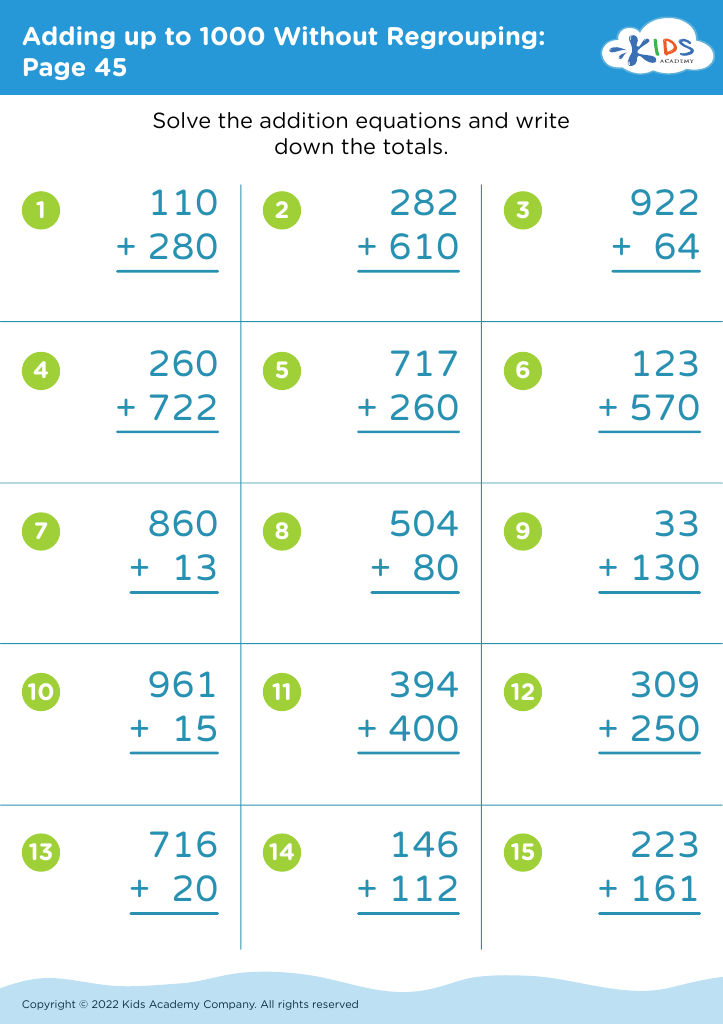
Addition with Regrouping Worksheet
 Assign to My Students
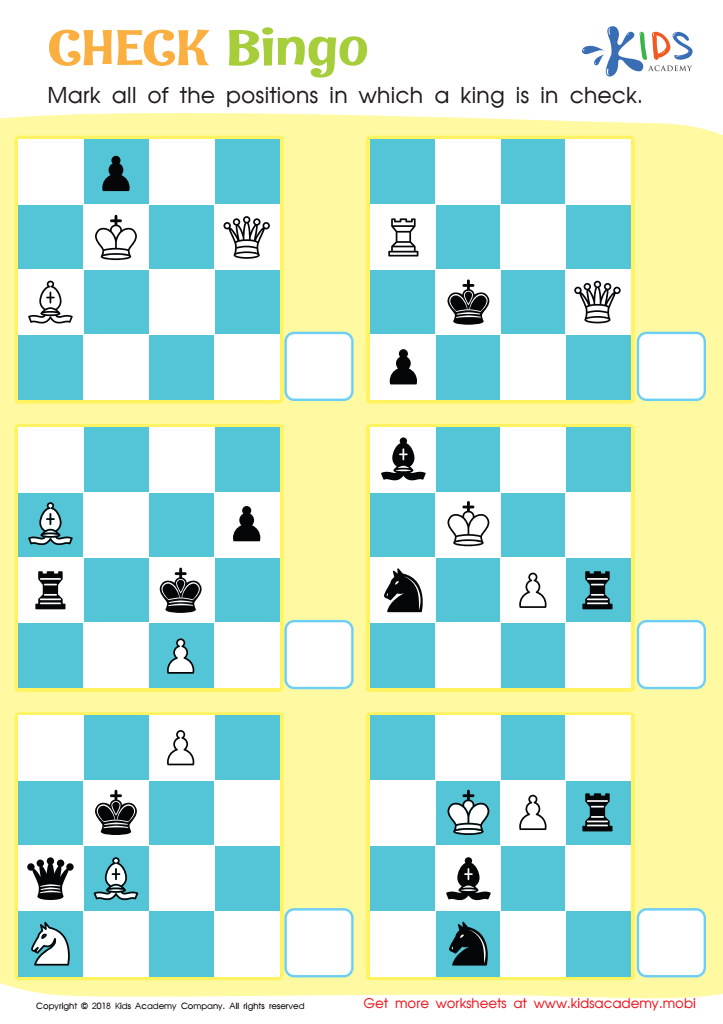
Check Bingo Worksheet
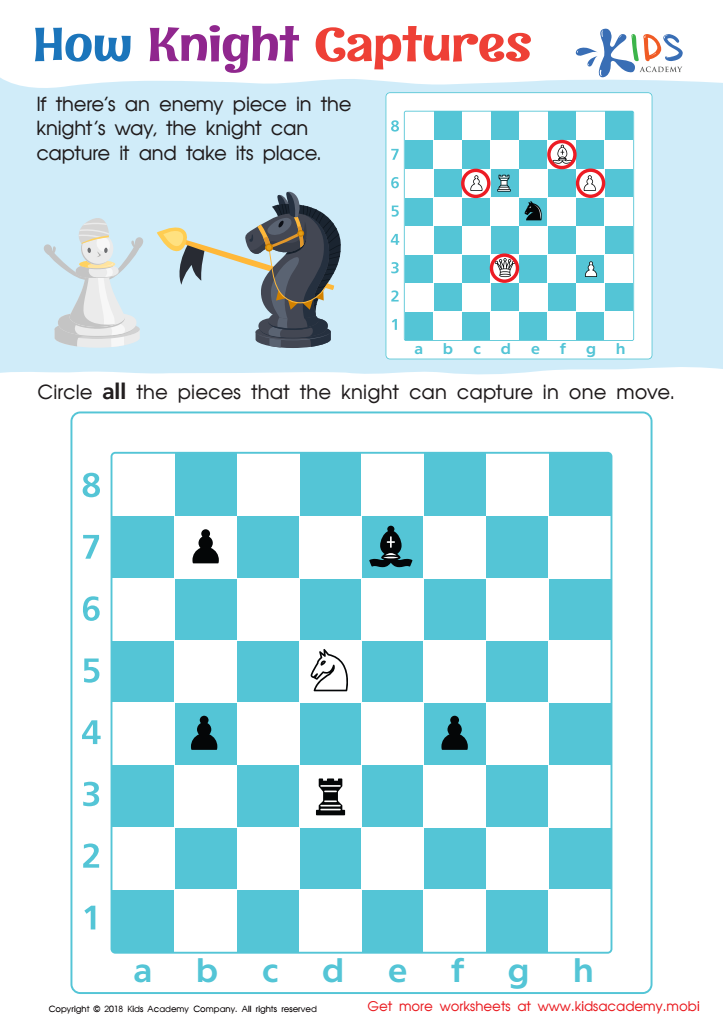
How Knight Captures Worksheet

How King Captures Worksheet
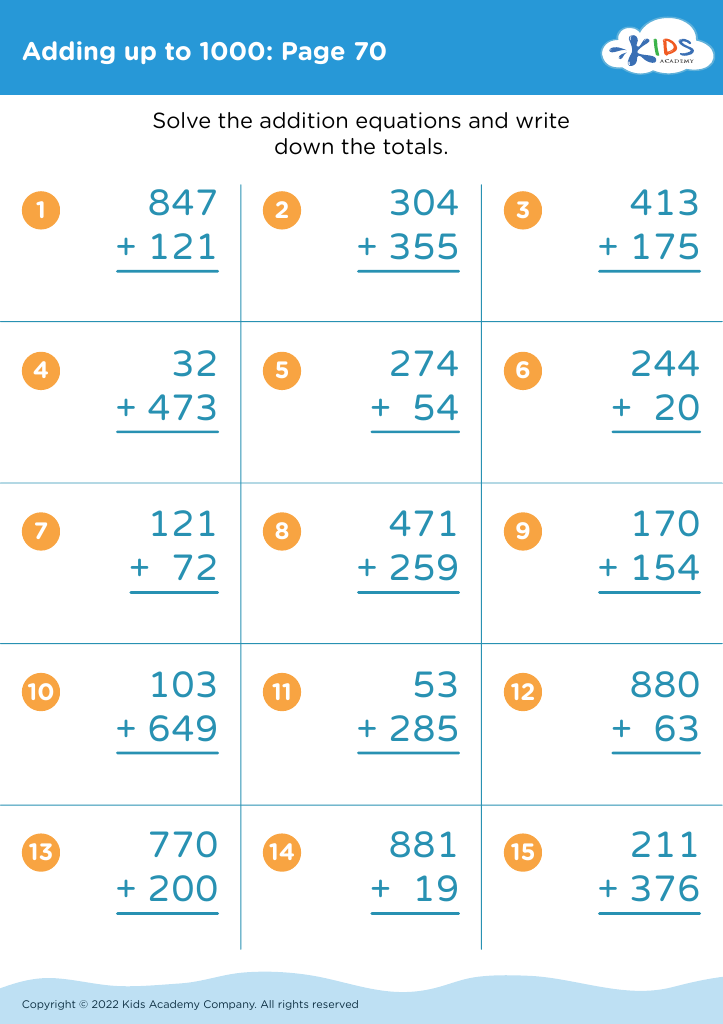







Problem-solving practice is crucial for 9-year-olds as it cultivates essential life skills that contribute to their overall development. First and foremost, engaging in problem-solving activities enhances critical thinking. Children learn to analyze situations, identify possible solutions, and make reasoned decisions. This analytical capacity is valuable across various subjects and situations, fostering academic success and real-world competence.
Moreover, problem-solving nurtures perseverance and resilience. Faced with challenges, children learn to approach issues methodically rather than giving up. These attributes are essential for long-term success and well-being, as they build a child's ability to navigate obstacles throughout life robustly.
Socially and emotionally, problem-solving activities encourage collaboration and communication. Many problem-solving tasks require teamwork, where children must articulate their thoughts clearly, listen to peers, and build on each other's ideas. This enhances interpersonal skills and emotional intelligence, enabling them to manage social dynamics better.
Furthermore, by solving problems from a young age, children develop confidence. Successfully overcoming challenges boosts self-esteem and imparts a sense of accomplishment. This confidence spills over into other areas, motivating children to tackle new tasks and learn skills they might have previously avoided.
In summary, problem-solving practice for 9-year-olds molds critical thinkers, resilient individuals, effective communicators, and confident learners—vital attributes for holistic growth and lifelong success.








