
Syllable identification Worksheets for 9-Year-Olds
3 filtered results
Difficulty Level
Grade
Age
-
From - To
Subject
Activity
Standards
Discover our engaging Syllable Identification Worksheets designed specifically for 9-year-olds! These fun resources enhance reading and pronunciation skills by helping children break down words into syllables. Our worksheets encourage interactive learning through various activities, including matching, sorting, and filling in the blanks. Suitable for reinforcing classroom lessons or as at-home practice, these worksheets make mastering syllable identification enjoyable. With vibrant illustrations and age-appropriate challenges, children will stay motivated while improving their language skills. Explore our collection to support your child's learning journey and build a strong foundation in literacy. Perfect for educators and parents alike!
Favorites
With answer key
Interactive
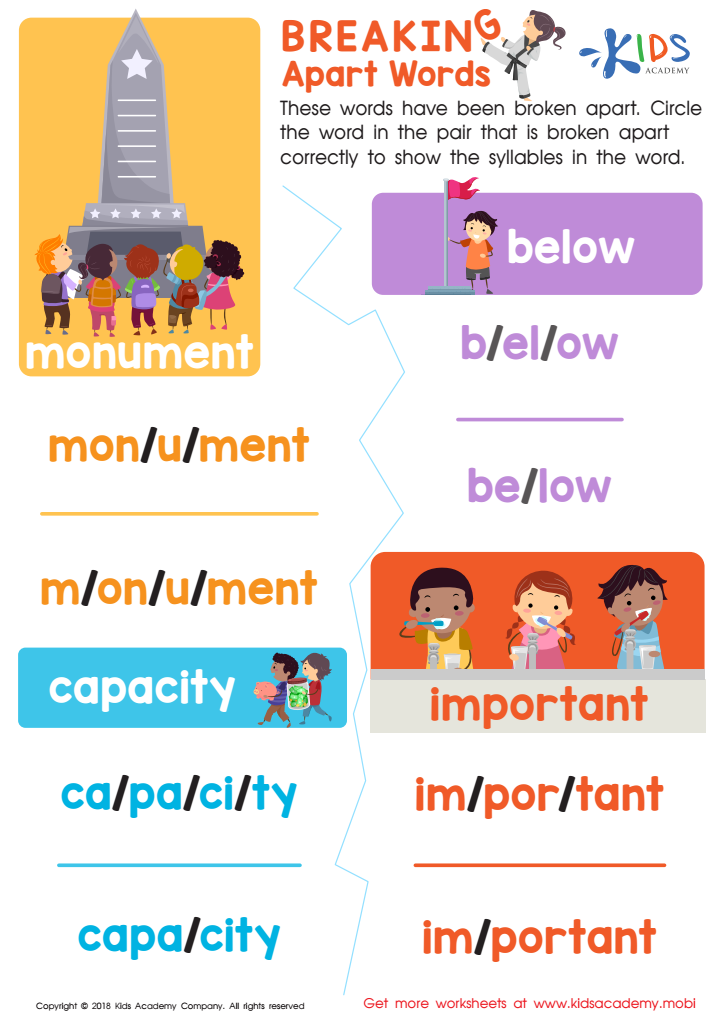
Breaking Apart Words Worksheet
Break words into syllables to make them easier to say correctly. Say each word carefully aloud and get kids to circle the correctly broken apart word in the pair to show the syllables. This worksheet has four words to practice with.
 Assign to My Students
Breaking Apart Words Worksheet
Worksheet
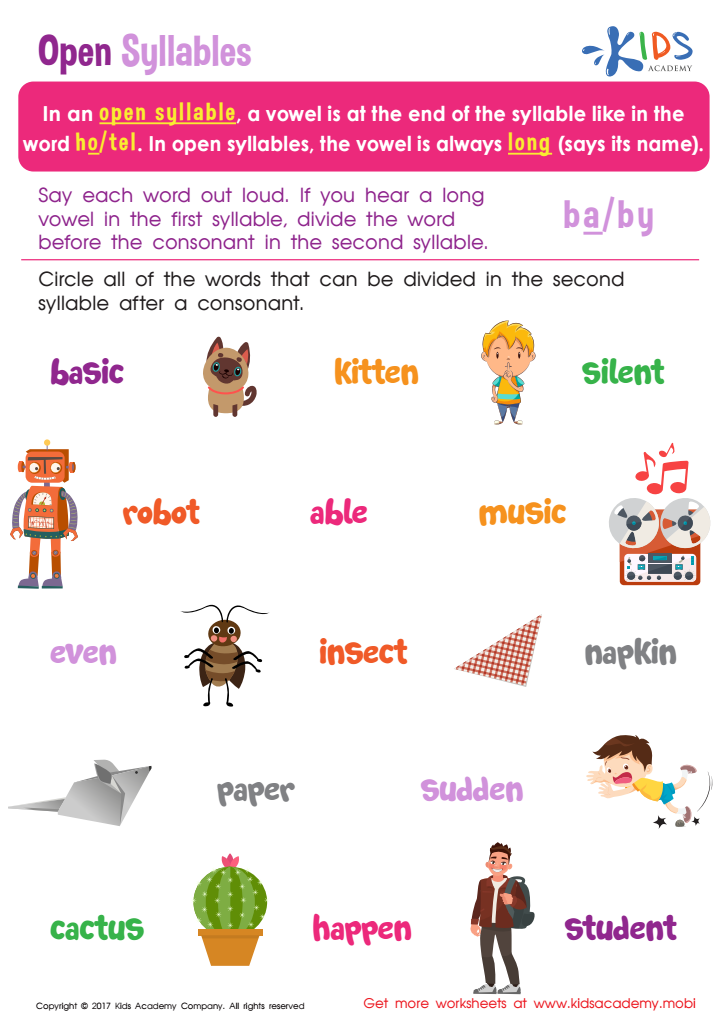
Open Syllable Printable Worksheet
Kids will have fun recognizing open syllables with this colorful worksheet. All they have to do is look for long vowel sounds and read each word aloud. With cute illustrations, they can easily discover the right answers!
Open Syllable Printable Worksheet
Worksheet
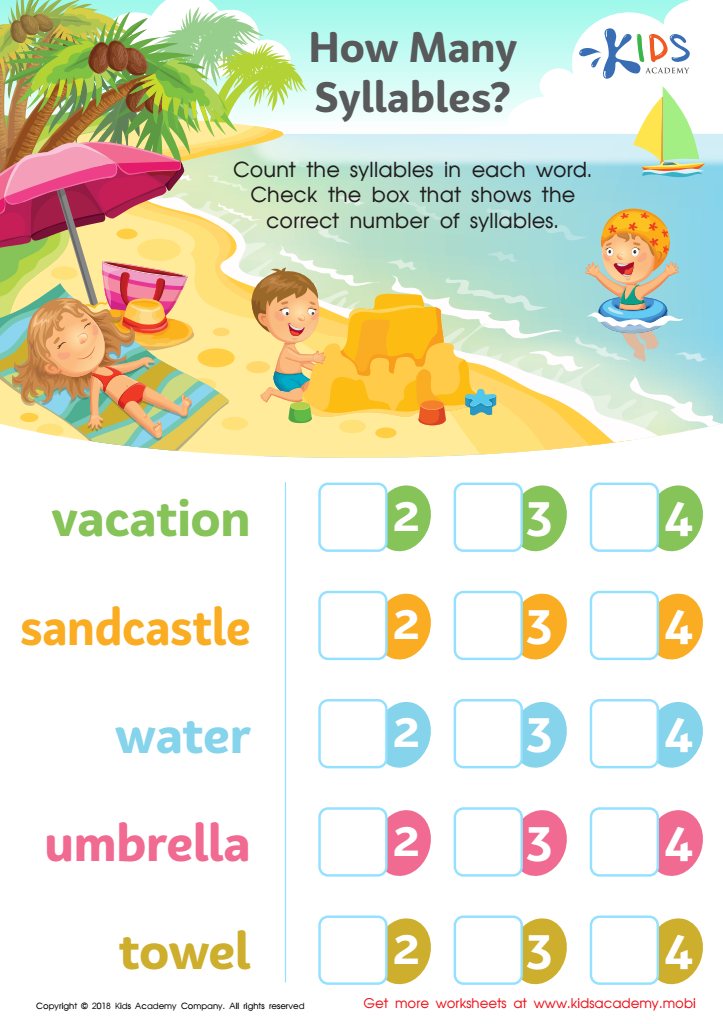
How Many Syllables Worksheet
Draw up memories of sunny beach days with your child. Ask them to tell you their favourite activities, objects seen. Read the words in the picture aloud and help them count the syllables. Then check the box with the right number of syllables.
How Many Syllables Worksheet
Worksheet
Join Kids Academy for Free
Who is primarily going to use this learning content?




.jpg)


Syllable identification is a crucial skill for 9-year-olds that parents and teachers should prioritize as it lays the foundation for reading, writing, and pronunciation. As students progress through their academic journey, understanding syllables enhances their phonological awareness, which correlates strongly with effective reading abilities. When children learn to identify syllables, they develop stronger decoding skills, enabling them to tackle challenging words more confidently.
Moreover, syllable identification supports spelling strategies. By recognizing how words are divided into syllables, children can apply this knowledge to spell new or unfamiliar words accurately. This skill is particularly vital in developing their writing abilities, where precise communication is essential.
Additionally, educators and parents can aid in boosting children's oral language skills through syllable games and activities. This fun engagement fosters a positive attitude toward language learning and enhances their ability to articulate thoughts clearly. Overall, nurturing syllable identification helps children become proficient readers and writers, ultimately contributing to their academic success and boosting their self-esteem, as they experience victories in their literacy skills. Therefore, it is imperative for both parents and teachers to actively engage in this aspect of literacy development.








