
Understanding food chains Worksheets for 9-Year-Olds
3 filtered results
Difficulty Level
Grade
Age
-
From - To
Subject
Activity
Standards
Discover engaging "Understanding Food Chains" worksheets designed specifically for 9-year-olds! Our expertly crafted resources help young learners grasp essential ecological concepts through fun and interactive activities. Each worksheet features vibrant illustrations and hands-on tasks that explore the relationships between predators, prey, plants, and more. Ideal for classroom use or homeschooling, our worksheets align with educational standards and foster critical thinking skills. Watch your child connect the dots of the natural world as they navigate food chains, energy flow, and the interdependence of living organisms. Empower your 9-year-old with the knowledge to appreciate and protect our ecosystems today!
Favorites
With answer key
Interactive
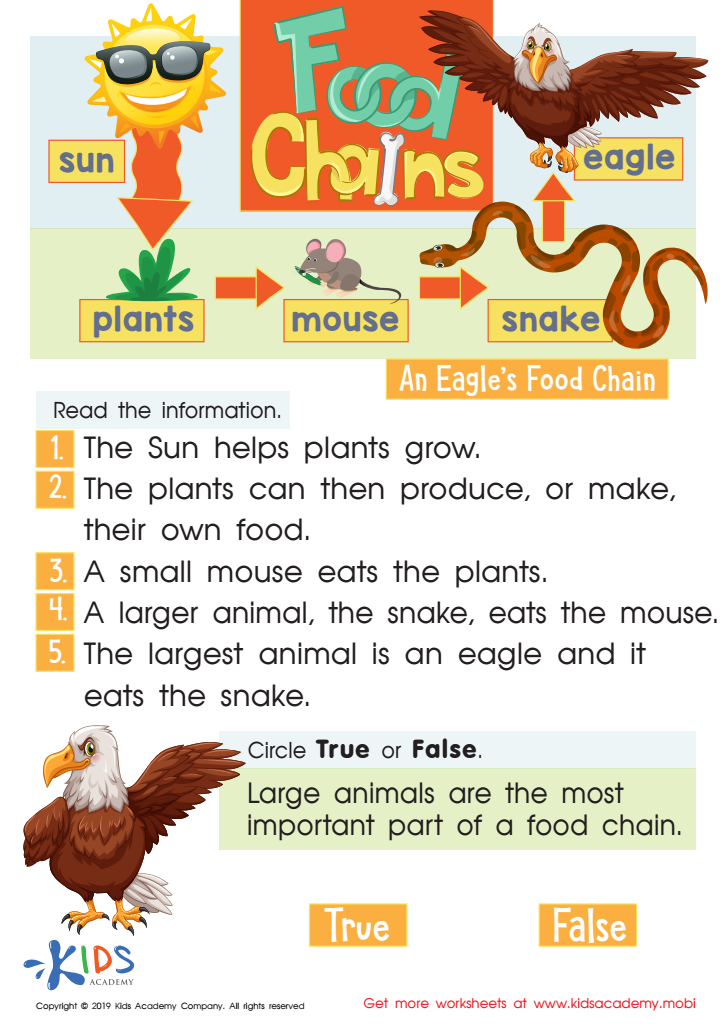
Food Chains Worksheet
This worksheet gets your child thinking about the sun's key role in the food chain. Read the info on the page, then discuss the true/false question. Are large animals the most important? Explain that without the sun, the other organisms would not exist. Have them circle the correct answer to finish.
 Assign to My Students
Food Chains Worksheet
Worksheet
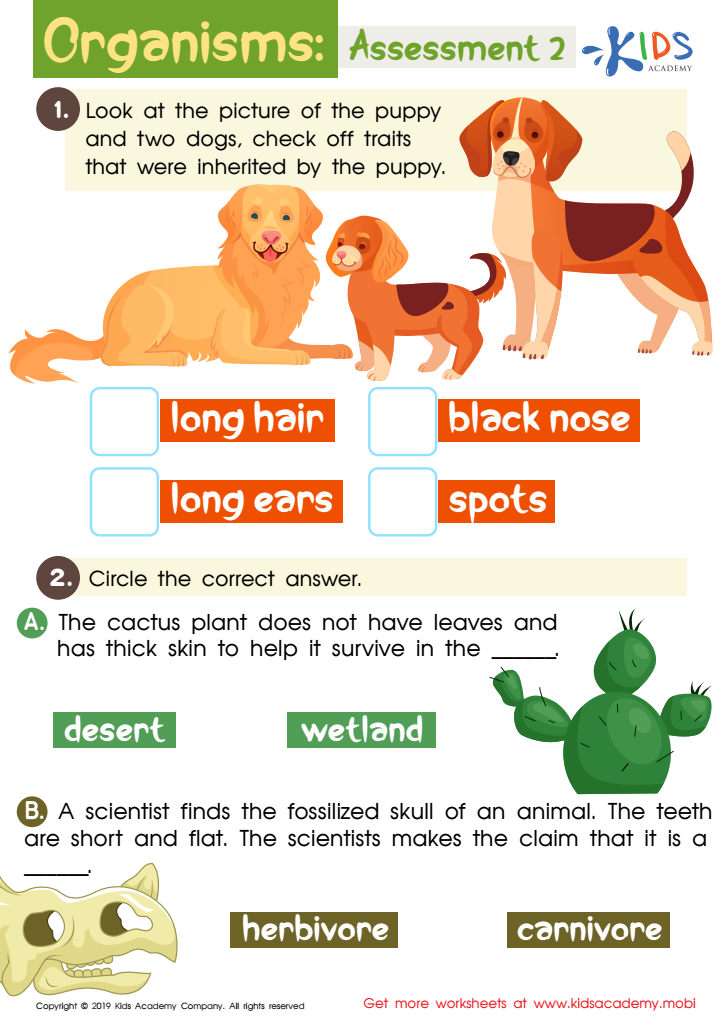
Organisms: Assessment 2 Worksheet
This free assessment helps you measure your child's science knowledge. They can check off traits a puppy inherited, identify a cactus's habitat, and review a dinosaur's diet. It's an efficient way to assess their skills.
Organisms: Assessment 2 Worksheet
Worksheet
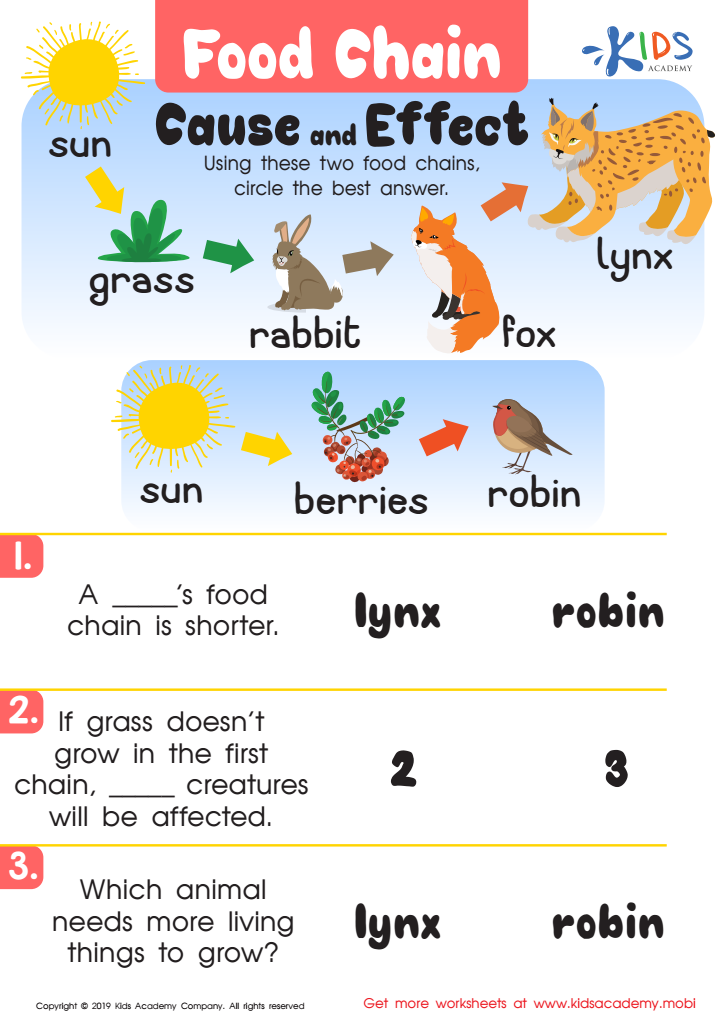
Food Chain Cause Worksheet
Help your little learner analyze ecosystems and compare food chains with this Kids Academy worksheet! Kids will compare a carnivore's and herbivore's food chain; which is longer and why? Questions at the bottom of the page will help them compare and circle the best answers. A great way to understand animal food chains!
Food Chain Cause Worksheet
Worksheet
Learning Skills
Understanding food chains
Learning about ecosystems
Comprehending energy transfer
Identifying animal diets
Recognizing predator-prey relationships
Identifying organisms
Analyzing organisms relationships
Understanding organisms interactions
Identifying cause and effect
Analyzing ecological relationships
Join Kids Academy for Free
Who is primarily going to use this learning content?







Understanding food chains is crucial for 9-year-olds, and both parents and teachers play a vital role in fostering this knowledge. Food chains represent the ecological connections between organisms and explain how energy flows through an ecosystem. For young learners, grasping this concept builds a foundation for lifelong environmental awareness and responsibility.
Firstly, understanding food chains helps children appreciate the interdependence among living things. They learn that even small animals and plants are essential to the balance of nature. This perspective breeds respect and empathy for all forms of life, fostering a sense of stewardship for the planet.
Secondly, studying food chains can enhance a child's critical thinking skills. They learn to predict what might happen if one element of the chain is disrupted, such as the disappearance of a species. This deepens their comprehension of cause and effect, which is beneficial not only in science but in everyday problem-solving.
Lastly, knowledge of food chains integrates seamlessly with other subjects. From reading about animals in language arts to using math to chart energy flow, it offers cross-curricular educational benefits. When parents and teachers invest time in explaining food chains, they cultivate informed, thoughtful, and environmentally conscious individuals. This empowers children to make sustainable choices, positively impacting future generations.








