Unlock your 9-year-old's potential with our "Understanding Sequences Worksheets"! Tailored to enhance logical thinking and pattern recognition, these engaging activities guide children through the art of ordering events, numbers, and objects. Perfect for building a foundational skill set, our worksheets blend education with fun, featuring colorful illustrations and diverse exercises. Whether it’s identifying the next step in a sequence or solving progressively challenging problems, young learners will gain confidence and a deeper understanding of sequences. Start your child’s journey towards mathematical mastery and logical excellence today with our expertly designed resources!

Check out this FREE "Understanding Sequences" Trial Lesson for age 9!

Realistic Fiction

Favorites
With answer key
Interactive
  • 9
  • Understanding Sequences
Sequence Word Eagle Worksheet

Sequence Word Eagle Worksheet

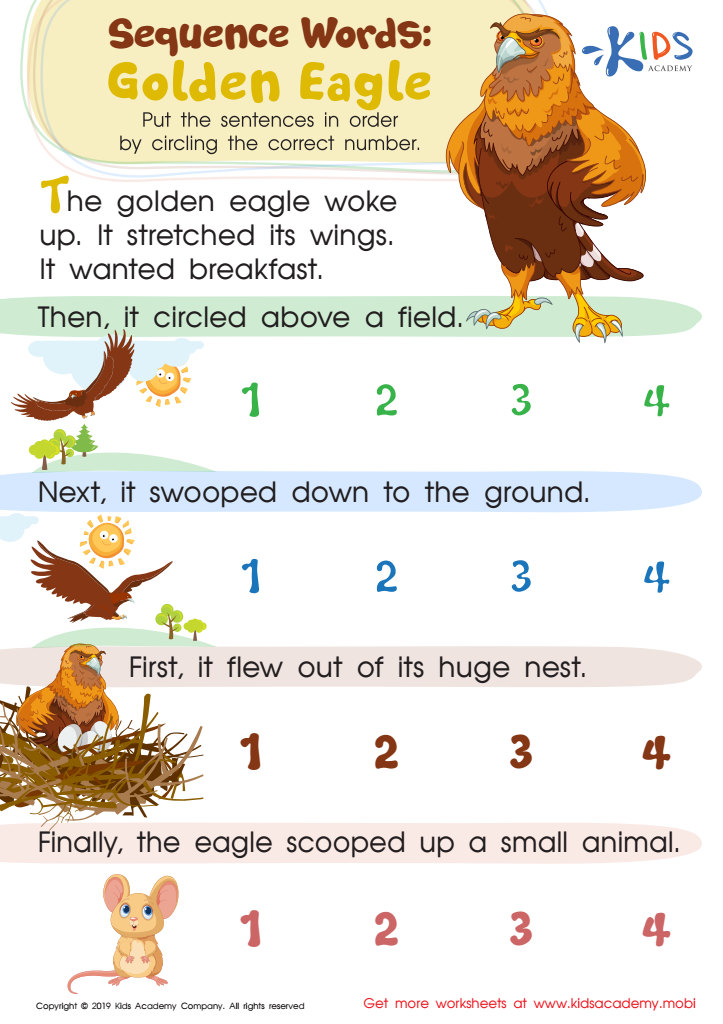
Help your child brush up on reading and writing with this fun worksheet. Read the story of the golden eagle's day, then have the child circle the numbers in the right order. Point out the sequence words that tell the order of events. This helps learners understand how to make their writing clear and understandable to others.
Sequence Word Eagle Worksheet
Worksheet
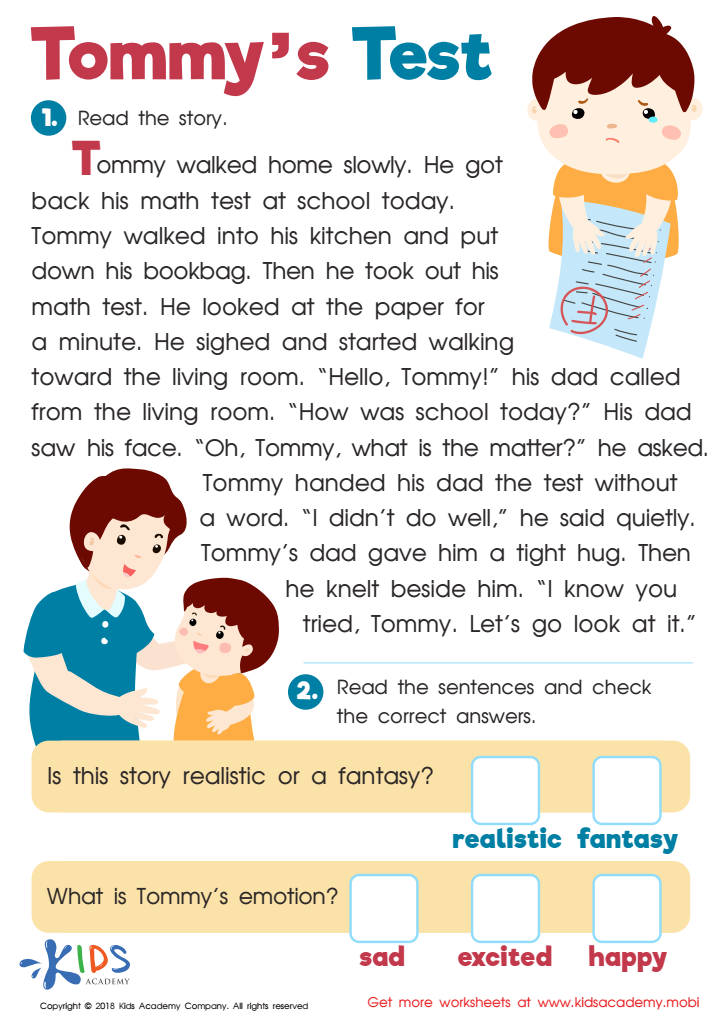
Tommys Test Worksheet

Tommys Test Worksheet

Reading short stories to your students builds a bond, teaches new words and lessons. Read the story aloud and then have them listen for details. Ask them the questions at the bottom and help them check the answers.
Tommys Test Worksheet
Worksheet
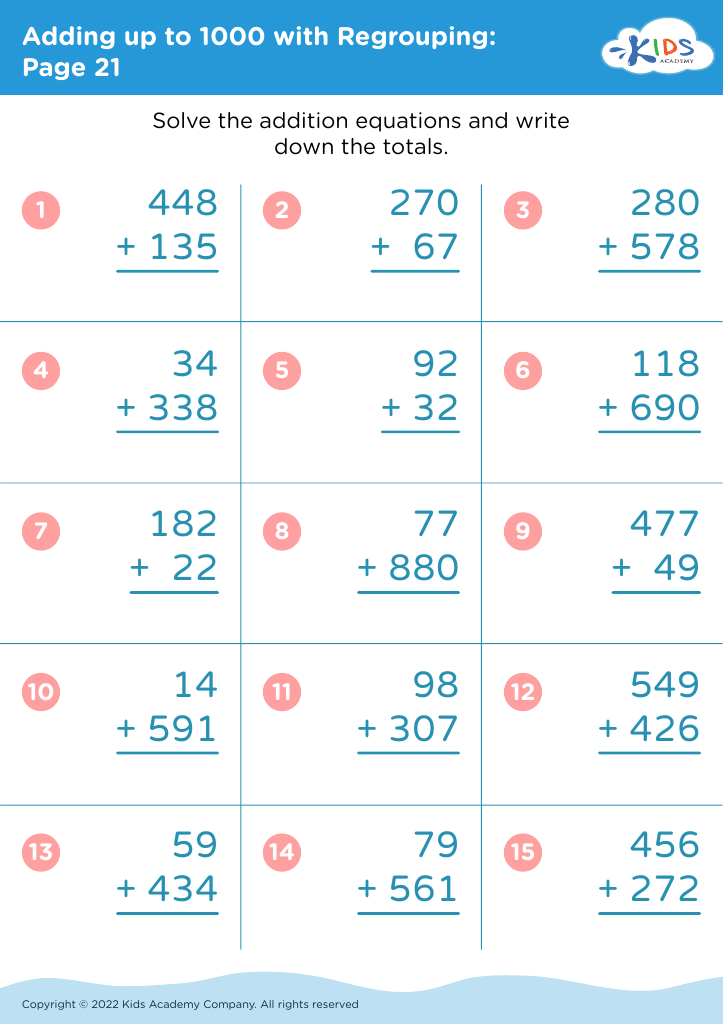
Adding up to 1000 with Regrouping: Page 21
Worksheet
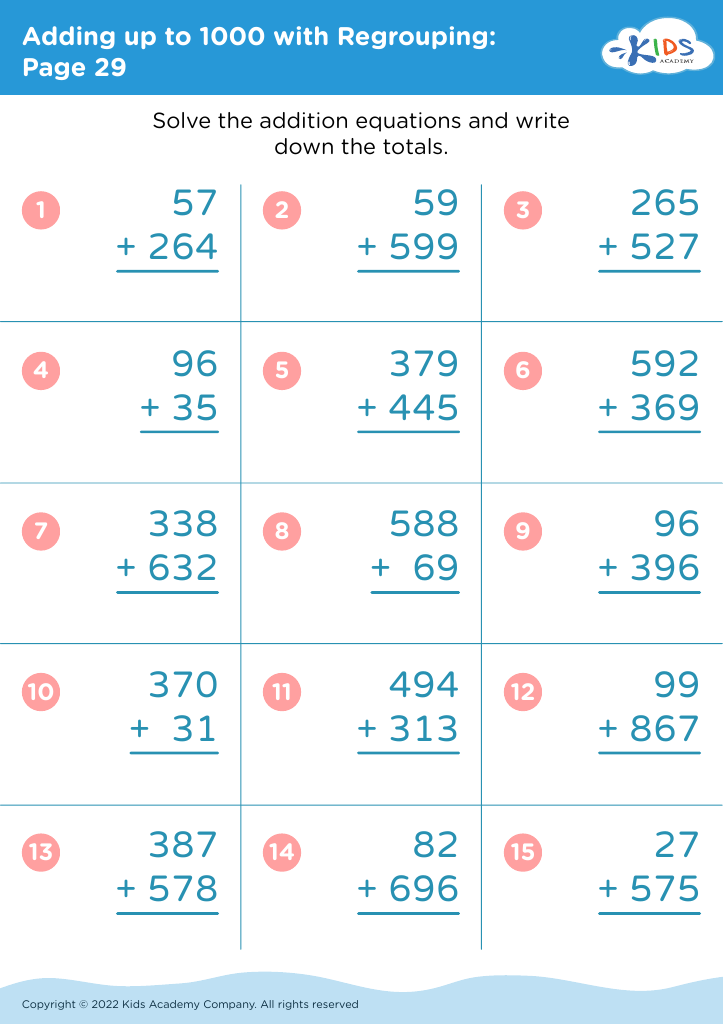
Adding up to 1000 with Regrouping: Page 29
Worksheet
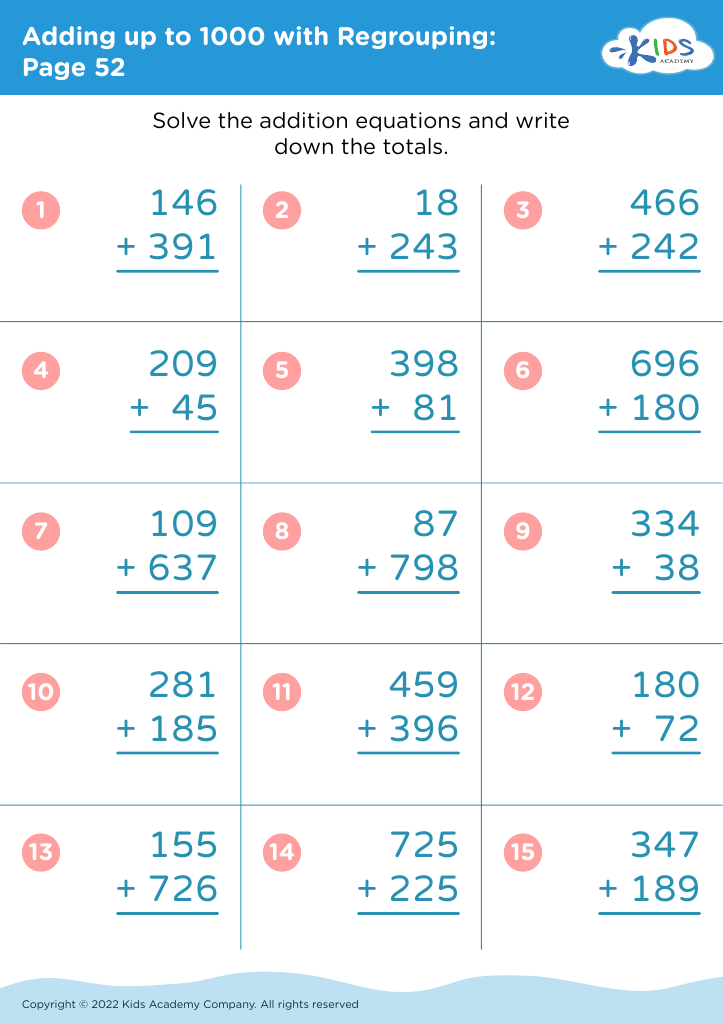
Adding up to 1000 with Regrouping: Page 52
Worksheet
Using Number Sentences to Solve Problems Worksheet

Using Number Sentences to Solve Problems Worksheet

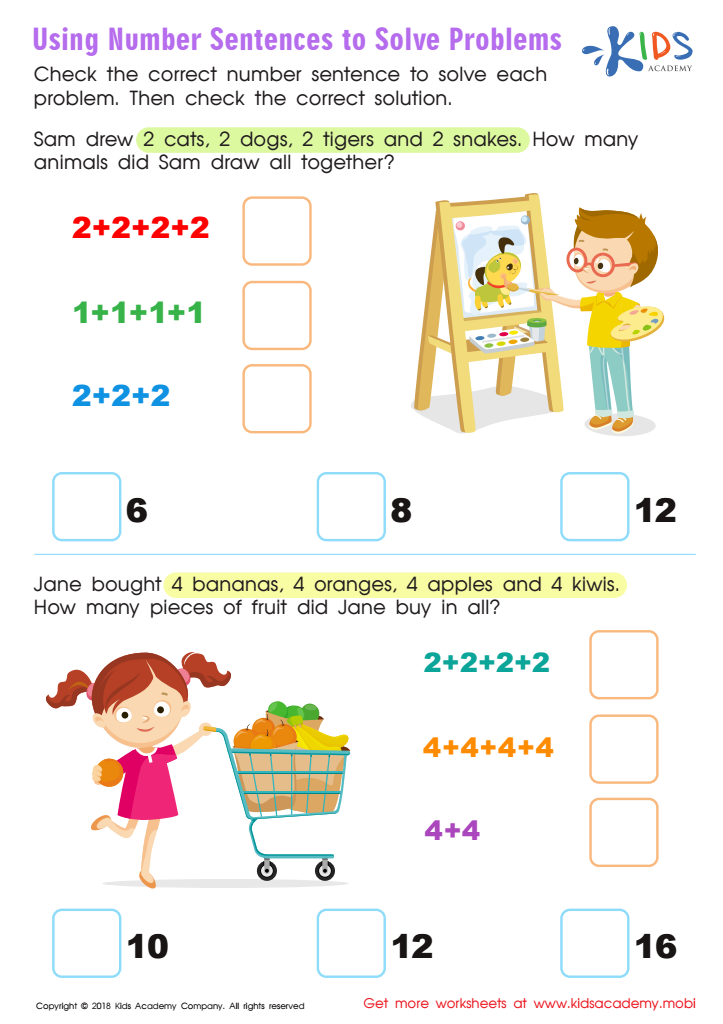
Solving math problems requires an efficient strategy. Picture representation can help young mathematicians with basic addition problems, especially when it involves repeated addends. As they gain confidence, they'll be able to apply their number sentence solving abilities to more complex equations.
Using Number Sentences to Solve Problems Worksheet
Worksheet
Sequencential Order Worksheet

Sequencential Order Worksheet

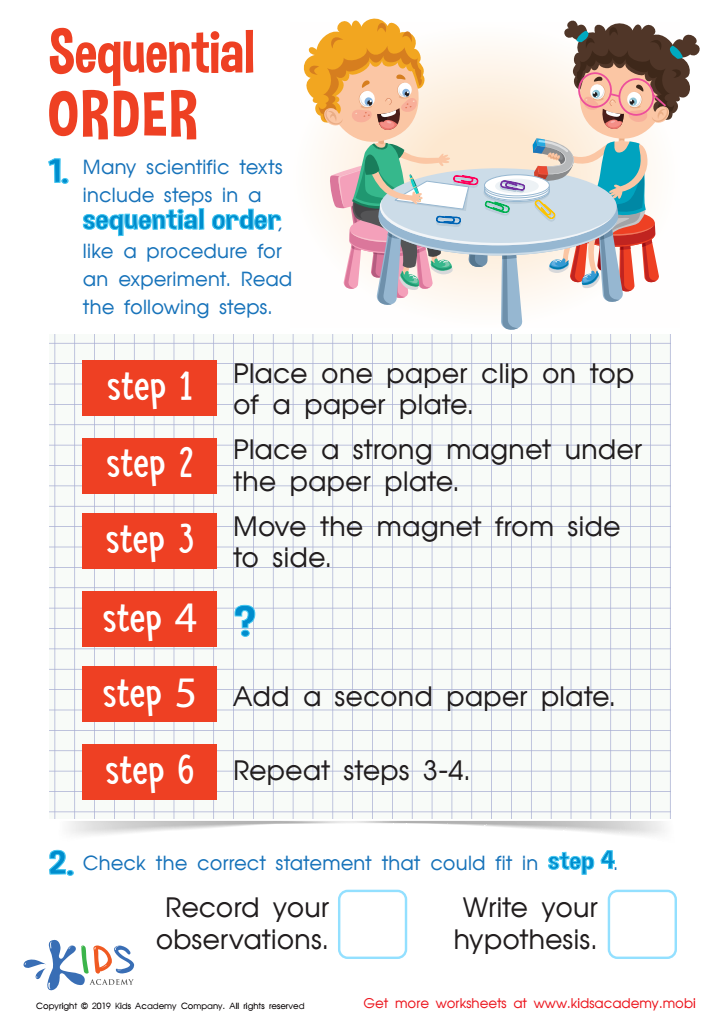
This worksheet is perfect for science-lovers: it'll test how good your child is at following instructions by asking them to complete the steps in the right order. Have them read the steps and then choose the statements that correctly fill in the blanks. It's more than just fun experiments and results - science also requires careful procedure.
Sequencential Order Worksheet
Worksheet
Writing it Down Worksheet

Writing it Down Worksheet

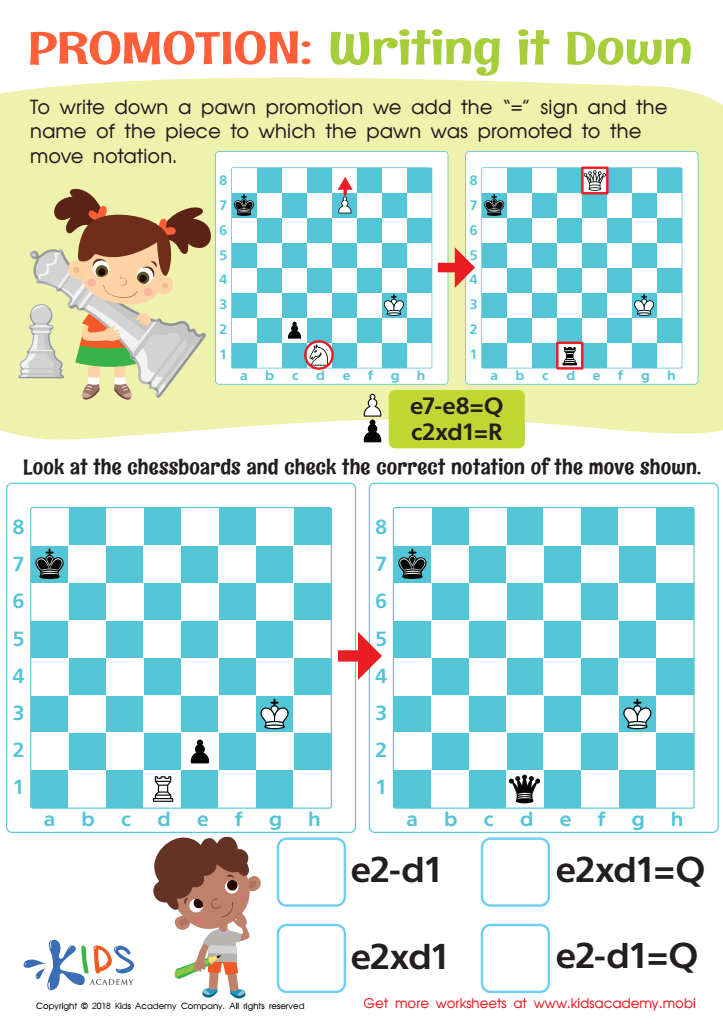
To document pawn promotion, add "=<piece name>" to the move notation. For example: e7-e8=Q. Ask your child to look at the chessboard and take note of the moves. Check the notations are correct. (80 words)
Writing it Down Worksheet
Worksheet
Adding up to 1000: Page 72

Adding up to 1000: Page 72

Adding up to 1000: Page 72
Worksheet
Adding up to 1000 with Regrouping: Page 70
Worksheet
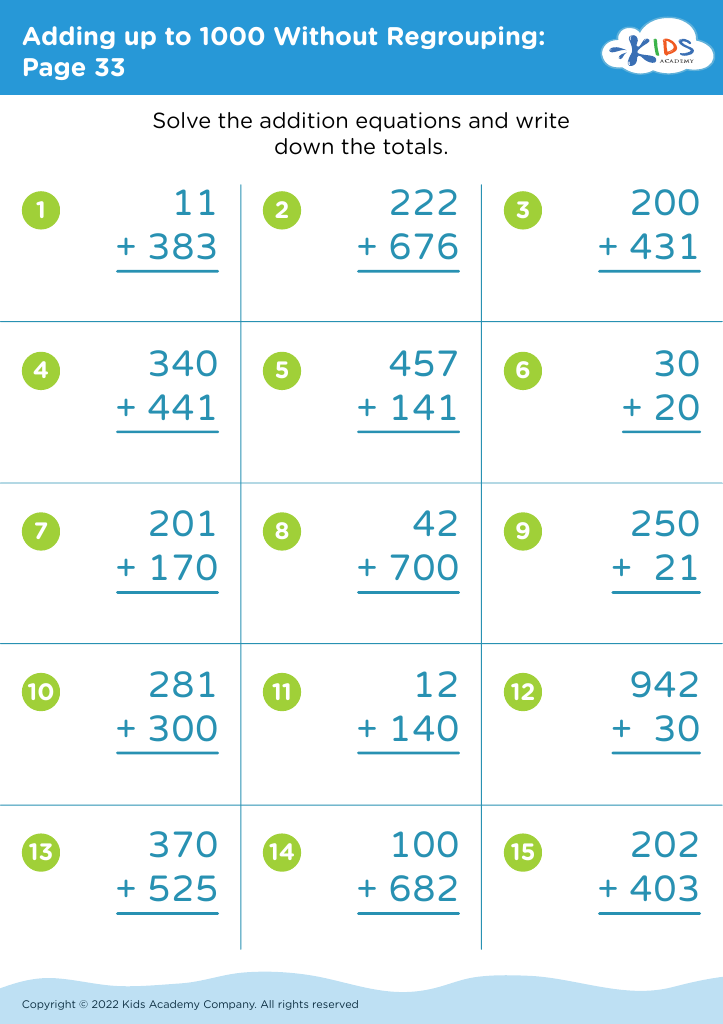
Adding up to 1000 Without Regrouping: Page 33
Worksheet


Understanding sequences is crucial for 9-year-olds as it lays a foundational framework for cognitive development and enhances their ability to grasp more complex mathematical concepts. Parents and teachers should prioritize this because sequences sharpen critical thinking and problem-solving skills. By recognizing patterns and understanding the order of events or numbers, children develop logical reasoning, which is applicable in everyday situations and future academic endeavors.

Sequences also foster excellent organizational abilities. For example, when students understand the concept of chronology in stories, it helps improve their reading comprehension and narrative skills, allowing them to recognize cause-and-effect relationships. This cultivated ability can bolster their writing and storytelling proficiency.

In mathematics, sequences serve as a gateway to higher-level math topics such as algebra and calculus. Exploring number sequences with different rules helps kids develop an early comfort with mathematical functions, preparing them for advanced studies. Furthermore, the joy of discovering patterns can ignite a lifelong interest in math and science.

From a practical standpoint, everyday tasks often involve sequences, like following a recipe or planning the day’s activities. Mastery of sequences builds children’s self-confidence in managing multiple-step processes, thereby fostering independence and responsibility. Therefore, understanding sequences is indispensable for holistic development and future success.