
Understanding suffixes Worksheets for 9-Year-Olds
4 filtered results
Difficulty Level
Grade
Age
-
From - To
Subject
Activity
Standards
Explore our engaging "Understanding Suffixes Worksheets" tailored specifically for 9-year-olds! These worksheets are designed to enhance students' vocabulary skills by helping them identify and understand suffixes—the letters or groups of letters added to the end of words. With a variety of fun exercises including matching, filling in the blanks, and sentence creation, children will develop their reading and writing proficiency through playful learning. These resources not only reinforce language concepts but also boost confidence in using new words effectively. Ideal for classroom settings or at-home practice, our worksheets make mastering suffixes enjoyable and effective for young learners!
Favorites
With answer key
Interactive
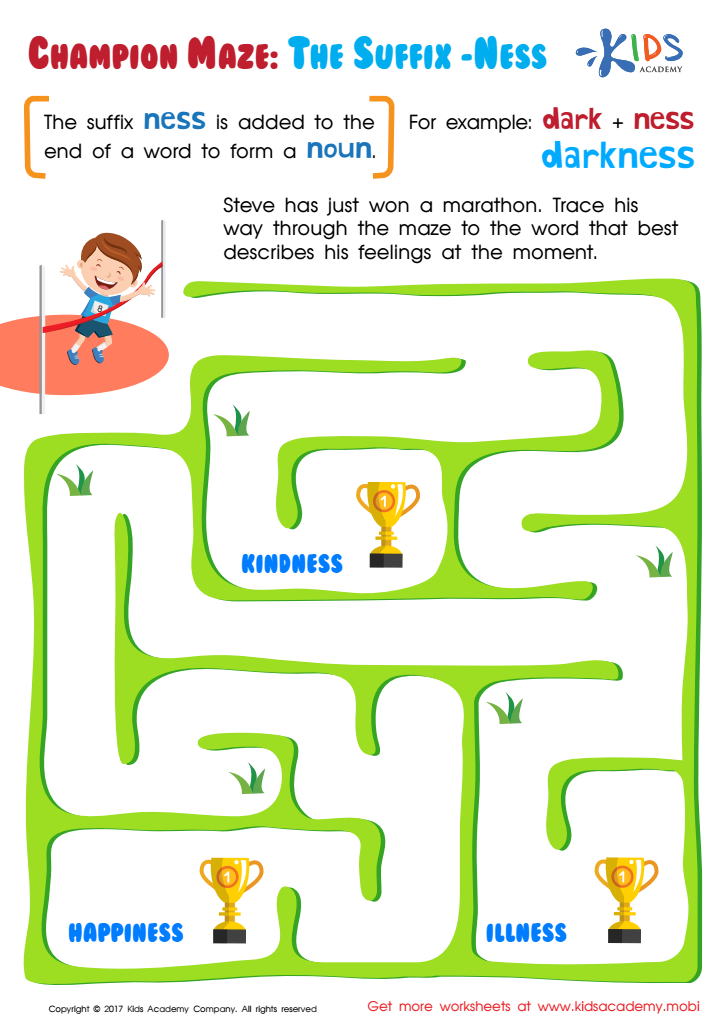
Suffix Ness Worksheet
Words are amazing! Add an ending and they can change part of speech. Make nouns out of adjectives with -ness. This worksheet has a fun maze to help learners increase vocabulary and language skills.
 Assign to My Students
Suffix Ness Worksheet
Worksheet
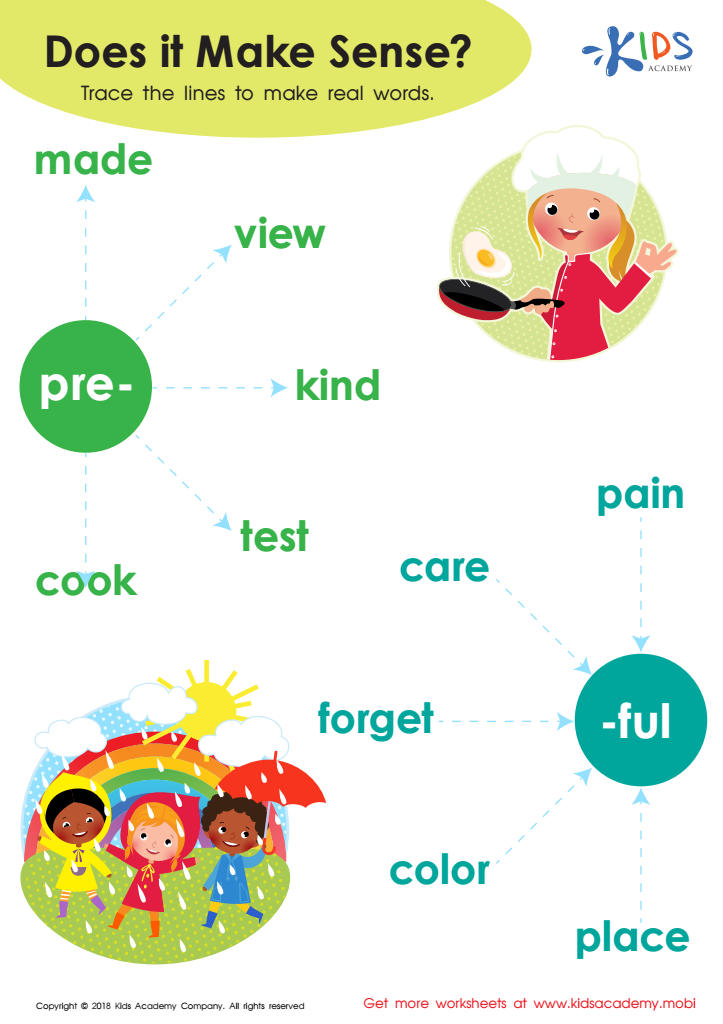
Prefix pre– and Suffix ful– Worksheet
Can't preforget something! This worksheet helps kids learn how to attach prefixes and suffixes to root words, forming new words that make sense. With this activity, they'll evaluate how the root words change when adding the prefix or suffix.
Prefix pre– and Suffix ful– Worksheet
Worksheet
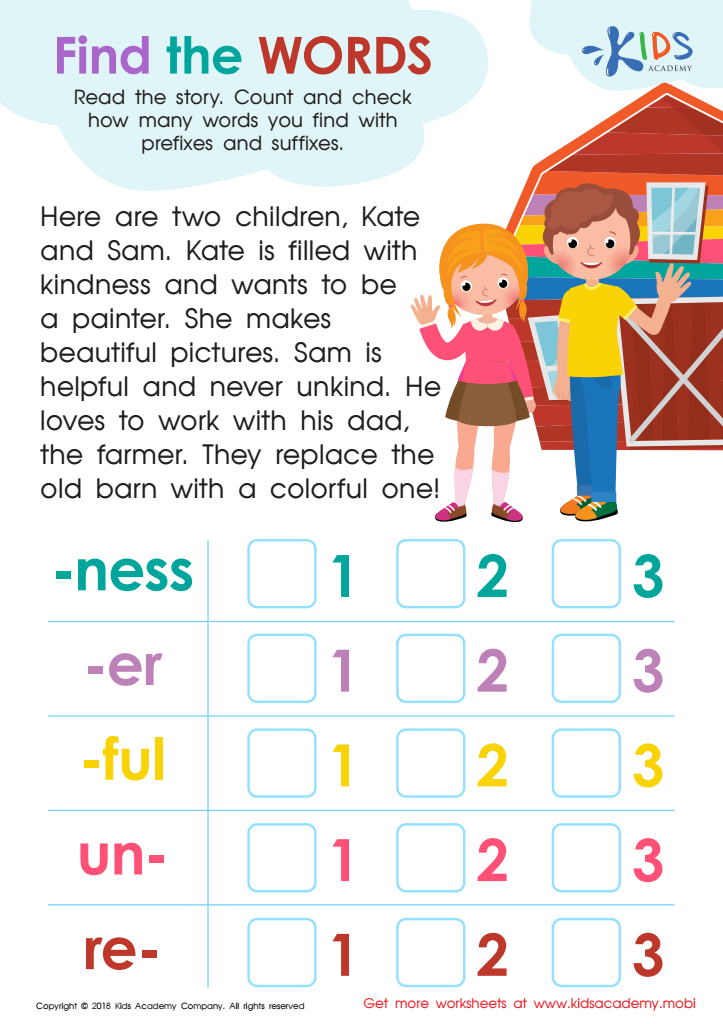
Prefix and Suffix Worksheet For Grade 3
Read the story about Sam and Kate and help your grade 3 child tally all the words with prefixes and suffixes. Check their work by counting the words and ticking the appropriate boxes. This entertaining worksheet will help develop their reading and counting skills! (80 words)
Prefix and Suffix Worksheet For Grade 3
Worksheet
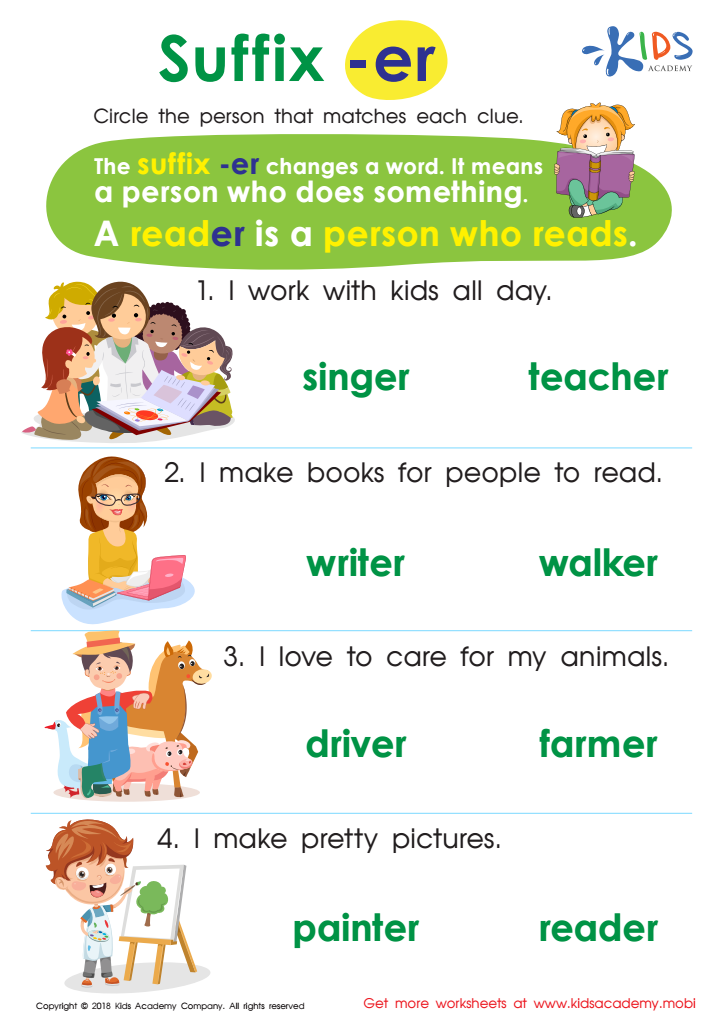
Suffix –er Printable Worksheet
Kids learn how powerful suffixes are with this printable worksheet. Read the sentence clues and select the word it describes. Discuss how the suffix alters the original word. Amazing how two letters can transform meanings!
Suffix –er Printable Worksheet
Worksheet
Join Kids Academy for Free
Who is primarily going to use this learning content?







Understanding suffixes is crucial for 9-year-olds, as it lays the groundwork for advanced literacy skills and enhances their vocabulary. Suffixes, letters or syllables added to the end of a word, can change the meaning, tense, or part of speech of that word. For example, by adding the suffix "-ing," a child can transform "play" into "playing," deepening their understanding of actions and timelines.
When parents and teachers prioritize suffix comprehension, they foster children's reading and writing abilities, enabling them to decipher unfamiliar words more effectively. This skill boosts confidence, as students can tackle new vocabulary in context. It also nurtures independent learning, empowering children to explore language creatively and express themselves more clearly.
Moreover, a solid grasp of suffixes is essential in developing critical thinking. As 9-year-olds begin to analyze texts, understanding how suffixes influence meaning encourages them to think more deeply about language and content. Finally, engaged parents and teachers can support literacy growth by incorporating games, activities, and discussions around suffixes, making learning enjoyable and effective. In summary, valuing suffix understanding promotes strong communication skills, fosters independence, and sparks a lifelong love for language in young learners.








