Hand-eye Coordination Addition and Subtraction Word Problems Worksheets for 9-Year-Olds
3 filtered results
-
From - To
Enhance your 9-year-old's math skills with our engaging Hand-eye Coordination Addition and Subtraction Word Problems Worksheets! These interactive exercises seamlessly combine mathematical practice with hand-eye coordination activities, helping children improve their analytical thinking while developing fine motor skills. Each worksheet presents relatable real-life scenarios, encouraging children to solve addition and subtraction word problems in a fun and stimulating way. Designed to fit various learning styles, our worksheets promote active problem-solving and critical thinking. Perfect for both classroom and at-home learning, these resources support educational growth while keeping learning enjoyable. Download now to inspire your child’s math journey!
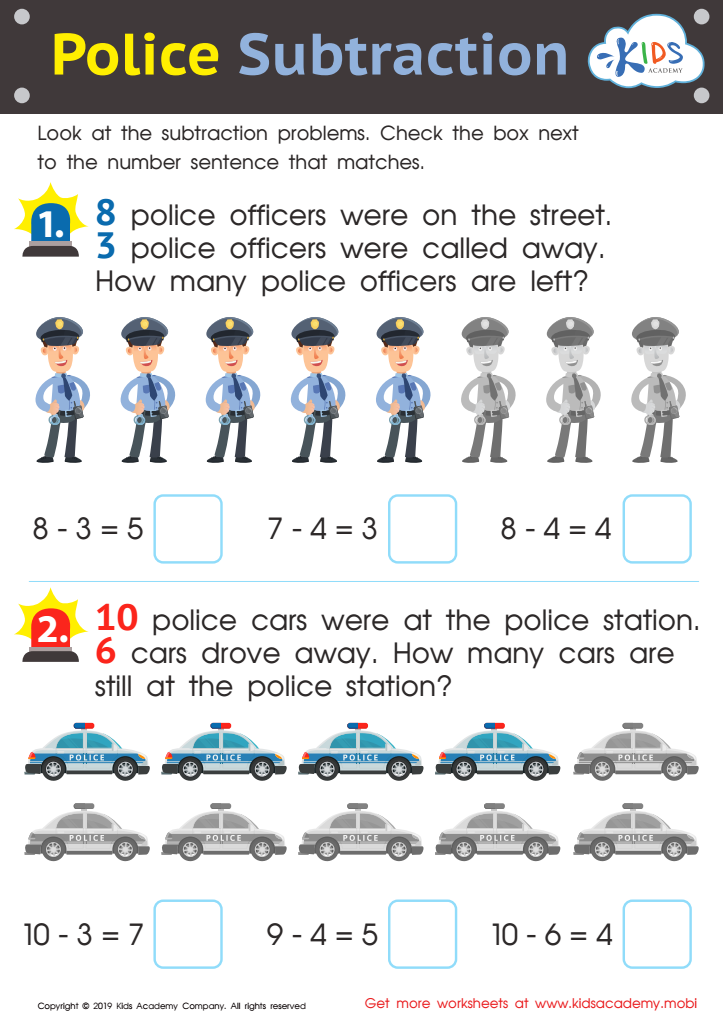
Police Subtraction Worksheet
 Assign to My Students
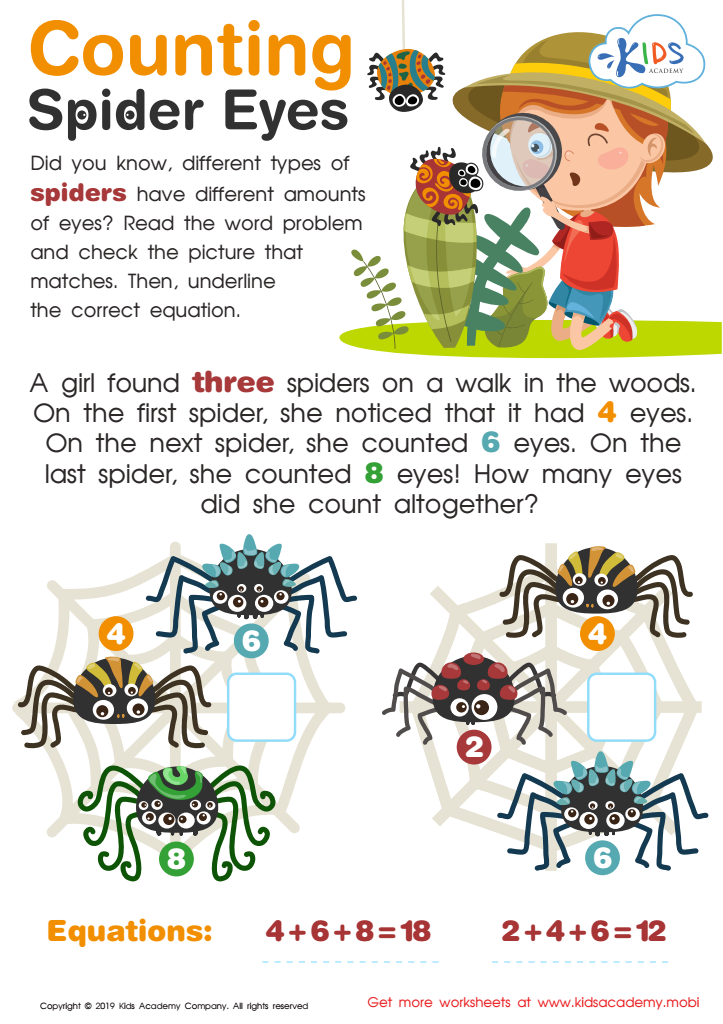
Counting Spider Eyes Worksheet
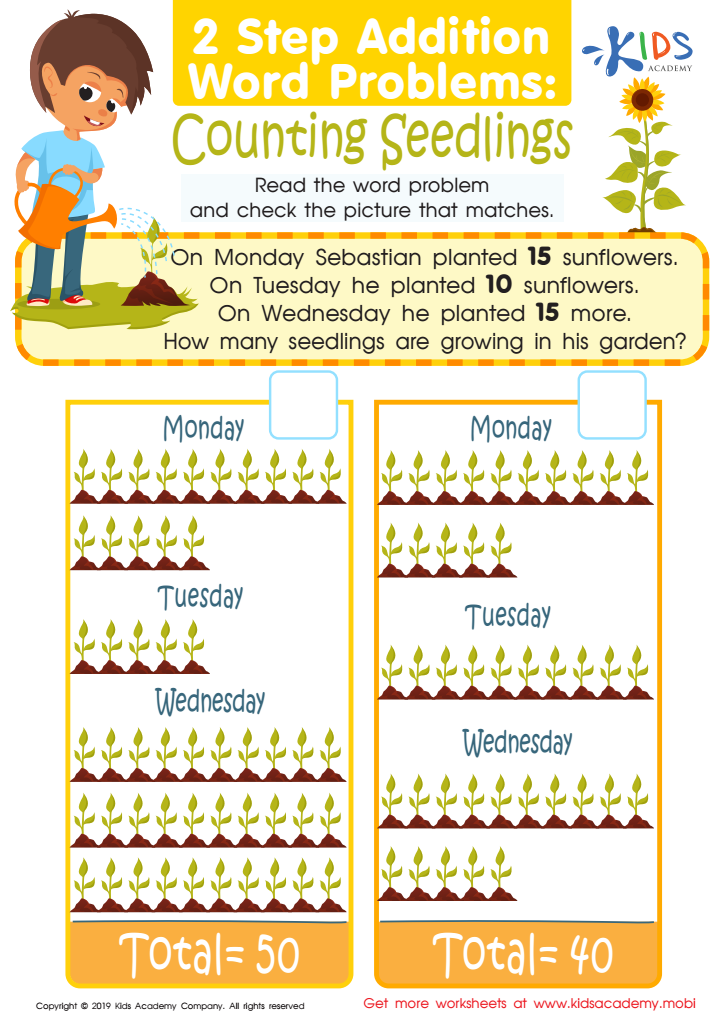
Counting Seedlings Worksheet








Hand-eye coordination is a critical skill that directly influences a child's ability to perform tasks requiring physical coordination and cognitive processing. For 9-year-olds, engaging with hand-eye coordination activities in the context of addition and subtraction word problems not only enhances their mathematical understanding but also improves their fine motor skills.
When children solve word problems that require them to manipulate objects, draw diagrams, or use manipulatives, they naturally develop coordination between their visual input and motor output. This kinesthetic approach helps solidify their understanding of mathematical concepts while making learning more interactive and engaging.
Moreover, these problems foster critical thinking and problem-solving abilities. Children learn to analyze information, organize their thoughts, and find solutions through a combination of movement and mental processing. This dual engagement can deepen their comprehension and retention of math skills.
For parents and teachers, encouraging such activities can provide a holistic approach to education—integrating physical development with cognitive growth. By recognizing the importance of hand-eye coordination in solving math problems, caregivers can ensure that children achieve a well-rounded skill set essential for their overall development and future learning.