Fine motor skills (writing) Addition & Subtraction Worksheets for 9-Year-Olds
5 filtered results
-
From - To
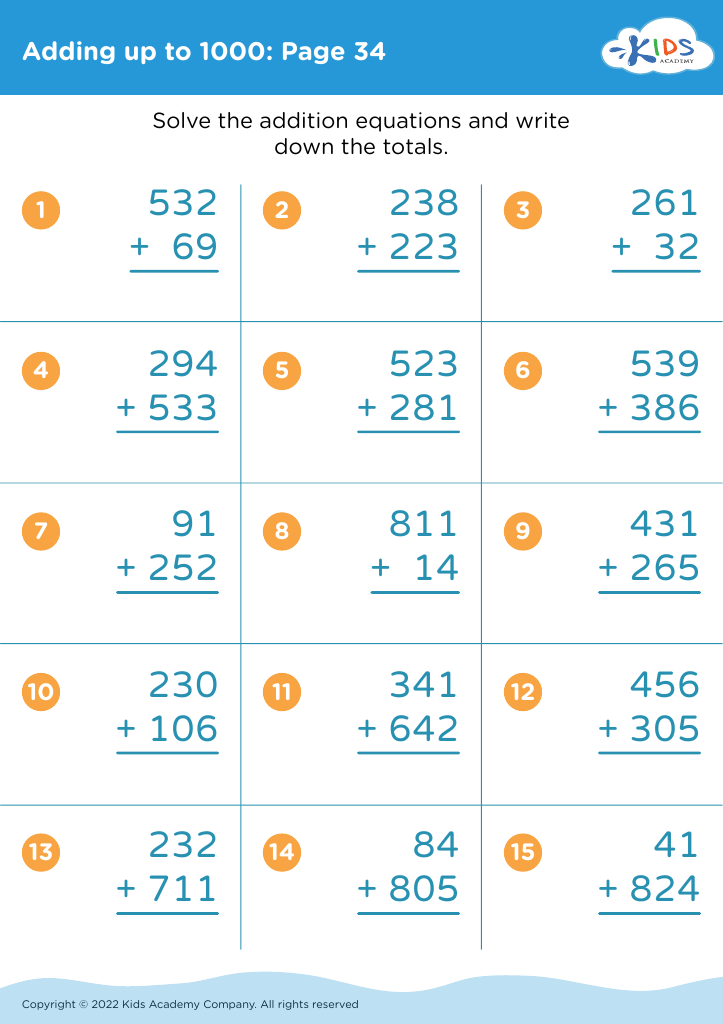
Explore our engaging Fine Motor Skills (Writing) Worksheets designed specifically for 9-year-olds, where mathematics meets craftsmanship! These worksheets provide a perfect blend of addition and subtraction exercises aimed at enhancing your child's numerical abilities while also developing essential fine motor skills through writing practice. By tracing, writing, and solving math problems, children will strengthen their finger dexterity and hand-eye coordination, enhancing overall writing ability. Our expertly crafted activities make learning fun and interactive, helping to build confidence in both arithmetic and handwriting. Dive into our collection today and set the foundation for your child's academic success!
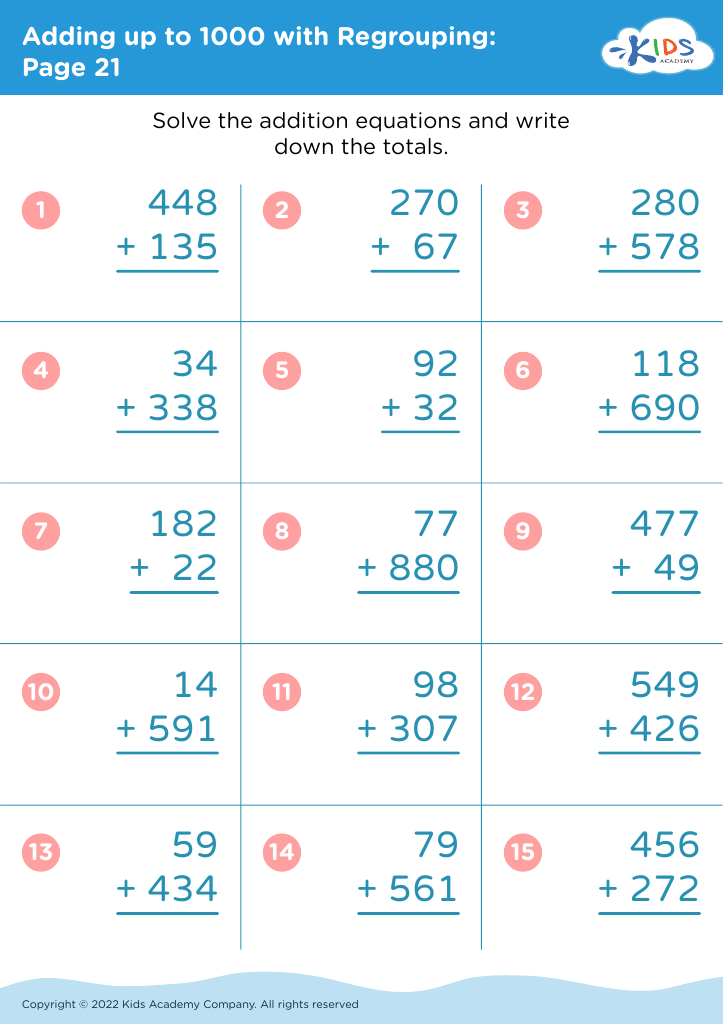
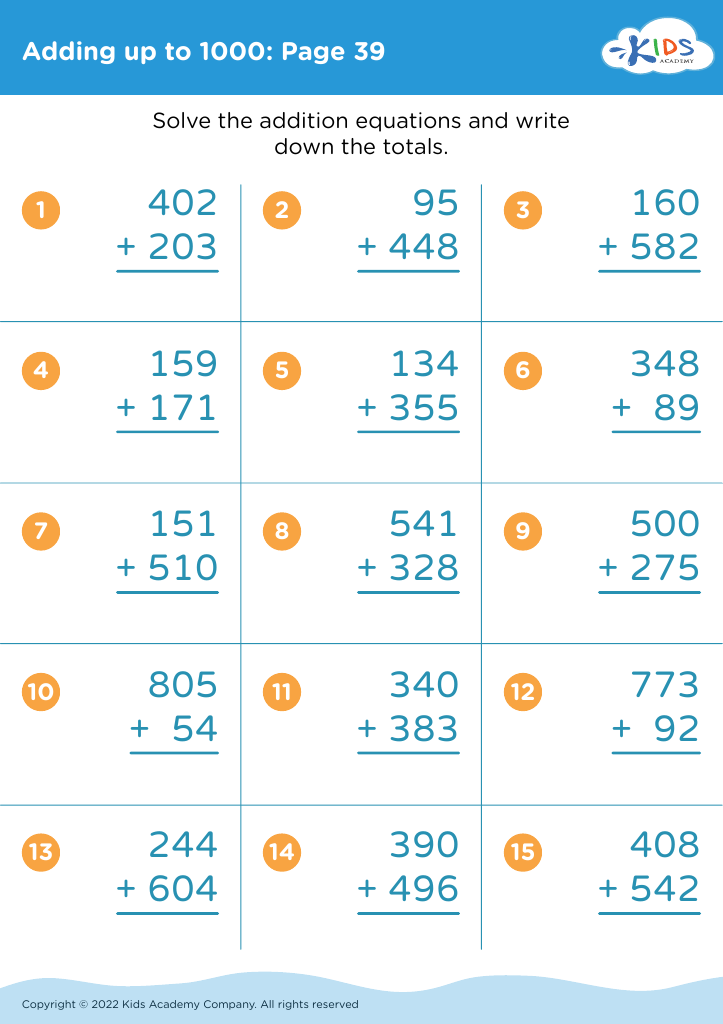
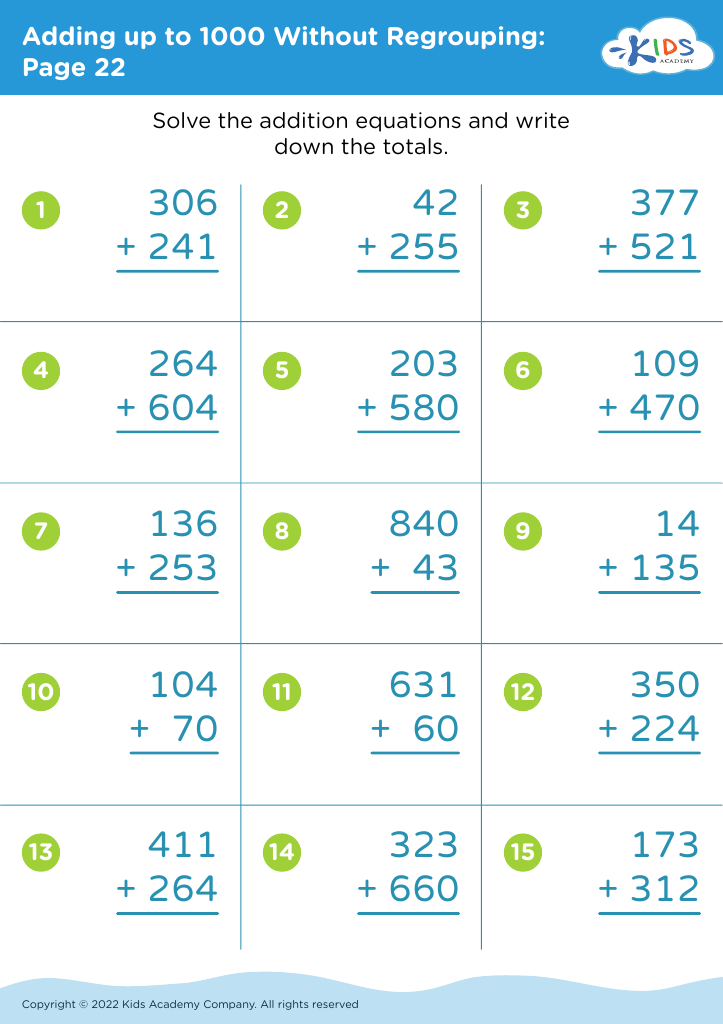
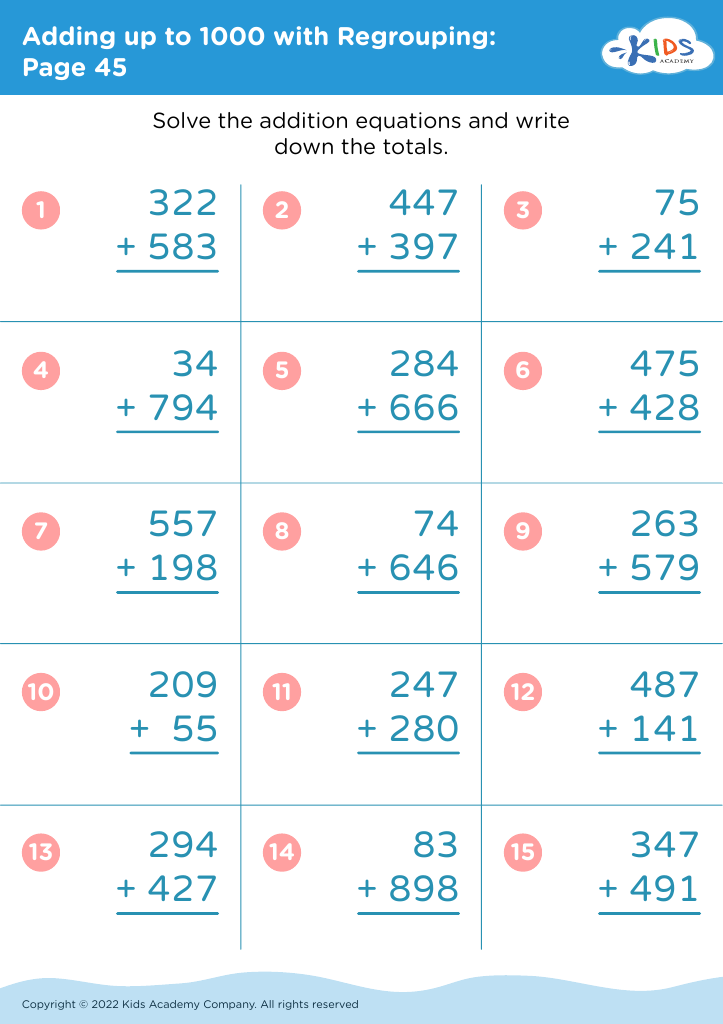








Fine motor skills and numeracy, including addition and subtraction, are crucial for 9-year-olds, influencing their overall development and academic success. As children refine their fine motor abilities, they gain control over their hand movements, which is essential for writing. High-quality handwriting not only enhances their confidence but also impacts their ability to express thoughts clearly. A child proficient in writing can engage more effectively with assignments, leading to deeper learning.
In addition, mastering addition and subtraction is fundamental to a child’s mathematical understanding. These skills serve as building blocks for more complex mathematical concepts and applications in everyday life. Fluent literacy in basic arithmetic fosters critical thinking and problem-solving, skills relevant across subjects.
By nurturing fine motor skills alongside arithmetic, parents and teachers can support holistic development. Engaging children in activities that promote both writing and math—like journaling math experiences or drawing related to equations—can make learning more enjoyable and effective.
Ultimately, prioritizing fine motor development and numeracy together equips children with essential tools for success in school and beyond, as they form a foundation for lifelong learning and independence.








