Problem-solving practice Addition & Subtraction Worksheets for 9-Year-Olds
4 filtered results
-
From - To
Welcome to our Problem-Solving Practice Addition & Subtraction Worksheets designed for 9-year-olds! These engaging worksheets aim to enhance critical thinking and mathematical skills through real-world problem scenarios. Your child will tackle a variety of addition and subtraction problems, encouraging the application of concepts in practical situations. Our interactive format not only makes learning fun but also builds confidence in young learners as they develop strong problem-solving abilities. Perfect for classroom practice or at-home learning, these worksheets will provide the essential practice needed for mastering addition and subtraction. Download and instill a strong foundation in math today!
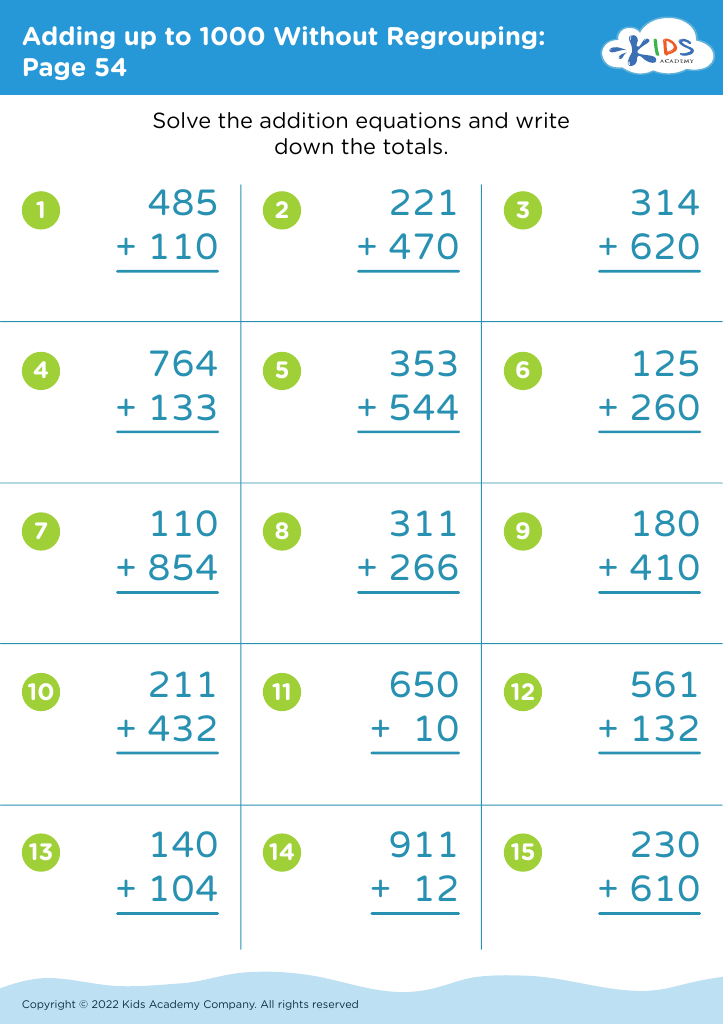
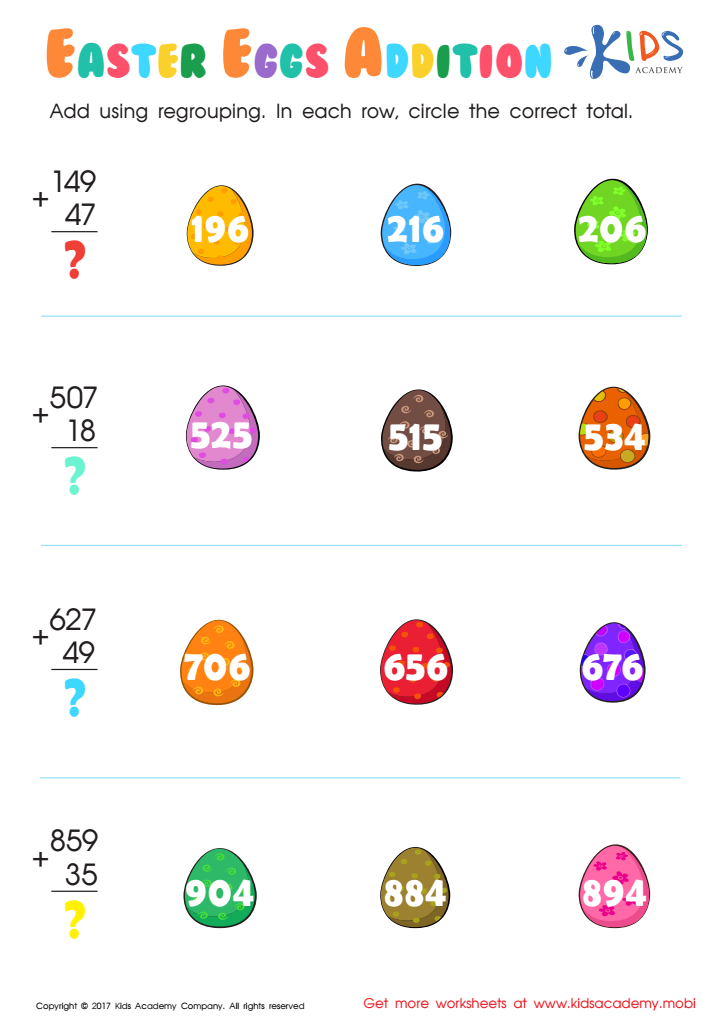
Addition with Regrouping Worksheet
 Assign to My Students
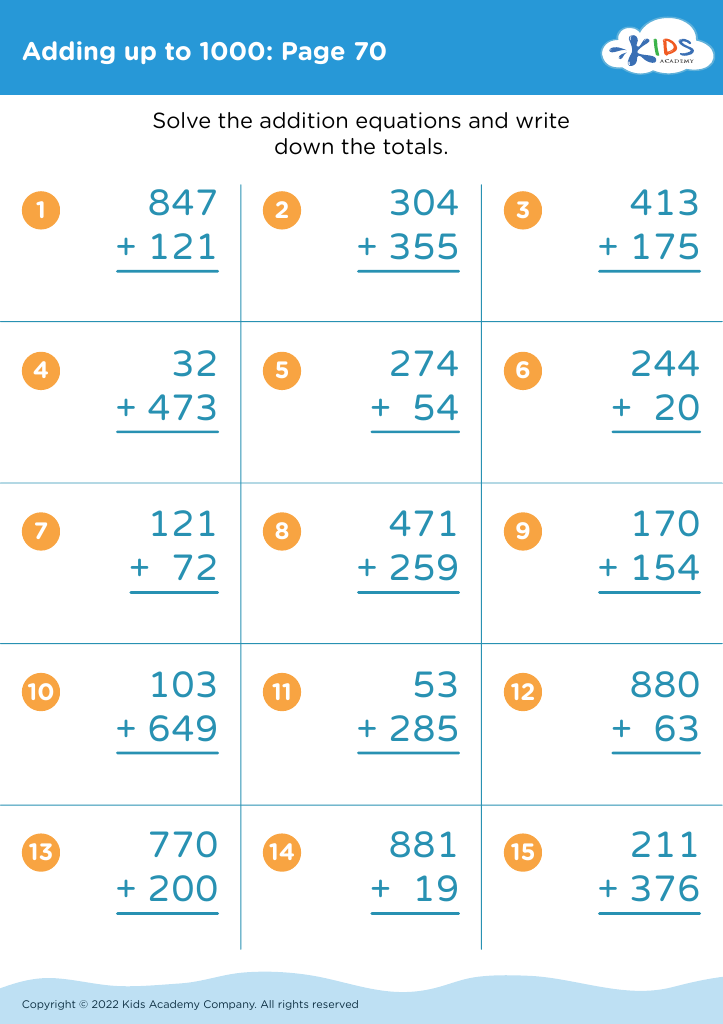
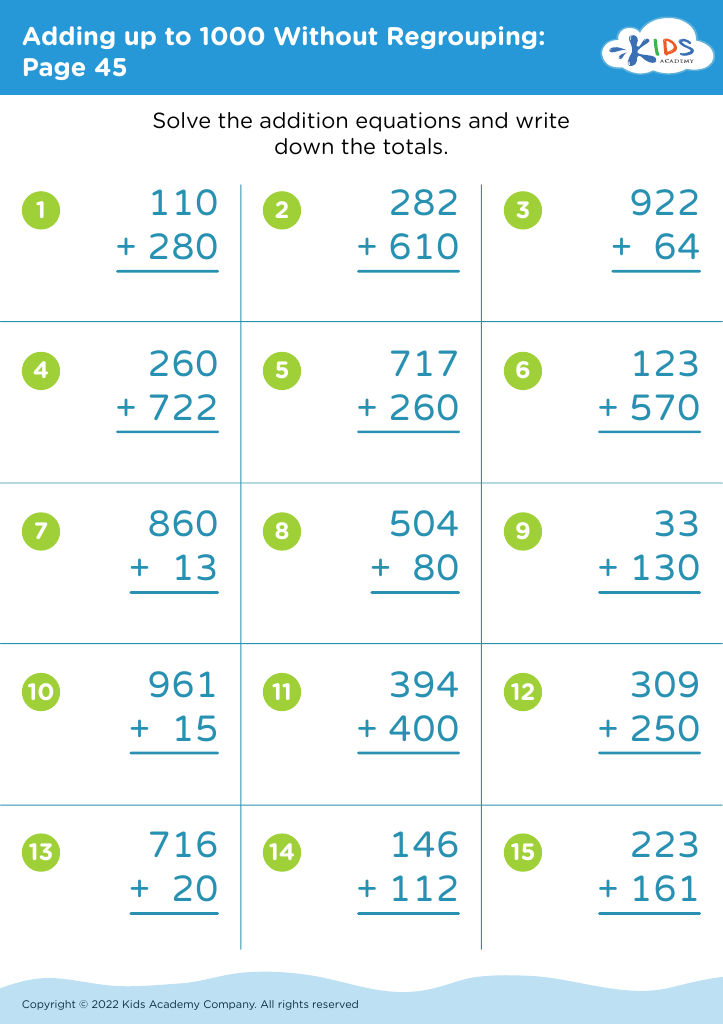








Parents and teachers should prioritize problem-solving practice in addition and subtraction for 9-year-olds because these skills are foundational for a child’s mathematical understanding and overall cognitive development. At this age, children are transitioning from basic arithmetic to more complex problem-solving, which enhances critical thinking and analytical skills necessary for future learning.
Engaging in problem-solving strengthens a child's ability to approach challenges methodically. It fosters perseverance and independence, as students learn to tackle problems using various strategies rather than relying on rote memorization. This skill is transferable to other subjects and real-life situations, creating well-rounded learners.
Additionally, improving addition and subtraction through practical experiences enriches a child's understanding of mathematical concepts, such as place value and number relationships. It helps to build confidence in their abilities, reducing math-related anxiety as they advance into higher grades.
By creating a supportive environment for problem-solving, teachers and parents can encourage a love for math, ensuring that children see it not just as a school subject but as a valuable life skill. This early investment in their mathematical capabilities lays the groundwork for academic success, creativity, and critical thinking in various fields in the future.








