Visual interpretation Addition & Subtraction Worksheets for 9-Year-Olds
3 filtered results
-
From - To
Enhance your child's math skills with our "Visual Interpretation Addition & Subtraction Worksheets for 9-Year-Olds" from Kids Academy. These engaging worksheets combine colorful visuals with clear instructions to help children grasp fundamental addition and subtraction concepts. Ideal for 3rd graders, our resources promote critical thinking and problem-solving abilities, making math fun and understandable. Foster confidence in young learners with exercises designed around visual representation methods that simplify complex calculations. Perfect for both home and classroom use, our worksheets are a valuable tool in any young student's educational journey. Boost your child's numerical literacy today with Kids Academy's premium printable worksheets!
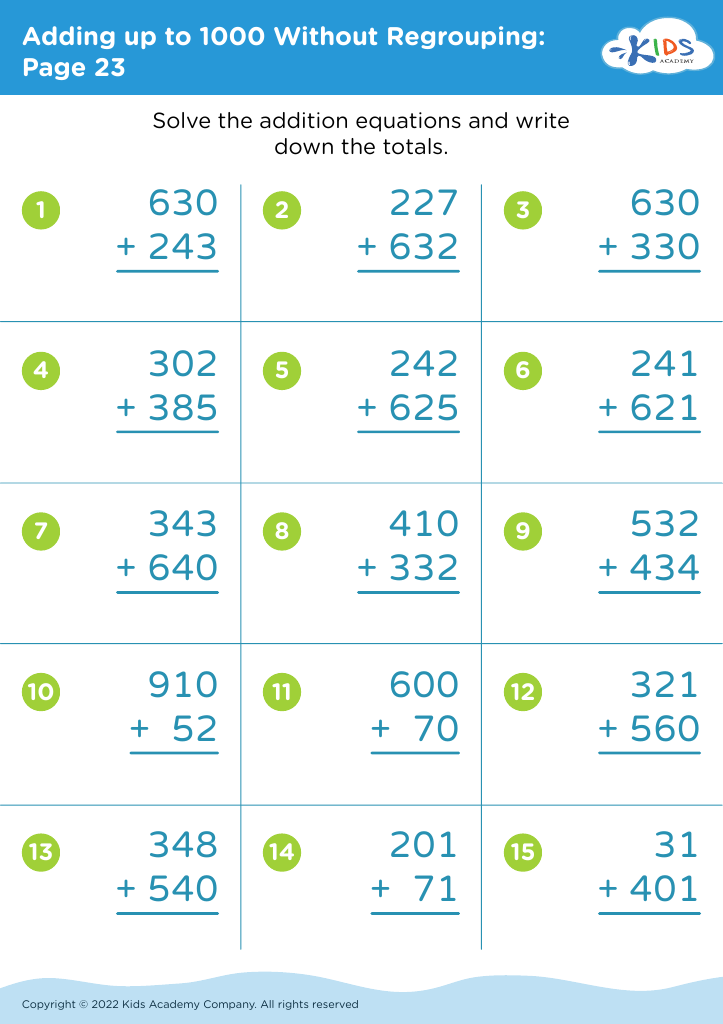
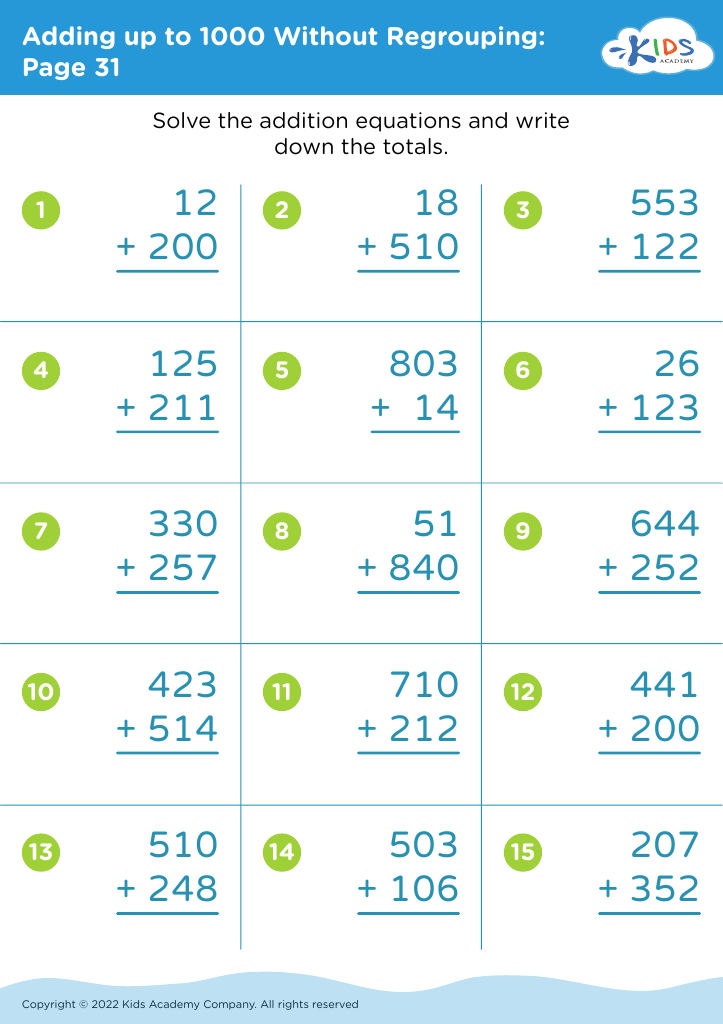
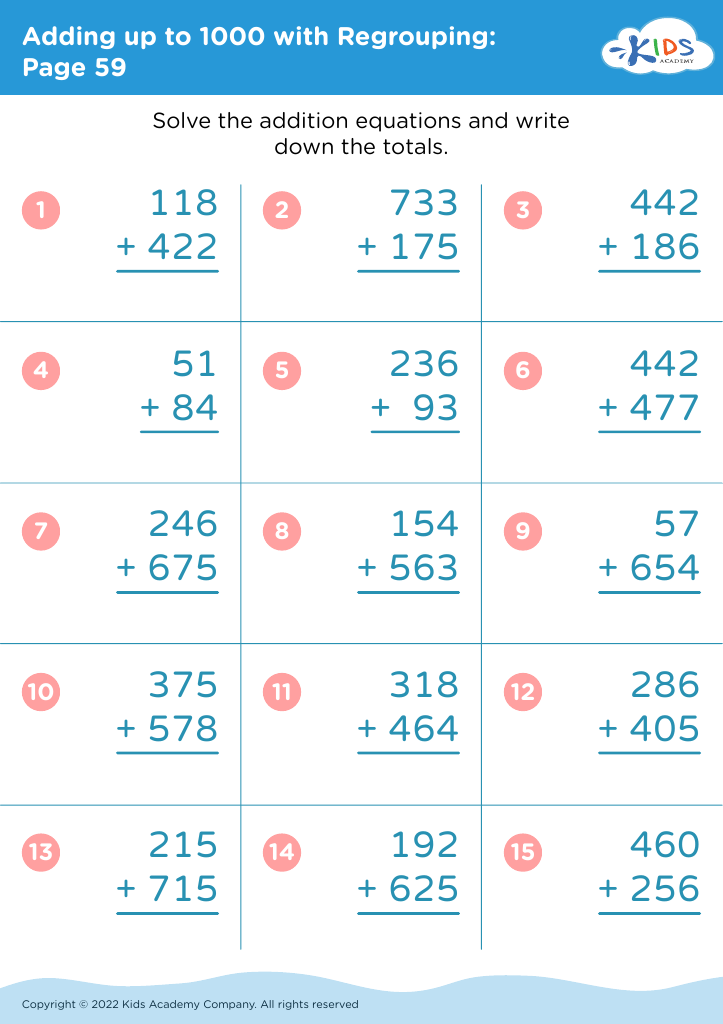








Visual interpretation of addition and subtraction is crucial for 9-year-olds as it enhances their foundational understanding of mathematics. At this age, children are transitioning from concrete to more abstract thinking. Visual aids, such as number lines, counters, or pictorial representations, make abstract concepts tangible, facilitating comprehension.
When parents and teachers use visual methods to explain addition and subtraction, they help bridge the gap between concrete experiences and mathematical symbols. This approach caters to various learning styles, accommodating visual learners who might struggle with numerical or verbal-only methods. It promotes active engagement and hands-on learning, which are pivotal at this developmental stage.
Furthermore, visual interpretations support problem-solving skills. They allow children to see patterns, make connections, and understand the 'why' behind the 'how.' This deeper understanding builds a strong foundation for more advanced mathematical concepts and increases confidence in their abilities.
Additionally, visual tools can also foster collaborative learning, as children often work in groups to solve problems, explaining their thinking and learning from peers. This not only enhances social skills but also reinforces their mathematical understanding through peer teaching.
In summary, visual interpretations are vital as they make math accessible, engaging, and comprehensible, laying the groundwork for future academic success. Investing in these strategies fosters a positive attitude towards math and promotes lifelong learning skills.








