Reading analog clocks Addition Worksheets for 9-Year-Olds
3 filtered results
-
From - To
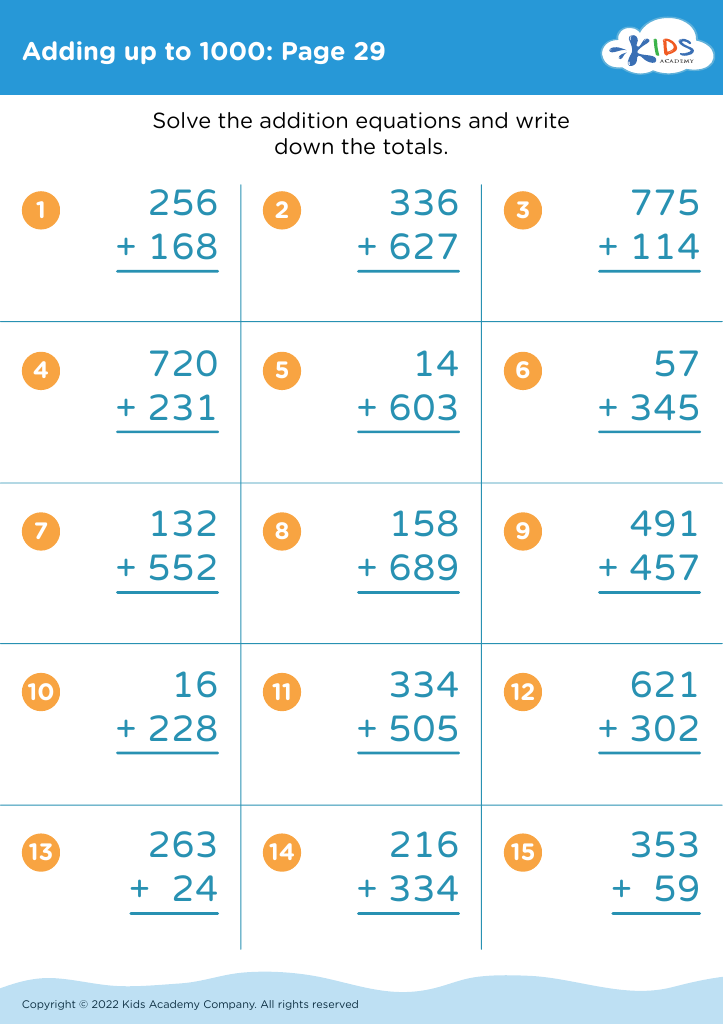
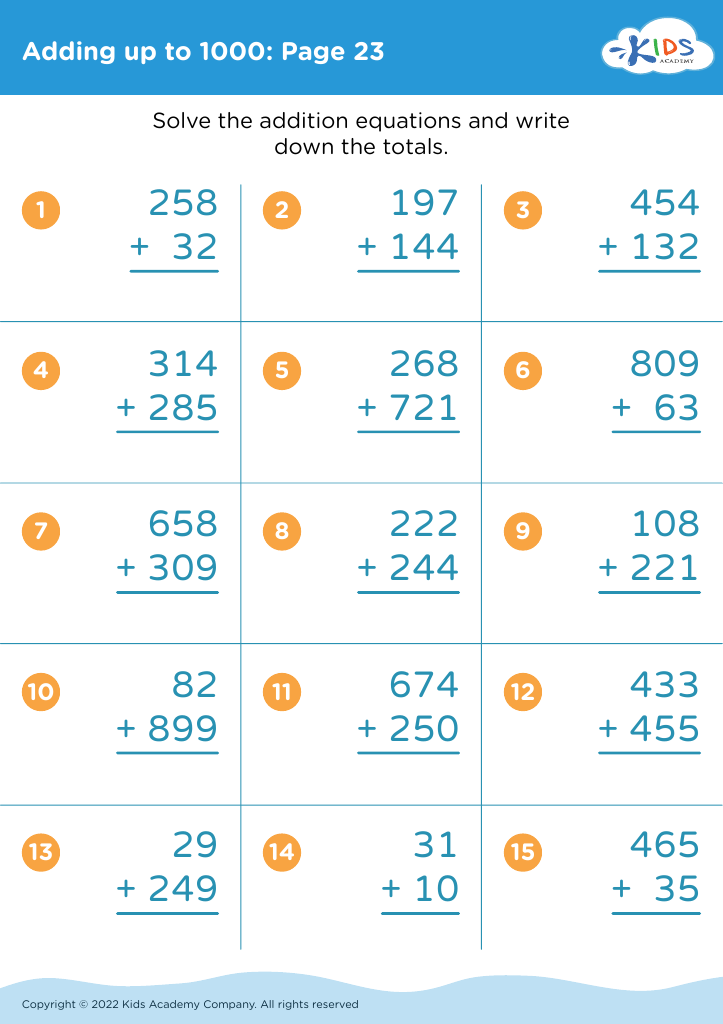
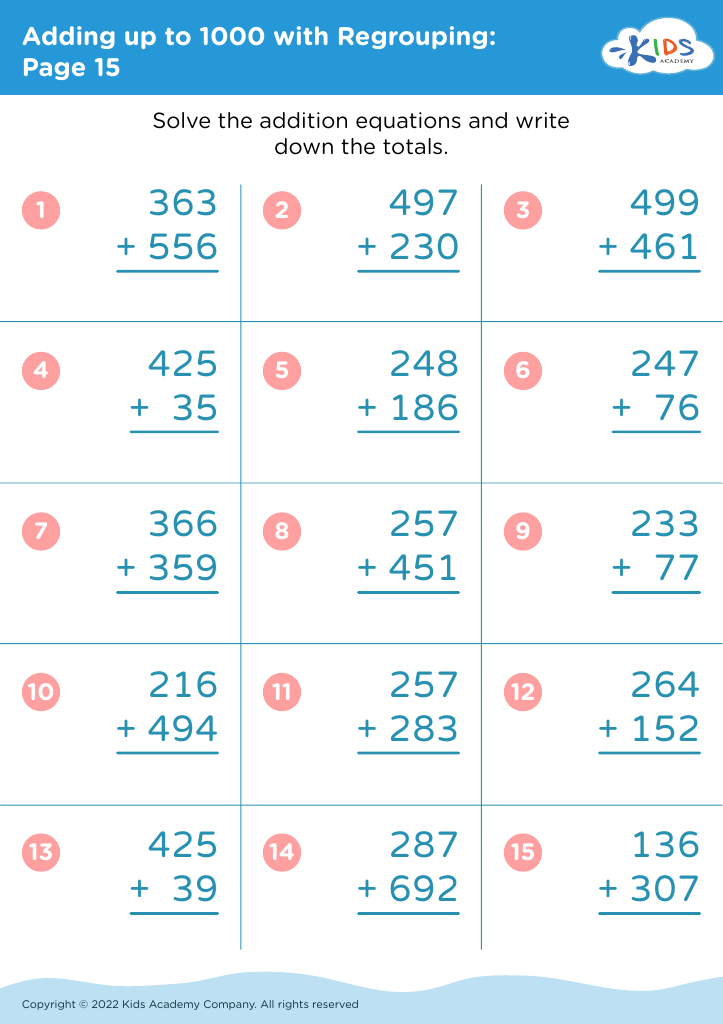
Our "Reading Analog Clocks Addition Worksheets for 9-Year-Olds" are designed to seamlessly integrate time-telling skills with addition practice. Engaging and educational, these worksheets help children master reading analog clocks while strengthening their math abilities. Perfect for classroom and at-home use, they incorporate colorful visuals and real-life scenarios to make learning fun and relevant. Suitable for kids who are honing their addition skills, these worksheets provide a thorough practice that builds confidence and accuracy in both mathematics and time reading. Equip your 9-year-old with essential skills that form a strong foundation for future learning!








Understanding how to read analog clocks is a crucial skill for 9-year-olds, as it aids in the development of a well-rounded sense of time management and mathematical proficiency. Learning to read clocks promotes a child's ability to comprehend concepts of hours, minutes, and seconds, which are foundational for effective timekeeping and scheduling. Analog clocks, with their unique structure of hour and minute hands, help kids establish a visual and tangible relationship with time, enhancing their ability to plan and allocate sufficient time for various activities, both academic and leisure.
Moreover, mastering time-reading skills has implications beyond just understanding clocks. It reinforces numerical skills, such as counting by fives, understanding fractions, and spatial-thinking abilities. These skills are integrated and applied during lessons on addition, helping children to see math as a continuous, interconnected subject rather than disjointed topics.
For parents and teachers, emphasizing the importance of reading analog clocks can lead to more responsible and independent children. It supports the students in becoming punctual and aware of the passage of time, fostering inherent discipline. Additionally, analog clocks persist in society, illustrating the ongoing relevance of this skill despite the prevalence of digital devices. By embedding these skills in early education, parents and teachers are equipping children with the confidence and competence they need as they grow and face increasingly complex time-related challenges.








