Understanding quantity Addition Worksheets for 9-Year-Olds
4 filtered results
-
From - To
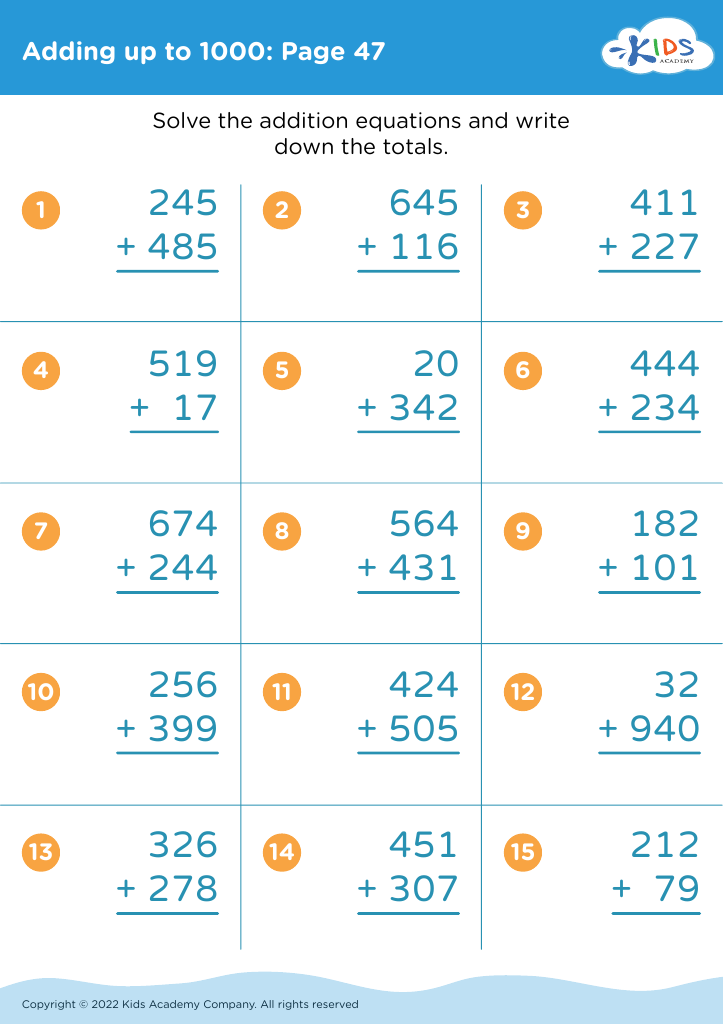
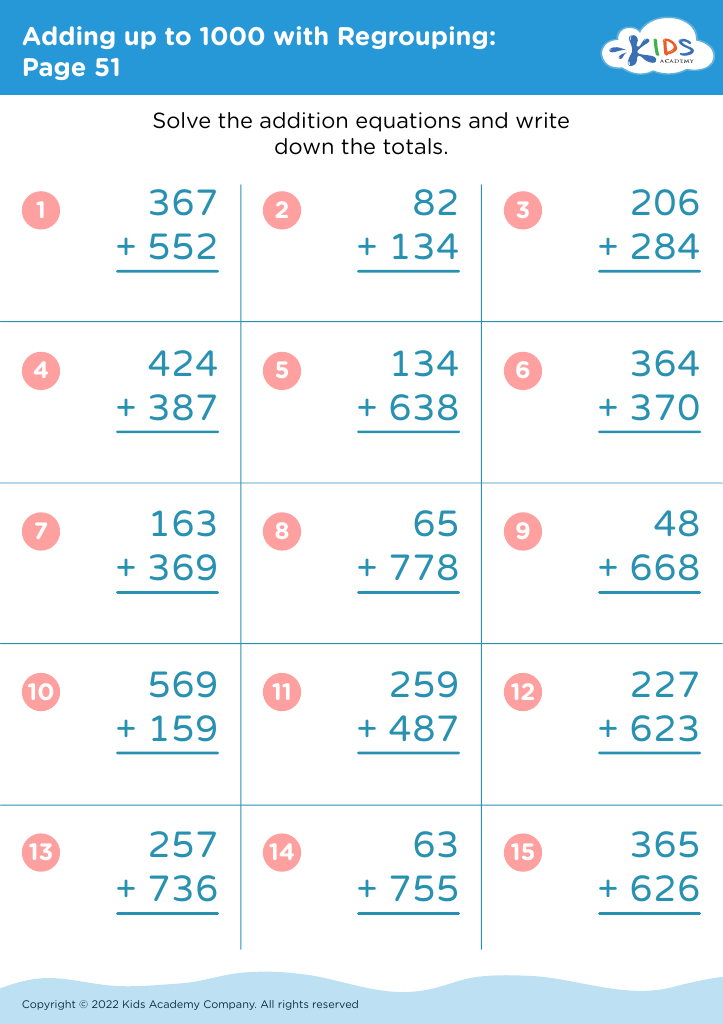
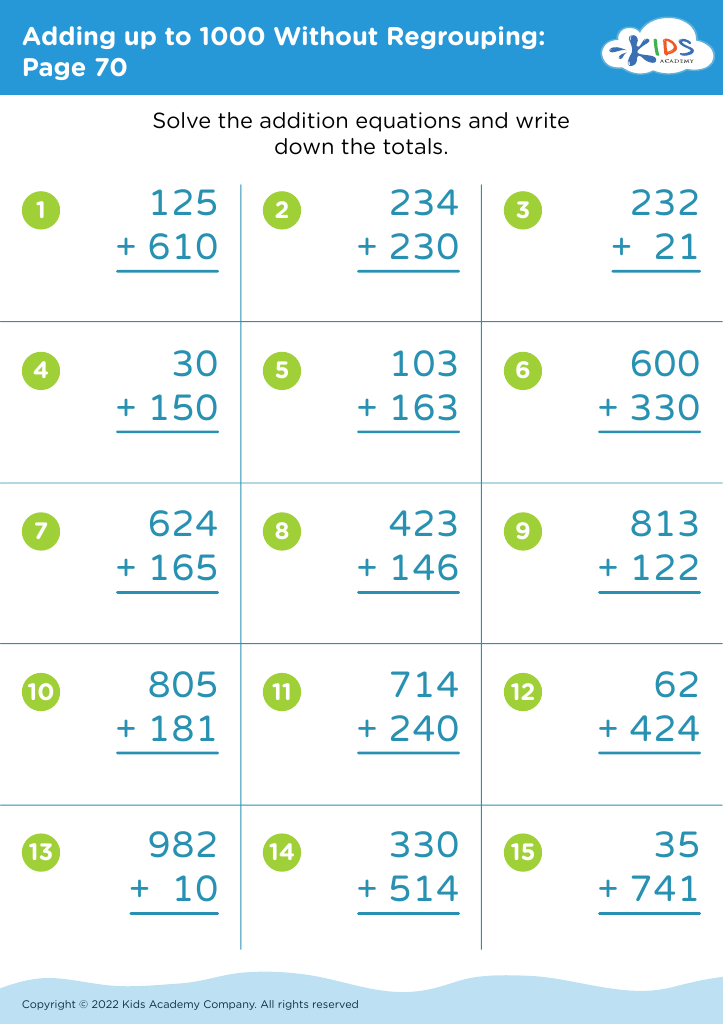
Explore our engaging "Understanding Quantity Addition Worksheets" designed specifically for 9-year-olds. These worksheets help young learners grasp the concept of quantity and develop essential addition skills through fun and interactive activities. By incorporating visuals and real-life scenarios, students can easily relate quantities to their everyday experiences, making math more enjoyable. Our resources promote critical thinking and problem-solving abilities, ensuring that children not only learn how to add but also understand the underlying concepts of quantity. Perfect for classroom use or at home, these worksheets provide valuable practice that boosts confidence and fosters a love for math.
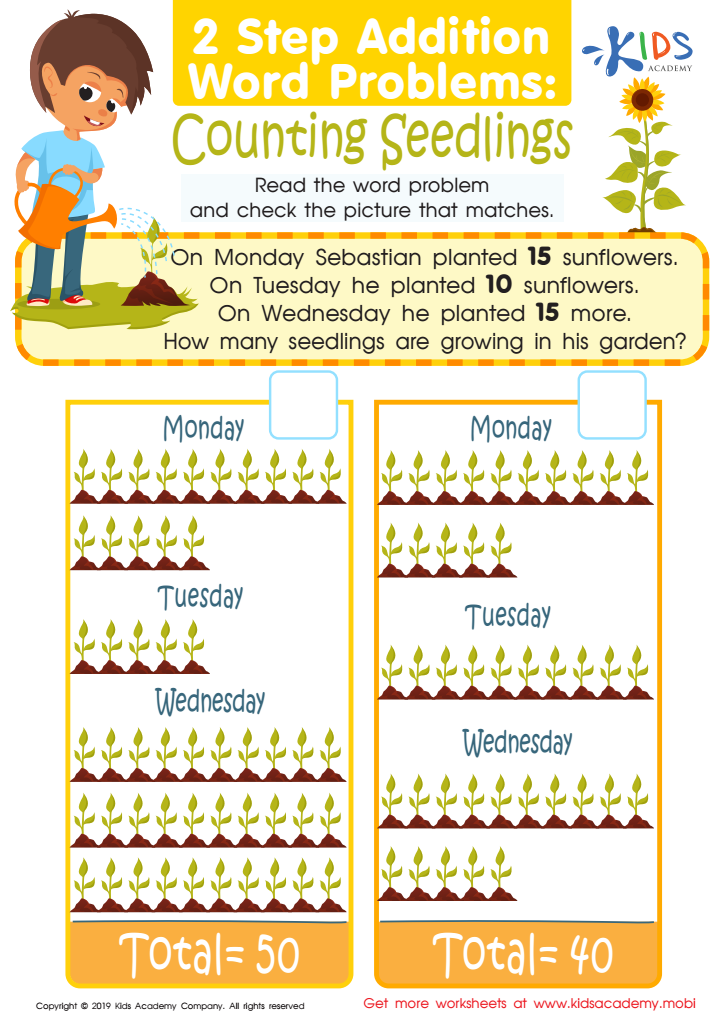
Counting Seedlings Worksheet
 Assign to My Students








Understanding quantity addition is fundamental for 9-year-olds as it lays the groundwork for advanced mathematical concepts and problem-solving. At this age, children transition from concrete counting to abstract reasoning, making it essential for parents and teachers to support this learning phase. Mastering quantity addition enhances a child’s ability to perform operations with larger numbers, fostering confidence in math skills that are vital in everyday life.
Moreover, quantity addition promotes critical thinking and analytical skills that go beyond mathematics. When children grasp how to combine quantities, they learn to approach problems systematically, breaking them down into manageable steps. This cognitive process translates well into other subjects and real-world situations, from budgeting allowance to measuring ingredients for a recipe.
Engaging with quantity addition also helps foster a positive attitude towards mathematics. Support from parents and teachers can encourage children to persist in challenges, develop a growth mindset, and see math as relevant and empowering. Involvement in their learning not only bolsters academic performance but also strengthens the parent-teacher relationship, creating a supportive environment where children can thrive. Investing in their understanding of quantity addition benefits not just their math skills, but their overall cognitive development and lifelong learning.








