Understanding symmetry Addition Worksheets for 9-Year-Olds
5 filtered results
-
From - To
Our "Understanding Symmetry Addition Worksheets for 9-Year-Olds" offer a fun and educational way to boost math skills. Designed specifically for young learners, these worksheets feature engaging activities that blend addition practice with symmetry concepts. As children solve addition problems, they also learn to recognize and create symmetrical patterns, enhancing their analytical thinking and spatial awareness. Perfect for classroom or home use, these worksheets help reinforce foundational math skills while keeping kids entertained and challenged. Equip your 9-year-old with the tools needed for math success with our expertly crafted, high-quality resources.
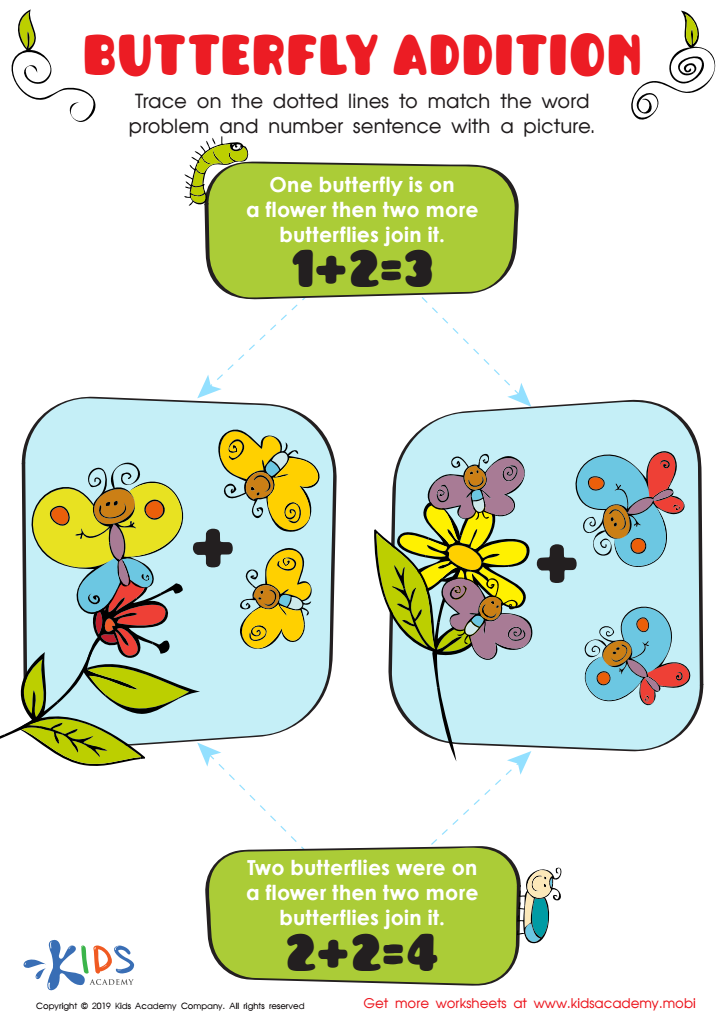
Butterfly Addition Worksheet
 Assign to My Students
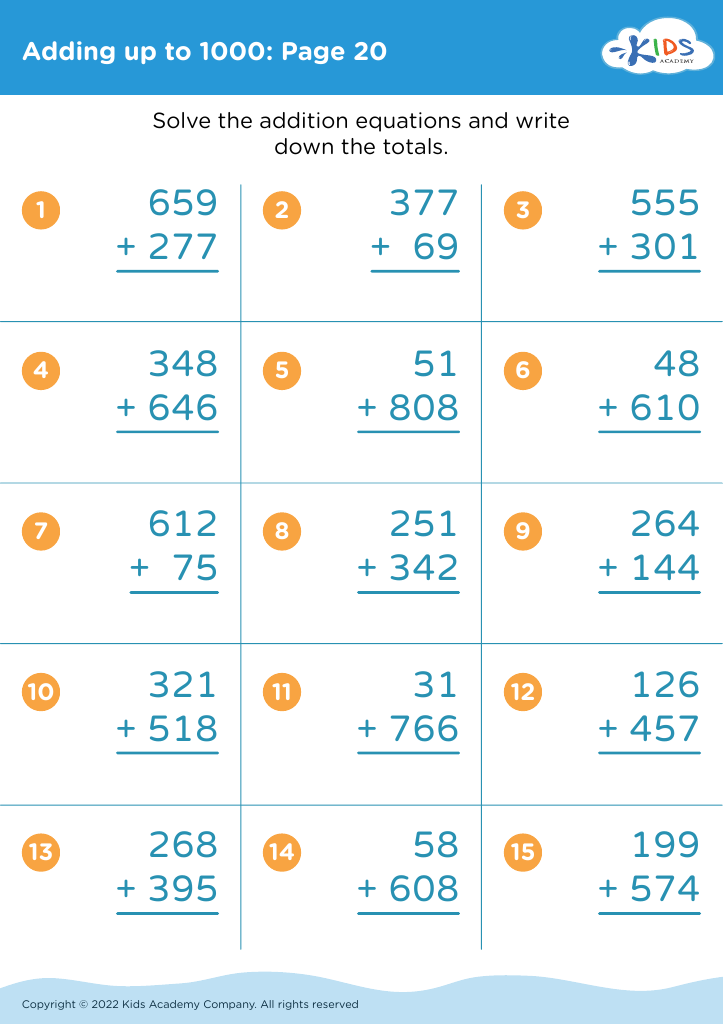
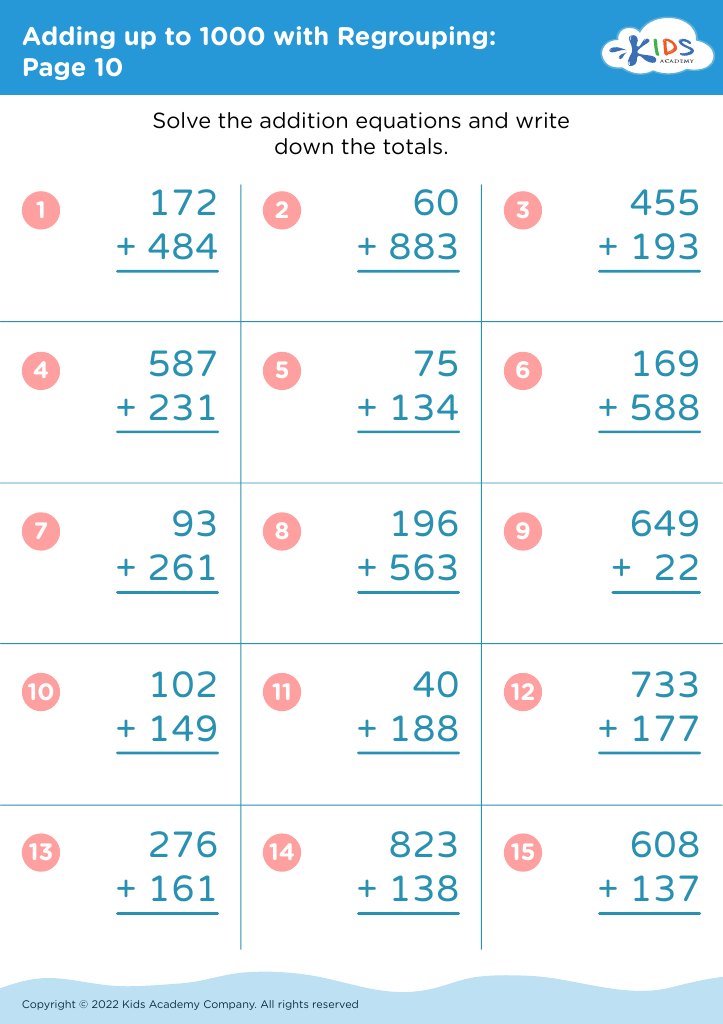
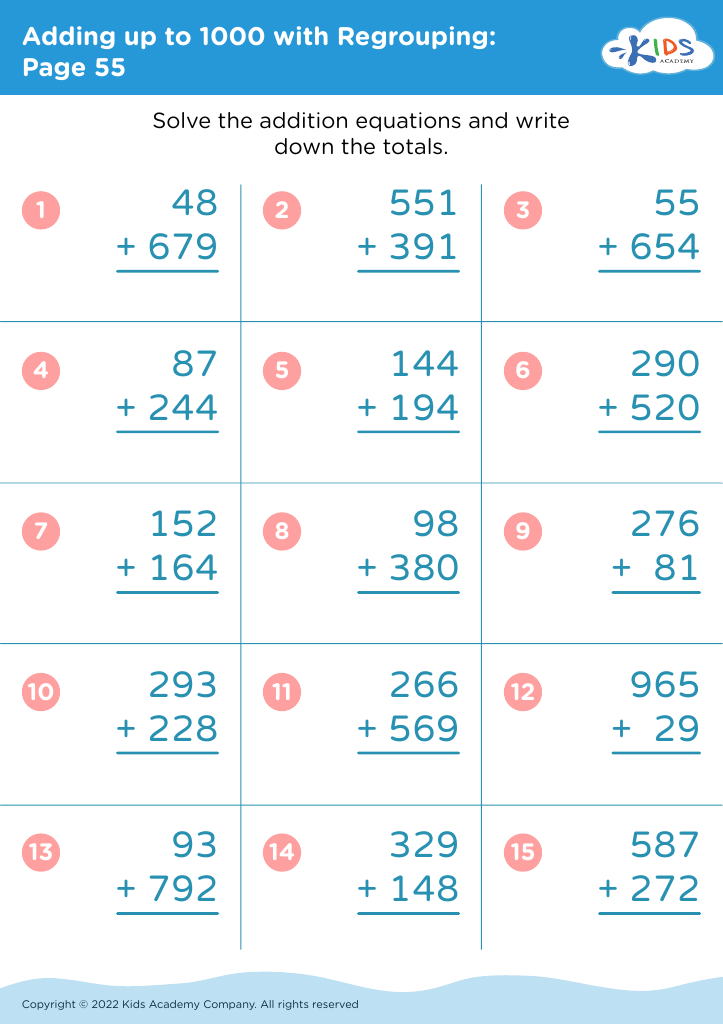








Understanding symmetry and addition is fundamental for 9-year-olds as it builds a solid foundation for more advanced mathematical concepts. Symmetry, the balanced and proportionate similarity found in two halves of an object, instills a sense of spatial awareness and geometry in young learners. Recognizing symmetry improves visual skills, which are crucial not only in math but also in art and daily problem-solving tasks. It teaches children the concept of balance and perspective, which are useful in various fields, including science and engineering.
Addition, on the other hand, is a core mathematical operation that is vital for daily life. Mastering addition helps children develop their numerical fluency, enabling them to solve simple to complex arithmetic problems efficiently. This basic skill lays the groundwork for all other operations in mathematics, such as subtraction, multiplication, and division.
For both parents and teachers, fostering these skills can boost a child's confidence in mathematics, making learning more enjoyable and less intimidating. Providing practical applications, such as visual puzzles for symmetry and real-life scenarios for addition, helps children see the relevance of these concepts. Investing time in teaching symmetry and addition will yield long-term benefits by nurturing logical reasoning and critical thinking abilities in children, indispensable tools for their academic and personal development.








