Shape Recognition Geometry Worksheets for 9-Year-Olds
10 filtered results
-
From - To
Explore our engaging Shape Recognition Geometry Worksheets designed specifically for 9-year-olds! These interactive resources help young learners identify and understand various shapes, fostering essential geometric skills. Each worksheet features fun activities that promote critical thinking while enhancing recognition of 2D and 3D shapes. From coloring and matching to real-world shape discovery, our worksheets are perfect for classroom learning or at-home practice. Encourage spatial awareness and build a solid foundation in geometry as students enjoy a variety of challenges. Visit now to access these valuable materials and support your child's mathematical journey with our imaginative and educational worksheets!
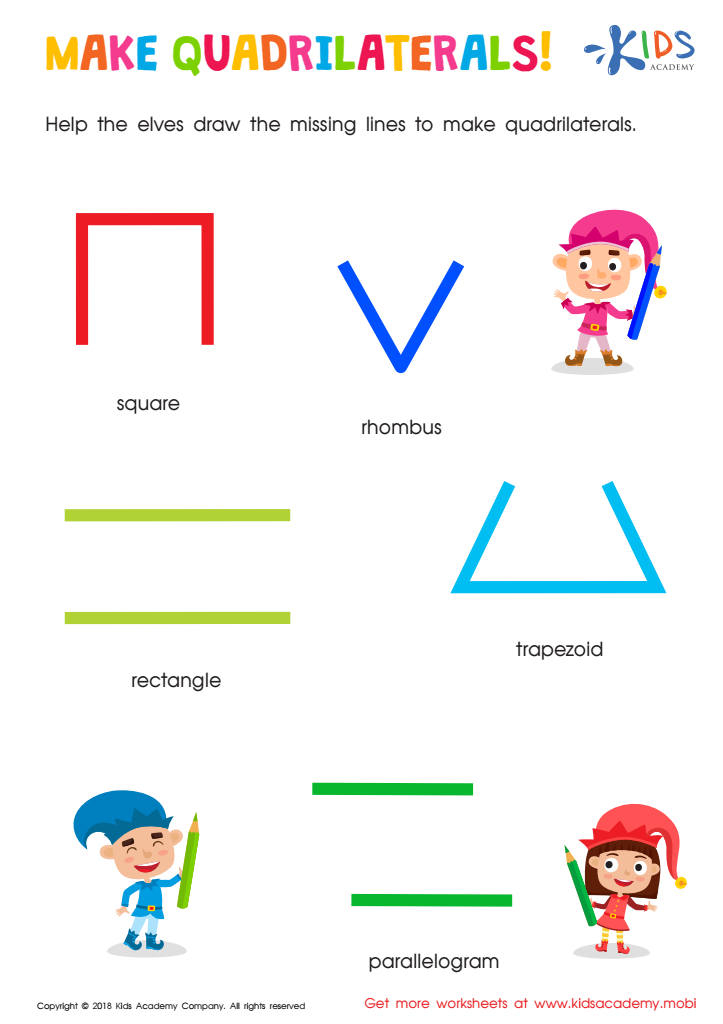
Make Quadrilaterals Worksheet











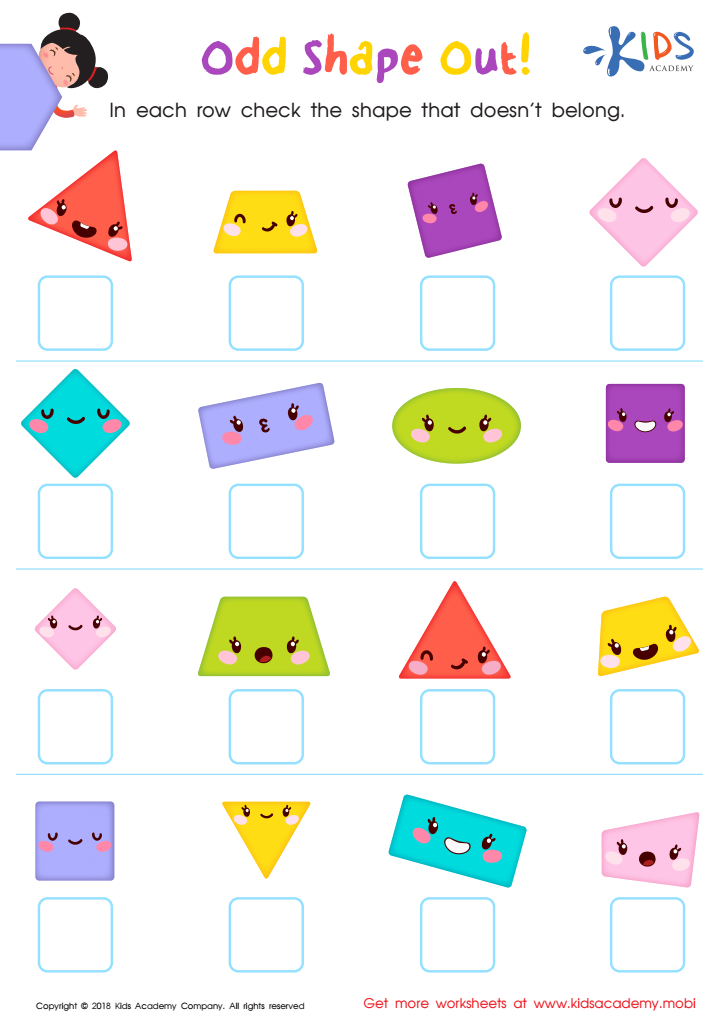
Odd Shape Out Worksheet for Grade 3
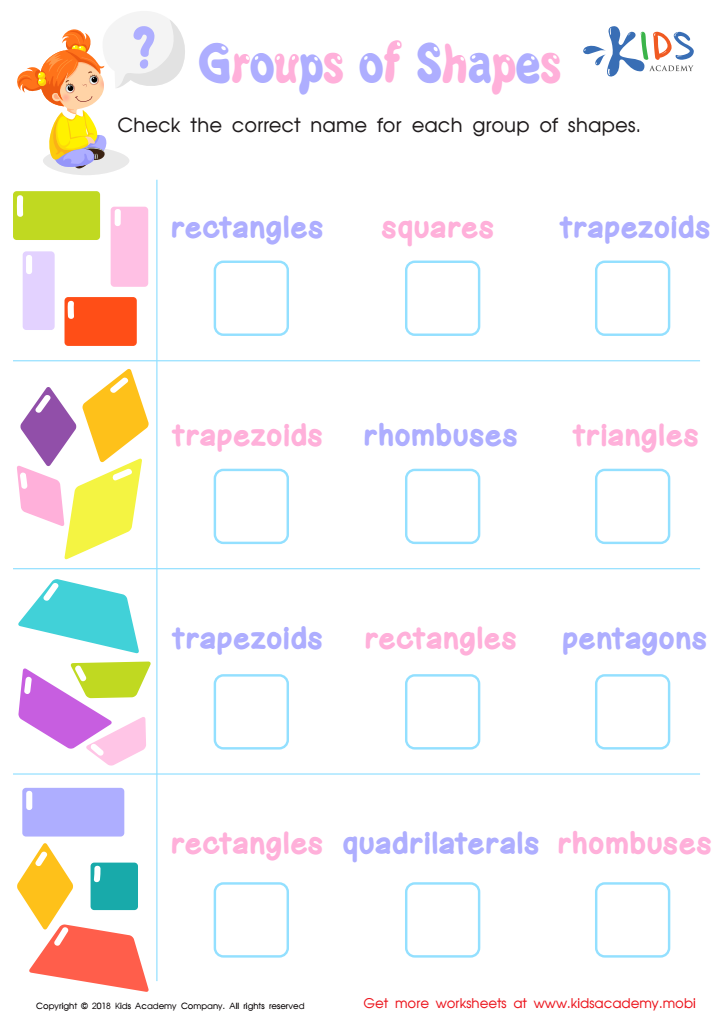
Groups of Shapes Worksheet
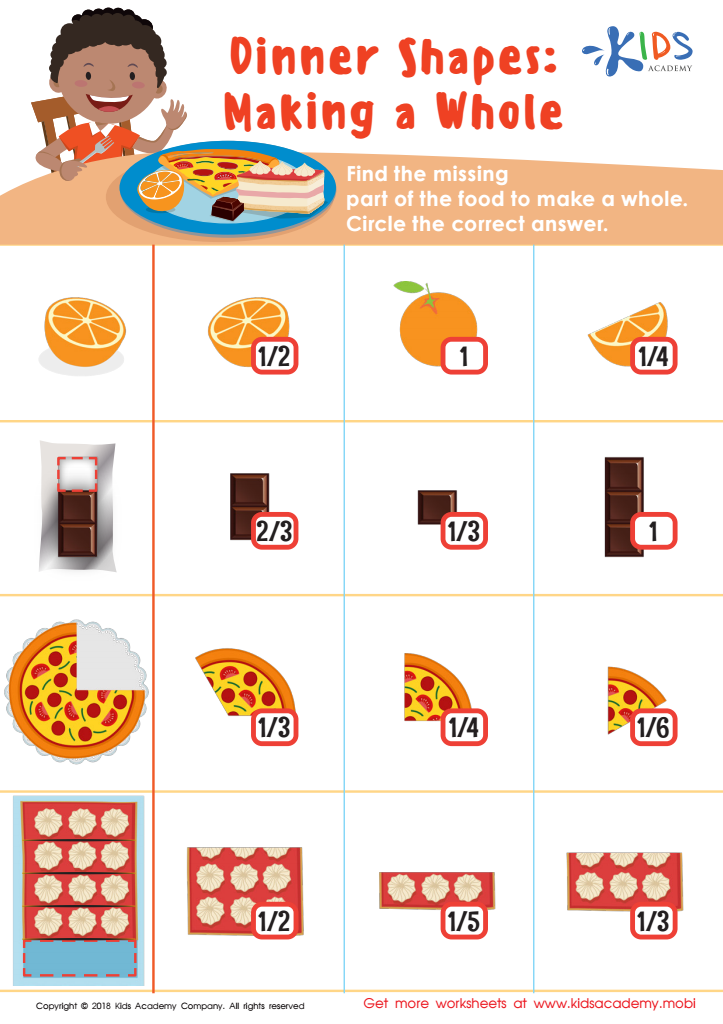
Dinner Shapes: Making a Whole Worksheet
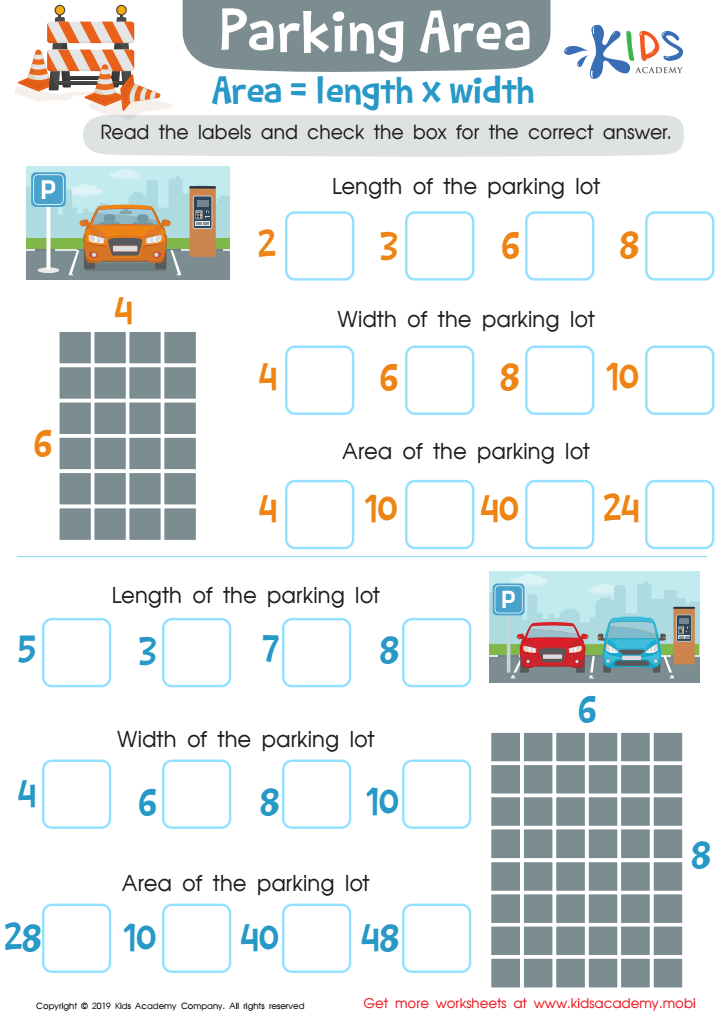
Parking Area Worksheet
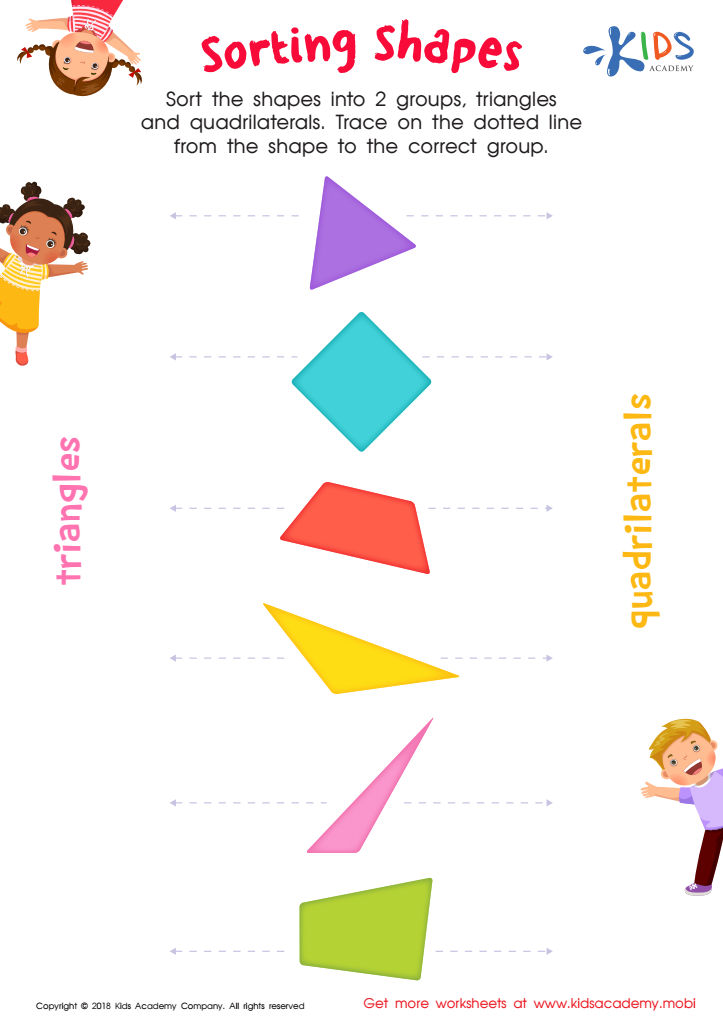
Sorting Shapes Worksheet
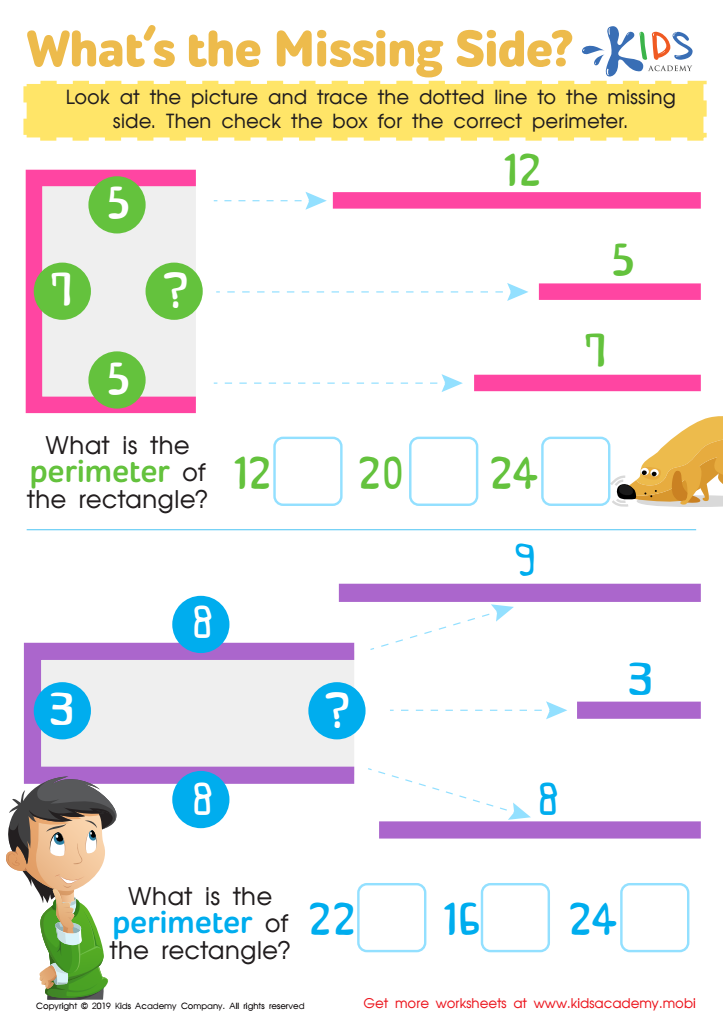
What's the Missing Side Worksheet
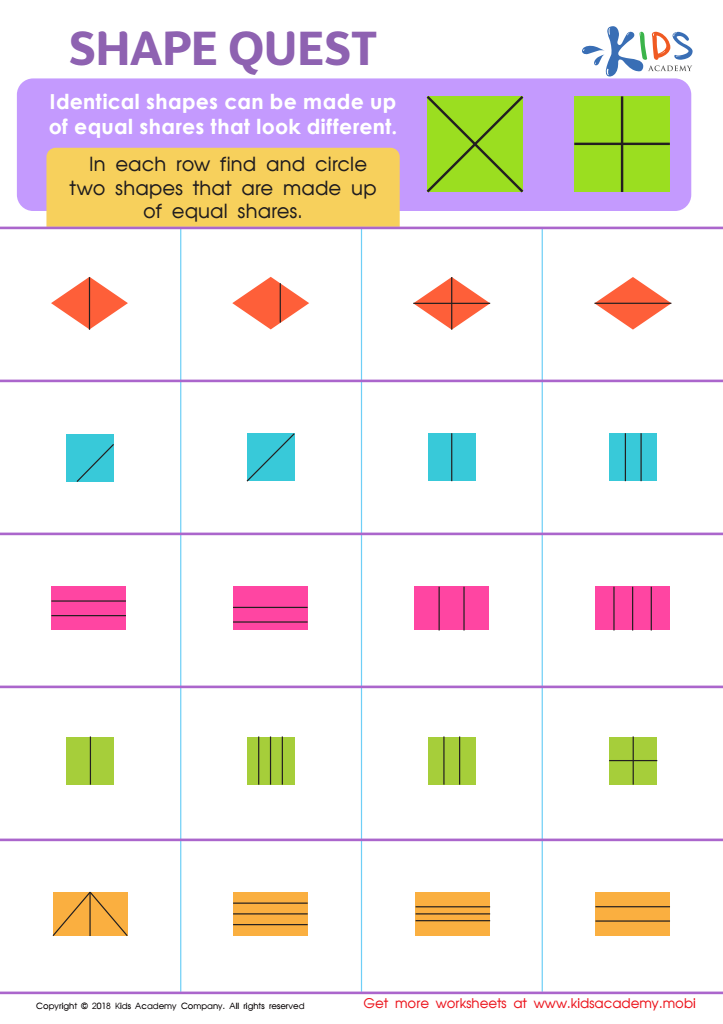
Shape Quest Worksheet
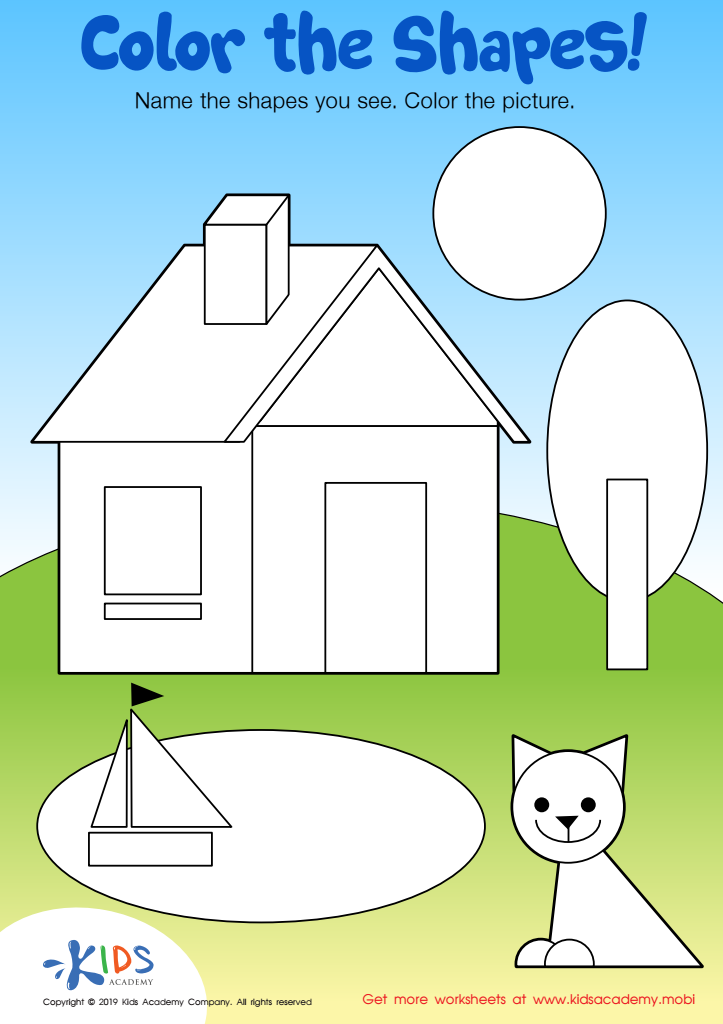
Color the Shapes Worksheet
 Assign to My Students
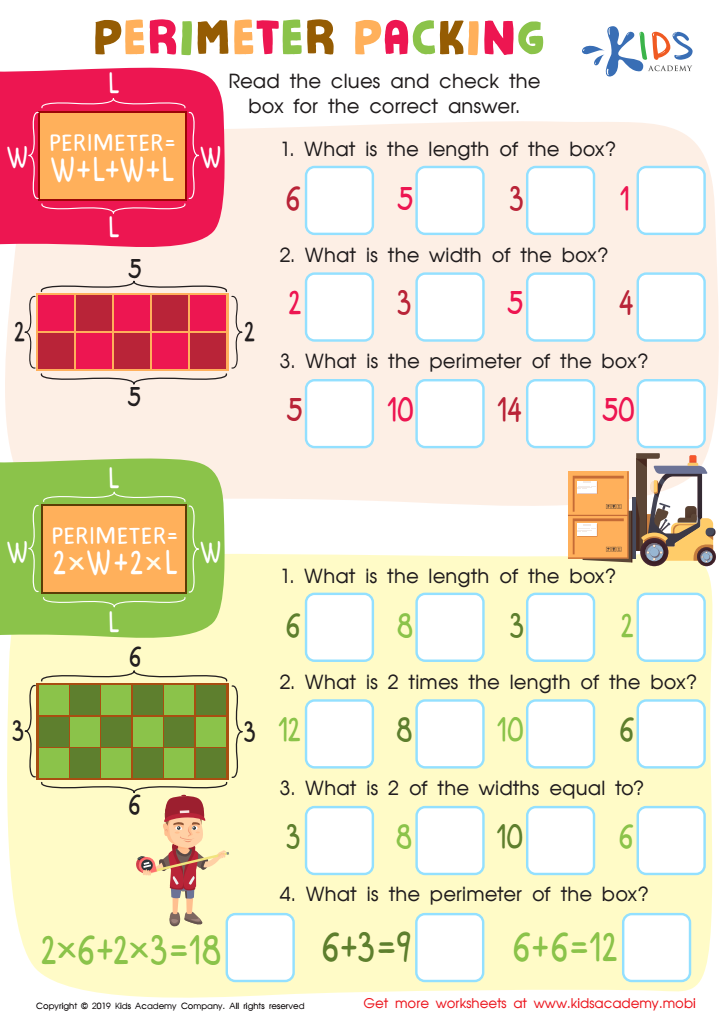
Perimeter Parking Worksheet








Shape recognition is fundamental for 9-year-olds as it forms the basis for critical mathematical concepts and spatial awareness. At this age, children are not only increasing their understanding of different shapes like circles, squares, and triangles, but they are also learning to identify and analyze more complex geometric forms, such as polygons and 3D shapes. This development is integral to cultivating problem-solving skills and logical reasoning.
Effective shape recognition fosters creativity and understanding in children. Recognizing shapes helps them understand the world around them, as geometry is everywhere – from architecture to nature, and art. Moreover, it strengthens their ability to visualize and manipulate objects mentally, skills crucial in higher-level math, science, and engineering.
Parents and teachers should pay attention to this milestone because it directly impacts academic success. Encouragement in shape recognition boosts children's confidence in mathematics, making them more likely to engage positively with future math challenges. By promoting these skills, adults help children build a solid foundation for STEM literacy, critical thinking, and real-world applications that can enhance overall learning experiences and future opportunities. Awareness of shape recognition can enrich educational interactions at home and in the classroom, highlighting the importance of engaging, hands-on activities.








