Develop critical thinking Math Worksheets for 9-Year-Olds
3 filtered results
-
From - To
Enhance your 9-year-old's problem-solving abilities with our specially designed math worksheets focused on developing critical thinking. Kids Academy offers engaging and challenging activities that promote logical reasoning and analytical skills. These printable worksheets cover various math topics, encouraging students to think deeply and strategize effectively. By solving complex problems, understanding patterns, and applying math concepts in real-world scenarios, children build a strong foundation for future academic success. Foster your child's intellectual growth and boost their confidence in math with Kids Academy's thoughtfully crafted critical thinking worksheets for 9-year-olds.
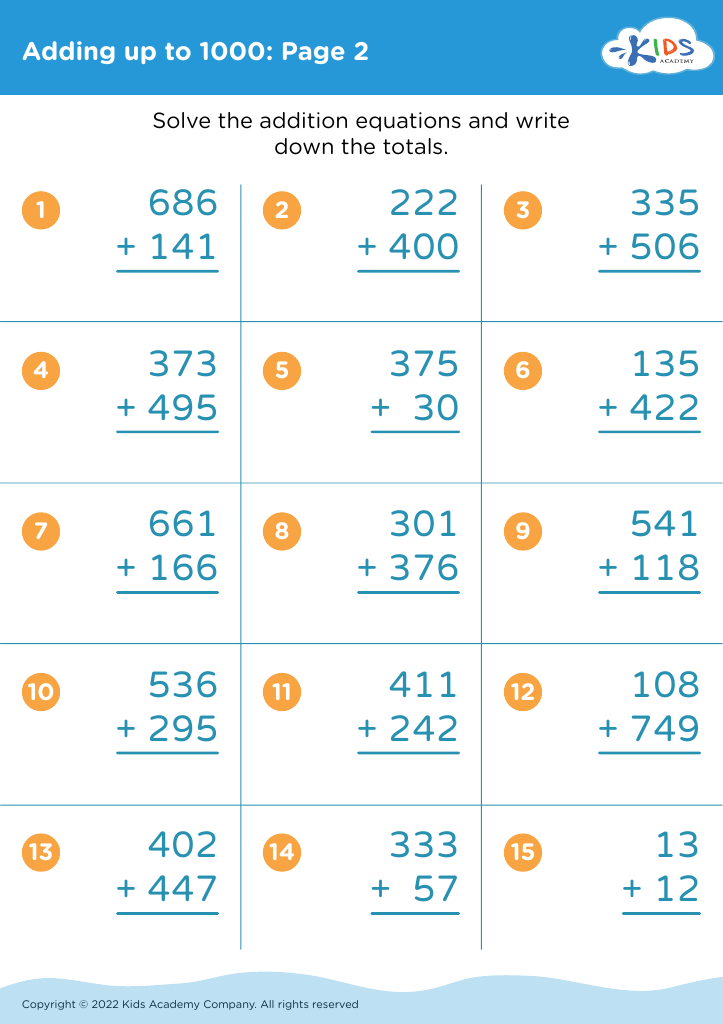
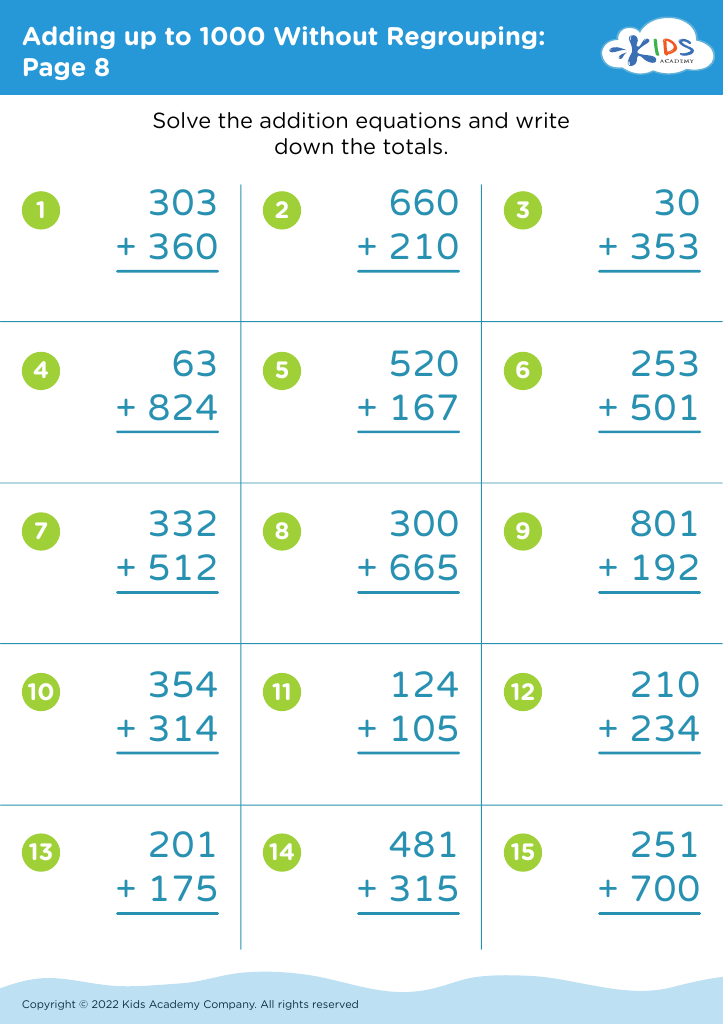
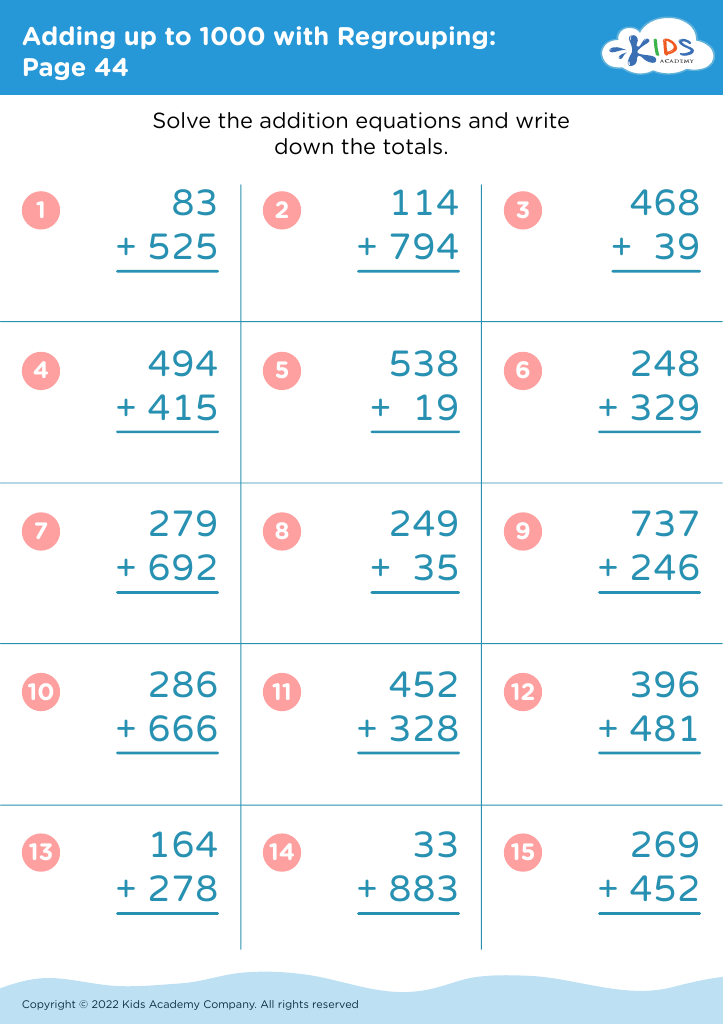







Ensuring that 9-year-olds develop critical thinking skills in math is pivotal for enhancing their overall cognitive abilities and academic performance. Critical thinking in mathematics encourages children to not just rely on rote memorization, but to understand the underlying concepts and principles. This depth of understanding assists them in solving complex problems, making connections between different ideas, and applying math to real-world scenarios.
When children learn to approach math with a critical mindset, they sharpen their reasoning and analytical skills. This doesn't just benefit their progress in math; these skills are transferable across various subjects, from science to social studies. For instance, they learn to question assumptions, evaluate evidence, and understand cause-and-effect relationships. Critical thinking also fosters intellectual independence. Students become proactive learners who are not afraid to tackle challenging problems or think outside the box.
Additionally, developing these skills at a young age can boost a child’s confidence and foster a lifelong love of learning. They learn that mistakes are not failures but opportunities to learn and grow. For parents and teachers, prioritizing critical thinking in math equips children with a toolkit that prepares them for future academic pursuits and everyday decision-making, laying a strong foundation for success in an increasingly complex world.








