
Fraction simplification Math Worksheets for 9-Year-Olds
7 filtered results
Difficulty Level
Grade
Age
-
From - To
Subject
Activity
Standards
Enhance your child's math skills with our engaging Fraction Simplification Worksheets designed for 9-year-olds. These expertly crafted resources help young learners grasp the concept of simplifying fractions with ease and confidence. Clear instructions and varied problems encourage critical thinking and foster a deep understanding of fractions in real-world contexts. Our worksheets cater to different learning styles, ensuring that every child can thrive and master this essential math skill. Perfect for classroom settings or at-home practice, these worksheets promote independent learning while making math fun and accessible. Download now and support your child’s journey to becoming a fraction whiz!
Favorites
With answer key
Interactive
Join Kids Academy for Free
Who is primarily going to use this learning content?


.jpg)



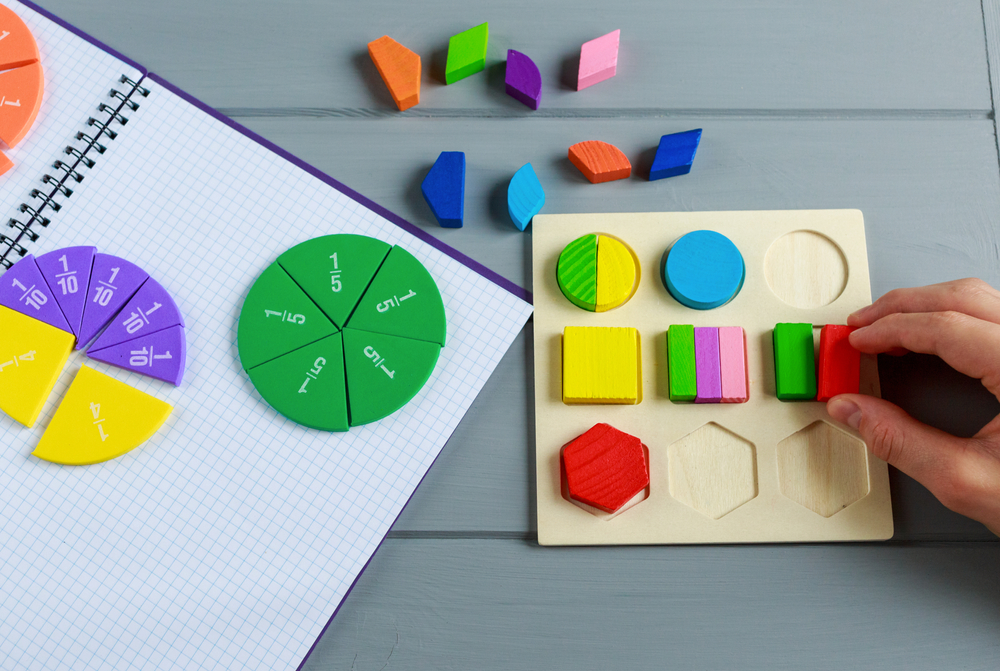

Fraction simplification is a crucial mathematical skill for 9-year-olds that promotes their overall number sense and mathematical reasoning. Understanding how to simplify fractions enables children to develop problem-solving strategies, making it easier for them to recognize equivalent fractions and work with them in given contexts.
Parents and teachers should care about this skill because it lays a strong foundation for future math concepts. As children progress in their education, they'll encounter more complex calculations in areas such as algebra, engineering, and science, where understanding fractions is vital. Simplifying fractions helps reduce problems to their simplest form, making calculations less intimidating.
Moreover, mastering this skill can boost students' confidence in math, encouraging a positive attitude towards learning, which can lead to improved performance in other academic areas. By supporting children in mastering fraction simplification, parents and educators provide them with tools for both academic success and real-life applications, such as cooking, budgeting, or measuring, where fractions are often used. In conclusion, fostering this skill at an early age empowers children, equipping them for present challenges and future learning opportunities.








