Understanding multiplication Math Worksheets for 9-Year-Olds
7 filtered results
-
From - To
Discover a comprehensive collection of multiplication math worksheets tailored for 9-year-olds at Kids Academy! These educational resources are designed to help children grasp the fundamentals of multiplication through engaging activities and real-world applications. Our worksheets include visual aids, number lines, and interactive exercises that make learning multiplication fun and effective. Perfect for reinforcing classroom instruction or providing additional practice at home, these resources cater to various learning styles. Whether your child is just starting with multiplication or needs help mastering the concept, our worksheets offer clear explanations and step-by-step methods to boost confidence and improve mathematical skills. Start your multiplication journey today!
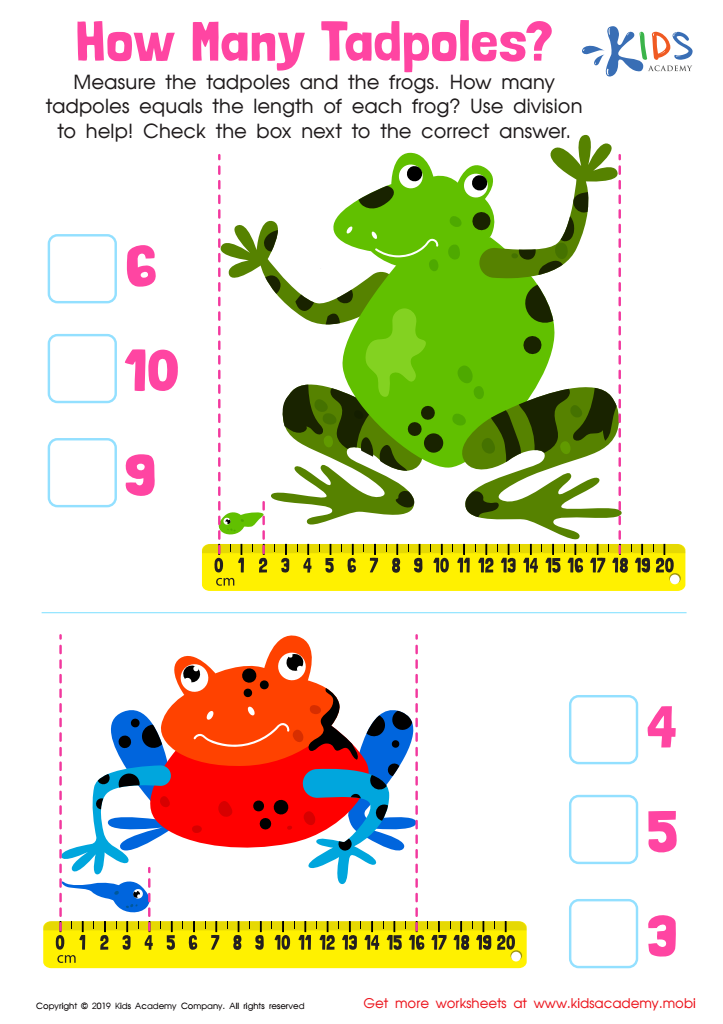
How Many Tadpoles Worksheet
 Assign to My Students
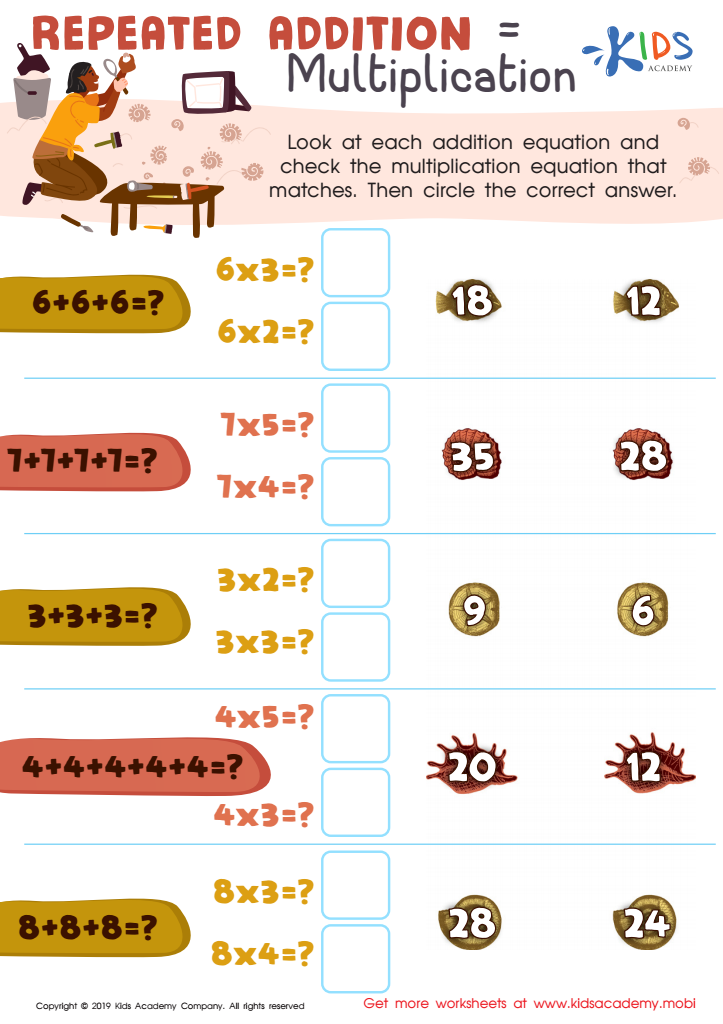
Repeated Addition = Multiplication Worksheet
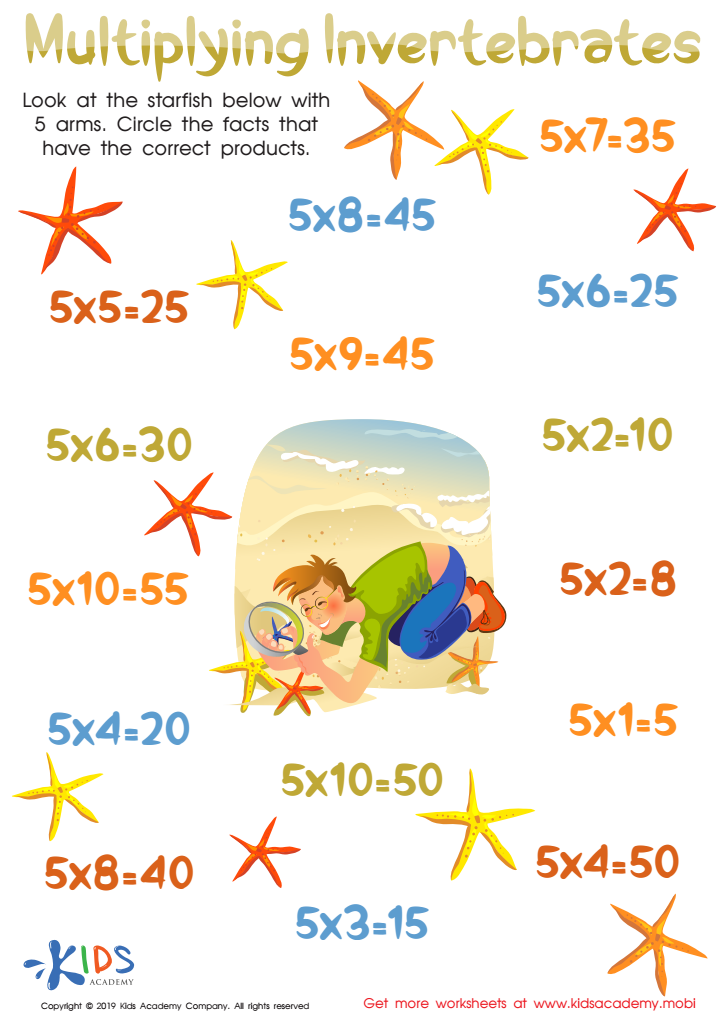
Multiplying Invertebrates Worksheet





.jpg)


Understanding multiplication is foundational for 9-year-olds, as it significantly impacts their overall mathematical journey and academic success. At this age, children are transitioning from basic arithmetic to more complex problem-solving, and grasping multiplication concepts sets the stage for advanced operations like division, fractions, and algebra. Mastering multiplication helps children develop critical thinking skills and enhance their ability to tackle varied mathematical challenges.
Moreover, multiplication serves as a vital tool in everyday life. From managing time to budgeting, understanding how to multiply ensures that children can apply these skills practically and independently. It fosters confidence, enabling children to approach math tasks with a positive attitude.
For parents and teachers, supporting a child's multiplication learning is essential for their emotional and intellectual development. Engaging children through hands-on activities, games, and real-life applications makes learning enjoyable and memorable. This holistic approach nurtures a love for math and fuels persistence in problem-solving.
Ultimately, by prioritizing multiplication mastery, parents and teachers not only equip children with essential skills but also cultivate a strong foundation for future learning, enabling them to thrive academically and develop a lifelong appreciation for mathematics.








