
Historical Knowledge Multiplication Worksheets for 9-Year-Olds
5 filtered results
Difficulty Level
Grade
Age
-
From - To
Subject
Activity
Standards
Enhance your 9-year-old's math skills with our engaging Historical Knowledge Multiplication Worksheets! Tailored for young learners, these worksheets combine multiplication practice with intriguing historical facts, making math both educational and fun. Each worksheet encourages kids to solve multiplication problems while discovering important historical events and figures, enriching their knowledge beyond numbers. These interactive activities promote critical thinking and provide a well-rounded educational experience. Perfect for classroom use or home learning, our worksheets help integrate history with mathematics, making learning enjoyable and effective. Explore the past while sharpening multiplication skills to ensure a comprehensive understanding and curiosity for both subjects!
Favorites
With answer key
Interactive
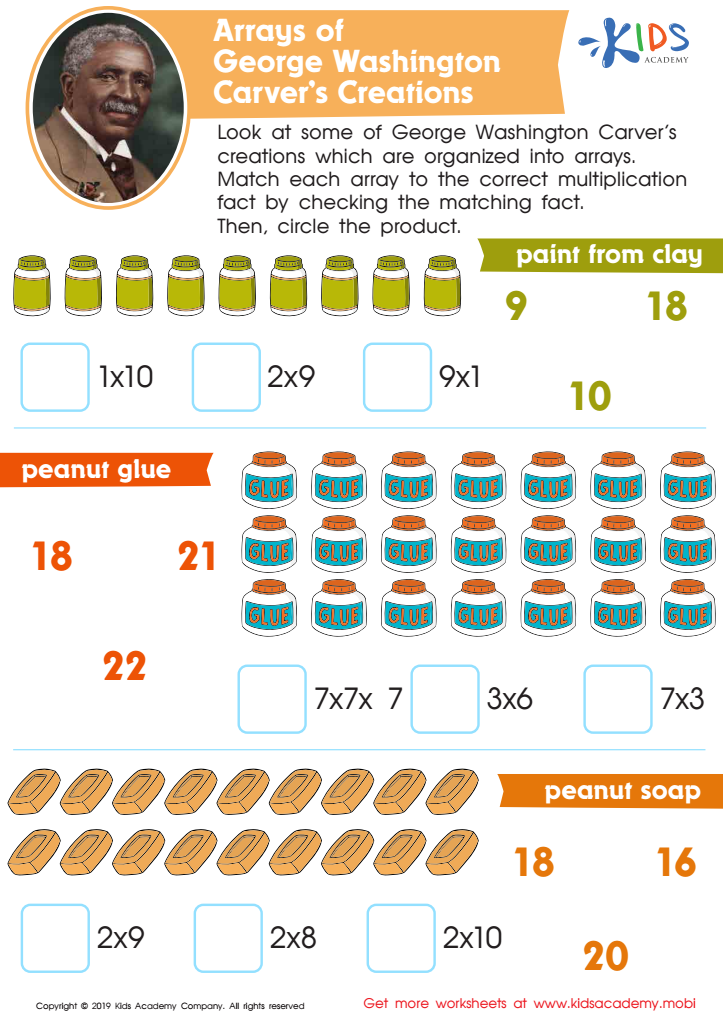
Arrays of George Washington Carver’s Creations Worksheet
Remind your child of what George Washington Carver created. Can they tell you? This worksheet has arrays with his creations. Match the array to the multiplication fact and help your child to circle the product.
 Assign to My Students
Arrays of George Washington Carver’s Creations Worksheet
Worksheet
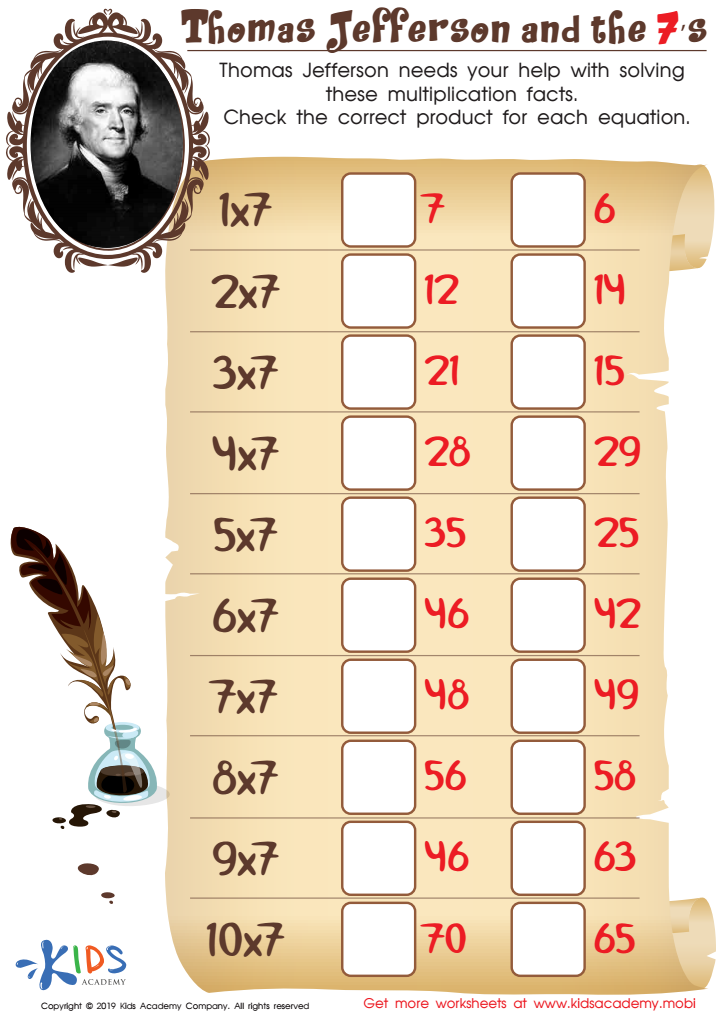
Thomas Jefferson and the 7’s Worksheet
Thomas Jefferson championed education and wants kids to know their times tables. Help your child with this worksheet focusing on 7's. Check the box for the correct answer for each multiplication problem. Make sure your child gets the facts right!
Thomas Jefferson and the 7’s Worksheet
Worksheet
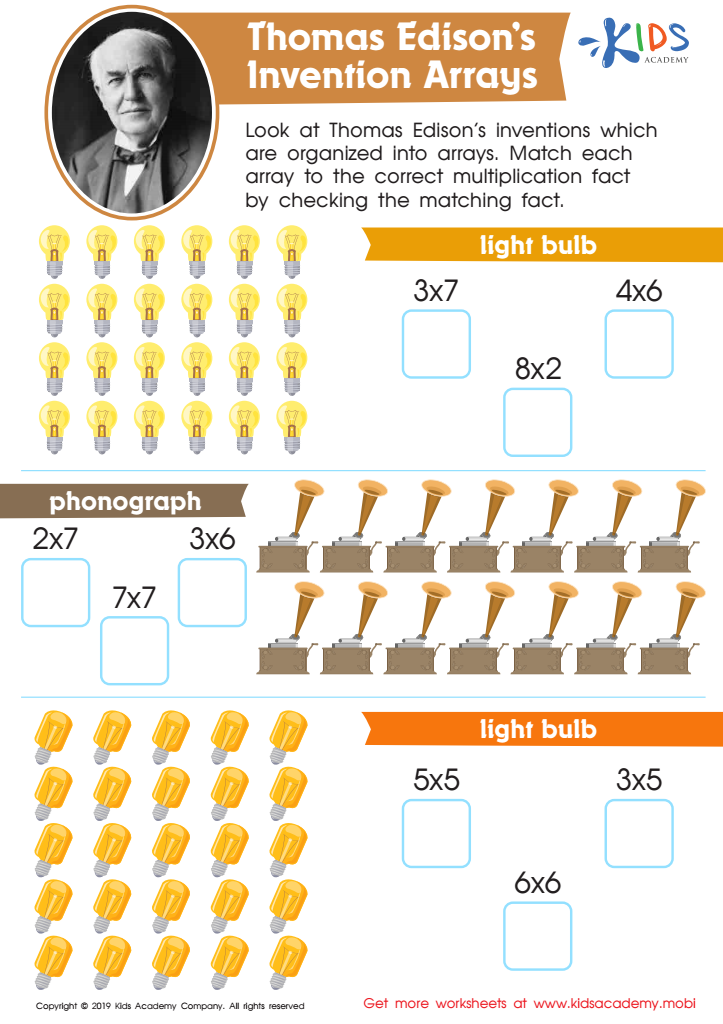
Thomas Edison’s Invention Arrays Worksheet
Test your students' knowledge on history by asking them what Thomas Edison invented. If they get the right answer, provide more information on other inventors. Check out this printout of Edison's light bulb inventions laid out in arrays. Get them to match each array to the correct multiplication fact.
Thomas Edison’s Invention Arrays Worksheet
Worksheet
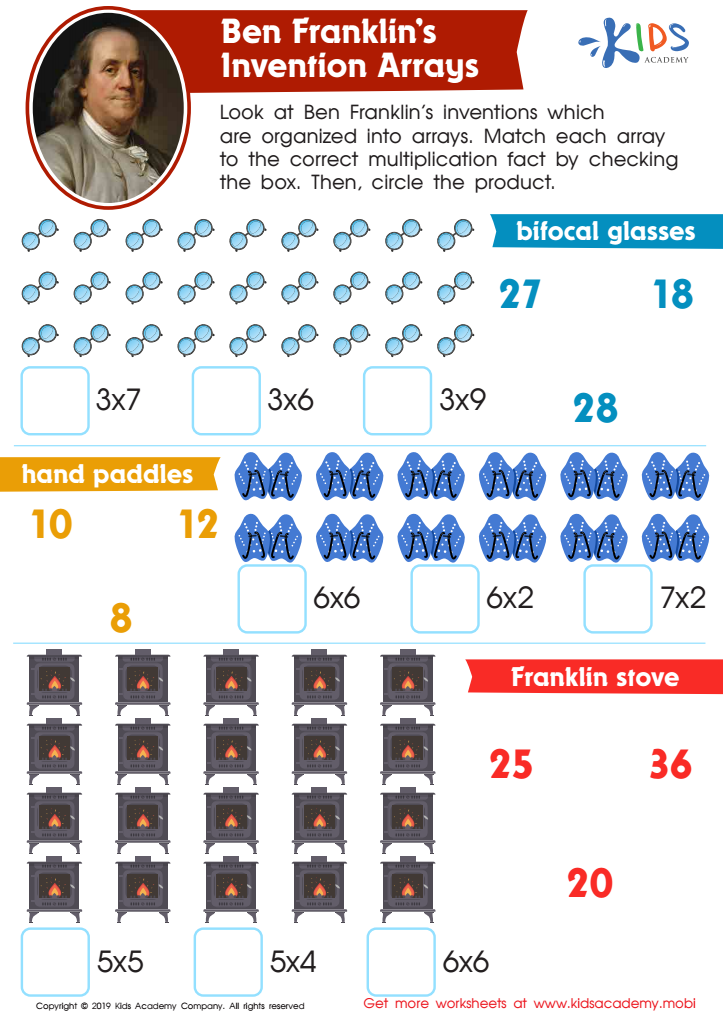
Ben Franklin’s Invention Arrays Worksheet
Have your child guess some of the inventors of the popular items we use today. For instance, the light bulb was invented by Thomas Edison. Look at Ben Franklin's inventions and help your kids match the arrays to the correct multiplication fact. Check the box and circle the product.
Ben Franklin’s Invention Arrays Worksheet
Worksheet
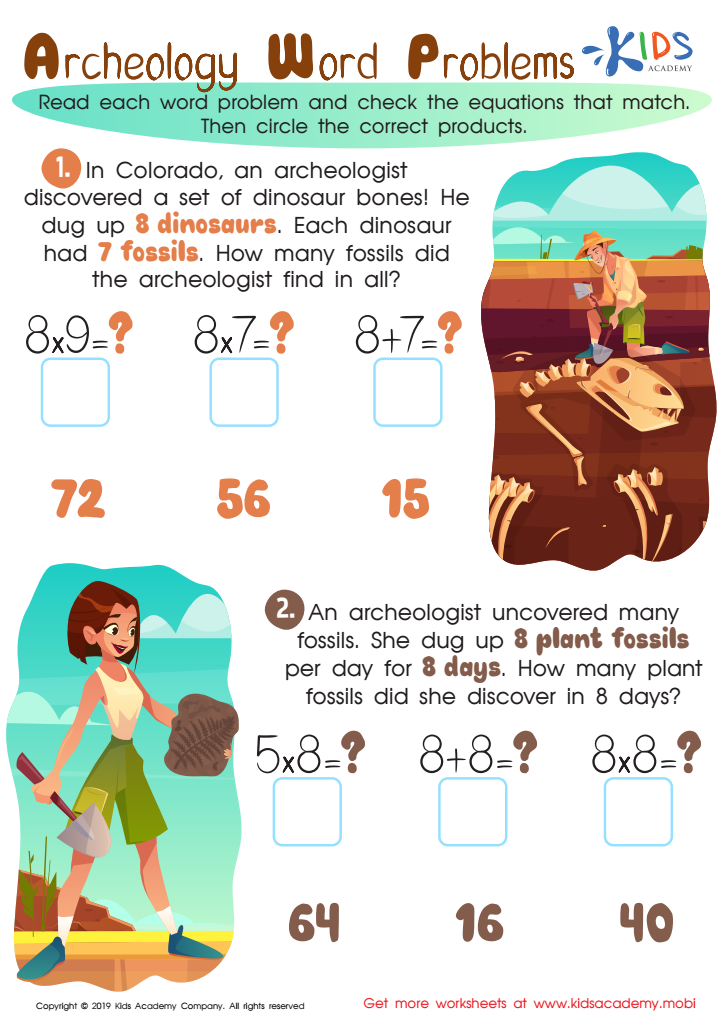
Archeology Word Problems Worksheet
Encourage your child to explore their career options! Show them an archeologist's job with this worksheet - featuring a picture of a dinosaur bone discovery. Read the accompanying text, then solve the word problems. Help your kids circle the correct answers to better understand this profession.
Archeology Word Problems Worksheet
Worksheet
Join Kids Academy for Free
Who is primarily going to use this learning content?








Understanding historical knowledge multiplication is essential for parents and teachers concerned with a well-rounded education for 9-year-olds. At this critical stage in a child's cognitive development, they begin to form connections between different pieces of information, allowing them to understand broader concepts. By focusing on historical context and the relationships between events, students can strengthen their critical thinking and analytical skills.
Moreover, integrating historical multiplicity into learning helps children recognize patterns, cause-and-effect relationships, and the interplay between various societies. This awareness fosters empathy and cultural understanding, enabling children to appreciate diversity in the past and present. In a globalized world, these skills are more crucial than ever.
Additionally, when children grasp historical facts as part of a larger narrative, their engagement and curiosity about the world increase. This can lead to a lifelong love for learning and exploration. Parents and teachers must prioritize these elements in their curricula and home discussions, as they imbue children with the importance of history in shaping human experiences. Ultimately, instilling historical knowledge multiplication helps create informed, compassionate citizens who understand the complexities of their own world.








