Multiplication practice Times Tables Worksheets for 9-Year-Olds - Page 2
33 filtered results
-
From - To
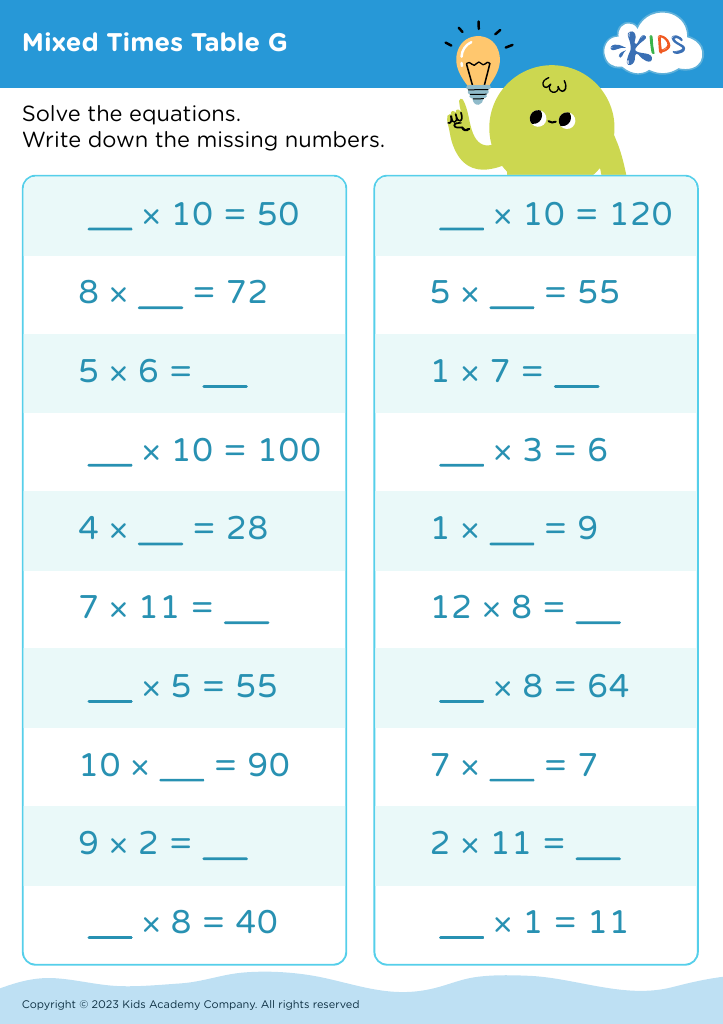
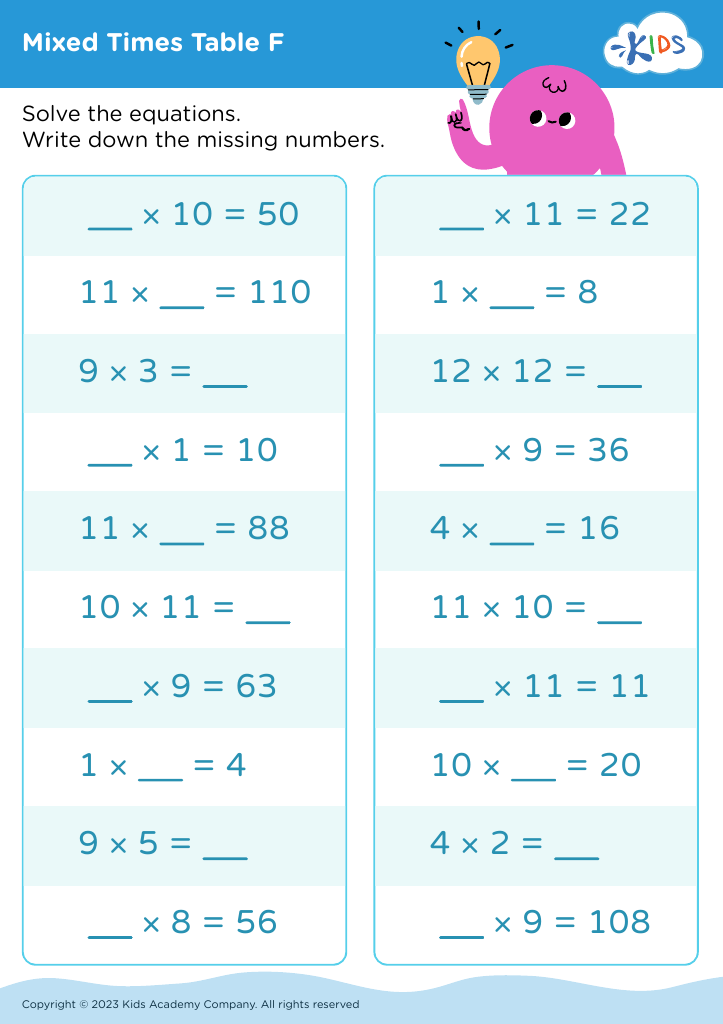
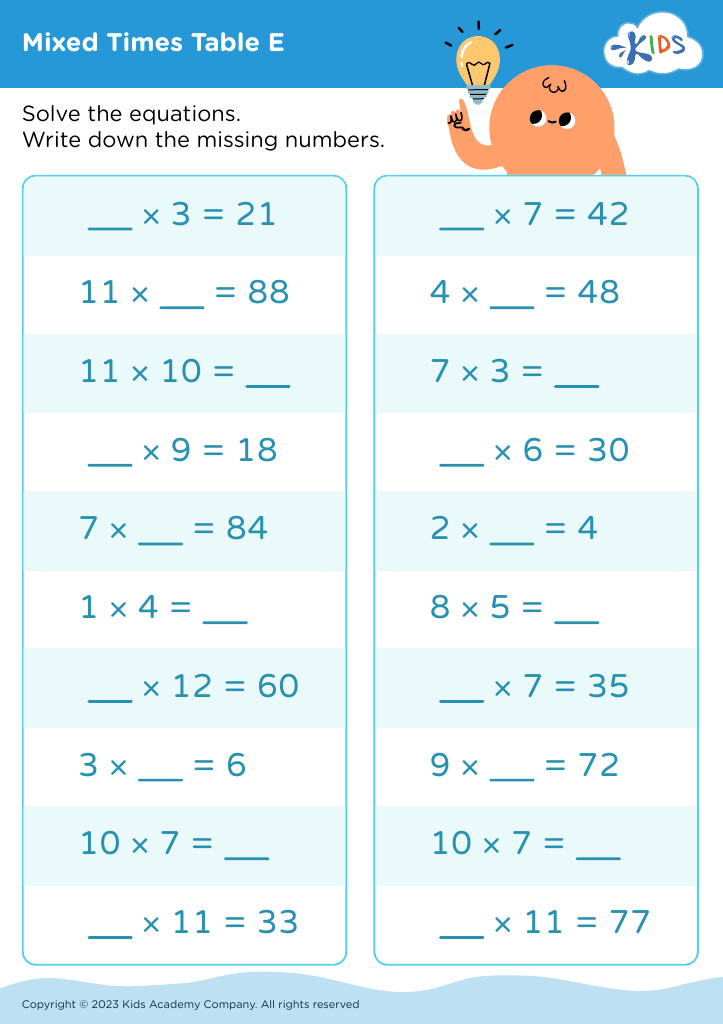
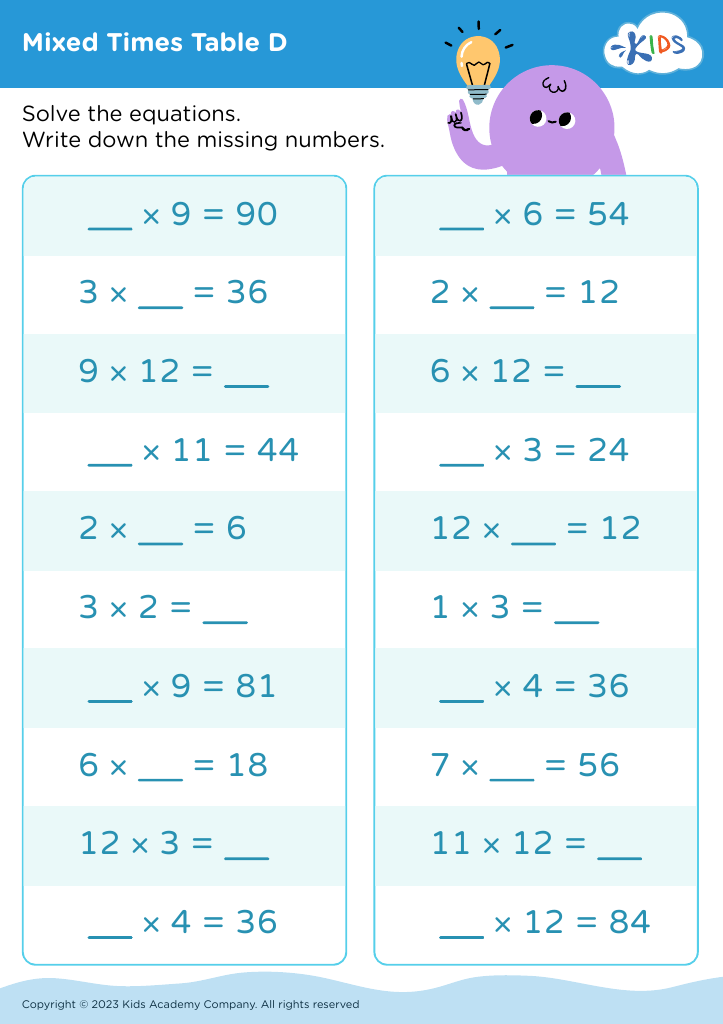
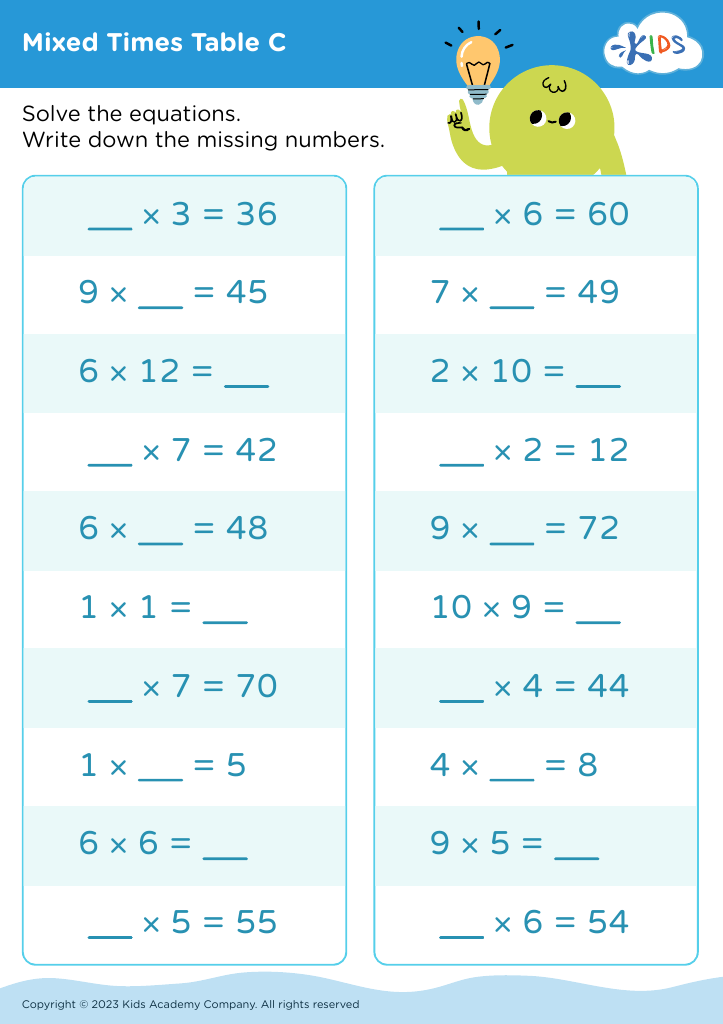
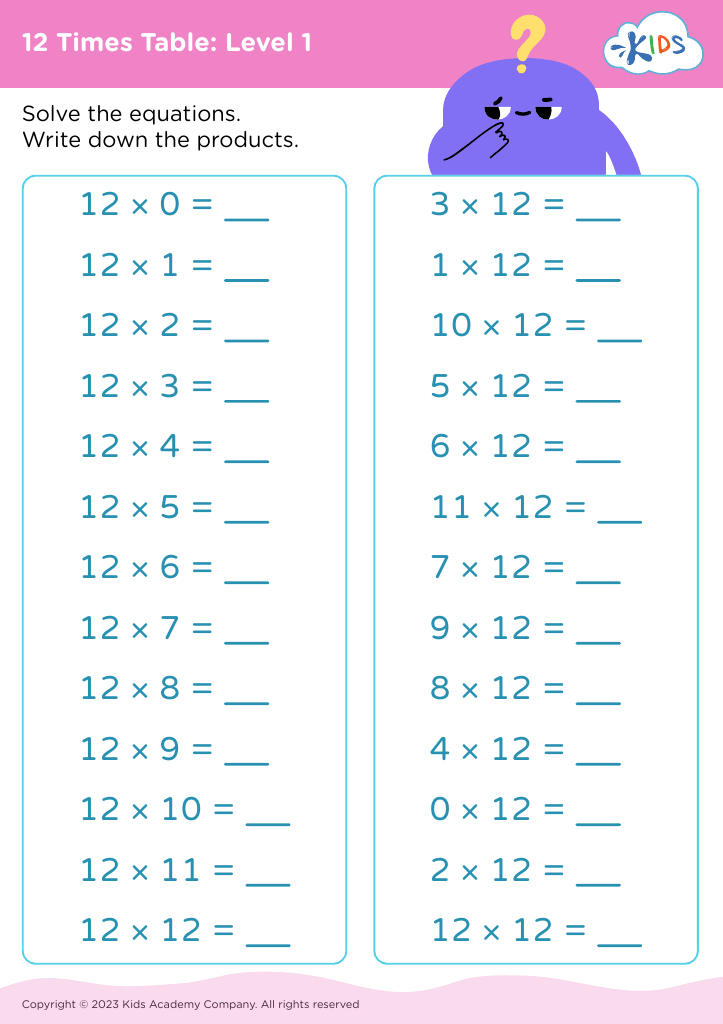
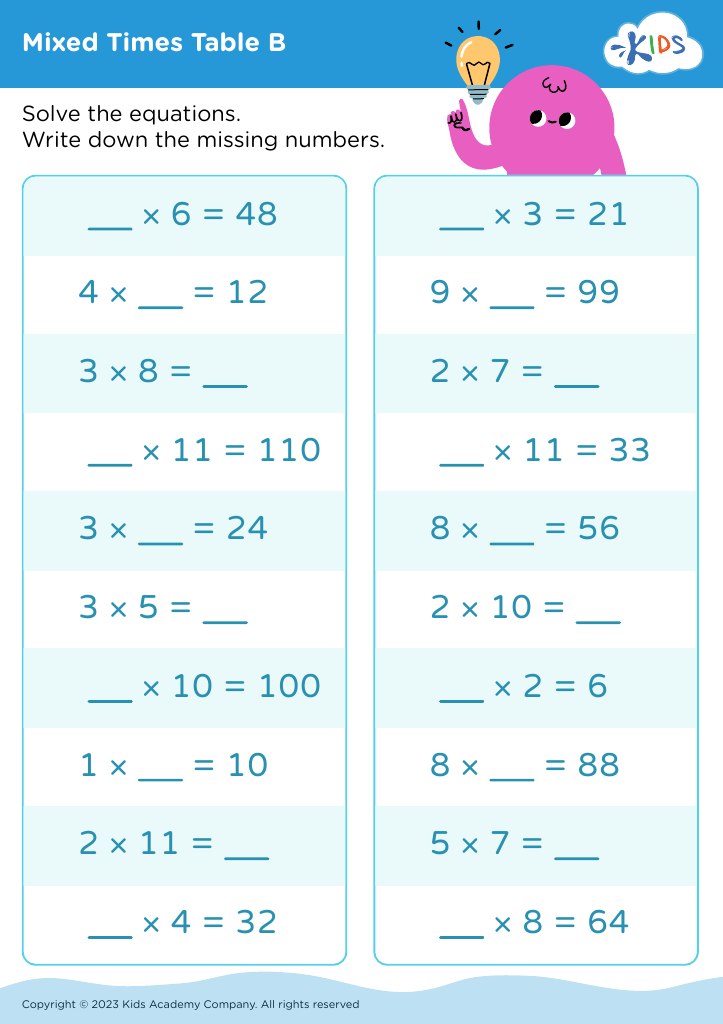
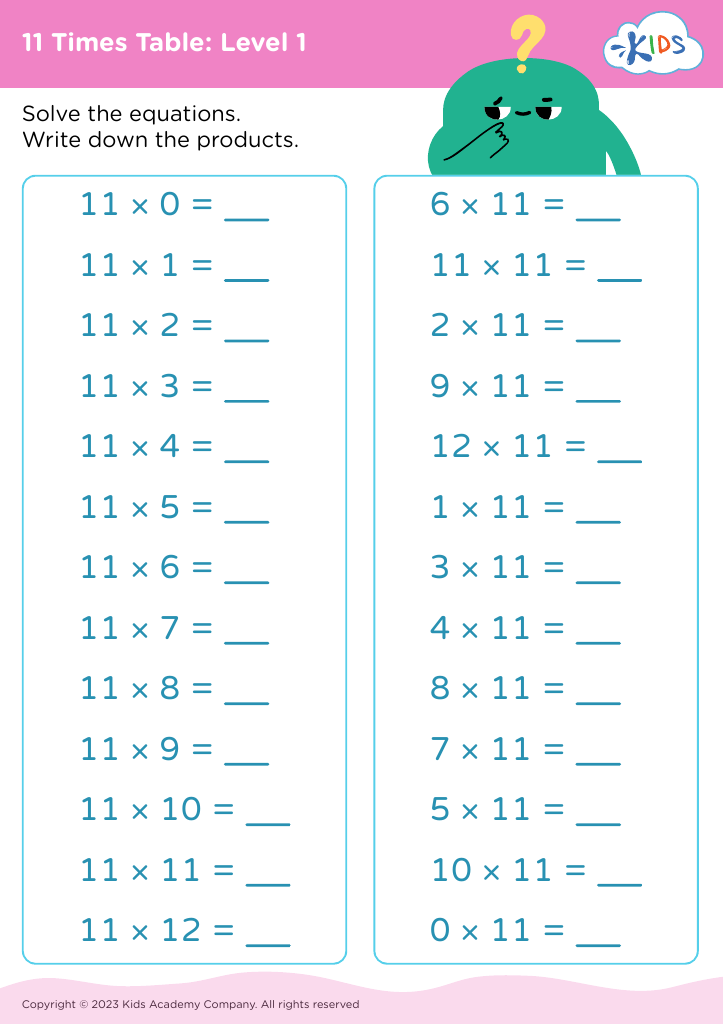
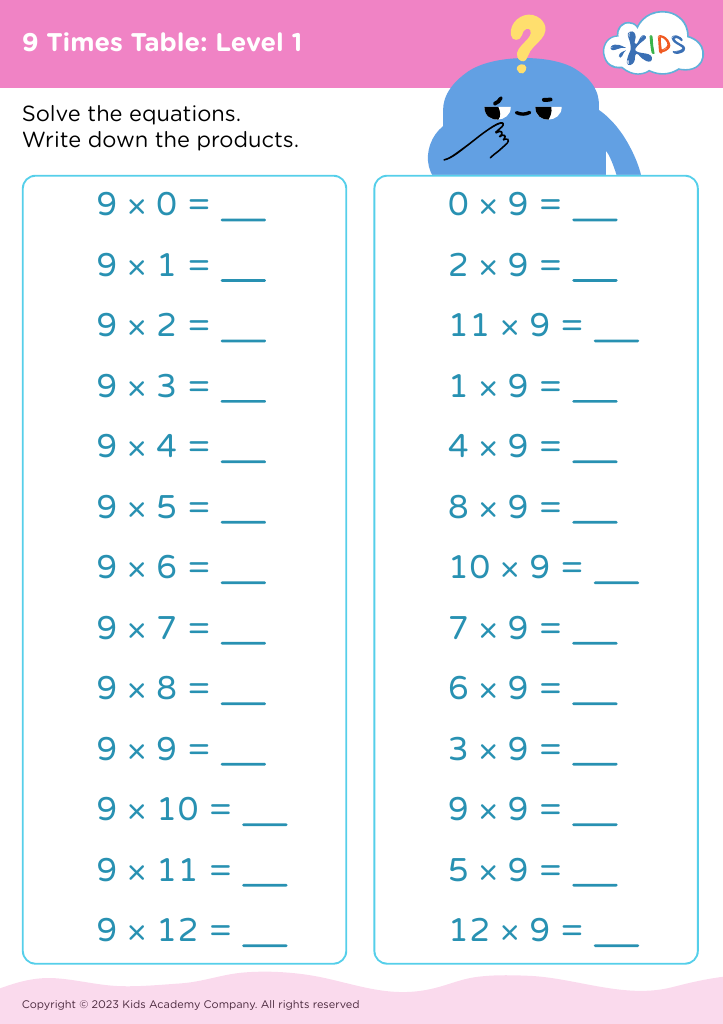





Parents and teachers should prioritize multiplication practice, specifically times tables, for 9-year-olds due to several compelling reasons. Mastery of multiplication forms a foundational skill that is critical for understanding more complex mathematical concepts, such as division, fractions, and even basic algebra. At this stage, children are increasingly exposed to multi-step word problems, where a solid grasp of multiplication helps students tackle challenges with confidence.
Building fluency in times tables not only aids in academic success but also boosts a child’s overall numeracy skills. Children proficient in multiplication can solve problems more quickly, reducing anxiety during tests and daily math tasks. Moreover, early practice fosters analytical thinking and problem-solving abilities, preparing kids for future mathematical pursuits.
Engaging multiplication learning also enhances cognitive development, as students develop memory strategies, learn patterns, and improve their focus. When parents and teachers encourage regular practice—through games, songs, and interactive exercises—they make learning enjoyable, catering to various learning styles. Ultimately, strong multiplication skills empower children to navigate their educational journeys with assurance and can ignite a lifelong interest in mathematics, setting a positive trajectory for their academic future.








