
Real-life application Word Problems Worksheets for 9-Year-Olds
3 filtered results
Difficulty Level
Grade
Age
-
From - To
Subject
Activity
Standards
Discover engaging Real-life Application Word Problems Worksheets designed for 9-year-olds, perfect for enhancing critical thinking and problem-solving skills! Our worksheets feature relatable scenarios, helping young learners connect math concepts to everyday situations. Each engaging problem encourages kids to apply their knowledge of addition, subtraction, multiplication, and division while developing a deeper understanding of how math is relevant in real life. With clear instructions and varying difficulty levels, these worksheets cater to different learning needs and promote independent thinking. Ideal for classroom use or home studies, our resources inspire confidence in math and make learning fun. Explore our worksheets today!
Favorites
With answer key
Interactive
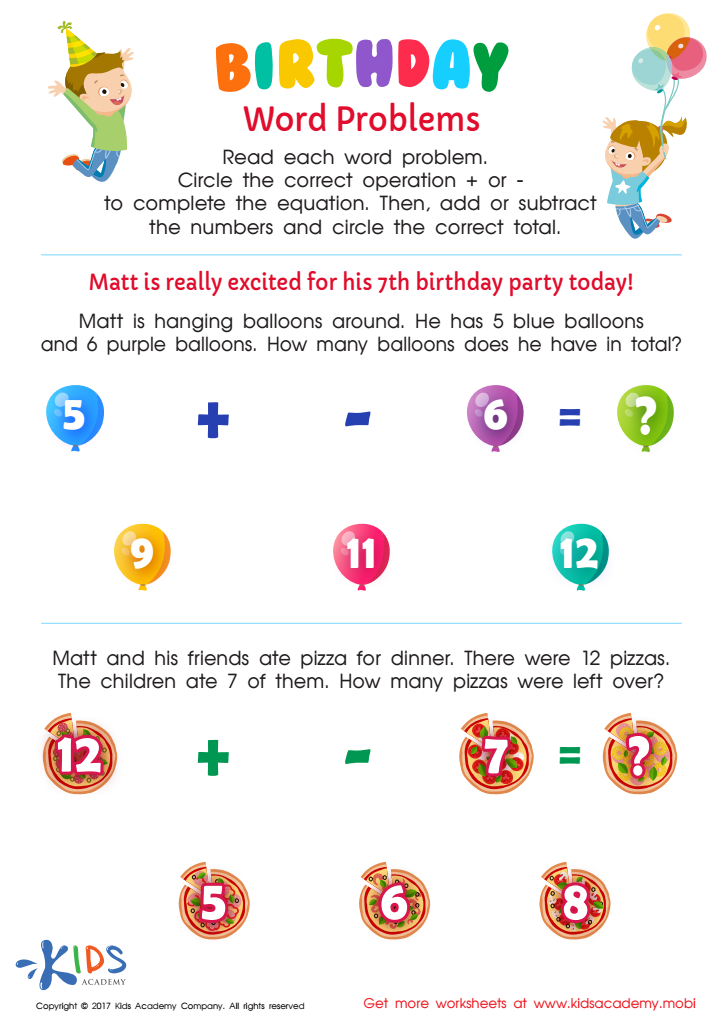
Birthday Word Problems Substraction Worksheet
This worksheet, Birthday Word Problems, is a great way to improve your child's math and literacy skills. It features tricky subtraction equations based on a birthday celebration - perfect for kids who love birthdays!
 Assign to My Students
Birthday Word Problems Substraction Worksheet
Worksheet
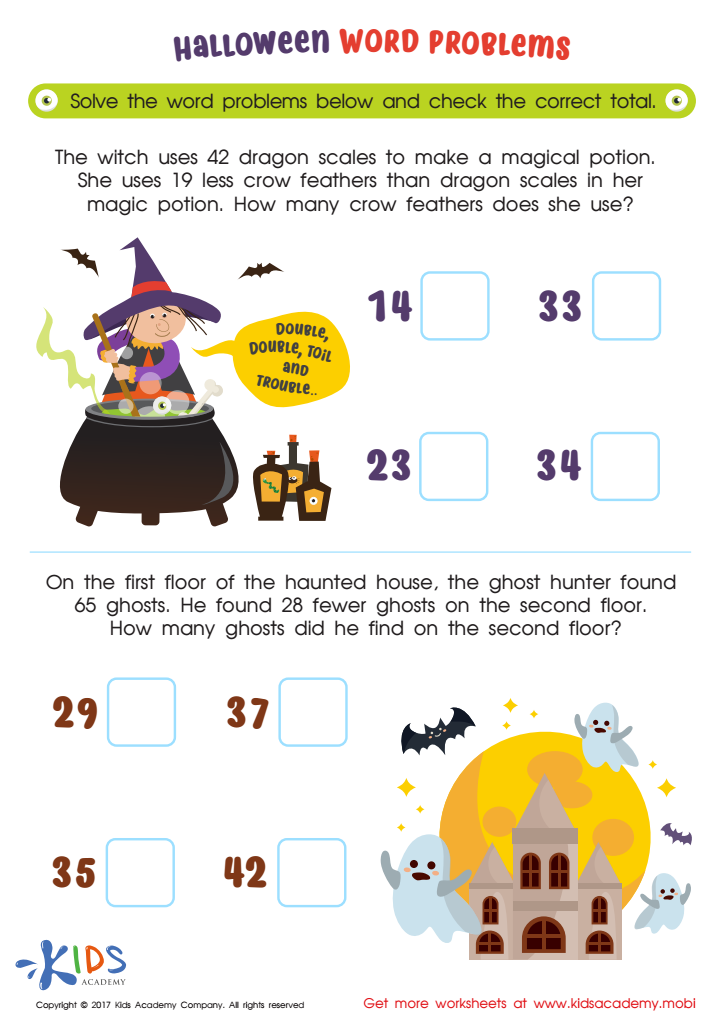
Halloween Word Problems Printable
Ghosts, witches, and other spooky characters make these problems exciting and interactive. Get ready to have some math fun!
Halloween Word Problems Printable
Worksheet
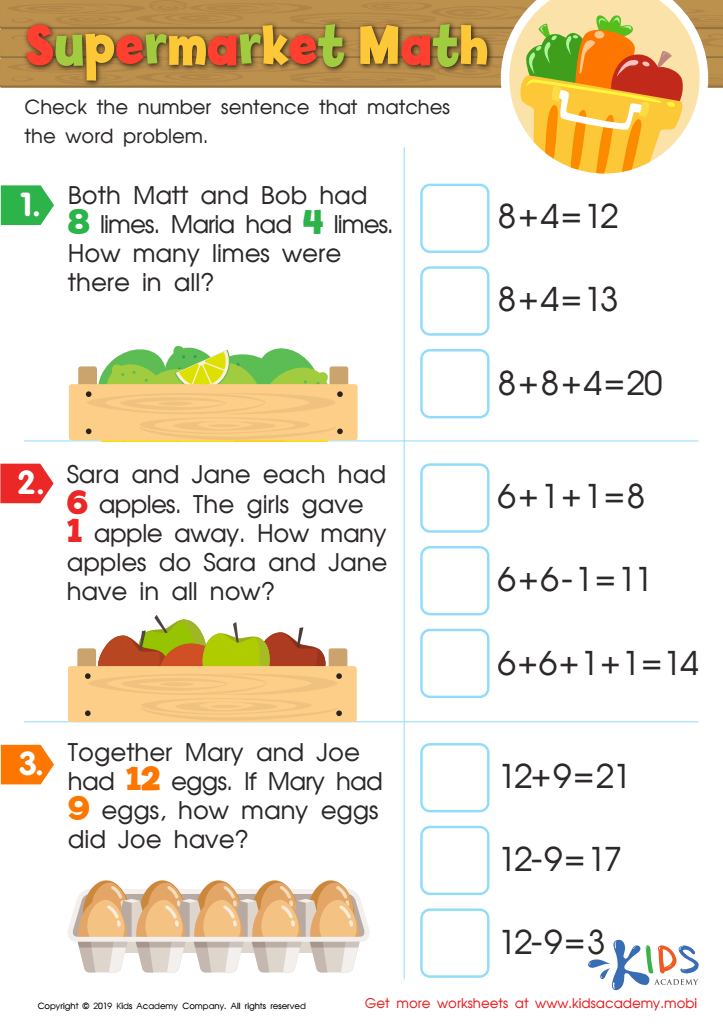
Supermarket Math Worksheet
Take your kids to the supermarket and ask what they're looking forward to buying. Help them solve the three questions in the worksheet by interpreting each one into an equation, then choose the right answer.
Supermarket Math Worksheet
Worksheet
Join Kids Academy for Free
Who is primarily going to use this learning content?








Real-life application word problems are essential for 9-year-olds because they bridge the gap between classroom learning and practical experiences. At this age, children begin to understand more complex mathematical concepts, and word problems encourage them to apply these concepts in everyday situations. This not only enhances their problem-solving skills but also fosters critical thinking and logical reasoning.
Parents and teachers should care about these problems as they cultivate essential life skills. By working through realistic scenarios—like budgeting for a family outing, dividing treats among friends, or measuring ingredients for a recipe—children learn the value of mathematics in their daily lives. This relevance boosts engagement and motivation, showing students that math isn't just an abstract subject but a vital tool they will use throughout their lives.
Moreover, tackling real-life word problems helps develop perseverance and resilience. Students learn to read carefully, dissect the information presented, and strategize solutions. When parents and teachers emphasize these problems, they contribute to building a more rounded educational experience that equips children not just with knowledge, but with the confidence to navigate real-world challenges effectively. In fostering these skills, they set the foundation for future success in math and beyond.








