Comparing Fractions Building Vocabulary Worksheets for 9-Year-Olds
6 filtered results
-
From - To
Explore our engaging "Comparing Fractions Building Vocabulary Worksheets" designed specifically for 9-year-olds! These worksheets help young learners master the concept of fractions while expanding their mathematical vocabulary. With interactive exercises, colorful visuals, and clear instructions, children will practice comparing fractions through fun and stimulating activities. By enhancing their understanding of terms such as numerator, denominator, and equivalent fractions, students will build a solid foundation for future math success. Perfect for classroom use or at-home learning, these worksheets foster critical thinking and problem-solving skills. Empower your child’s learning journey and make fractions easy to understand and enjoyable!
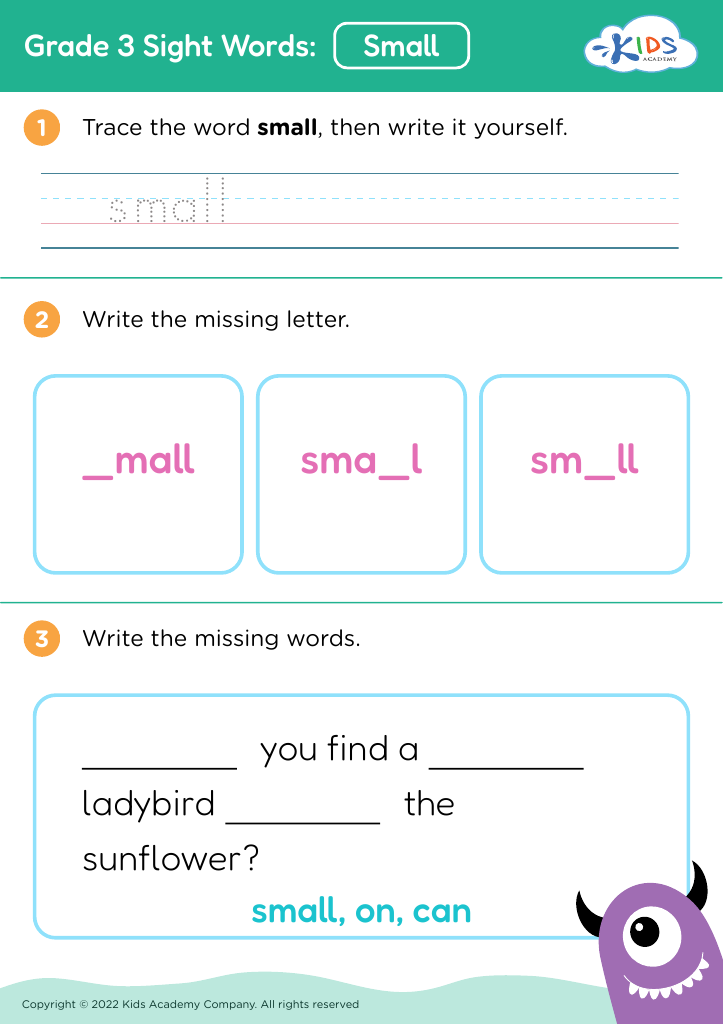











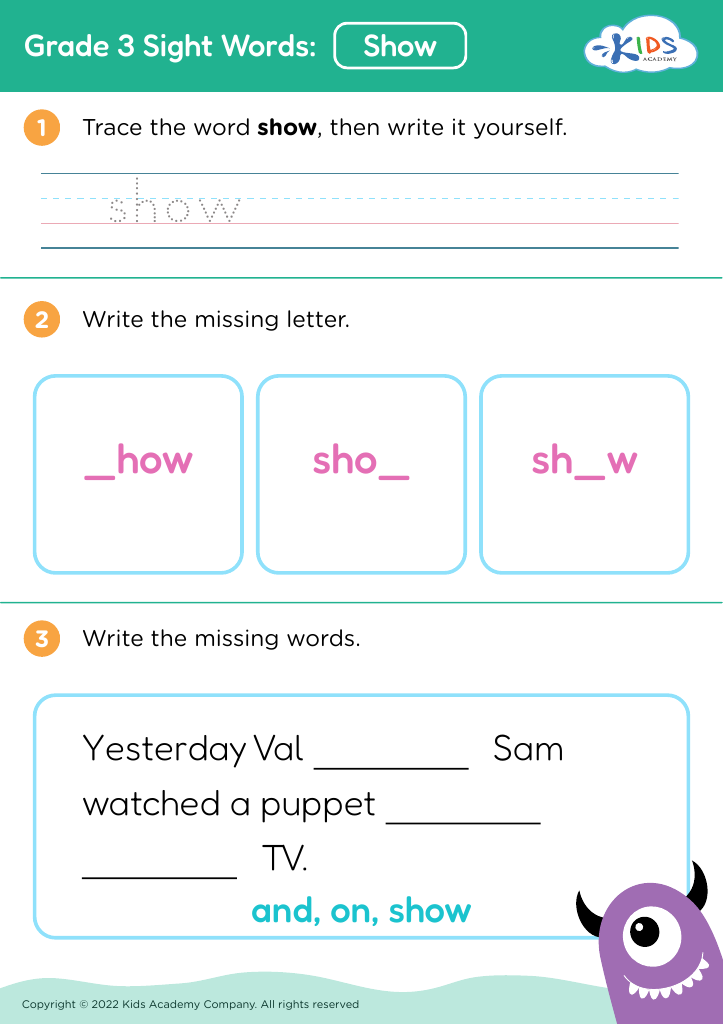
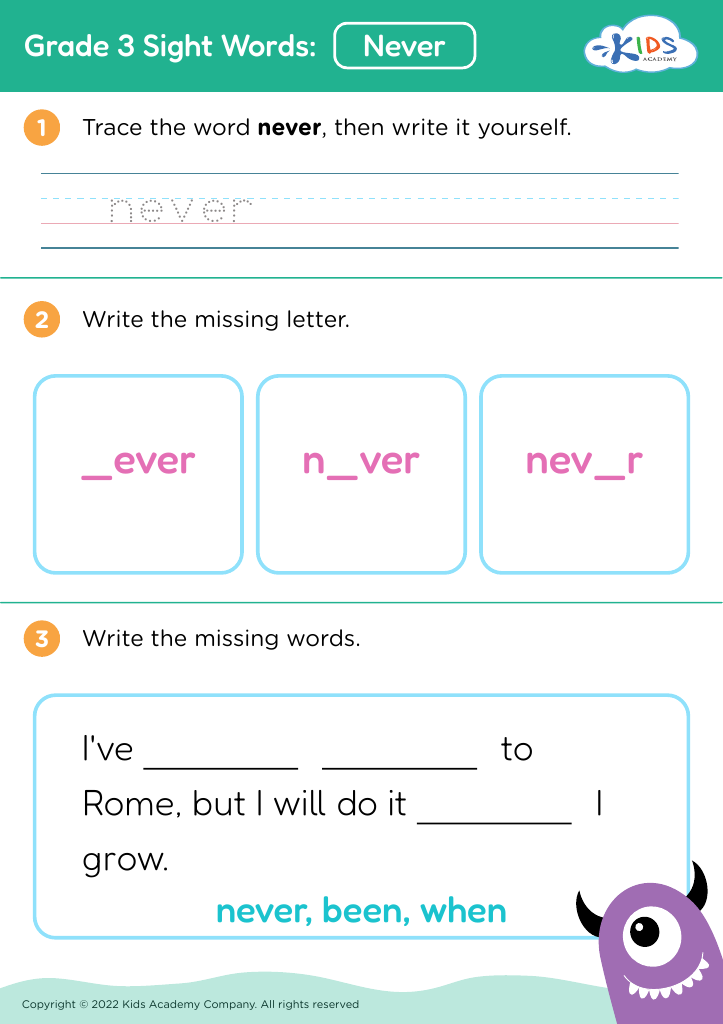
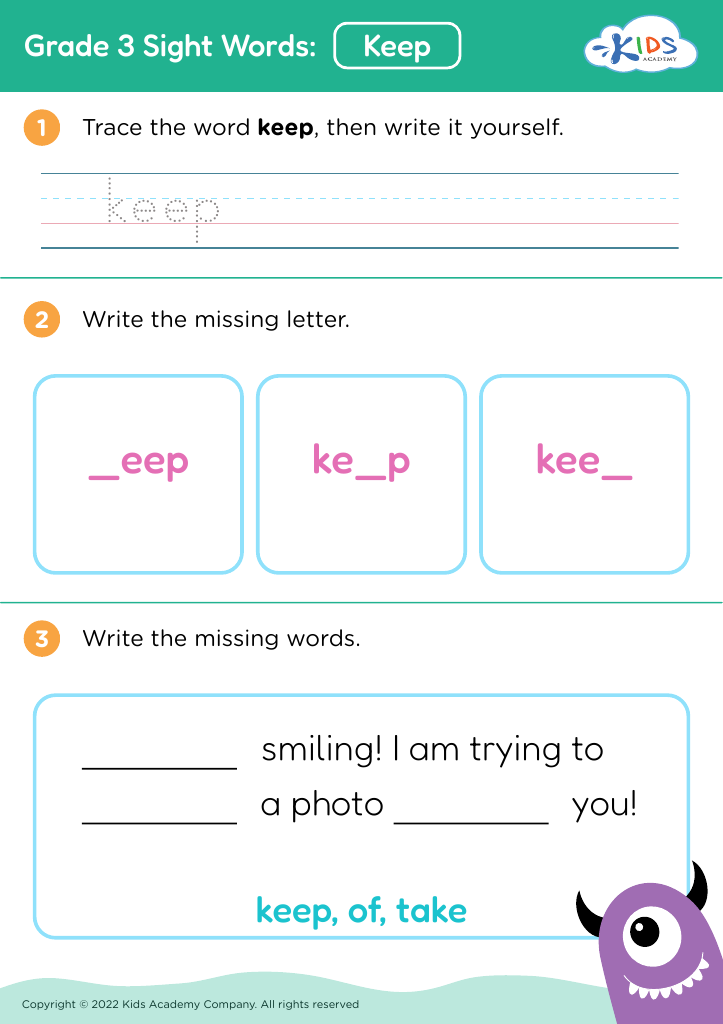



.jpg)




Parents and teachers should care about comparing fractions and building vocabulary for 9-year-olds because these skills are foundational for mathematical understanding and overall cognitive development. At this age, children are transitioning from basic arithmetic to more complex concepts, and comparing fractions introduces them to critical thinking and problem-solving skills. Learning to compare fractions helps children understand the relationship between numbers, enhances their ability to visualize quantities, and forms a basis for future math topics, such as ratios and percentages.
Moreover, building vocabulary around fractions and related mathematical terms improves communication skills. A robust vocabulary enables children to articulate their thought processes, ask questions, and explain their reasoning when tackling mathematical problems. This deeper understanding and expression fosters confidence and promotes a positive learning experience.
Additionally, understanding fractions is essential in everyday life—for measuring ingredients in cooking, understanding portions, or interpreting bar graphs. By emphasizing these skills at this developmental stage, parents and teachers help equip children with the necessary tools for academic success, critical thinking, and practical application in real-world contexts, ultimately contributing to their overall growth and preparedness for future challenges.








