Understanding Sequences Reading Worksheets for 9-Year-Olds
3 filtered results
-
From - To
Unlock the power of sequencing with our unique "Understanding Sequences Reading Worksheets" designed especially for 9-year-olds! These engaging and educational worksheets help young readers identify and put events in logical order, making reading comprehensions more accessible and fun. Perfect for educators and parents, these activities boost critical thinking and storytelling skills. Each worksheet is filled with captivating stories and visual aids that make learning irresistible for kids. Whether at school or home, our printables ensure children master the art of sequencing while fostering a love for reading. Discover the secret to successful reading practice today!
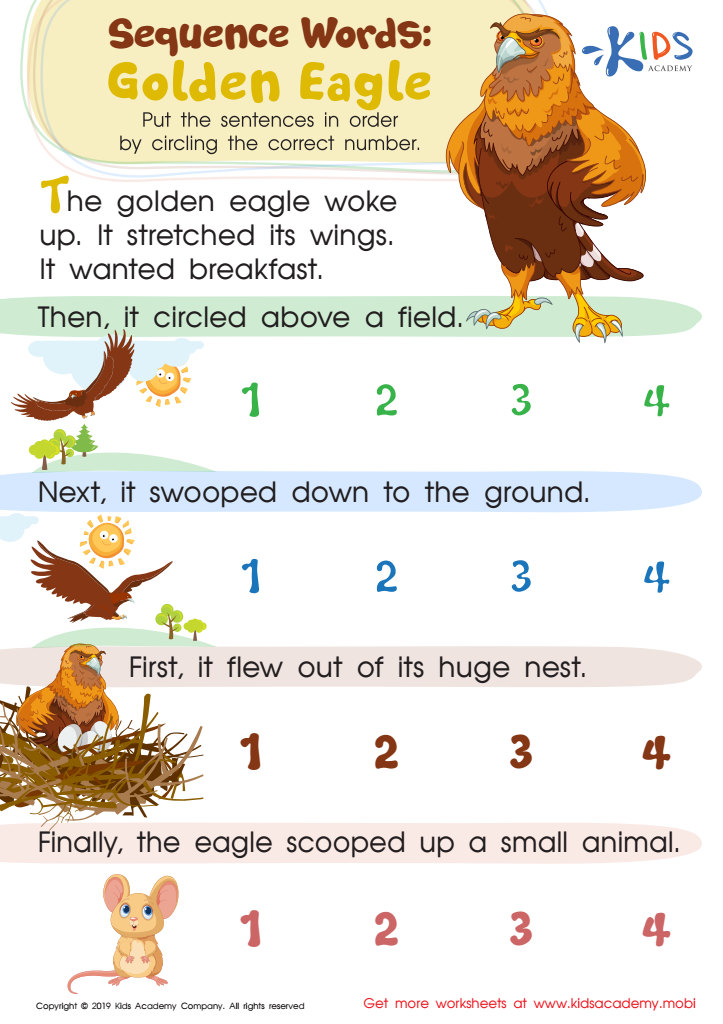
Sequence Word Eagle Worksheet
 Assign to My Students
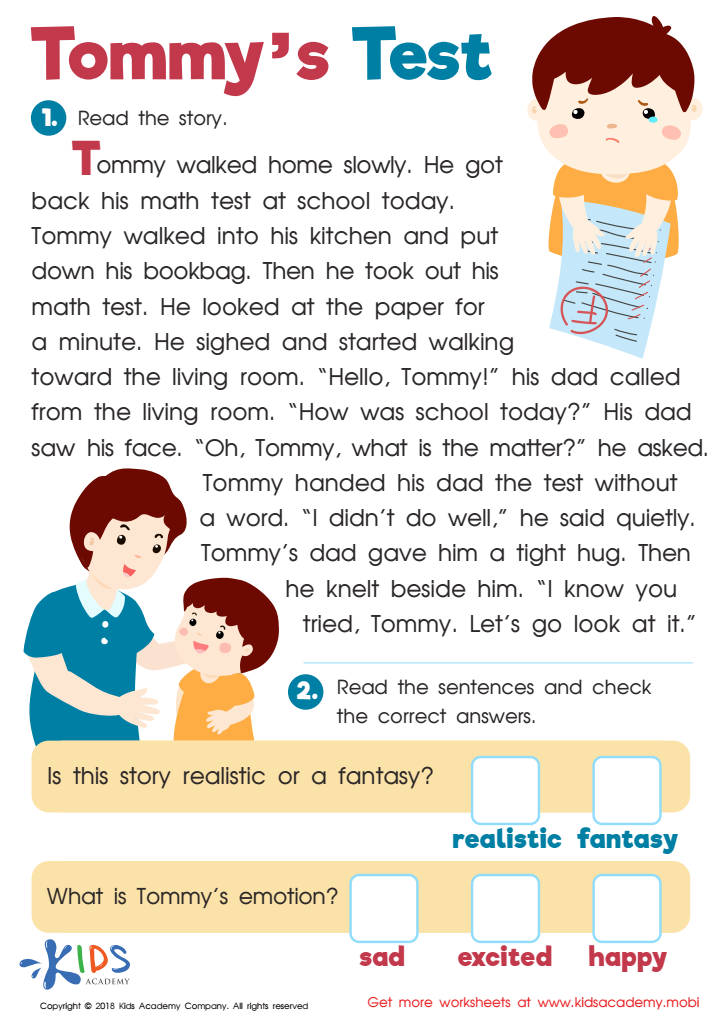
Tommys Test Worksheet
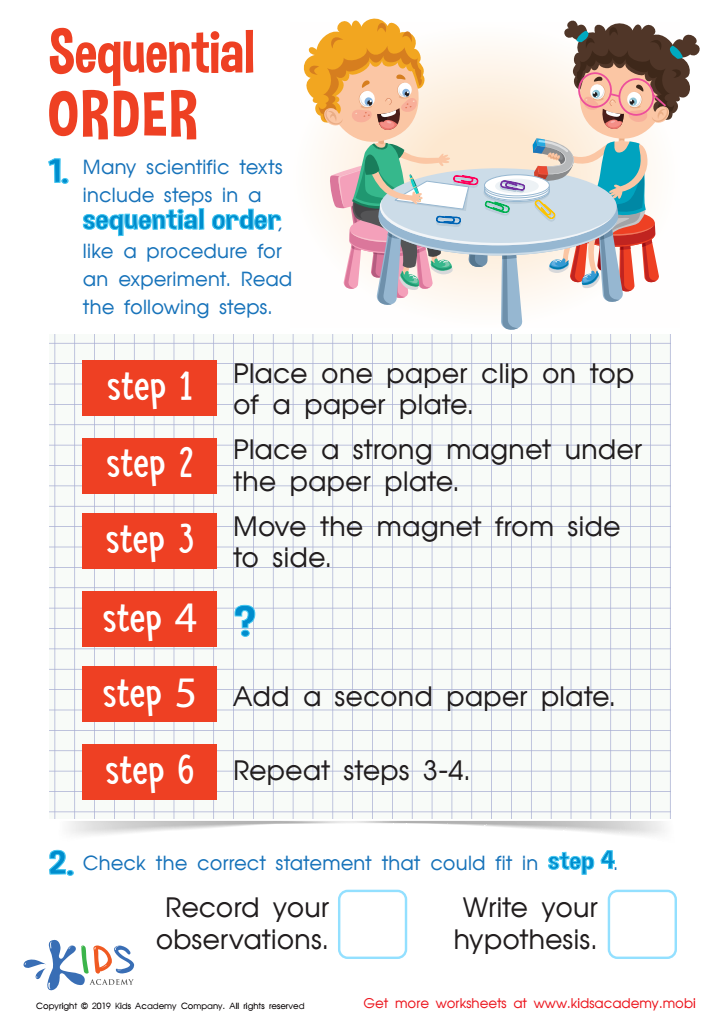
Sequencential Order Worksheet







Understanding sequences in reading is crucial for 9-year-olds because it lays the foundation for many essential cognitive and academic skills. Sequences refer to the order in which events occur, and grasping this concept helps children develop strong reading comprehension and critical thinking abilities. By recognizing patterns and the logical flow of stories, kids become better equipped to predict outcomes, analyze the cause and effect, and understand the structure of different types of text, from narratives to instructions.
For parents and teachers, focusing on sequences in reading promotes better academic performance across various subjects. When children understand chronological order and other sequence types (like steps in a process), they can apply this knowledge in subjects such as science, where procedures must be followed in order, or history, where understanding timelines is crucial.
Engaging with sequences also improves executive functioning skills, such as planning and problem-solving. As children often encounter more complex and varied texts as they progress in school, strong foundational skills in understanding sequences will support their future learning endeavors.
Ultimately, fostering an early grasp of sequences in reading not only enriches a child's literacy but also prepares them for broader life skills, essential for daily tasks and effective communication. This integrated development underlines why parents and teachers should prioritize this area of learning.








