Comparing Fractions Sight Words Worksheets for 9-Year-Olds
6 filtered results
-
From - To
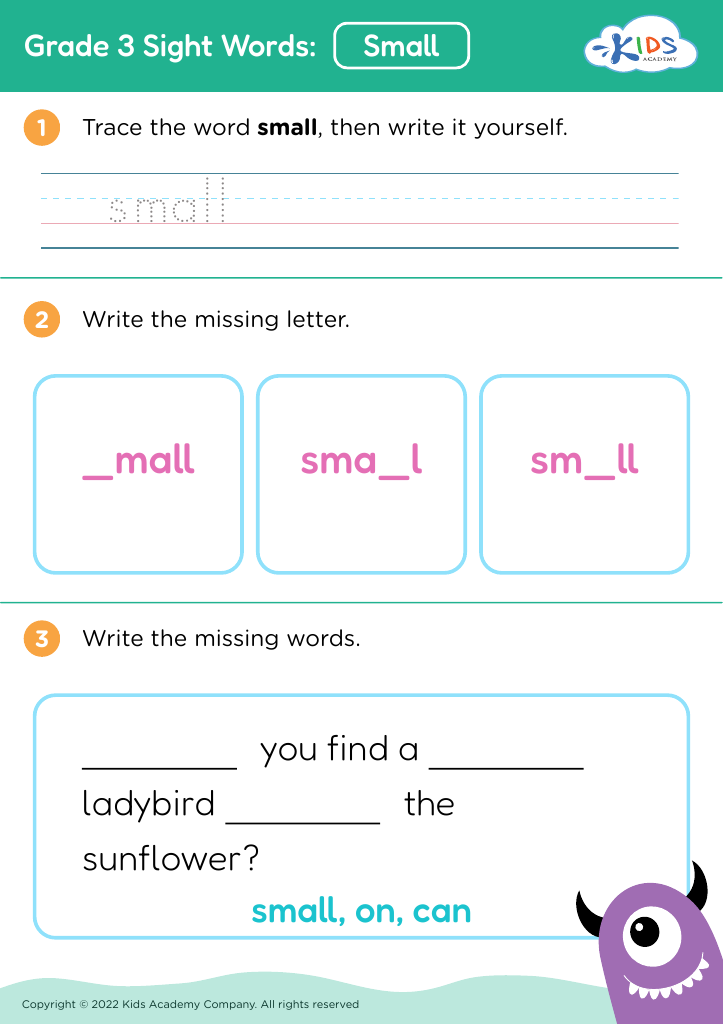
Enhance your child's math and reading skills with our customizable Comparing Fractions Sight Words Worksheets for 9-year-olds! Designed with young learners in mind, these engaging worksheets seamlessly blend essential sight word practice with fraction comparison exercises. By integrating fun, educational activities, students will confidently recognize and use sight words while mastering the fundamentals of comparing fractions. Each worksheet is crafted to stimulate curiosity and support cognitive development, making learning both rewarding and enjoyable. Ideal for classroom use or at-home practice, our resources foster strong foundational skills and build critical thinking for future academic success.




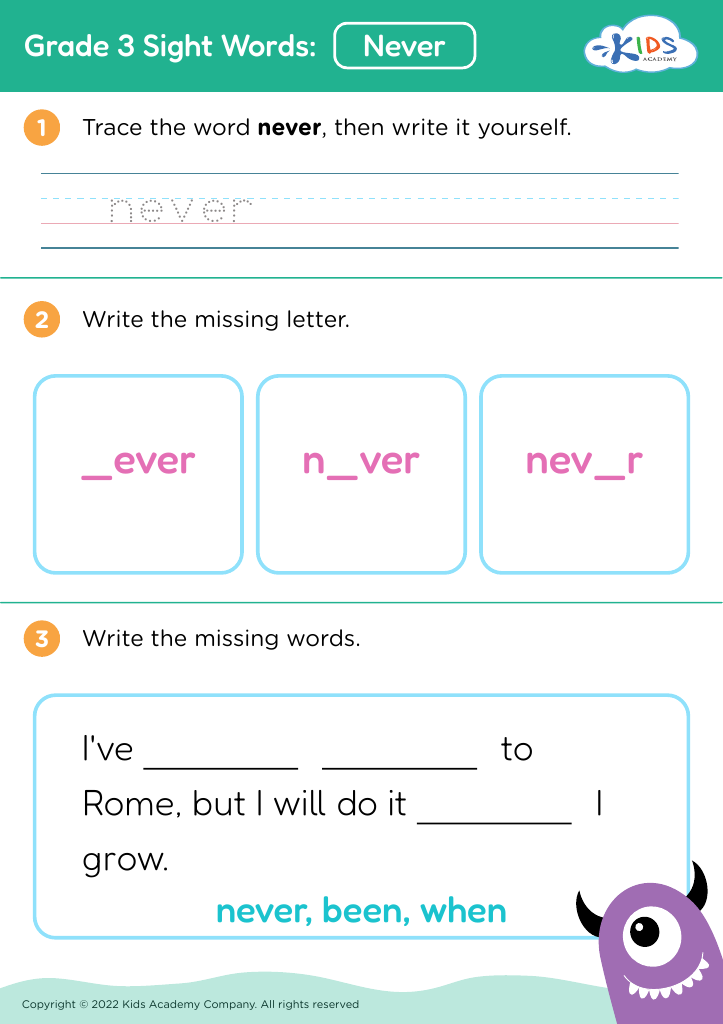
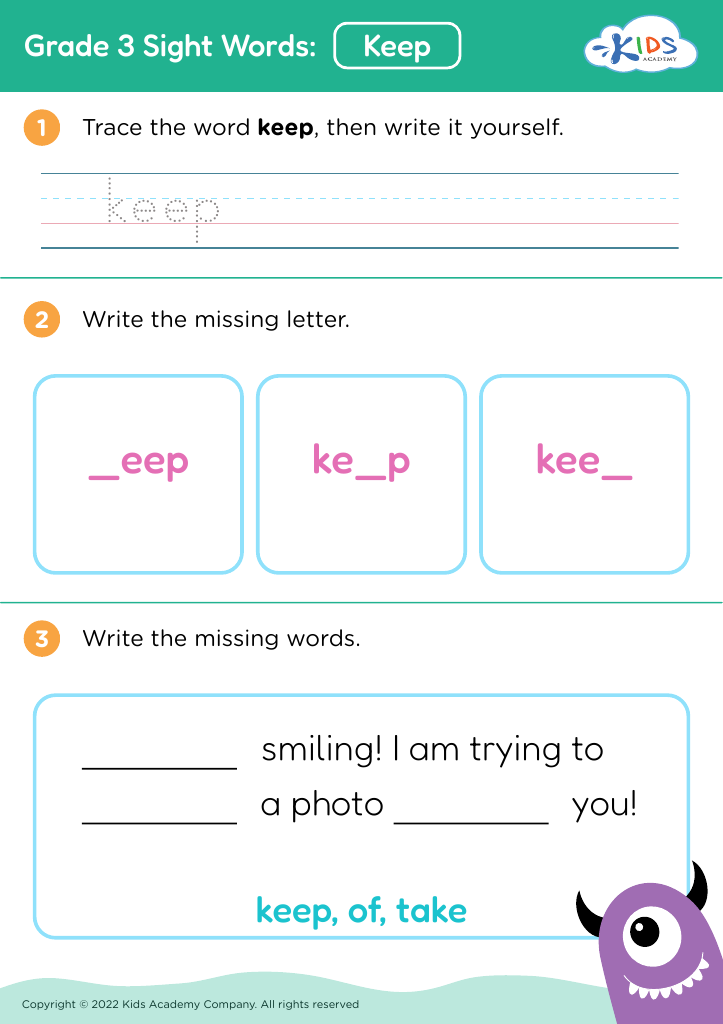
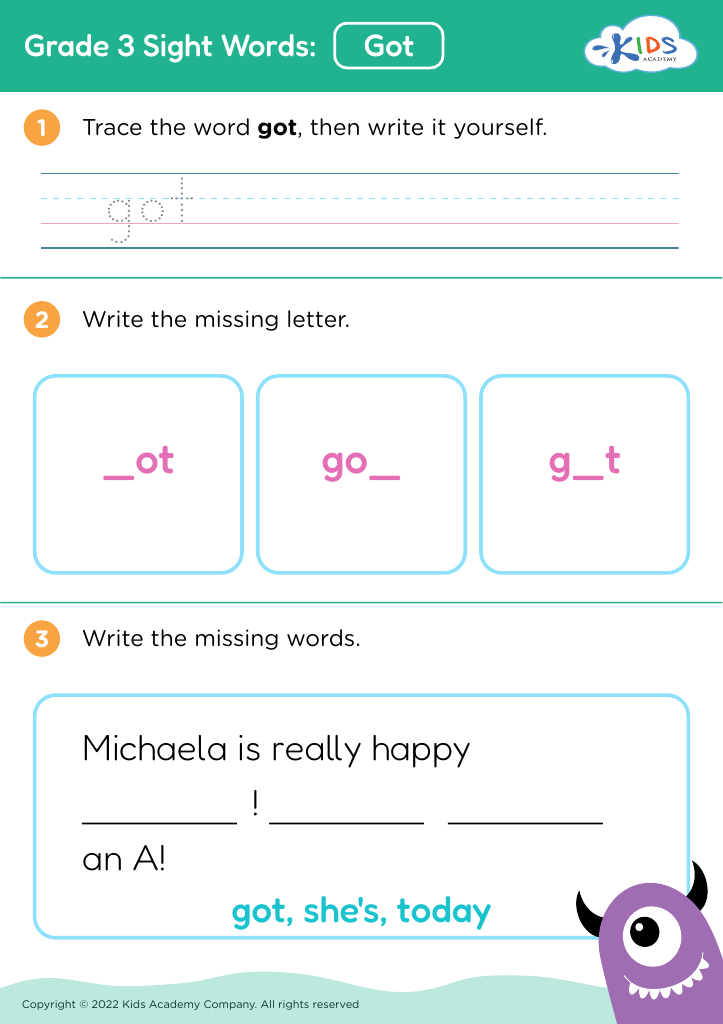
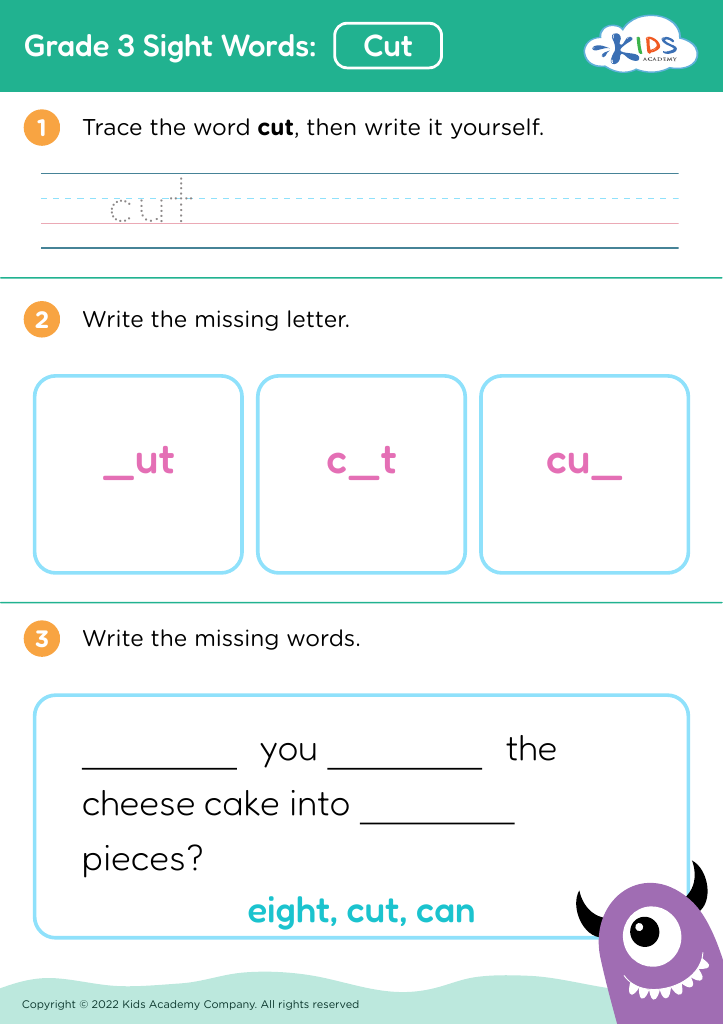







Parents and teachers should care about teaching comparing fractions and sight words to 9-year-olds because these skills are foundational for both mathematical reasoning and reading fluency. Understanding and comparing fractions form a core part of the elementary math curriculum, enabling children to grasp more complex mathematical concepts later on. When kids learn to compare fractions, they develop critical thinking, reasoning skills, and a better understanding of numerical relationships and equivalency, all vital in daily problem-solving and higher-level math.
Similarly, sight words are high-frequency words that often do not follow regular phonetic rules and are seen regularly in reading and writing. Mastering sight words boosts a child’s reading fluency, comprehension, and overall confidence in reading. At around 9 years old, the transition from learning to read to reading to learn starts becoming critical, and fluency in reading broadens their access to diverse knowledge and information.
In sum, developing proficiency in comparing fractions and memorizing sight words provides a sturdy educational foundation. It allows smoother progression in both mathematical computations and rich reading, supporting a child’s academic growth and future success. Therefore, a strong emphasis on these skills sets children on a path to becoming competent learners and thinkers.