Cursive writing practice Cursive Letters Worksheets for 9-Year-Olds
11 filtered results
-
From - To
Enhance your child's penmanship with our Cursive Writing Practice Cursive Letters Worksheets for 9-Year-Olds. Designed to improve handwriting skills, these worksheets provide engaging exercises that focus on each cursive letter of the alphabet. Our resources aim to develop fine motor skills and boost confidence in writing gracefully and fluently. Whether for homework or extra practice, kids will enjoy tracing and writing letters, joining strokes and mastering cursive formations. Printable and easy to use, these worksheets are perfect for third graders keen on advancing their writing abilities. Help your child achieve beautiful handwriting today!
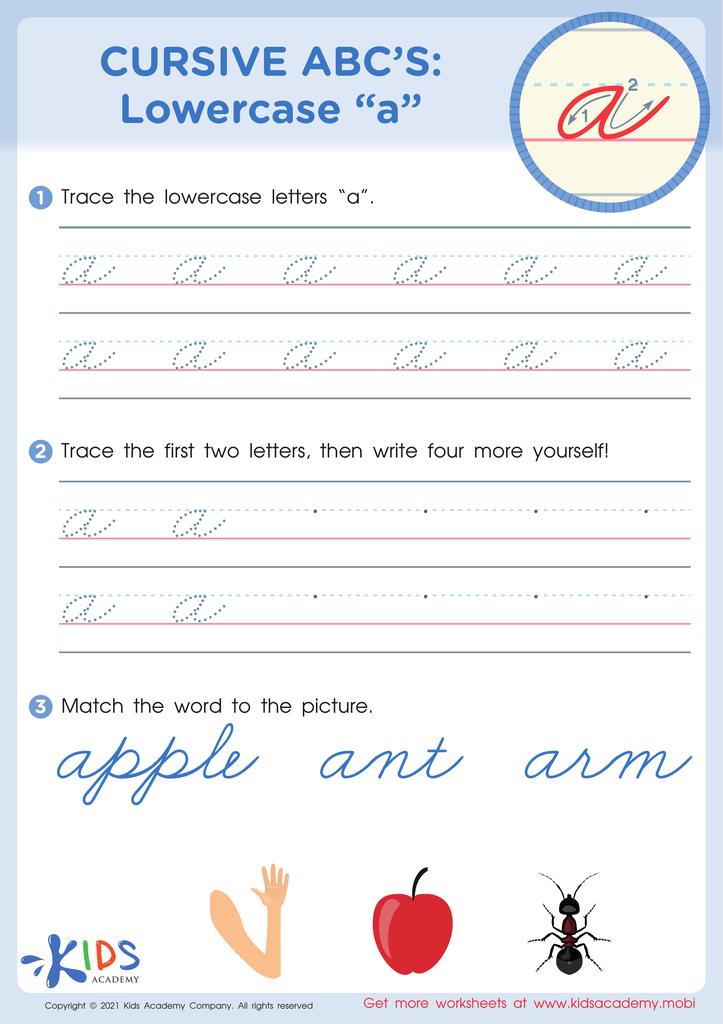
Cursive ABCs: Lowercase a
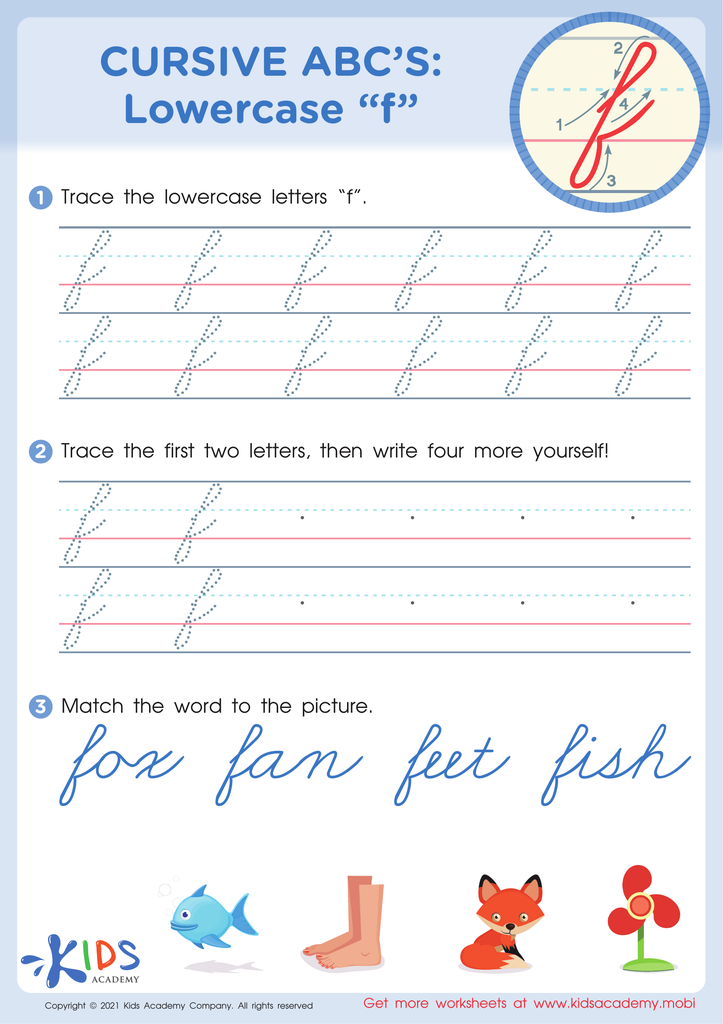
Cursive ABCs: Lowercase f
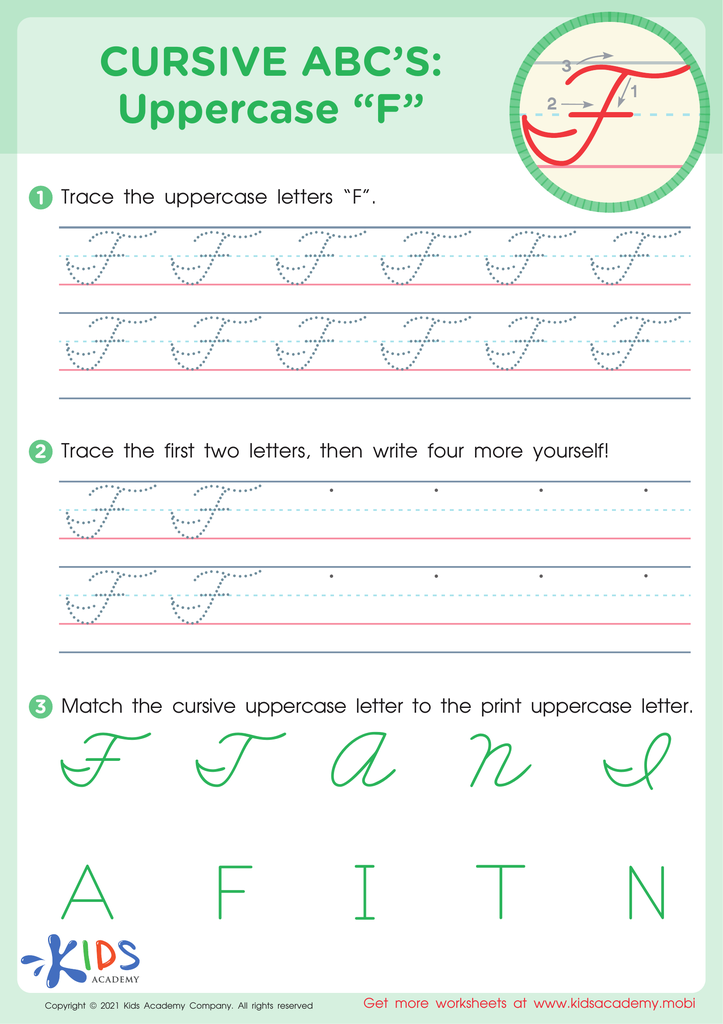
Cursive ABCs: Uppercase F
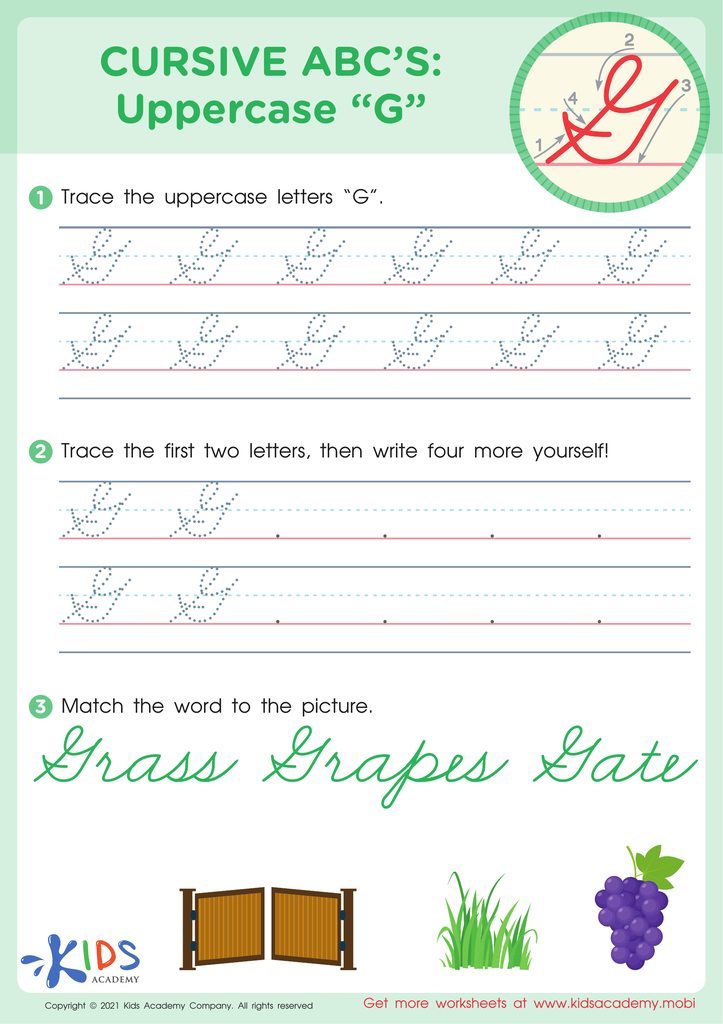
Cursive ABCs: Uppercase G
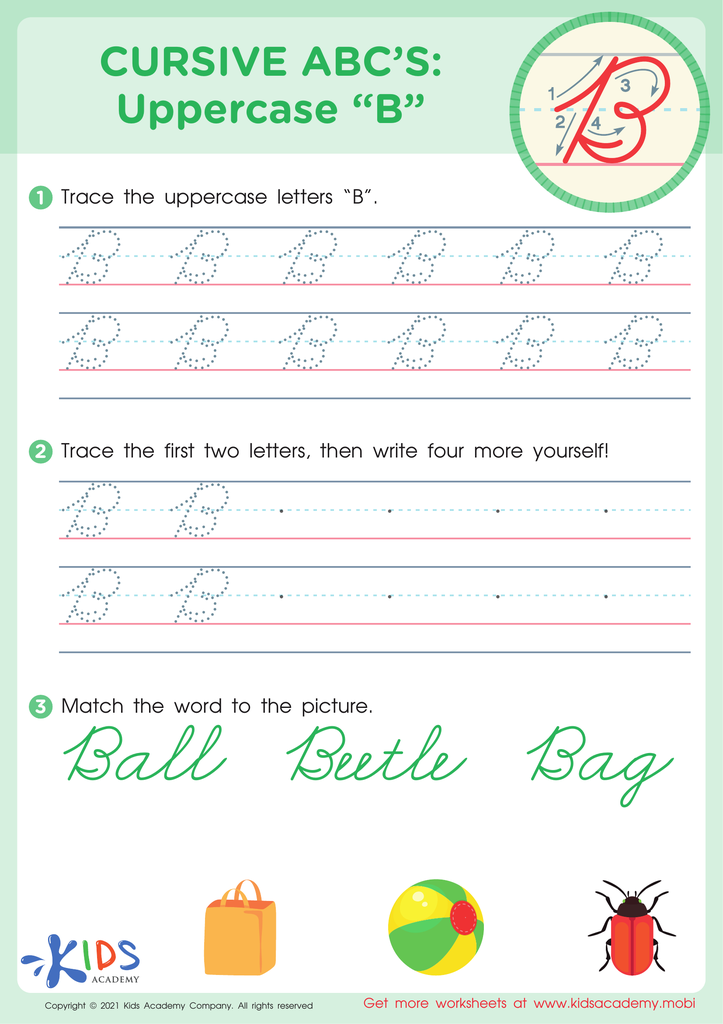
Cursive ABCs: Uppercase B
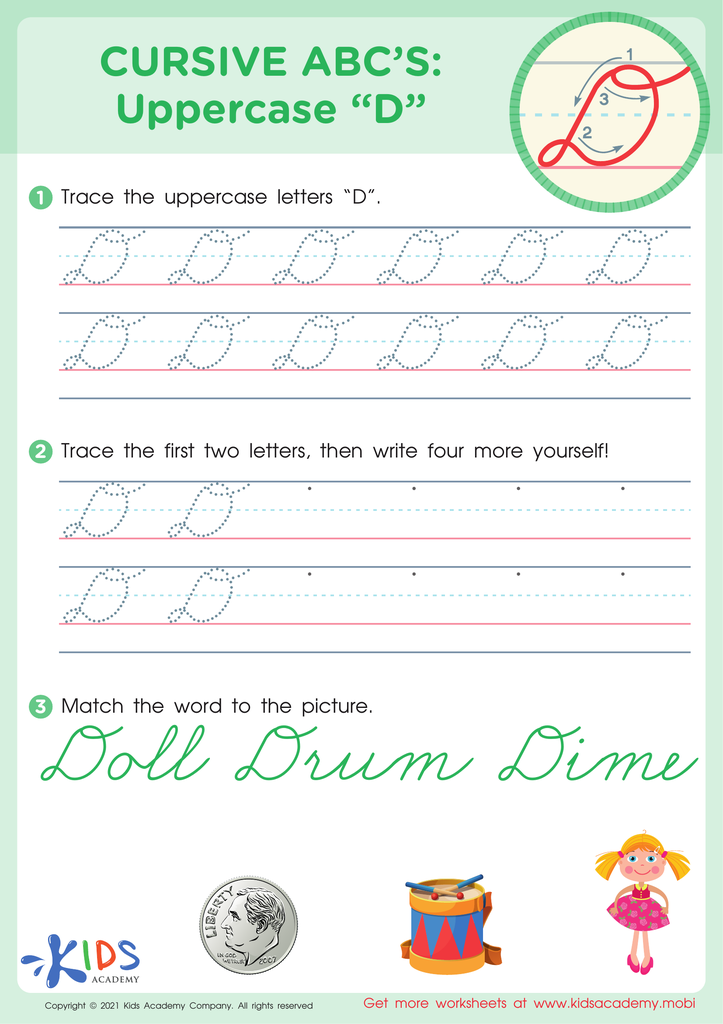
Cursive ABCs: Uppercase D
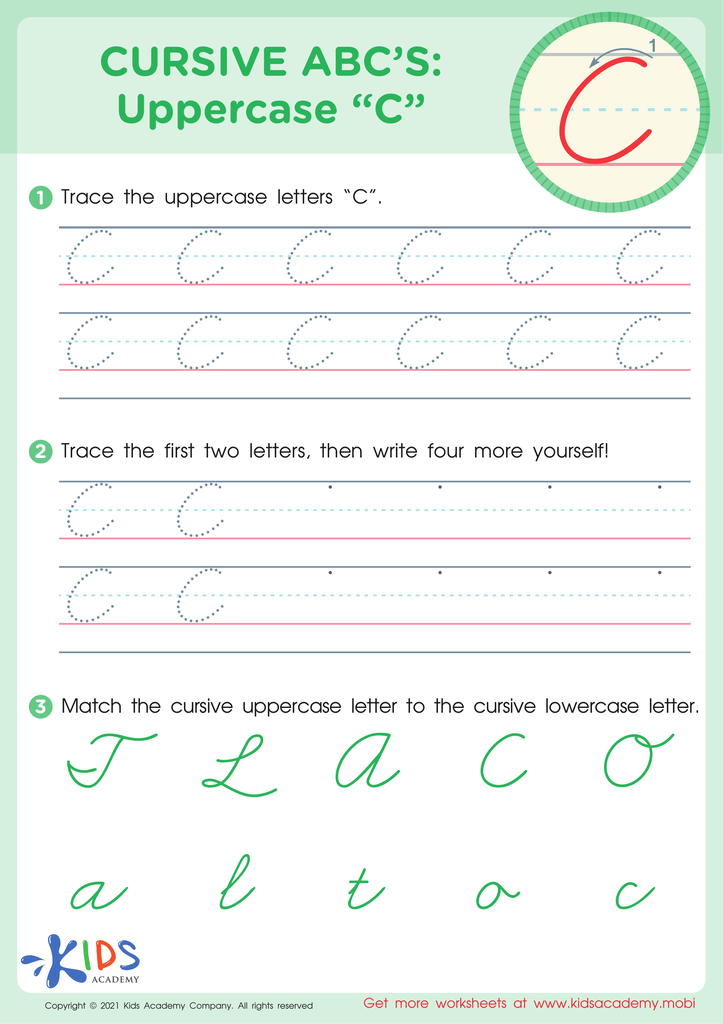
Cursive ABCs: Uppercase C
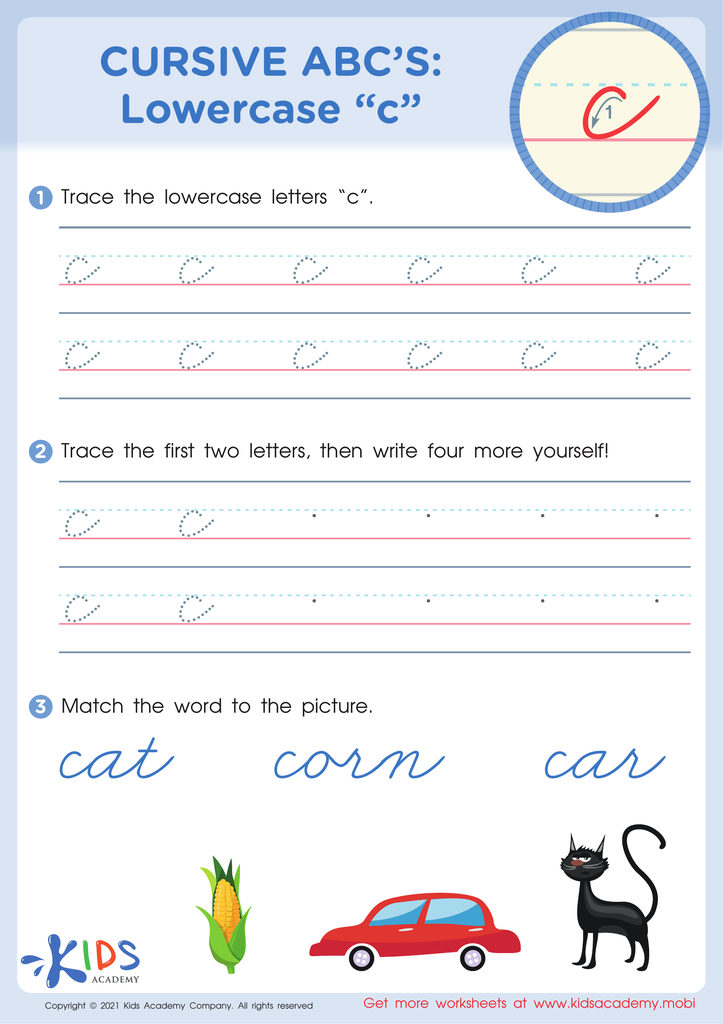
Cursive ABCs: Lowercase c
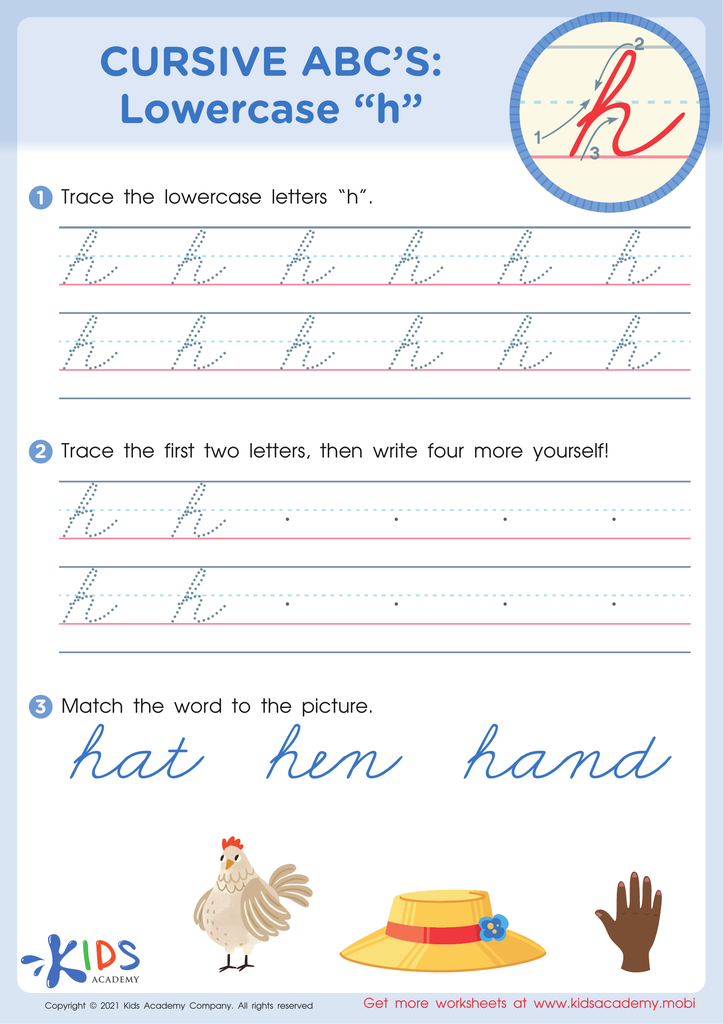
Cursive ABCs: Lowercase h
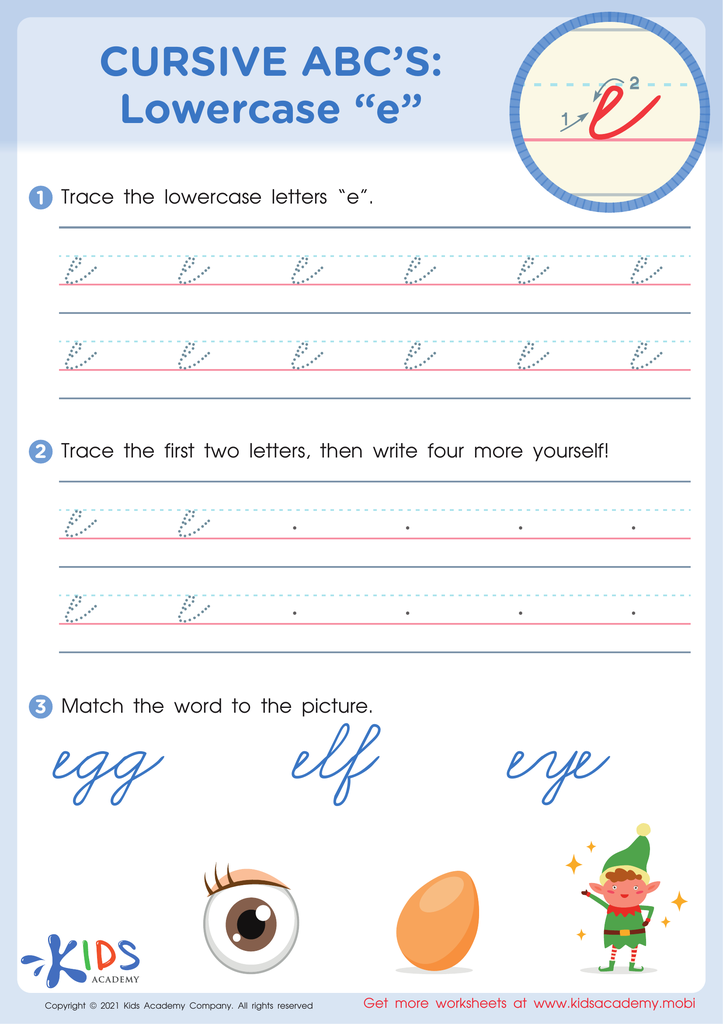
Cursive ABCs: Lowercase e
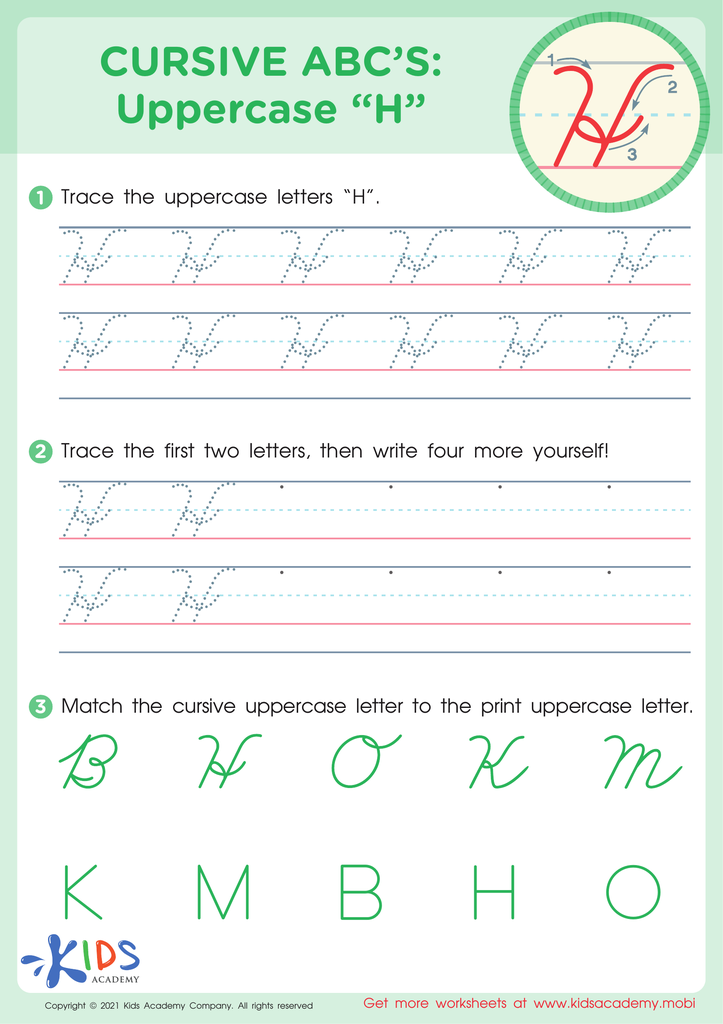
Cursive ABCs: Uppercase H







Parents and teachers should recognize the importance of cursive writing practice for 9-year-olds due to several substantial benefits that extend beyond mere penmanship. Firstly, cursive writing helps develop fine motor skills and hand-eye coordination, which are crucial at this developmental stage. Forming cursive letters requires controlled, fluid movements, honing a child's dexterity and strengthening the muscles in their hands and fingers.
Secondly, learning cursive can improve cognitive development. Writing in cursive activates different neural pathways than typing or print writing, aiding in memory retention and brain development. As children create each unique letter, they learn to integrate visual and tactile information, bolstering their comprehension skills.
Furthermore, cursive writing promotes quicker and more efficient note-taking. The flowing style of cursive letters allows for faster writing than block print, supporting children in recording information swiftly and seamlessly during classes.
Lastly, cursive writing connects children to culture and history, fostering a sense of heritage. Many important historical documents are written in cursive, and understanding cursive script ensures that children can read these primary sources first-hand.
Overall, cursive writing is more than an art form; it’s a vital skill that reinforces fine motor development, cognitive growth, efficiency in writing, and cultural literacy, making it an essential component of a child's education.







