Filters

6 filtered results

Clear all filters
Favorites
With answer key
Interactive

6 filtered results

Difficulty Level

Grade


Boost your 9-year-old's handwriting skills with our engaging Hand-eye Coordination Cursive Letters Worksheets. Designed to enhance fine motor skills, these fun and educational sheets help children master the art of cursive writing while improving their hand-eye coordination. Through practice and consistency, young learners will develop fluid, legible cursive handwriting. Our worksheets are perfect for at-home learning or supplementing school activities. Invest in your child's writing proficiency and confidence with our expertly crafted resources. Download today for a seamless blend of education and play, ensuring writing success and skillful penmanship.

Check out this FREE Trial Lesson on Cursive Letters for age 9!

Z

Favorites
With answer key
Interactive
  • 9
  • Hand-eye Coordination
  • Cursive Letters
Cursive ABCs: Uppercase E

Cursive ABCs: Uppercase E

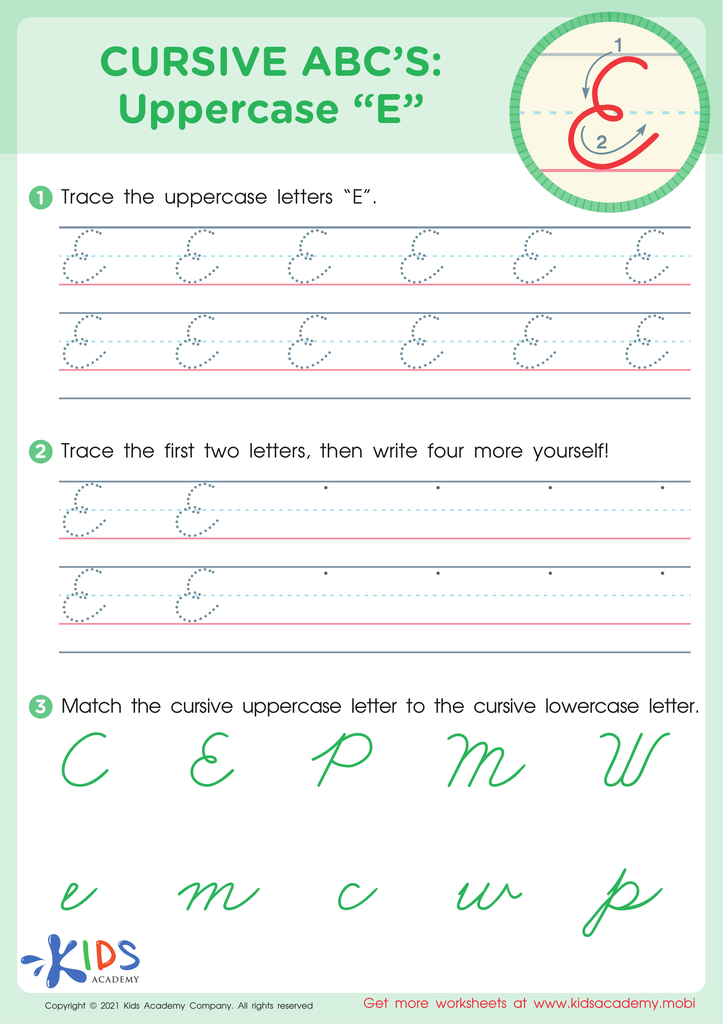
Ask your child if they can identify the letter 'E' and give examples. Each letter is unique, so provide coaching. Have them trace cursive 'E' to become familiar and boost confidence. Then, ask them to write it on their own.
Cursive ABCs: Uppercase E
Worksheet
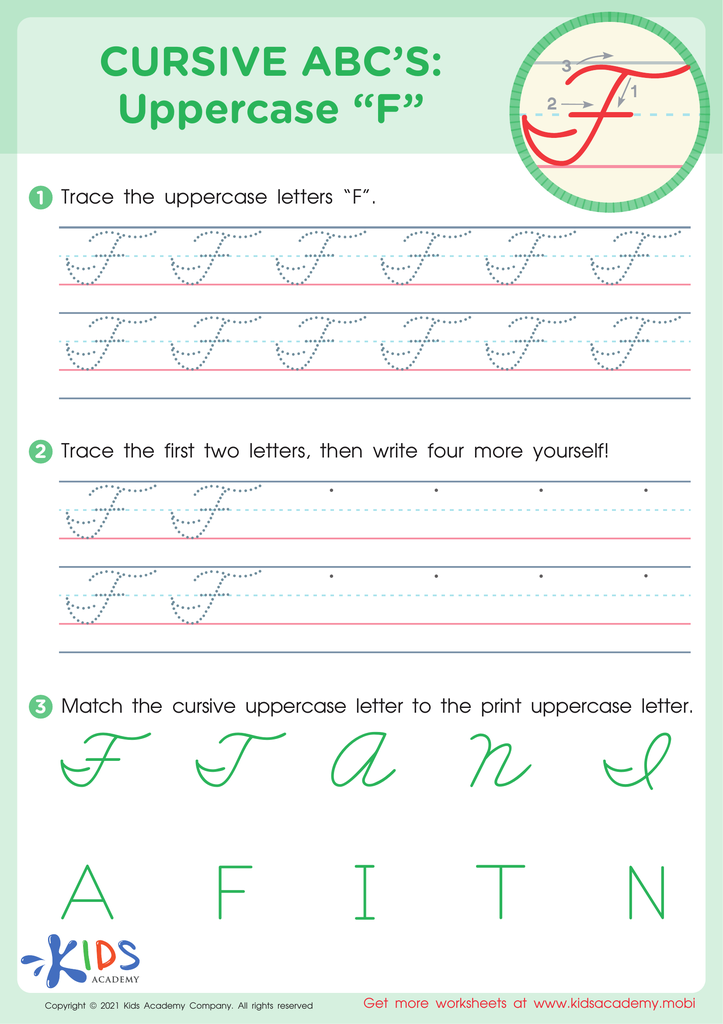
Cursive ABCs: Uppercase F

Cursive ABCs: Uppercase F

Help your kids trace the letters in these worksheets and watch their confidence grow as they learn to write cursive uppercase and lowercase letters. Ask them to identify the letters in words and give examples of words that start with an uppercase 'F', then have them write some letters on their own and assess their progress.
Cursive ABCs: Uppercase F
Worksheet
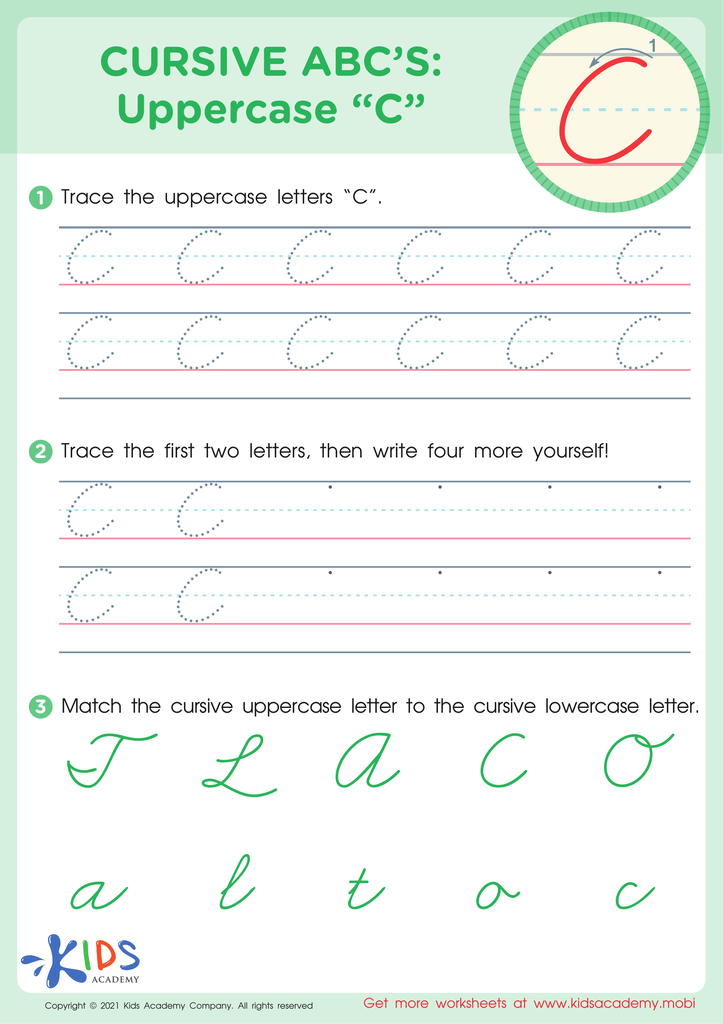
Cursive ABCs: Uppercase C

Cursive ABCs: Uppercase C

These worksheets are perfect for those wanting to improve their handwriting or learn letter recognition. The tracing exercises help younger students sharpen their writing skills and teach how to write the 'C' in cursive. First, they trace the given examples and then practice writing it solo. A letter recognition test is at the bottom of the page to check progress.
Cursive ABCs: Uppercase C
Worksheet
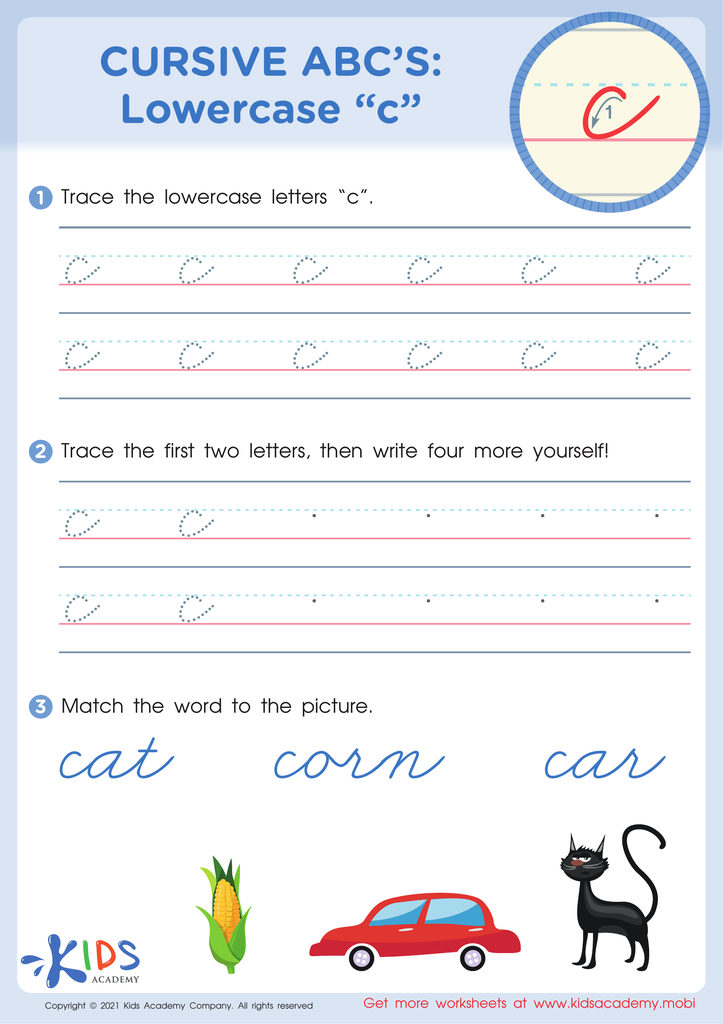
Cursive ABCs: Lowercase c

Cursive ABCs: Lowercase c

Once your child has successfully printed their letters, help them learn to recognize and write the alphabet in cursive. Struggling? This worksheet is perfect to assist them. Writing is an essential skill for kids to learn, so do all you can to help them. Use these tracing worksheets and guide them as they write the lowercase letter 'c' in cursive.
Cursive ABCs: Lowercase c
Worksheet
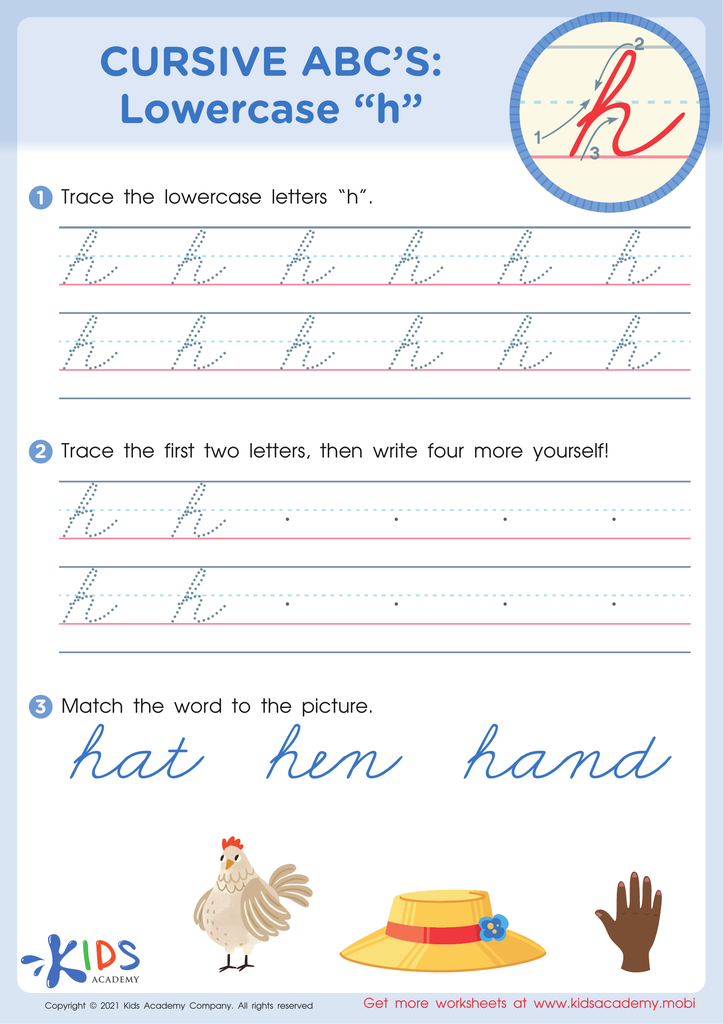
Cursive ABCs: Lowercase h

Cursive ABCs: Lowercase h

Your children will need more than just reciting the alphabet; they need to learn how to identify and write it. Cursive writing helps with neatness, and these tracing worksheets are great learning aids and offer exercises to practice writing lowercase 'h'. With these, your children get better writing skills and learn new words.
Cursive ABCs: Lowercase h
Worksheet
Cursive ABCs: Uppercase H

Cursive ABCs: Uppercase H

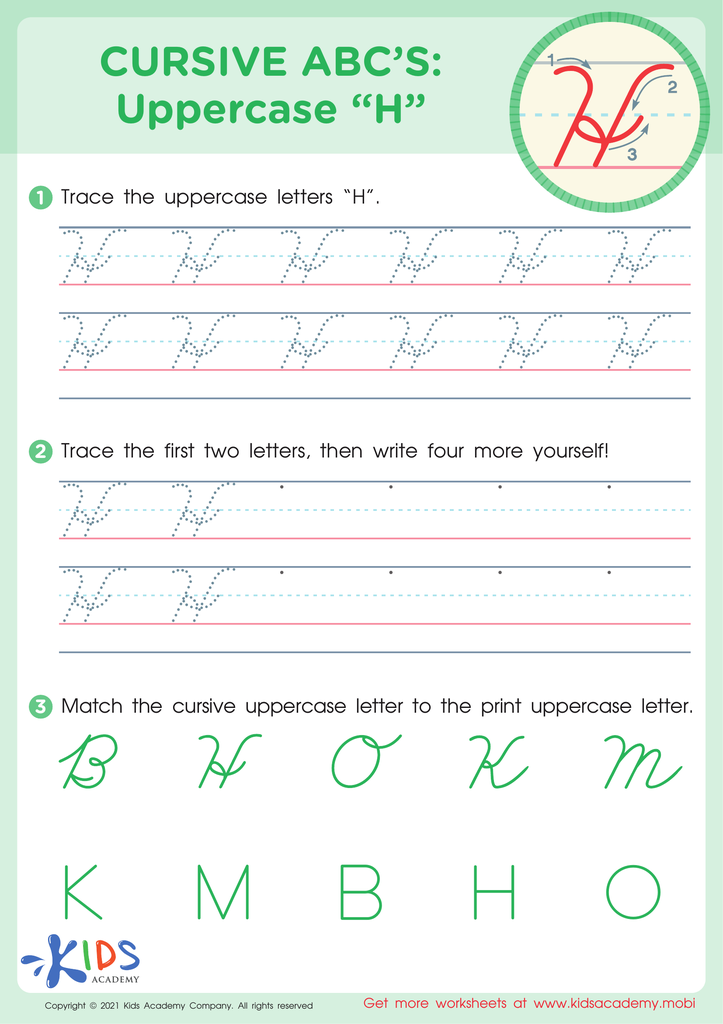
Have your child recite the alphabet and give you words beginning with H. This tracing sheet is perfect to help them improve their handwriting. Guide their hands as they trace the uppercase H, then have them practise writing it alone. At the bottom is an exercise to check their letter recognition.
Cursive ABCs: Uppercase H
Worksheet


Hand-eye coordination in cursive writing is crucial for 9-year-olds because it fosters a range of developmental benefits. Firstly, it enhances fine motor skills by engaging the small muscles in the hand, which are essential for daily tasks like buttoning clothes, tying shoelaces, and basic self-care. Mastering these skills at a young age lays a foundation for greater independence and confidence.

Moreover, writing in cursive requires the brain to integrate information from various senses and muscle movements. This complex process sharpens cognitive abilities, including memory, attention to detail, and spatial awareness. As children concentrate on forming each letter, they practice focus and patience, which are fundamental life skills.

In the digital age, traditional penmanship may seem less relevant, yet research indicates that the act of writing by hand improves literacy. By engaging in cursive writing, children better retain new information, which bolsters reading comprehension and encourages expressive storytelling.

For teachers, observing a student's cursive writing can provide insights into their neurological development and motor skills. Appropriate interventions can be made if discrepancies are noted, ensuring students receive tailored support.

Therefore, fostering hand-eye coordination in cursive writing is not merely about legible handwriting; it’s about supporting a holistic developmental framework that enables children to thrive both academically and personally.