Filters

7 filtered results

Clear all filters
Favorites
With answer key
Interactive

7 filtered results

Difficulty Level

Grade


Enhance your child's literacy foundation with our Alphabet Recognition Cursive Alphabet Worksheets. These expertly crafted printables from Kids Academy are designed to help young learners master cursive writing while reinforcing their ability to recognize letters. Perfect for beginners, each worksheet combines engaging activities with clear, traceable cursive letters, making learning both effective and fun. Ideal for classroom or home use, these resources support alphabet familiarity, fine motor skills, and cursive penmanship. Equip your child with the essential skills needed for advanced literacy through our comprehensive, easy-to-follow worksheets. Give your child the confidence to excel in their writing journey today!

Check out this FREE Trial Lesson on Cursive Alphabet!

Sorting Objects into 3 Categories

Favorites
With answer key
Interactive
  • Alphabet Recognition
  • Cursive Alphabet
Cursive ABCs: Lowercase d

Cursive ABCs: Lowercase d

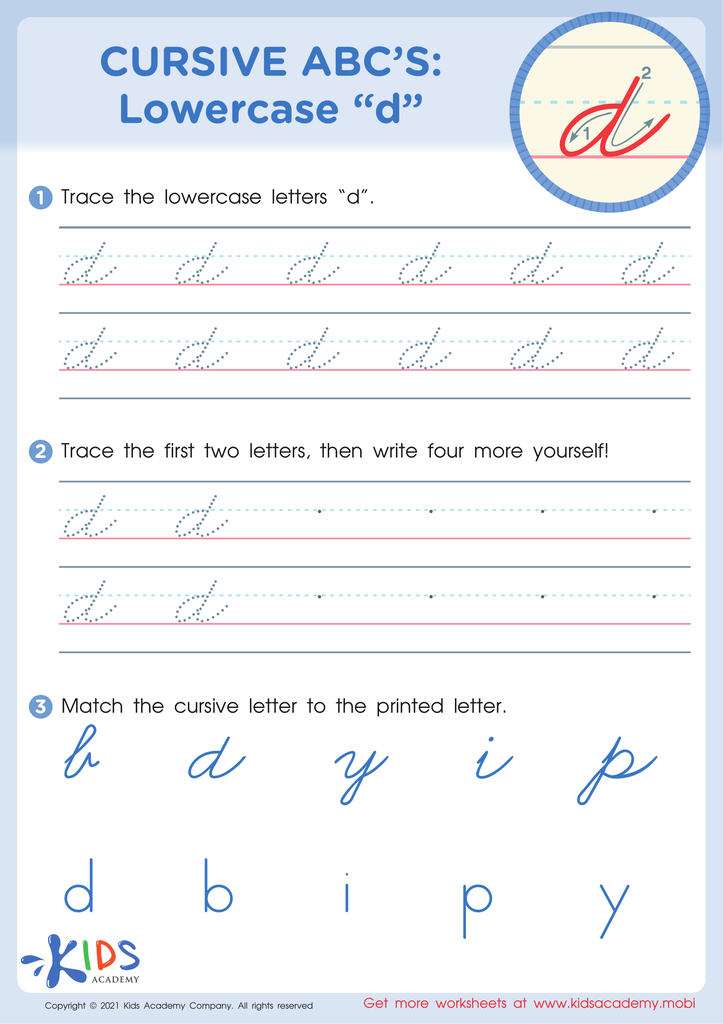
To make learning fun, introduce colorful worksheets! These help young learners perfect their cursive lowercase 'd'. By the end, they'll be better at writing and identifying the letter. It's an easy and enjoyable exercise for kids!
Cursive ABCs: Lowercase d
Worksheet
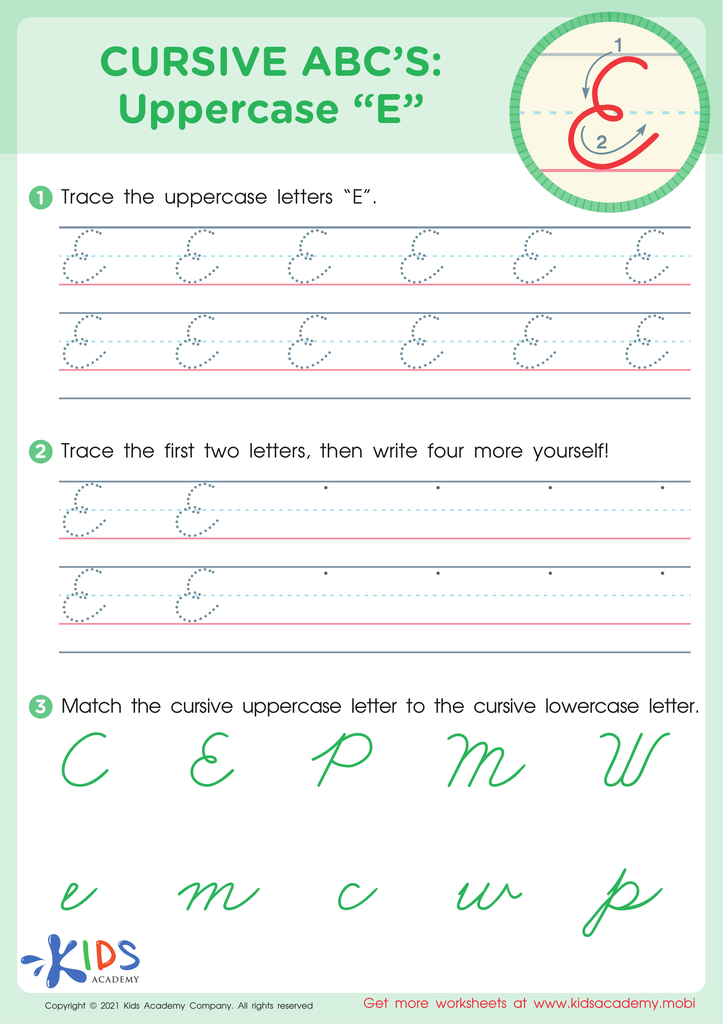
Cursive ABCs: Uppercase E

Cursive ABCs: Uppercase E

Ask your child if they can identify the letter 'E' and give examples. Each letter is unique, so provide coaching. Have them trace cursive 'E' to become familiar and boost confidence. Then, ask them to write it on their own.
Cursive ABCs: Uppercase E
Worksheet
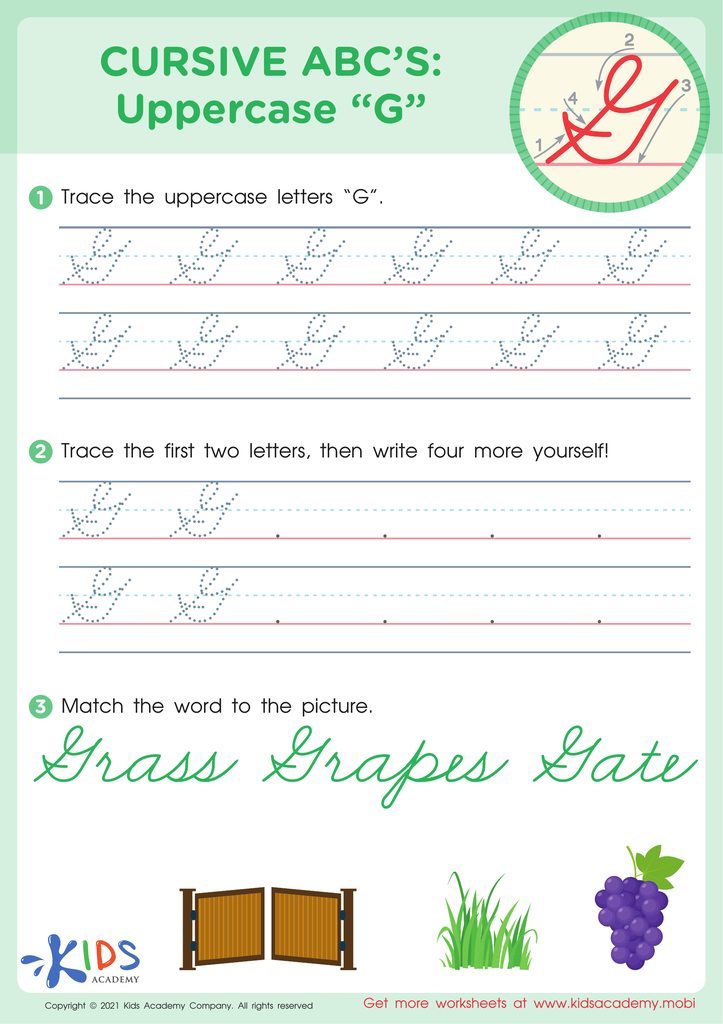
Cursive ABCs: Uppercase G

Cursive ABCs: Uppercase G

Remind your kids of words beginning with 'G' like 'girl' and 'goat'. Ask them to give examples too. Use this tracing worksheet to help your kids practice writing the cursive uppercase 'G'. It'll help them perfect their motor skills and get better at cursive letters.
Cursive ABCs: Uppercase G
Worksheet
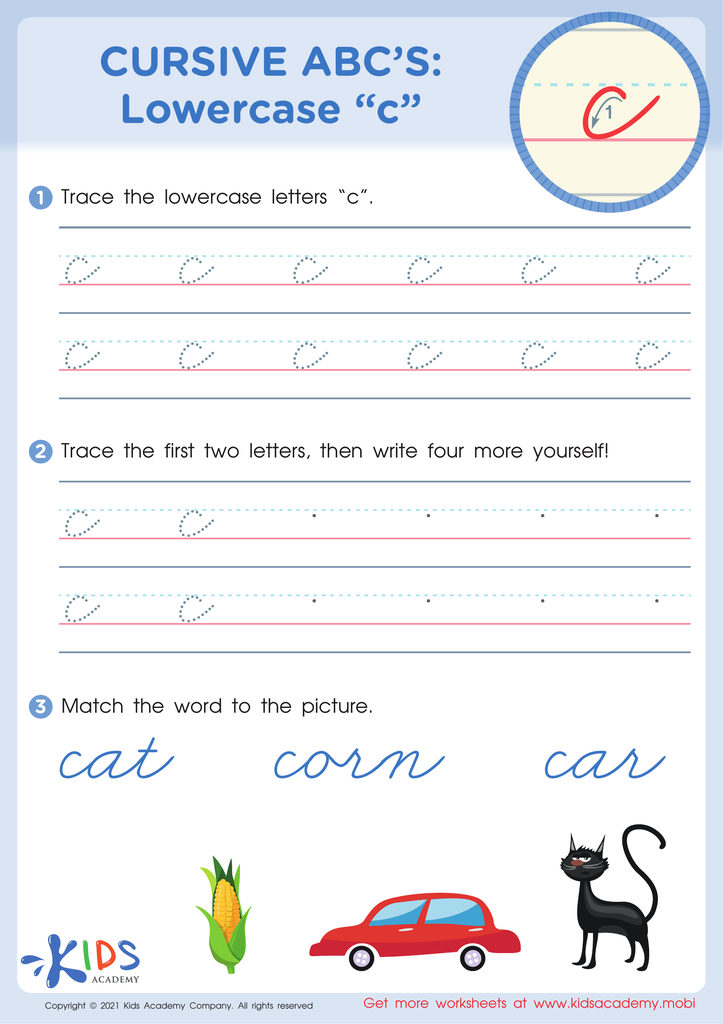
Cursive ABCs: Lowercase c

Cursive ABCs: Lowercase c

Once your child has successfully printed their letters, help them learn to recognize and write the alphabet in cursive. Struggling? This worksheet is perfect to assist them. Writing is an essential skill for kids to learn, so do all you can to help them. Use these tracing worksheets and guide them as they write the lowercase letter 'c' in cursive.
Cursive ABCs: Lowercase c
Worksheet
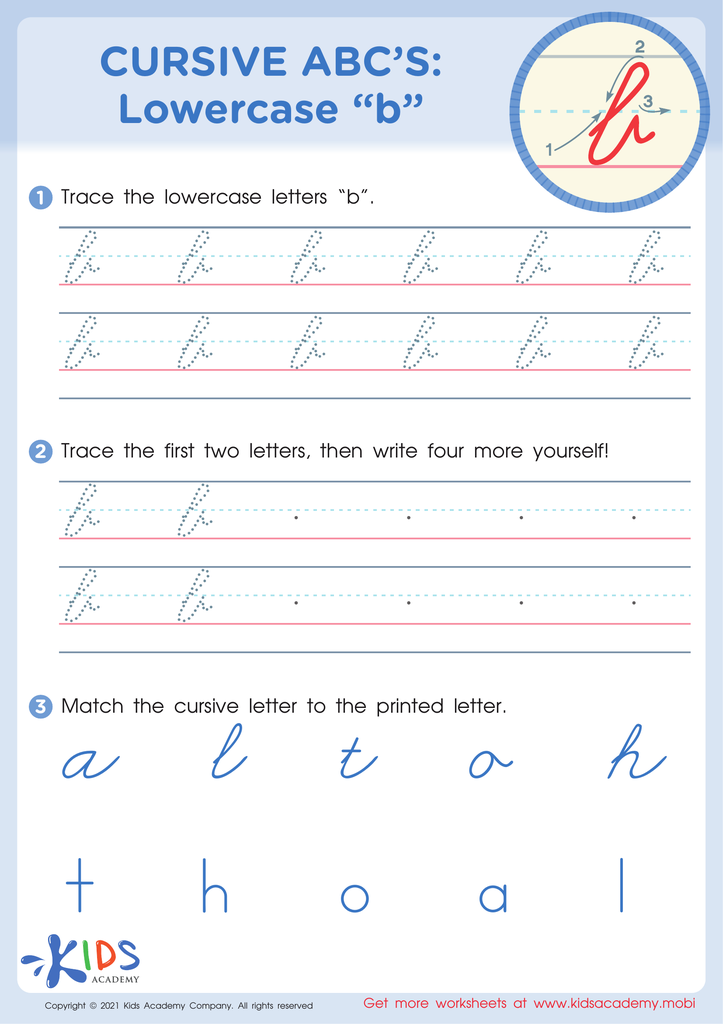
Cursive ABCs: Lowercase b

Cursive ABCs: Lowercase b

Trace two lines of lowercase b's with your kids. Guide them through the loops and swirls to help them learn cursive handwriting. Then let them practice writing the letter b themselves in the last two lines. With this exercise, your kids should become better at writing and recognizing the lowercase cursive b.
Cursive ABCs: Lowercase b
Worksheet
Cursive ABCs: Uppercase A

Cursive ABCs: Uppercase A

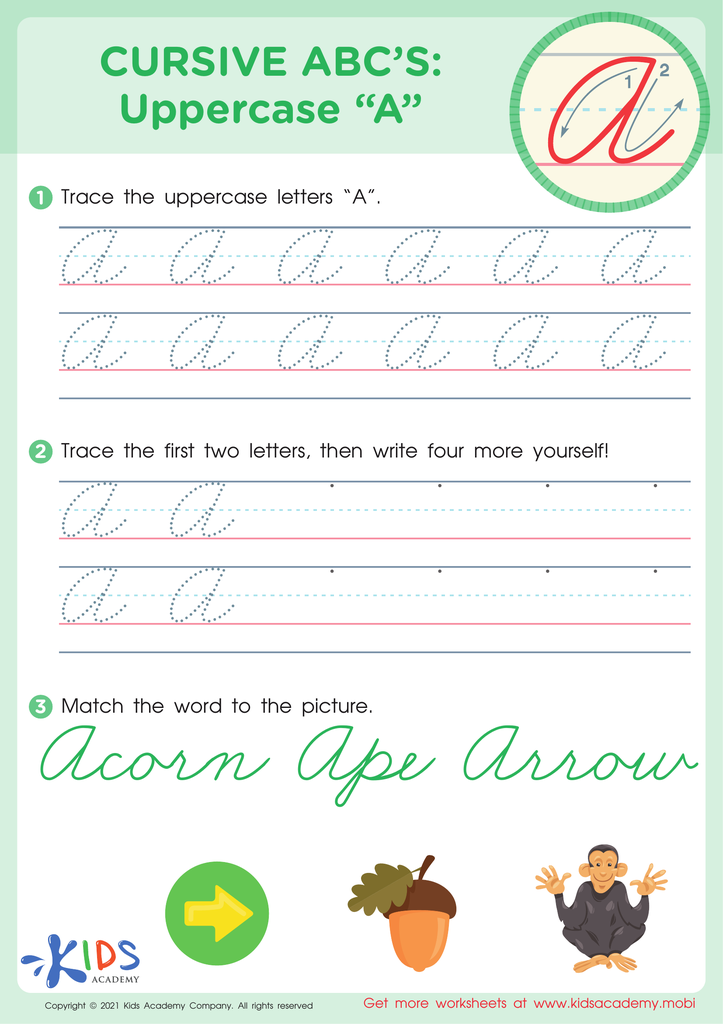
Help your kids develop their writing skills with our great tracing sheets. Improve their motor skills, as well as their vocabulary, by guiding them through tracing the dotted lines for the uppercase letters of the alphabet. When they are ready, let them practice writing the letters on their own for improved confidence.
Cursive ABCs: Uppercase A
Worksheet
Cursive ABCs: Uppercase H

Cursive ABCs: Uppercase H

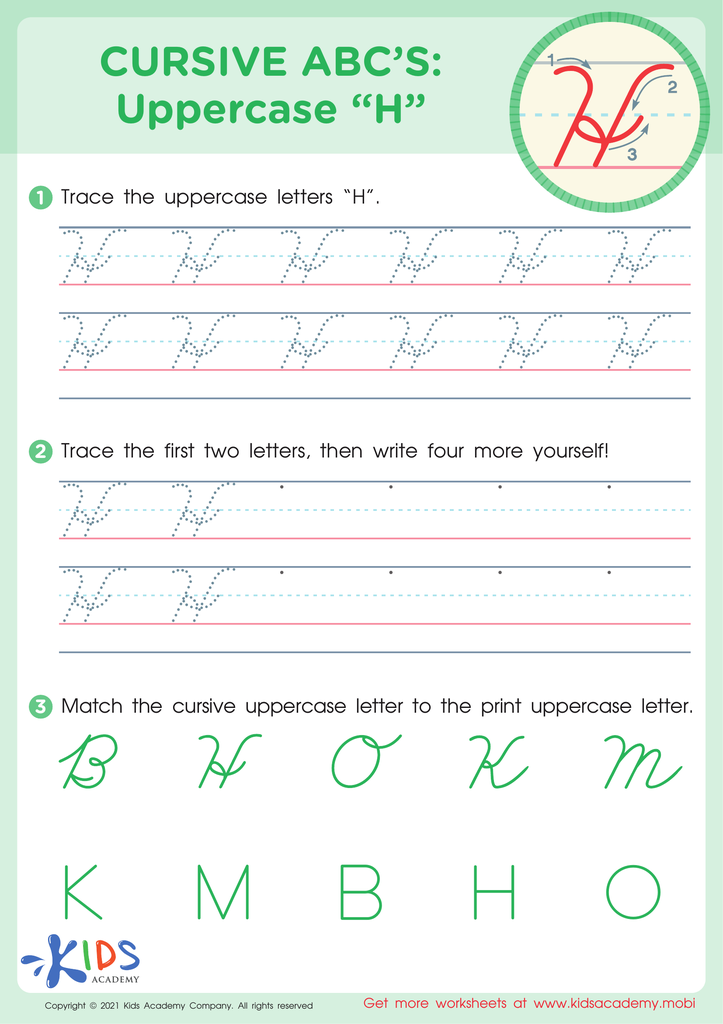
Have your child recite the alphabet and give you words beginning with H. This tracing sheet is perfect to help them improve their handwriting. Guide their hands as they trace the uppercase H, then have them practise writing it alone. At the bottom is an exercise to check their letter recognition.
Cursive ABCs: Uppercase H
Worksheet


Parents and teachers play a crucial role in early education, and one significant area of focus should be alphabet recognition, including the cursive alphabet. Understanding and recognizing both print and cursive alphabets serve as foundational skills that facilitate literacy development.

First, mastering the cursive alphabet fosters improved fine motor skills. The continuous, flowing motion required in cursive writing strengthens hand-eye coordination and dexterity. This physical development is essential not only for writing but also for other tasks requiring fine motor precision.

Second, familiarity with cursive can aid in reading fluency. Historically, many historical documents and classic literature are written in cursive. Early exposure helps children become comfortable with different text styles, broadening their ability to read diverse sources.

Third, learning cursive alphabet and recognition can enhance cognitive development. The act of writing in cursive has been shown to improve brain function by engaging both hemispheres, fostering neural connections that support memory, focus, and concept comprehension.

Finally, students gain a sense of achievement and confidence when they master both print and cursive alphabets. This dual proficiency ensures they are well-rounded in their literacy skills, preparing them for future academic and personal success. In summary, cursive alphabet recognition is a multifaceted skill essential for comprehensive educational and cognitive development.