Fine motor skills improvement Alphabet Worksheets
5 filtered results
-
From - To
Enhance your child's fine motor skills with our Alphabet Worksheets! At Kids Academy, our expertly crafted worksheets are designed to make learning fun and engaging while focusing on improving crucial fine motor skills. These printable worksheets help children practice letter tracing, handwriting, and finger dexterity through creative exercises. Perfect for preschool and kindergarten levels, they support cognitive development and prepare young learners for writing. Filled with colorful and child-friendly designs, these worksheets not only acceptably build motor precision but also foster foundational literacy skills. Transform everyday learning into an exciting adventure with our Fine Motor Skills Improvement Alphabet Worksheets!
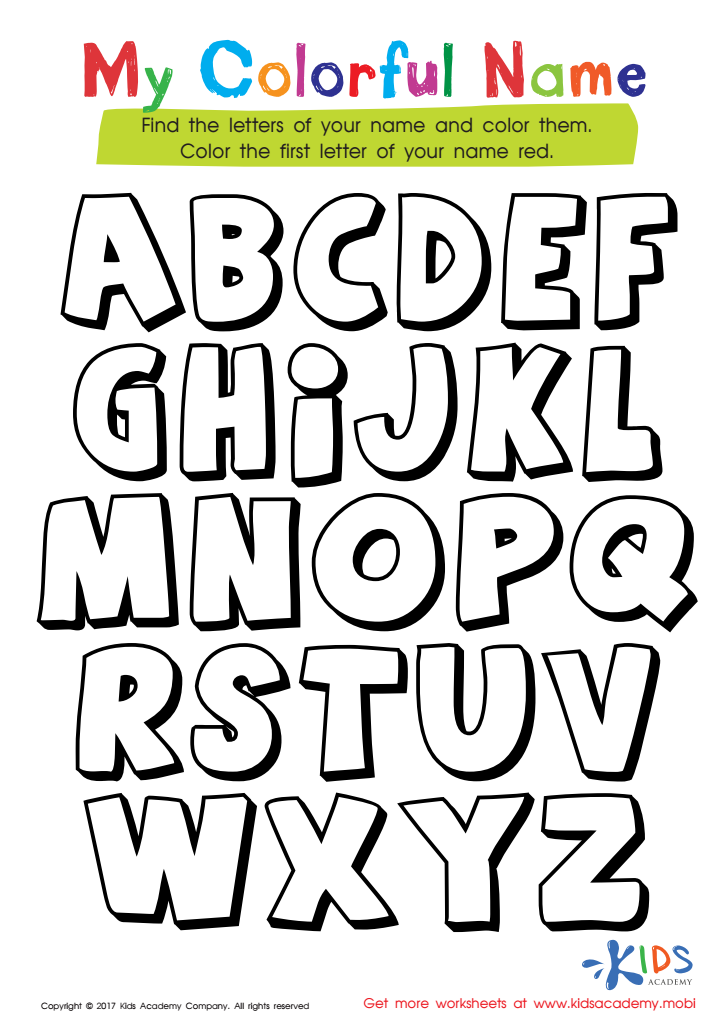
My Colorful Name Worksheet
 Assign to My Students
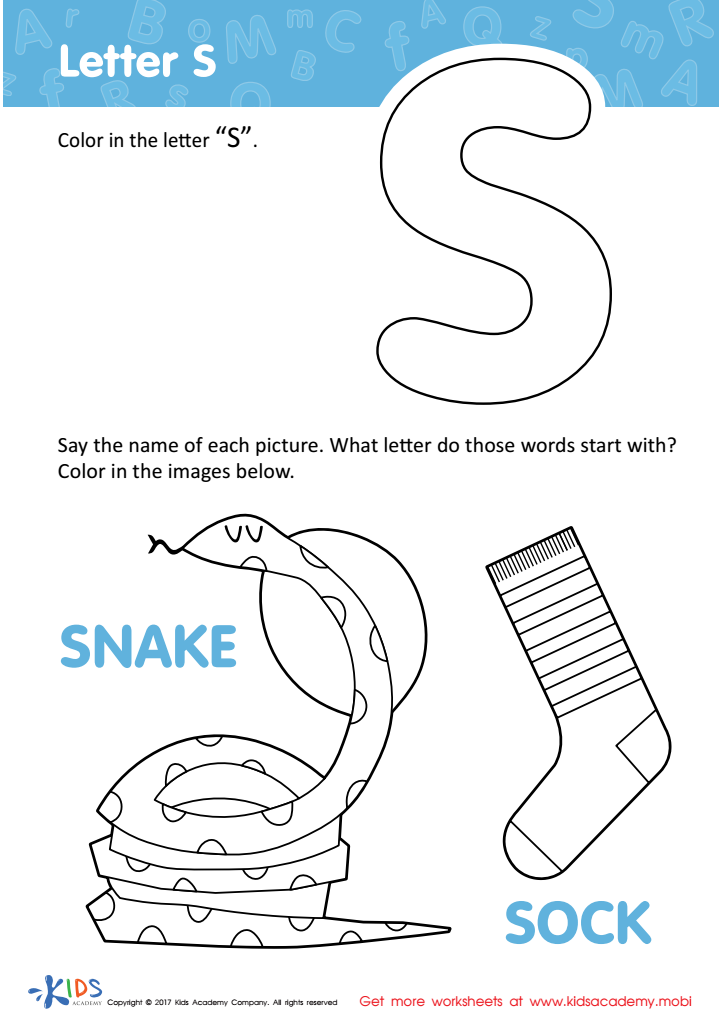
Letter S Coloring Sheet
Assign to My Students
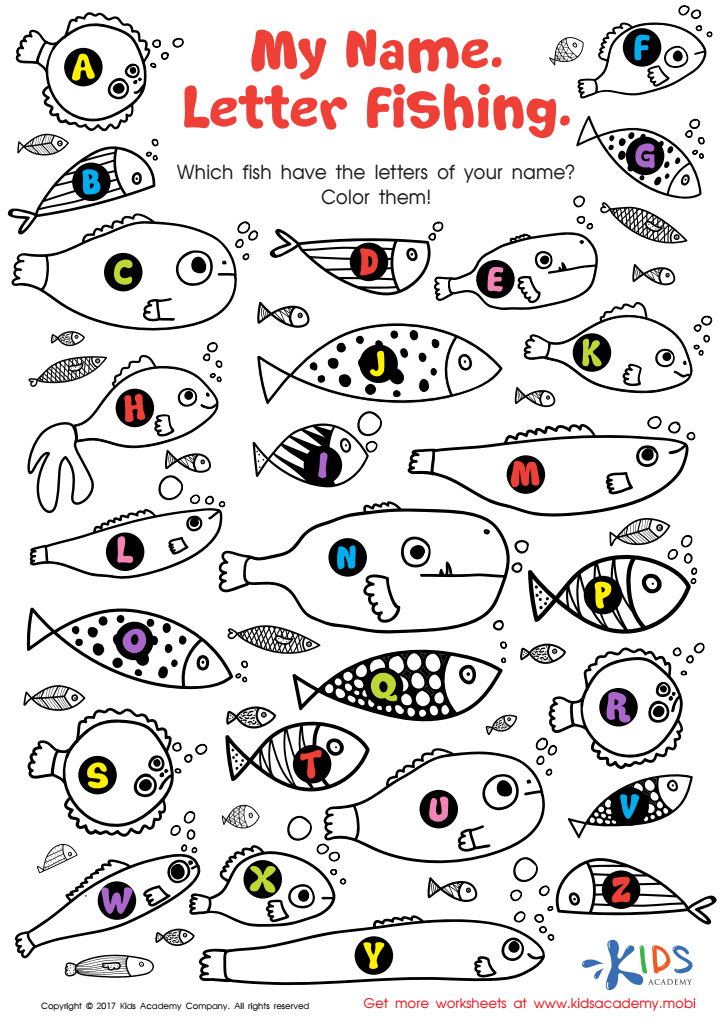
My Name: Letter Fishing Worksheet
Assign to My Students
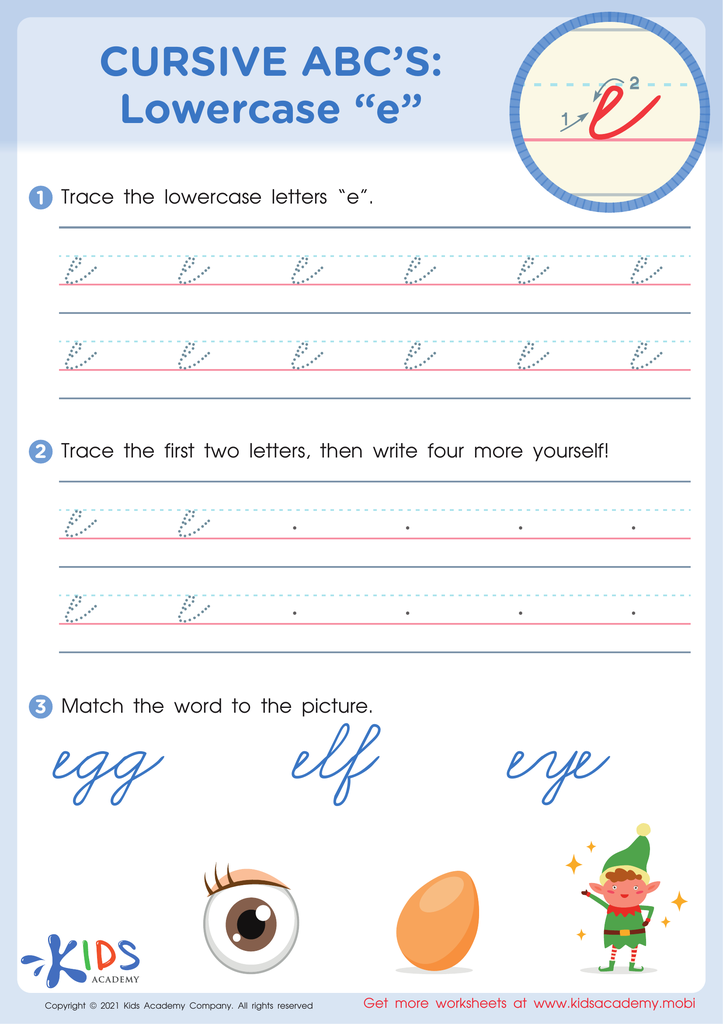
Cursive ABCs: Lowercase e
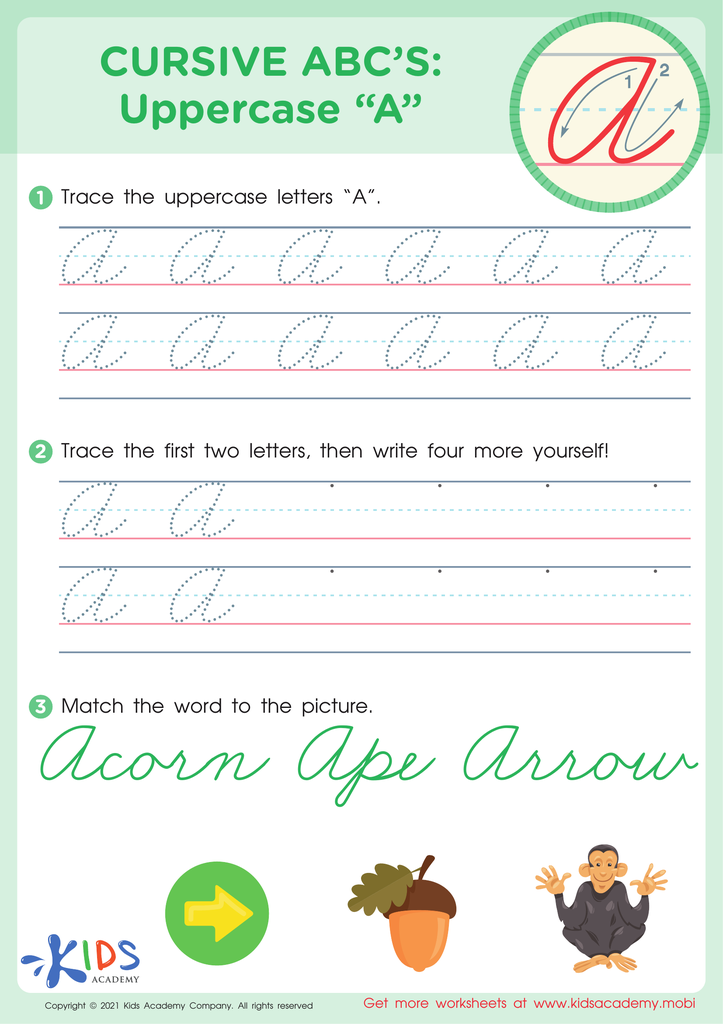
Cursive ABCs: Uppercase A








Fine motor skills are crucial for young children’s overall development, and focused improvement in these skills can significantly impact their learning journey, particularly when it comes to mastering the alphabet. Fine motor skills involve the coordination of small muscles in movements—mainly in the hands and fingers—which are required for activities like writing, buttoning, and threading.
Parents and teachers should be keenly aware of the importance of these skills because they directly influence a child’s ability to write letters and numbers. As children hone their fine motor skills, they become more adept at manipulating pencils, crayons, and scissors, leading to better handwriting and more legible alphabet formation. This proficiency not only benefits writing but also enhances other skills such as object manipulation and hand-eye coordination.
Additionally, strong fine motor skills are linked to improved cognitive function since activities that develop these skills often involve problem-solving and memory. For example, forming alphabet letters correctly encourages children to think more critically about shapes and sequences, fostering early literacy and numeracy.
Investing time in activities like tracing letters, cutting out alphabet shapes, or playing with clay can make a marked difference. In summary, improving fine motor skills is foundational for early academic success and builds a strong base for future learning experiences.







