Letter identification Alphabet Worksheets
4 filtered results
-
From - To
Enhance your child's literacy skills with our engaging Letter Identification Alphabet Worksheets! Designed for early grade learners, these worksheets help kids recognize and differentiate between uppercase and lowercase letters through fun activities and vibrant illustrations. Your little ones will engage in exercises that promote letter recognition, phonemic awareness, and foundational writing skills. Each worksheet is thoughtfully created to support a variety of learning styles, encouraging creativity while building confidence in reading and writing. Perfect for home or classroom use, these printable resources are a valuable tool for making alphabet learning enjoyable and effective. Explore our collection today and watch your child's skills soar!
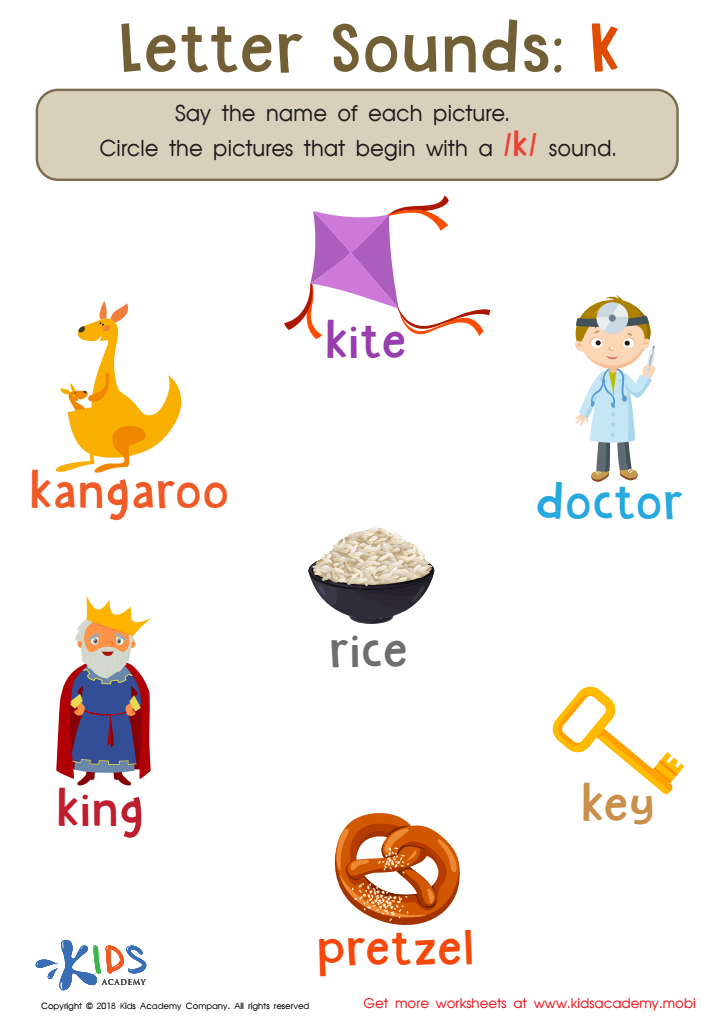
Letter K Sounds Worksheet
 Assign to My Students
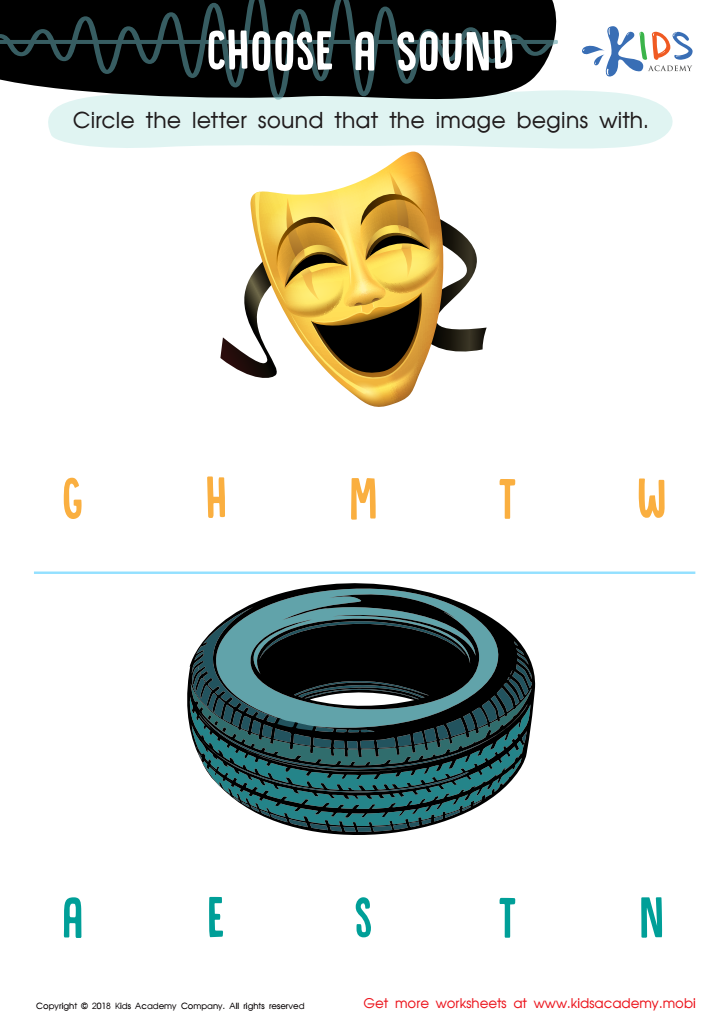
Choose a Sound Worksheet
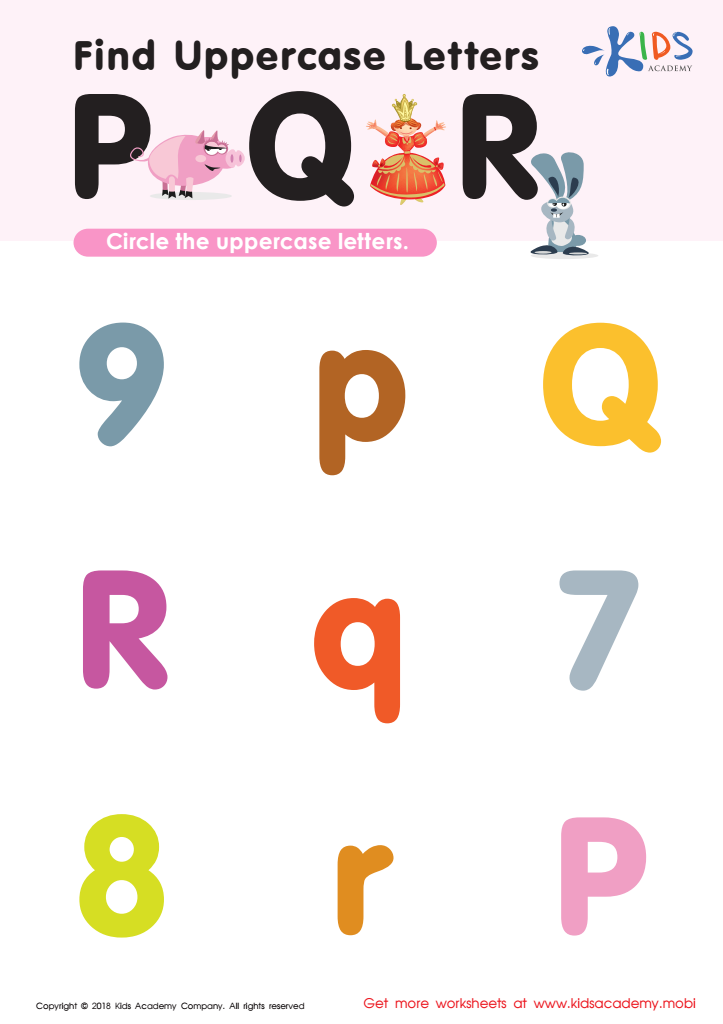
Find Uppercase Letters P, Q, and R Worksheet
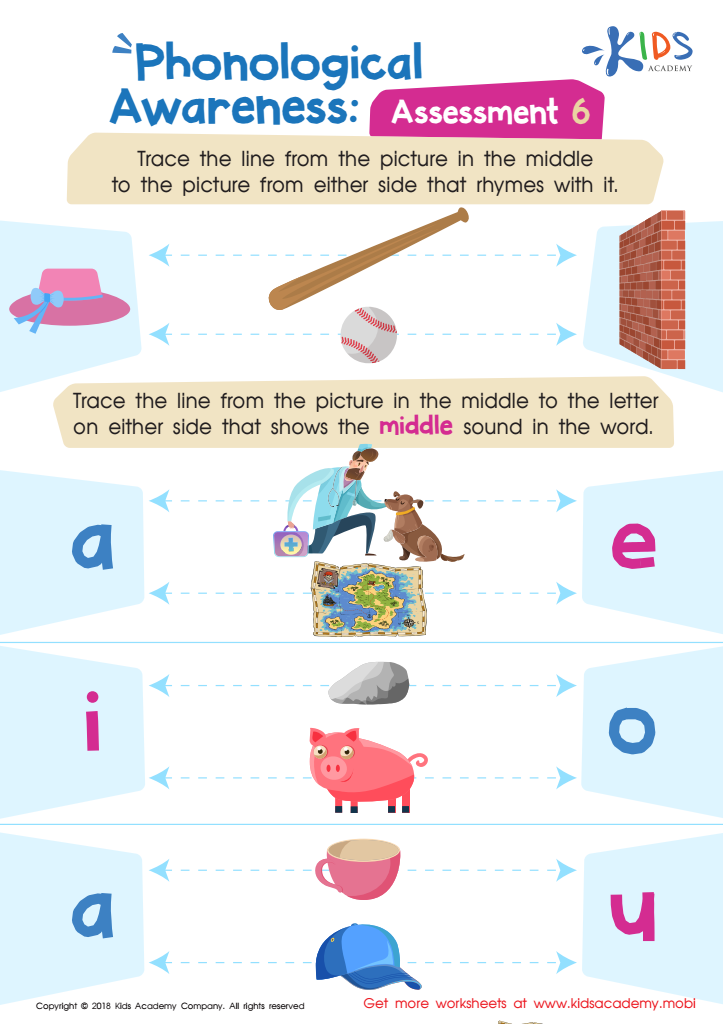
Phonological Awareness: Assessment 6 Worksheet








Letter identification is crucial in early literacy development, making it essential for parents and teachers to prioritize this skill. Recognizing letters helps young children understand that print carries meaning, laying the foundation for reading and writing. By identifying letters, children develop phonemic awareness, which enables them to connect sounds to written letters—a vital step in learning to read.
Furthermore, early letter identification can foster a child’s confidence and interest in literacy. When children feel competent in recognizing letters, they are more likely to engage with books and other reading activities, promoting a lifelong love of reading. Parents and teachers can support this process through fun, interactive activities that make learning letters enjoyable, such as games, songs, and storytelling.
Moreover, letter identification is closely linked to broader academic success. Children who master letter recognition are better equipped to tackle more complex literacy tasks later on. This skill also supports vocabulary development, spelling, and comprehension, forming the building blocks for all learning.
Investing time and energy into helping children identify letters not only enhances their literacy skills but also encourages a positive relationship with education as a whole. Ultimately, letter identification is a cornerstone of a child’s academic journey.







