Rhyming skills Alphabet Worksheets
5 filtered results
-
From - To
Boost your child's phonics and literacy foundation with our Rhyming Skills Alphabet Worksheets! Perfect for early learners, these engaging and interactive worksheets help kids recognize and create rhyming words while reinforcing their understanding of the alphabet. Each activity is designed to make learning fun and effective, using vibrant images and playful exercises to hold their interest. By seamlessly integrating essential preschool skills with imaginative play, our worksheets support pre-reading development and enhance vocabulary. Ideal for home or classroom use, they provide a seamless blend of education and enjoyment, setting the stage for successful reading fluency. Explore and download today!
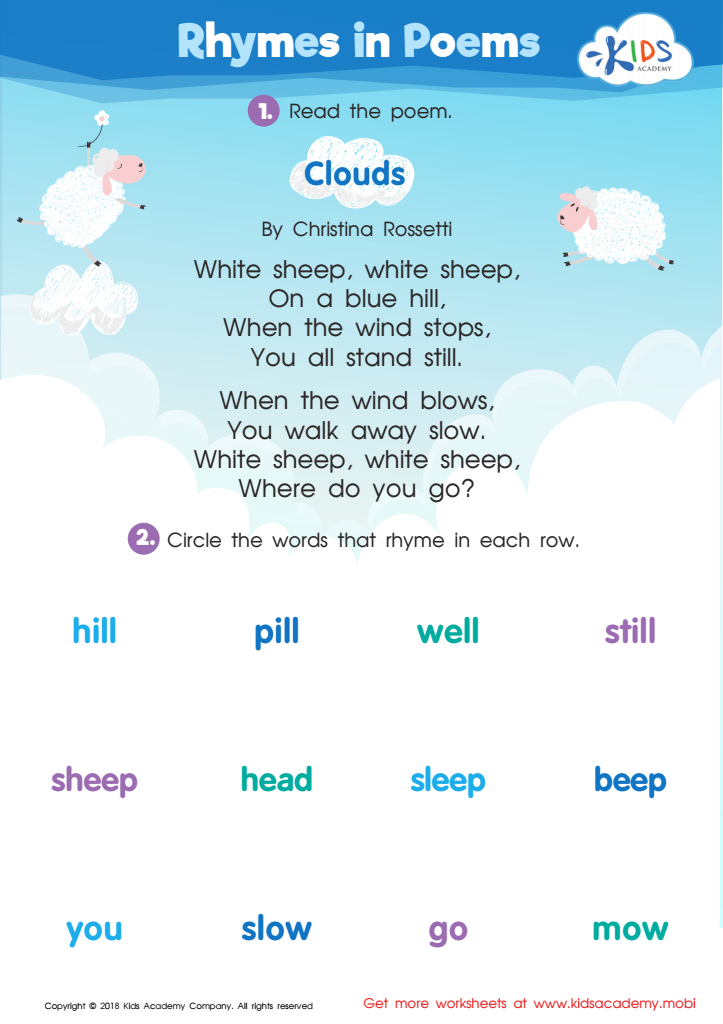
Rhymes in Poems Worksheet
 Assign to My Students
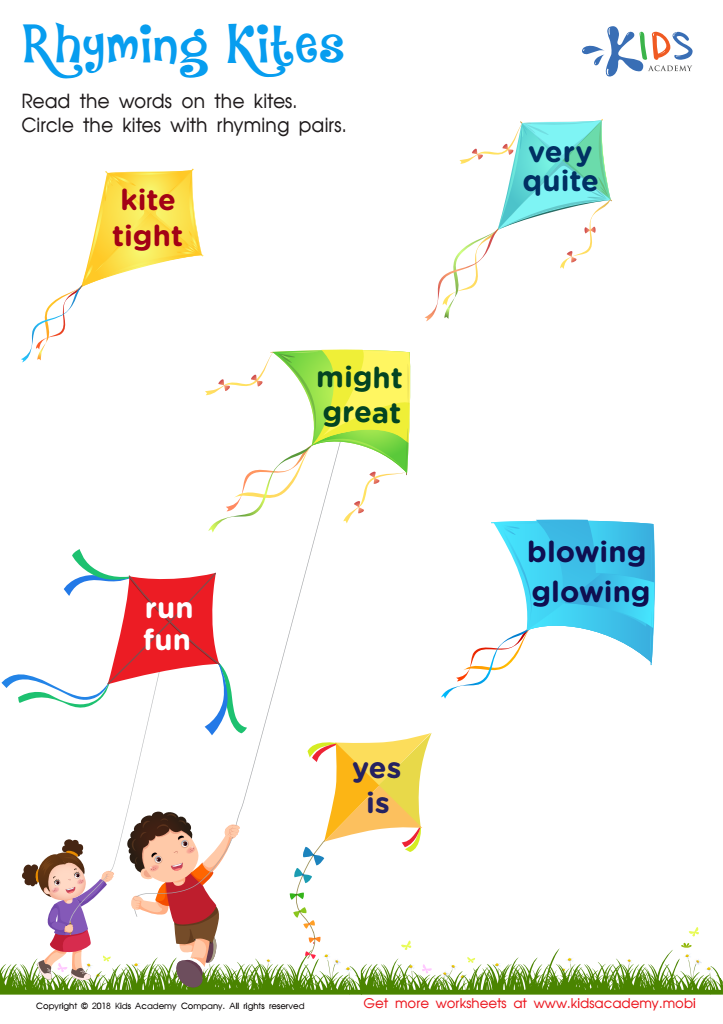
Rhyming Kites Worksheet
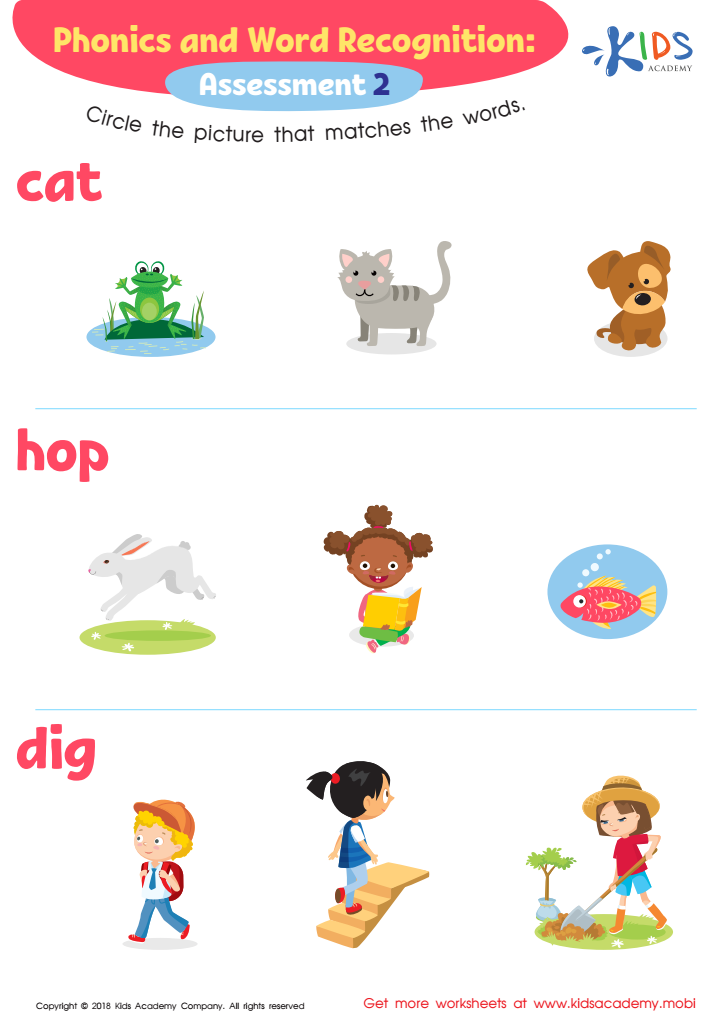
Phonological Awareness: Assessment 2 ELA Worksheet
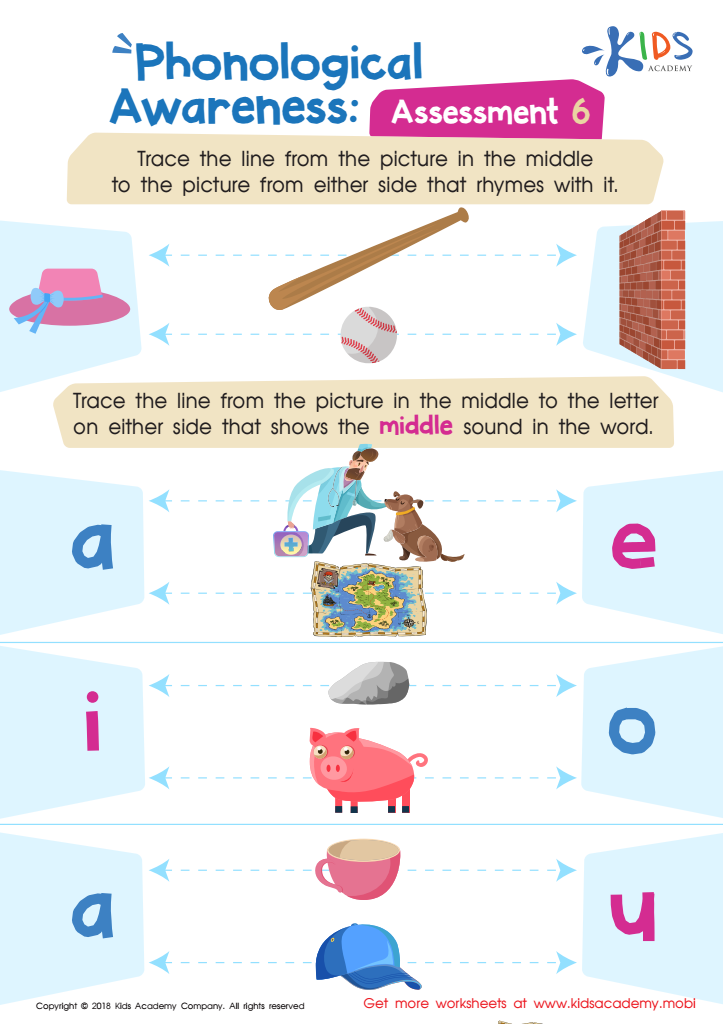
Phonological Awareness: Assessment 6 Worksheet
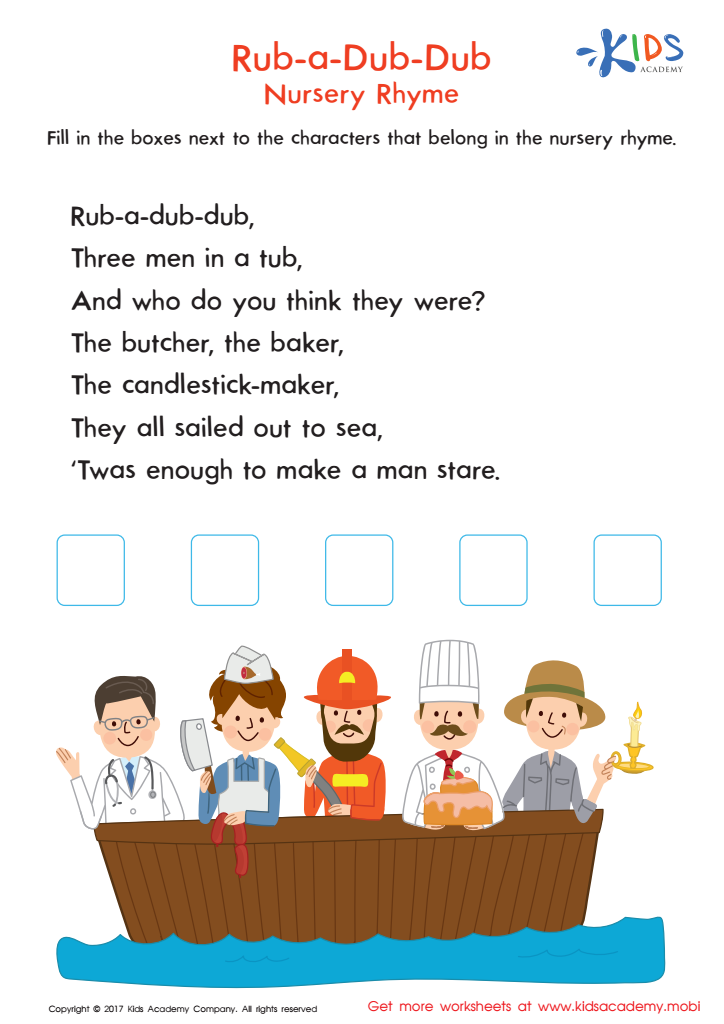
Rub a Dub Dub Printable







Rhyming skills are a fundamental aspect of early literacy that parents and teachers should prioritize because they lay the groundwork for reading and writing proficiency. Firstly, rhyming reinforces phonemic awareness, helping children to tune into the sounds within words. This auditory discrimination is vital for decoding new words, leading to improved reading abilities. Additionally, children who engage in rhyming games and songs can quickly pick up on patterns and word families, making it easier for them to predict and recognize word structures while reading.
Furthermore, mastering rhyming enhances vocabulary and comprehension skills. When children recognize words that rhyme, they are more likely to appreciate the meaning and usage of these words in context, enriching their language experience. Rhyming also boosts memory and retention. Repeating catchy, rhymed phrases ensures that language patterns stick, giving young learners a mental repository of words and sounds to draw from.
On an emotional and social level, engaging in rhymes, poems, and songs fosters bonding between children, parents, and educators, making learning a joyful and collaborative experience. Such engagement can significantly enhance a child's motivation and attitude towards learning. Therefore, encouraging rhyming skills helps build a strong literacy foundation that empowers children for future success.







