Fine Motor Skills Letter E Worksheets
3 filtered results
-
From - To
Enhance your child's fine motor skills with our engaging Letter E worksheets! Designed specifically for young learners, these printable activities encourage kids to practice tracing, coloring, and manipulating various letter E elements. Your little one will improve hand-eye coordination and dexterity while identifying the letter E and related words. Our interactive worksheets incorporate fun themes and vibrant illustrations, making learning enjoyable and effective. Ideal for preschool and kindergarten students, these resources provide a solid foundation in letter recognition and fine motor development. Download our Letter E fine motor skills worksheets today and watch your child's confidence grow as they master this essential letter!
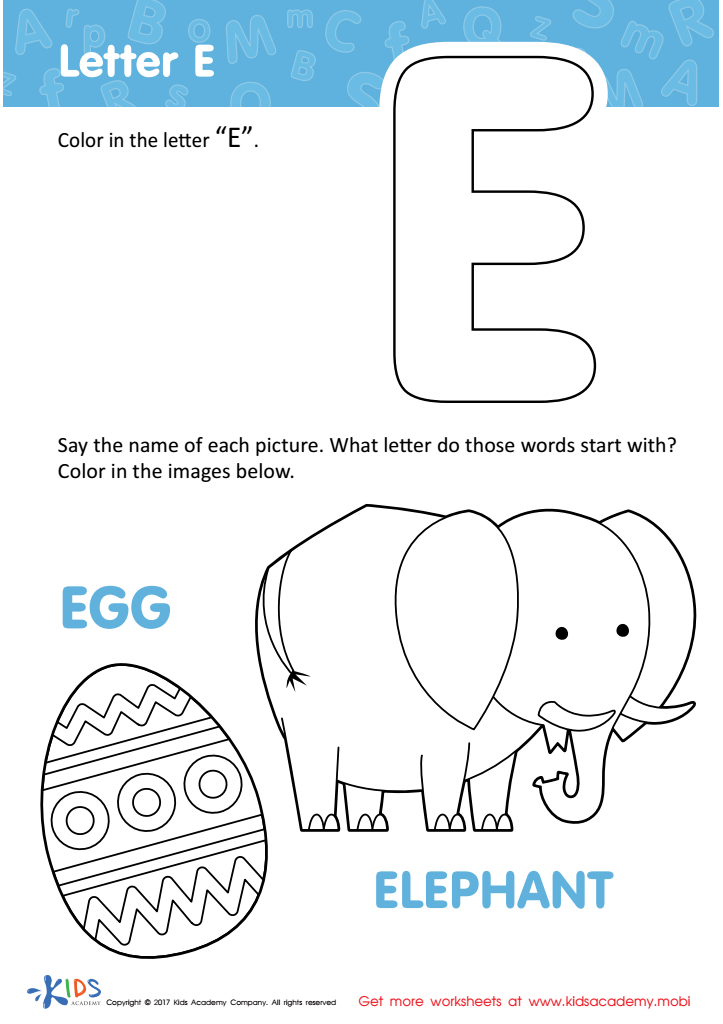
Letter E Coloring Sheet
 Assign to My Students
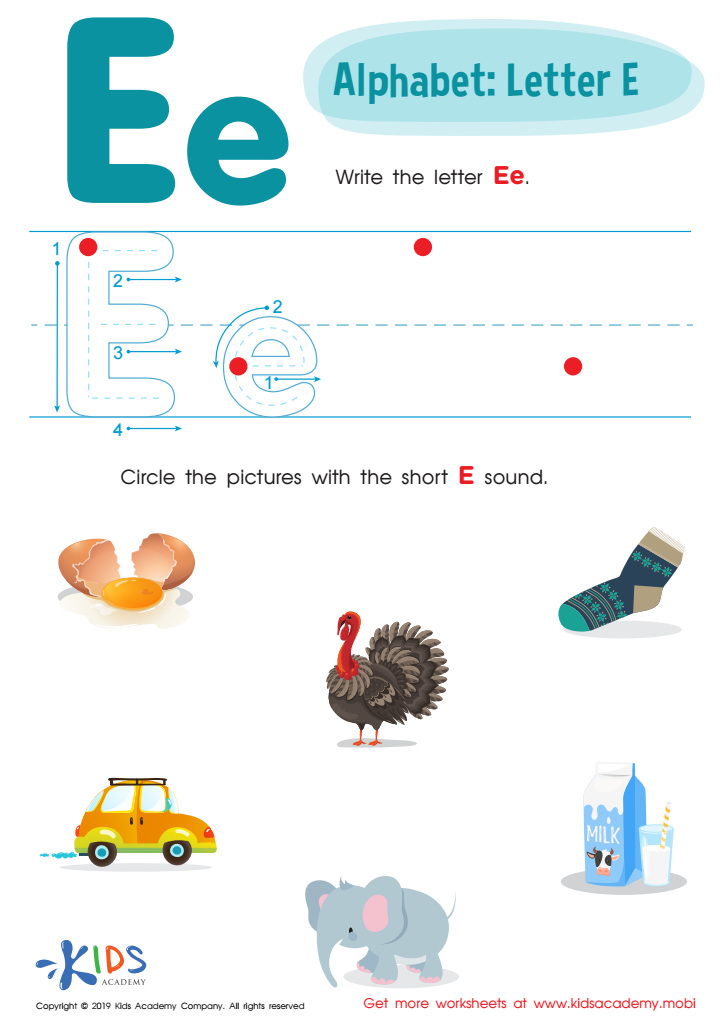
Letter E Tracing Worksheet
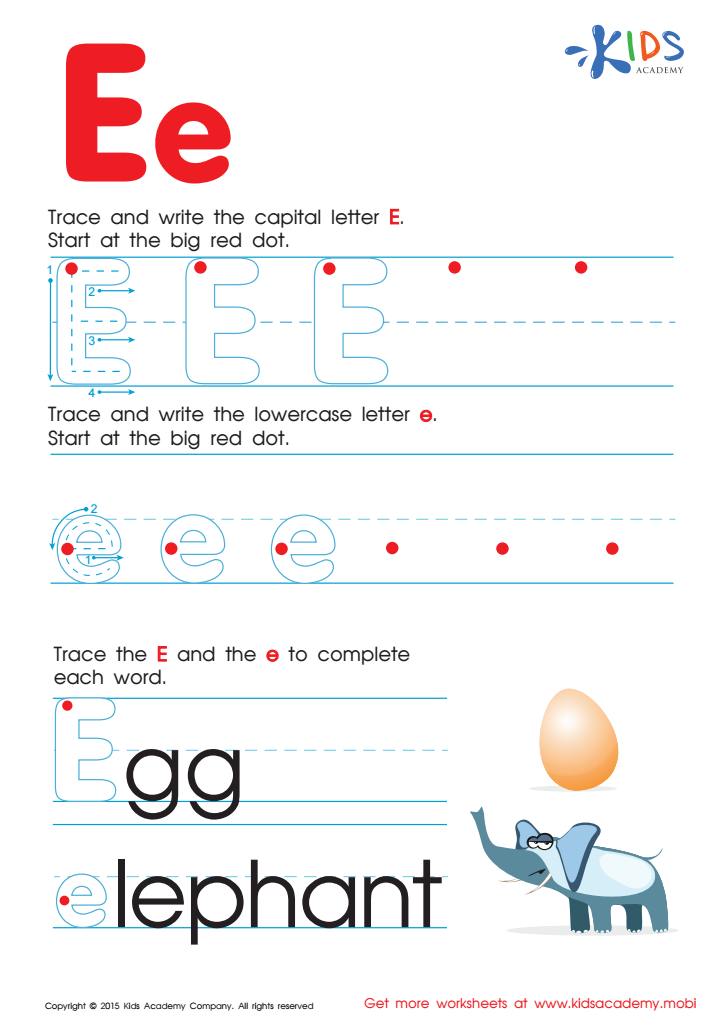
Letter E Tracing Page






Fine motor skills are crucial for children's overall development and learning, particularly in their early years. The letter "E" serves as an exemplary focus for teaching these skills. Mastering the letter "E" involves various motor tasks such as gripping a pencil correctly, using scissors to cut its shape, and forming it through activities such as tracing or crafting. These tasks not only enhance dexterity but also promote hand-eye coordination and spatial awareness.
Caring about fine motor skills linked to the letter "E" means recognizing the foundational role these skills play in a child's ability to perform everyday tasks, which ultimately supports their academic success. Children with well-developed fine motor skills find it easier to engage in writing, drawing, and other craft activities that are integral to early education.
Moreover, fostering these skills can enhance a child's confidence and engagement in learning, as they successfully navigate various activities. Teachers and parents can easily integrate fine motor activities related to the letter "E" into lesson plans and at-home games, such as intricate coloring or small puzzles, thus creating a harmonious balance in educational experiences. Overall, by focusing on the letter "E," caregivers play an essential role in developing critical fine motor skills for lifelong learning.